
Managed Voice AI Services for Inbound Calls, Outbound Follow-Up, AI Receptionists, Call Center Workflows, Integrations, Reporting, QA, and Operations Management
Peak Demand designs, launches, integrates, monitors, reports on, and optimizes Voice AI call operations for organizations that need more than a generic AI receptionist or one-off phone bot.
Inbound, outbound, receptionists, call center workflows, integrations, reporting, QA, and operations.
Connect calls to CRMs, booking systems, helpdesks, EMRs, EHRs, ERPs, dashboards, and workflows.
Monitor outcomes, review calls, tune workflows, report results, and optimize real operations over time.
Managed Voice AI means the call operation is designed, connected, monitored, and improved.
Voice AI can answer calls, make calls, qualify leads, book appointments, route requests, create tasks, update systems, escalate issues, and summarize outcomes. The real value comes from managing the operating layer around those calls.
Peak Demand helps organizations move beyond simple “AI receptionist” setups by building managed Voice AI operations around real workflows, system integrations, reporting needs, escalation rules, QA findings, staff feedback, and ongoing optimization.
This hub connects the full managed services ecosystem: inbound call handling, outbound follow-up, custom AI receptionists, AI call center workflows, integrations, workflow automation, reporting dashboards, QA, call monitoring, multi-location operations, and enterprise Voice AI services.
- Design call flows around business rules, caller intent, departments, locations, services, staff ownership, urgency, and escalation paths.
- Connect Voice AI to systems such as CRMs, booking tools, helpdesks, EMRs, EHRs, ERPs, dashboards, spreadsheets, APIs, and webhooks.
- Manage post-launch performance through reporting, QA, call review, failed workflow analysis, staff feedback, and ongoing optimization.
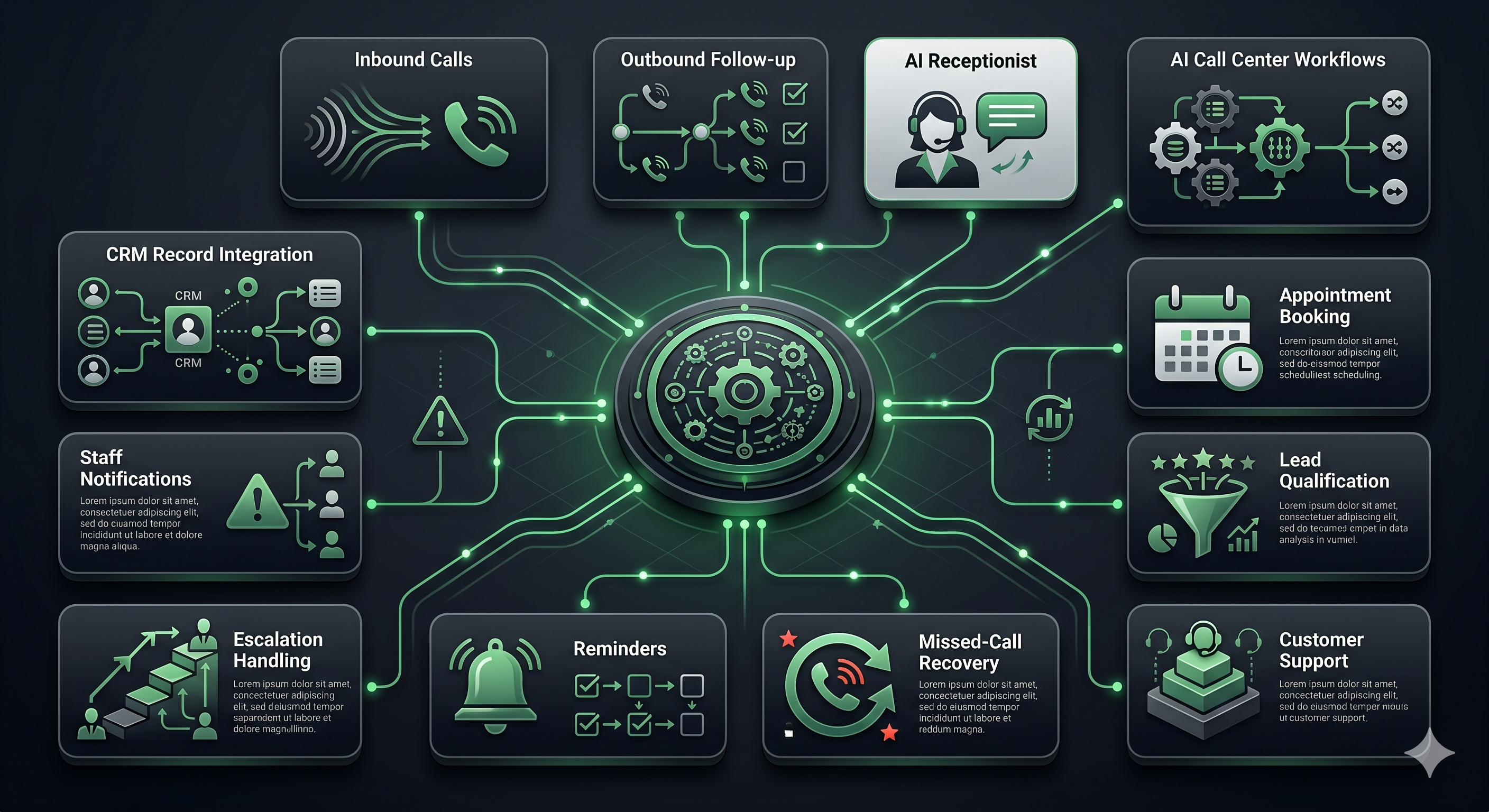
The goal is a managed Voice AI operating layer that connects calls to systems, workflows, staff actions, reporting, QA, and continuous improvement.
Explore the managed Voice AI service layer.
Use this hub to navigate the core managed service pages for enterprise Voice AI, AI receptionists, call center workflows, inbound and outbound call operations, integrations, reporting, QA, multi-location support, and workflow automation.
Enterprise Voice AI Services
Managed Voice AI for larger teams, multi-department workflows, system integrations, governance, reporting, and operations.
Explore enterprise Voice AICustom AI Voice Receptionists
Custom AI receptionists for inbound calls, intake, booking, routing, follow-up, staff handoff, and managed optimization.
Explore AI receptionistsCustom AI Call Center Solutions
AI call center workflows for high-volume call handling, routing, support, intake, escalation, reporting, and QA.
Explore AI call center solutionsManaged Inbound Voice AI
Inbound call handling for routing, intake, booking requests, lead qualification, escalation, and staff handoff.
Explore inbound Voice AIManaged Outbound Voice AI
Outbound follow-up, reminders, missed-call recovery, no-show recovery, reactivation, callback tasks, and workflow automation.
Explore outbound Voice AIVoice AI Operations Management
Monitoring, QA, reporting, escalation review, workflow updates, prompt tuning, and ongoing managed operations.
Explore operations managementVoice AI Reporting and Dashboards
Call outcome reporting, QA findings, escalation visibility, integration health, workflow data, and operations dashboards.
Explore reporting dashboardsVoice AI QA and Call Monitoring
Call review, escalation checks, failed workflow analysis, prompt tuning, reporting, and continuous improvement.
Explore Voice AI QAMulti-Location Voice AI Services
Centralized call routing, local workflow rules, location-specific reporting, QA, escalation, and operations management.
Explore multi-location Voice AICustom Voice AI Integrations
Custom integrations for CRMs, booking systems, helpdesks, EMRs, EHRs, ERPs, dashboards, APIs, and middleware.
Explore custom integrationsVoice AI Workflow Automation
Call-to-action workflows for CRM updates, booking actions, tasks, notifications, approvals, escalations, reporting, and QA.
Explore workflow automationVoice AI API Integrations Hub
System-by-system Voice AI integration possibilities across CRMs, ERPs, EMRs, EHRs, booking tools, and service platforms.
Explore integrations hubThe management layer is what keeps Voice AI useful after launch.
Managed Voice AI services should include visibility into call outcomes, escalations, failed workflows, system actions, staff feedback, QA findings, and optimization opportunities.
- Monitor call outcomes, routing decisions, booking attempts, CRM updates, ticket creation, escalations, and staff handoffs.
- Review calls and workflows for accuracy, missed intent, failed actions, weak summaries, escalation gaps, and operational risk.
- Use reporting, QA, staff feedback, and integration health to tune prompts, workflows, handoffs, and dashboards over time.

Monitoring
Track call outcomes, system actions, booking paths, staff handoffs, escalations, failed updates, and workflow exceptions.
QA and call review
Review real calls for caller intent, routing accuracy, escalation quality, summary usefulness, and workflow completion.
Optimization
Improve prompts, routing logic, integrations, reporting fields, fallback paths, staff notifications, and automation rules over time.
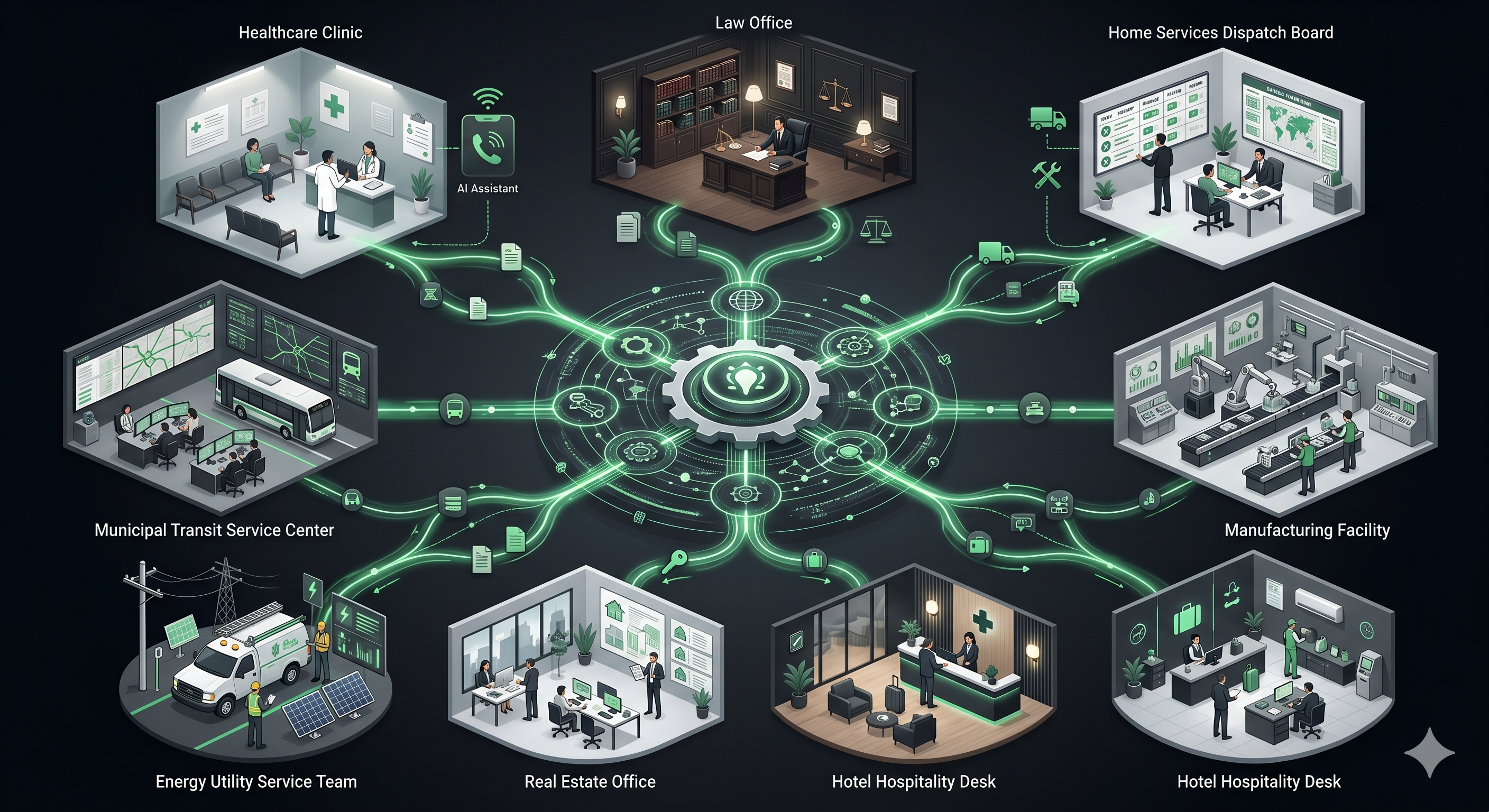
Managed Voice AI applies differently by industry, but the operating layer stays consistent.
Healthcare, legal, home services, manufacturing, hospitality, real estate, energy, utilities, municipal teams, and transit operators all need different call flows. Peak Demand manages the common operating layer: call handling, workflows, integrations, reporting, QA, escalation, and optimization.
Healthcare Voice AI
Patient calls, scheduling support, routing, reminders, after-hours handling, workflow governance, healthcare integrations, reporting, and QA.
Explore healthcare Voice AIHome Services Voice AI
Scheduling, dispatch support, emergency routing, missed-call recovery, technician handoffs, intake, reminders, and customer follow-up.
Explore home services Voice AIEnergy and Utilities Voice AI
Consultation booking, service requests, lead qualification, customer support, contractor workflows, scheduling, routing, and follow-up.
Explore energy Voice AIHospitality Voice AI
Guest assistance, reservations, service requests, staff routing, urgent escalations, customer service, and follow-up workflows.
Explore hospitality Voice AIManufacturing Voice AI
Quote intake, order status, production updates, troubleshooting support, service requests, ERP/CRM workflows, and reporting.
Explore manufacturing Voice AIReal Estate Voice AI
Lead qualification, appointment booking, property management calls, leasing workflows, inspector calls, mortgage calls, and follow-up.
Explore real estate Voice AILegal Voice AI
Intake calls, lead qualification, consultation booking, routing, follow-up, escalation, CRM updates, and call outcome reporting.
Explore AI receptionist workflowsMunicipal and Transit Voice AI
Resident inquiries, service requests, rider information, routing, alerts, staff handoff, public-sector workflows, and reporting.
Discuss municipal or transit Voice AIManaged Voice AI works best when calls connect to systems and workflows.
Voice AI should not create another disconnected call log. Managed Voice AI services can connect calls to CRMs, booking systems, helpdesks, EMRs, EHRs, ERPs, databases, spreadsheets, dashboards, staff notifications, APIs, webhooks, middleware, approval queues, and reporting systems.
Peak Demand can help design the bridge between your callers, Voice AI, business systems, staff actions, reporting, QA, and operational improvement.
This is for organizations that need managed call operations, not a cheap phone bot.
Managed Voice AI services are strongest when calls matter operationally: new leads, patient scheduling, booking requests, service dispatch, customer support, order status, reminders, follow-up, escalations, and reporting.
Call-heavy teams
Organizations with frequent inbound calls, outbound follow-up needs, missed calls, staff bottlenecks, overflow volume, or inconsistent call handling.
System-connected operations
Teams that need calls connected to CRMs, calendars, booking systems, helpdesks, EMRs, EHRs, ERPs, dashboards, and staff workflows.
Growing or multi-location organizations
Businesses that need more consistent call handling, centralized reporting, location-specific workflows, escalation paths, and operational oversight.
Questions teams ask before moving to managed Voice AI.
These answers are written for owners, operators, executives, call center leaders, healthcare groups, legal intake teams, home service companies, manufacturers, hospitality groups, real estate teams, energy providers, utilities, municipal teams, and multi-location organizations.
What are managed Voice AI services?
How is managed Voice AI different from an AI receptionist?
What does Peak Demand manage after launch?
Can managed Voice AI handle inbound and outbound calls?
Can Voice AI connect to our systems?
Which industries can use managed Voice AI services?
Can managed Voice AI include human approvals and escalations?
Can Peak Demand report on Voice AI performance?
Do we need custom integrations?
What should we bring to a discovery call?
Need Voice AI that is designed, connected, monitored, and improved?
Peak Demand provides managed Voice AI services for inbound calls, outbound follow-up, AI receptionists, call center workflows, integrations, workflow automation, reporting, QA, monitoring, escalation review, and operations management.
This is strongest when calls affect revenue, scheduling, support, service delivery, patient access, customer experience, staff workload, or operational reporting.
Peak Demand manages the Voice AI layer so the system can keep improving instead of becoming another unmanaged automation project.