

Managed Outbound Voice AI Services for Follow-Up Calls, Reminders, Reactivation, Recovery, and Workflow Automation
Peak Demand designs, launches, monitors, reports on, and improves outbound Voice AI workflows for follow-up calls, reminders, confirmations, missed-call callbacks, no-show recovery, customer reactivation, CRM updates, and staff handoffs.
Use Voice AI for missed-call callbacks, speed-to-lead follow-up, confirmations, and reminders.
Support no-show recovery, reactivation, rescheduling, customer check-ins, and callback workflows.
Track outcomes, connected calls, completed callbacks, CRM updates, opt-outs, QA, and workflow performance.
Outbound Voice AI should be structured follow-up infrastructure, not spam calling.
Managed outbound Voice AI helps teams follow up with the right people, at the right time, for the right operational reason. It can support missed-call callbacks, reminders, confirmations, recovery calls, reactivation, customer check-ins, CRM updates, and staff handoffs.
Peak Demand designs outbound Voice AI workflows around approved use cases, calling rules, customer context, consent considerations, opt-out handling, call timing, escalation paths, system updates, reporting, QA, and operational improvement.
The goal is to turn outbound calling into a managed workflow layer: faster follow-up, fewer lost opportunities, cleaner reminders, better recovery, clearer call outcomes, and more complete system records.
- Built for approved outbound workflows such as reminders, confirmations, callbacks, recovery, reactivation, and customer follow-up.
- Designed around call timing, CRM triggers, booking workflows, campaign rules, opt-out handling, escalation paths, and staff handoff.
- Managed after launch through reporting, QA review, call outcome analysis, prompt tuning, workflow updates, and optimization.
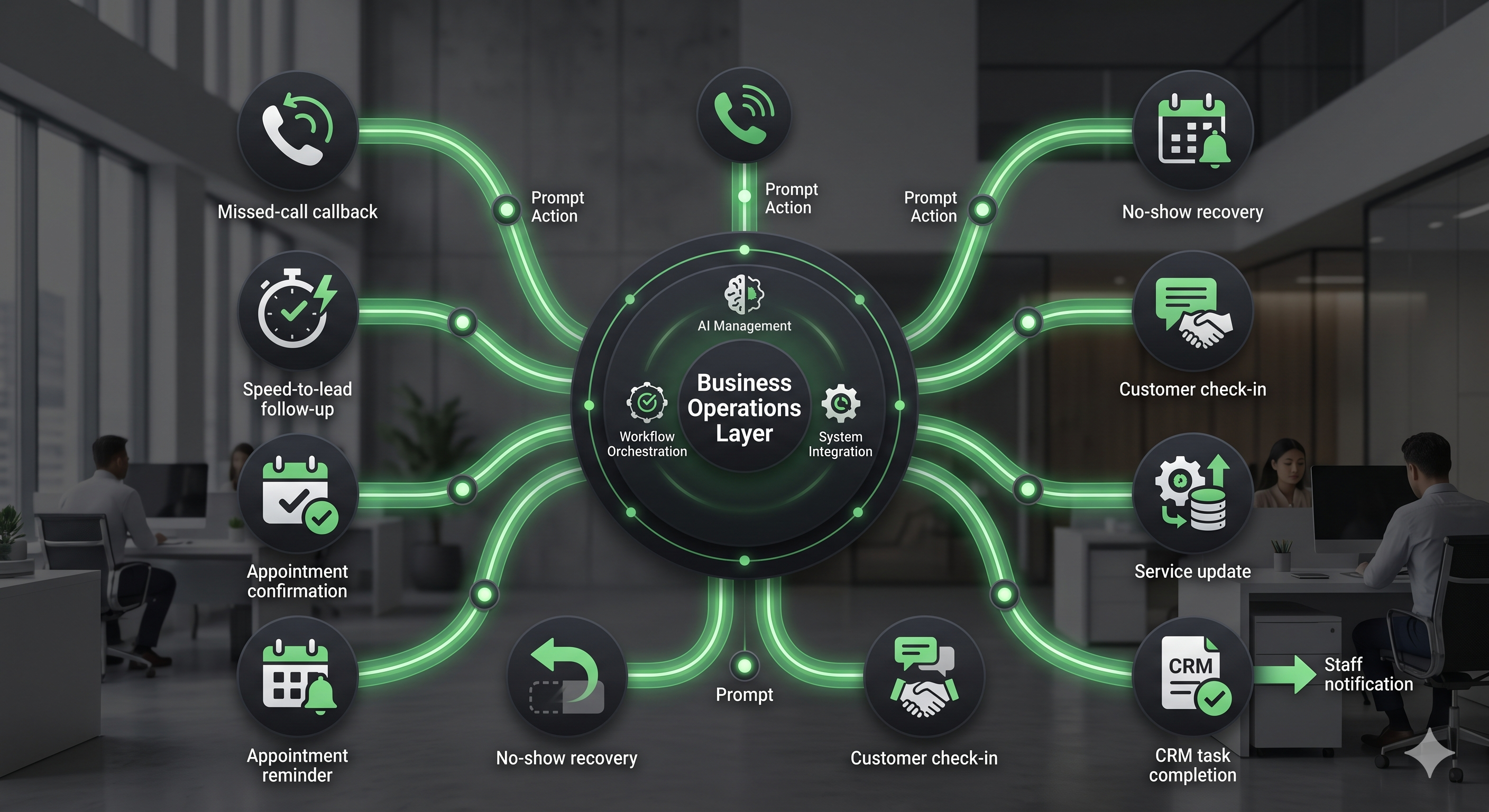
Peak Demand positions outbound Voice AI around useful follow-up, recovery, reminders, confirmations, and customer engagement workflows, not generic cold calling.
Outbound Voice AI helps teams follow up before opportunities go cold.
When inbound demand, booking requests, missed calls, lead inquiries, support needs, or appointment workflows create follow-up tasks, outbound Voice AI can help move those tasks forward quickly and consistently.
Missed-call callbacks
Call back missed callers, collect context, identify urgency, create summaries, and route next steps to staff or systems.
Speed-to-lead follow-up
Respond quickly to new inquiries, qualify interest, collect details, route high-intent leads, and update CRM records.
Appointment reminders
Deliver reminder calls, confirm attendance, collect reschedule needs, update records, and reduce manual reminder work.
Confirmation calls
Confirm appointments, service windows, consultations, orders, visits, callbacks, or scheduled conversations.
Customer check-ins
Support service updates, post-visit check-ins, satisfaction calls, renewal reminders, and structured follow-up programs.
CRM task completion
Trigger calls from CRM stages, task queues, booking statuses, lead lists, reminder schedules, or reactivation segments.
Outbound Voice AI can recover missed opportunities and keep workflows moving.
Peak Demand designs outbound call sequences around specific operational outcomes: confirmed appointments, rescheduled visits, completed callbacks, reactivated leads, recovered no-shows, updated records, and clean staff handoffs.
- No-show recovery calls can help reschedule missed appointments or route exceptions to staff.
- Reactivation calls can reach older leads, past customers, inactive patients, lapsed contacts, or dormant opportunities.
- Reminder and confirmation calls can reduce manual staff work and improve attendance visibility.
- Callback workflows can prioritize high-intent, urgent, or recently missed callers.
- Call outcomes can create CRM updates, booking notes, summaries, tasks, or escalation records.
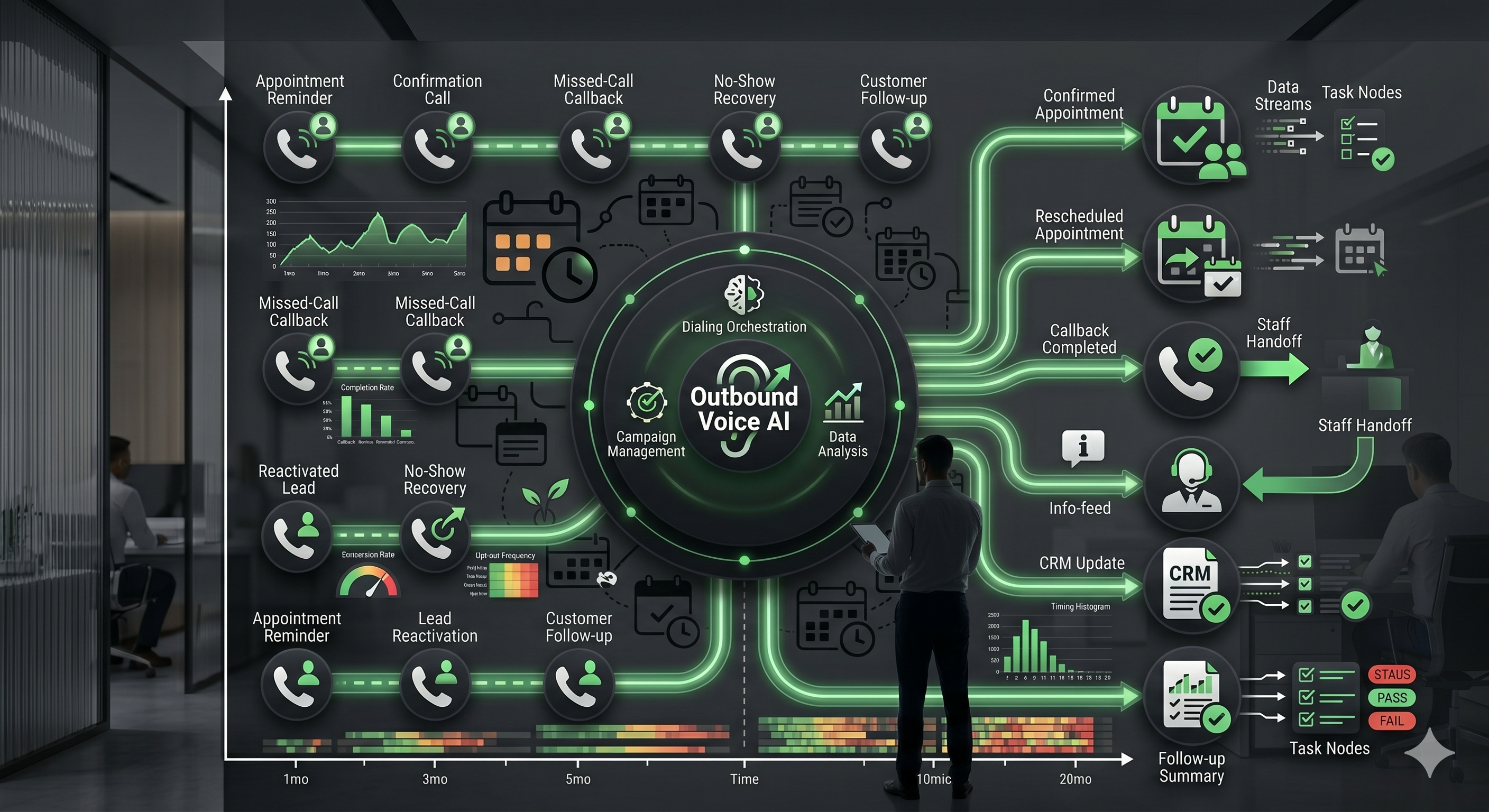
Call at the right time
Use schedule-based triggers, CRM stages, booking events, reminder windows, and recovery timing rules.
Collect the right response
Confirm, reschedule, qualify, update, route, summarize, or hand off based on caller response.
Update the workflow
Push outcomes into CRMs, booking systems, task lists, dashboards, notifications, or staff review queues.
Outbound workflows are strongest when they connect to your CRM, booking, and reporting systems.
Peak Demand can design outbound Voice AI workflows that trigger from CRM stages, booking statuses, missed-call events, lead lists, reminder schedules, support workflows, spreadsheets, databases, dashboards, and custom systems.
The right integration path depends on system access, API permissions, data fields, calling rules, timing requirements, opt-out handling, routing logic, and reporting needs. Some workflows can be automated directly, while others should use approval queues or staff-reviewed outbound lists.
For a broader system-by-system breakdown, explore Peak Demand’s Voice AI API integrations hub.
Outbound Voice AI needs visibility, QA, and compliance-aware controls.
Peak Demand manages outbound Voice AI after launch so teams can see call attempts, connected calls, completed callbacks, reminders delivered, confirmations, reactivation outcomes, opt-outs, escalations, CRM updates, failed workflows, and QA findings.
Attempt reporting
Track call attempts, connected calls, callbacks, reminders, confirmations, reattempts, and timing patterns.
Outcome tracking
See confirmed appointments, recovered no-shows, reactivated leads, completed callbacks, CRM updates, and handoffs.
Call quality review
Review caller responses, weak scripts, failed handoffs, escalation patterns, opt-out handling, and workflow friction.
Workflow tuning
Update call timing, prompts, retry logic, qualification paths, CRM mappings, summaries, and escalation rules.
Peak Demand uses call data, QA findings, staff feedback, system performance, and workflow outcomes to improve outbound Voice AI over time.
Outbound Voice AI should operate within clear rules.
Peak Demand designs outbound Voice AI workflows around approved call purposes, customer context, timing rules, opt-out handling, escalation paths, system records, reporting visibility, and human control.
Approved call purposes
Define the outbound use cases, caller context, workflow trigger, message boundaries, and allowed outcomes.
Opt-out and escalation handling
Design clear rules for opt-outs, do-not-call preferences, confused callers, sensitive responses, and staff handoff.
Operational control
Use reporting, QA, approval queues, call logs, CRM outcomes, and staff feedback to keep workflows aligned.
Questions teams ask before launching outbound Voice AI.
These answers are written for owners, operators, executives, call center leaders, intake teams, support teams, healthcare groups, legal intake teams, service companies, and multi-location organizations evaluating managed outbound Voice AI.
What are managed outbound Voice AI services?
How is outbound Voice AI different from cold calling?
Who should use managed outbound Voice AI?
Can outbound Voice AI call missed leads or missed callers?
Can outbound Voice AI handle appointment reminders and confirmations?
Can outbound Voice AI help with no-show recovery?
Can outbound Voice AI support reactivation campaigns?
Can outbound Voice AI update our CRM or booking system?
How does reporting work for outbound Voice AI?
How does QA work after launch?
Can outbound Voice AI handle opt-outs?
What happens when the AI should not continue the call?
Can outbound Voice AI support multiple locations or departments?
Can outbound Voice AI support healthcare, legal, real estate, home services, hospitality, and enterprise teams?
What should we bring to a discovery call?
Need outbound follow-up handled with real workflow logic?
Peak Demand designs, launches, connects, monitors, reports on, and improves outbound Voice AI services for follow-up calls, reminders, confirmations, callbacks, no-show recovery, reactivation, CRM updates, call summaries, reporting, QA, and ongoing optimization.
This is strongest when your team needs faster callbacks, cleaner reminders, better confirmation rates, no-show recovery, reactivation, CRM updates, and measurable outbound workflow outcomes.
Peak Demand manages outbound Voice AI as an operating layer, not a generic autodialer.
Explore your own AI use case on a discovery call.