
Voice AI for Home Service Companies: AI Receptionists, Scheduling Automation, Dispatch Coordination, and After-Hours Call Handling

Home service businesses rely heavily on phone calls to generate new jobs, schedule service visits, and dispatch technicians to customer locations.
When technicians are in the field and office staff are busy coordinating schedules, incoming calls can go unanswered. Missed calls often result in lost revenue, delayed service bookings, and frustrated customers who contact competing providers.
Traditional voicemail systems and third-party answering services frequently fail to capture complete service details, route emergency requests correctly, or provide customers with accurate scheduling options. During peak demand periods—such as extreme weather events or seasonal service surges—call volumes can quickly exceed what office staff can manage.
Voice AI communication systems can support home service businesses by answering inbound calls, collecting service request details, scheduling appointments, coordinating technician dispatch, and handling after-hours emergency calls.
For contractors operating HVAC, plumbing, electrical, pest control, restoration, and other field service businesses, reliable call handling infrastructure is essential for capturing service opportunities and maintaining responsive customer communication.
Peak Demand designs Voice AI systems that support service call intake, appointment scheduling, technician dispatch workflows, and after-hours service requests while maintaining operational oversight for service businesses.
Voice AI for Home Service Call Intake & Customer Access
Home service companies depend on fast, reliable phone communication to capture new jobs, schedule service visits, and respond to urgent customer needs. In industries such as HVAC, plumbing, electrical, pest control, restoration, and garage door repair, many inbound leads still arrive by phone rather than web form or email.
Managing those calls consistently can be difficult when technicians are in the field, dispatch teams are overloaded, and office staff are balancing scheduling, routing, and customer follow-up at the same time. During peak seasons, after-hours periods, or weather-driven service surges, missed calls can translate directly into lost bookings, delayed response times, and revenue leakage.
Voice AI can support home service communication by handling structured customer intake, appointment scheduling requests, emergency triage routing, and after-hours call capture while preserving human escalation pathways for high-value jobs, urgent service situations, and complex dispatch decisions.
Common Home Services Call Types
- New customer service requests and quote inquiries
- Appointment scheduling and rescheduling
- Emergency repair calls outside normal business hours
- Technician arrival window and dispatch status questions
- Service area, pricing, and availability inquiries
Operational Safeguards
- Structured intake routing: predefined workflows for job type, urgency, and location
- Human escalation: urgent, high-value, or exception-based calls routed to staff
- After-hours continuity: calls answered when office teams are offline
- Dispatch visibility: captured call details support technician coordination
- Policy-aligned responses: approved scripts, boundaries, and service-area rules
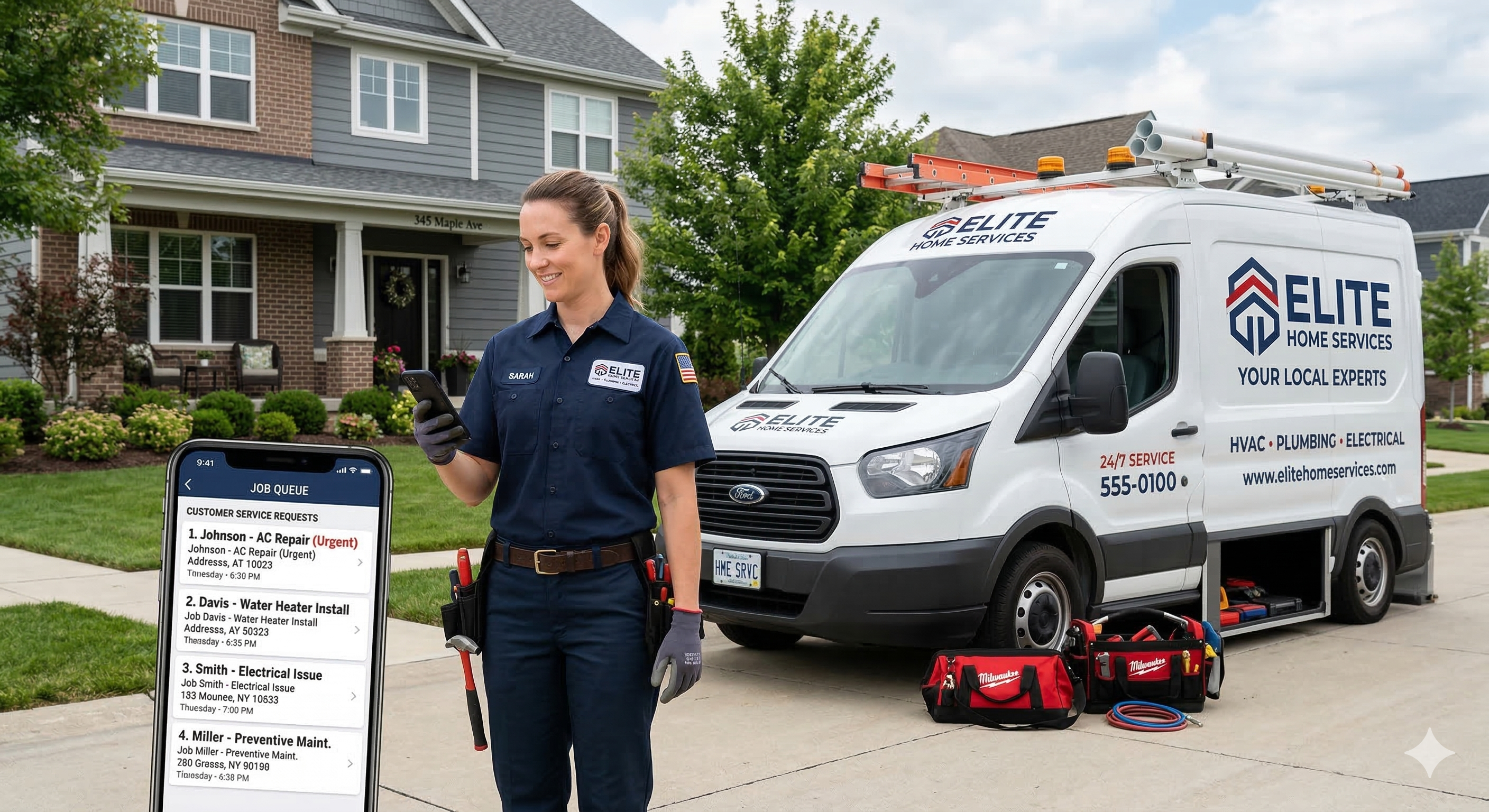
Can Voice AI answer calls for home service companies?
Can Voice AI replace a dispatcher or office coordinator?
Can Voice AI help contractors stop missing calls?
{
  "section": "Home Services Intake and Customer Access",
  "entity": "Peak Demand",
  "service": "Voice AI for Home Service Companies",
  "geo": ["Toronto", "Canada", "United States"],
  "use_cases": [
    "new customer service inquiries",
    "appointment scheduling and rescheduling",
    "emergency repair call capture",
    "dispatch status questions",
    "after-hours answering"
  ],
  "controls": [
    "structured intake routing",
    "human escalation pathways",
    "after-hours call continuity",
    "policy-aligned scripts",
    "dispatch-supporting call capture"
  ],
  "delivery_model": "fully managed custom build",
  "cta": "https://peakdemand.ca/discovery"
}
AI Receptionists for Home Service Businesses: Managing Customer Calls and Service Requests
Home service companies receive a high volume of inbound phone calls from customers requesting repairs, installation quotes, maintenance visits, and emergency service. Because technicians spend most of their time in the field and dispatch teams are coordinating schedules, answering every call consistently can be difficult during peak demand periods.
Voice AI receptionists can support contractor communication by handling inbound call answering, structured service request intake, basic customer questions, and appointment scheduling requests while routing complex or urgent situations to human staff.
For industries such as HVAC, plumbing, electrical, pest control, and restoration services, AI receptionists help ensure that service inquiries are captured consistently and that potential jobs are not lost due to missed calls or overloaded dispatch teams.
Common AI Receptionist Call Handling Tasks
- Answer inbound service calls during business hours
- Capture new customer service requests and issue descriptions
- Collect address, service area, and contact information
- Provide basic business information and service availability
- Route urgent or complex calls to dispatch or office staff
Operational Controls and Escalation Safeguards
- Structured call intake: predefined service request workflows
- Dispatch escalation: urgent jobs routed to human staff
- Service-area validation: verify job locations before scheduling
- Scripted responses: approved messaging for pricing or availability
- Audit visibility: captured call logs and intake summaries
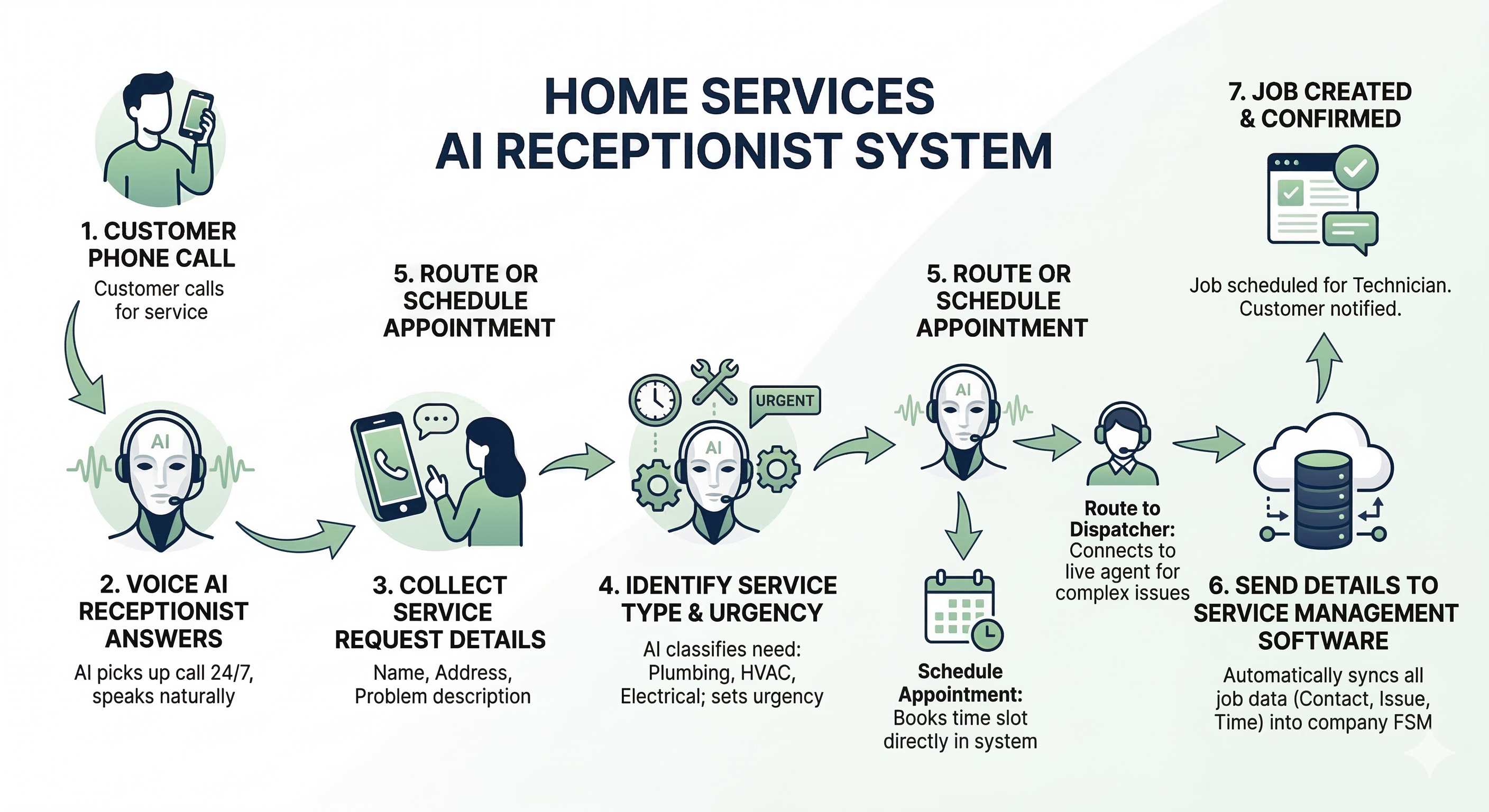
Can AI answer calls for contractors and home service companies?
Can an AI receptionist schedule service appointments?
Will AI replace front desk staff for contractors?
{
  "section": "AI Receptionists for Home Service Businesses",
  "entity": "Peak Demand",
  "service": "Voice AI receptionist for contractors",
  "industries": [
    "HVAC",
    "plumbing",
    "electrical",
    "pest control",
    "restoration",
    "garage door",
    "locksmith",
    "landscaping"
  ],
  "use_cases": [
    "answering service calls",
    "service request intake",
    "customer information capture",
    "basic business information",
    "call routing and escalation"
  ],
  "controls": [
    "structured call workflows",
    "dispatch escalation pathways",
    "service-area validation",
    "approved messaging scripts",
    "call logging and audit visibility"
  ],
  "delivery_model": "fully managed custom build",
  "cta": "https://peakdemand.ca/discovery"
}
Voice AI Scheduling for Home Service Appointments
Appointment scheduling is one of the most operationally important communication workflows in home services. Customers call to request same-day repairs, book maintenance visits, confirm installation estimates, or reschedule existing appointments. For field service businesses, these calls must be handled quickly and consistently because scheduling delays often lead directly to lost jobs or underutilized technician capacity.
Voice AI can support scheduling operations by managing structured service booking workflows, customer information capture, preferred time window collection, and appointment request routing into contractor scheduling systems while preserving human review and exception handling where needed.
For HVAC companies, plumbers, electricians, pest control operators, restoration teams, and other service businesses, scheduling is not just calendar management. It is a revenue workflow tied to technician availability, geography, service urgency, travel time, and job type. Voice AI systems can help standardize intake at the point of booking so that dispatch and office teams receive consistent information before a job is assigned.
Common Scheduling Tasks in Home Services
- Booking new service appointments for residential or commercial customers
- Capturing address, property type, and service issue details
- Collecting customer-preferred time windows and callback information
- Rescheduling or confirming existing appointments
- Routing urgent same-day requests into dispatch review workflows
Scheduling Controls and Workflow Safeguards
- Structured booking intake: standardized steps for capturing job details
- Availability alignment: requests matched against scheduling rules or office review
- Service-area screening: verify location before booking or escalation
- Urgency flagging: emergency or same-day needs routed differently from routine jobs
- Platform handoff: scheduling data passed into systems such as ServiceTitan, Jobber, or Housecall Pro
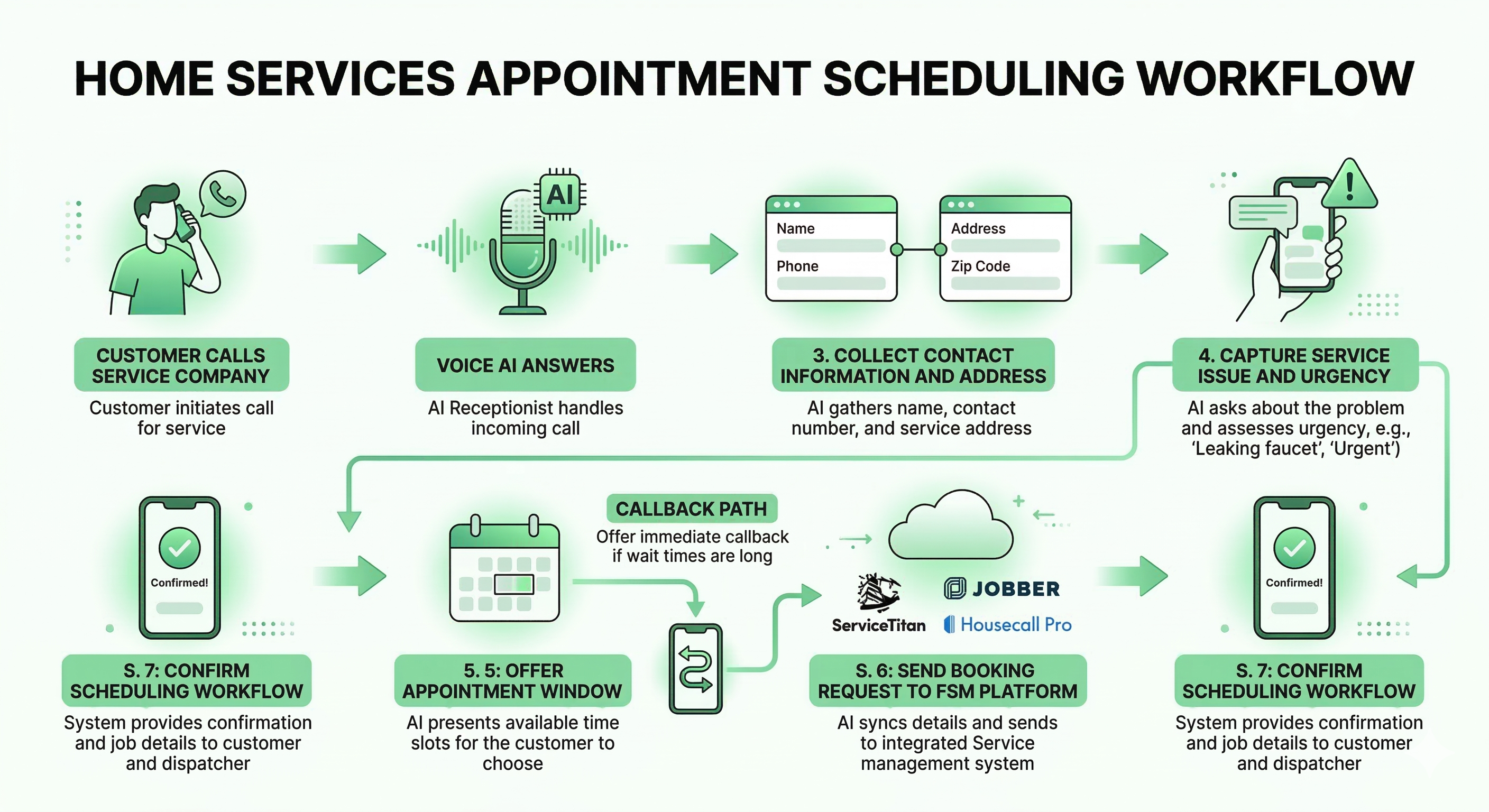
Can Voice AI schedule appointments for home service companies?
Can AI handle appointment rescheduling for contractors?
Can Voice AI book emergency same-day service?
{
  "section": "Scheduling Service Appointments",
  "entity": "Peak Demand",
  "service": "Voice AI scheduling for home service companies",
  "industries": [
    "HVAC",
    "plumbing",
    "electrical",
    "pest control",
    "restoration",
    "garage door",
    "locksmith",
    "landscaping"
  ],
  "use_cases": [
    "new service appointment booking",
    "address and issue intake",
    "preferred time window capture",
    "appointment confirmation and rescheduling",
    "urgent same-day request routing"
  ],
  "controls": [
    "structured booking workflows",
    "availability alignment",
    "service-area validation",
    "urgency-based routing",
    "service platform handoff"
  ],
  "software_context": [
    "ServiceTitan",
    "Jobber",
    "Housecall Pro"
  ],
  "delivery_model": "fully managed custom build",
  "cta": "https://peakdemand.ca/discovery"
}
Voice AI Dispatch Coordination for Field Service Teams
Dispatch coordination is one of the most operationally sensitive workflows in home services. Once a customer call is answered and service details are collected, the business must determine how quickly the request should be handled, which technician or crew is appropriate, whether the address is within service area, and how the visit fits into the existing schedule.
In many field service businesses, dispatch teams are already balancing live technician availability, route density, emergency interruptions, job duration uncertainty, and customer time-window expectations. When inbound call volume rises, office teams can become overloaded, which increases the risk of delayed responses, incomplete job intake, and inefficient technician routing.
Voice AI can support dispatch workflows by handling structured service request capture, urgency identification, dispatch-supporting intake, and escalation routing so office teams receive consistent operational information before assigning a technician. The goal is not to replace dispatch judgment. It is to improve intake quality, reduce communication bottlenecks, and preserve human oversight where operational decisions matter most.
Common Dispatch Coordination Tasks
- Capturing job type, issue severity, and customer location
- Identifying whether the request is routine, urgent, or emergency service
- Routing same-day service requests into dispatcher review queues
- Providing technicians with complete intake notes before arrival
- Coordinating appointment windows, arrival expectations, and priority changes
Dispatch Controls and Operational Safeguards
- Urgency classification: emergency and routine calls separated by workflow rules
- Human dispatch authority: final technician assignment remains with staff
- Structured field notes: captured service details handed off consistently
- Service-area validation: out-of-area requests filtered before assignment
- Audit visibility: dispatch-supporting call records and escalation tracking
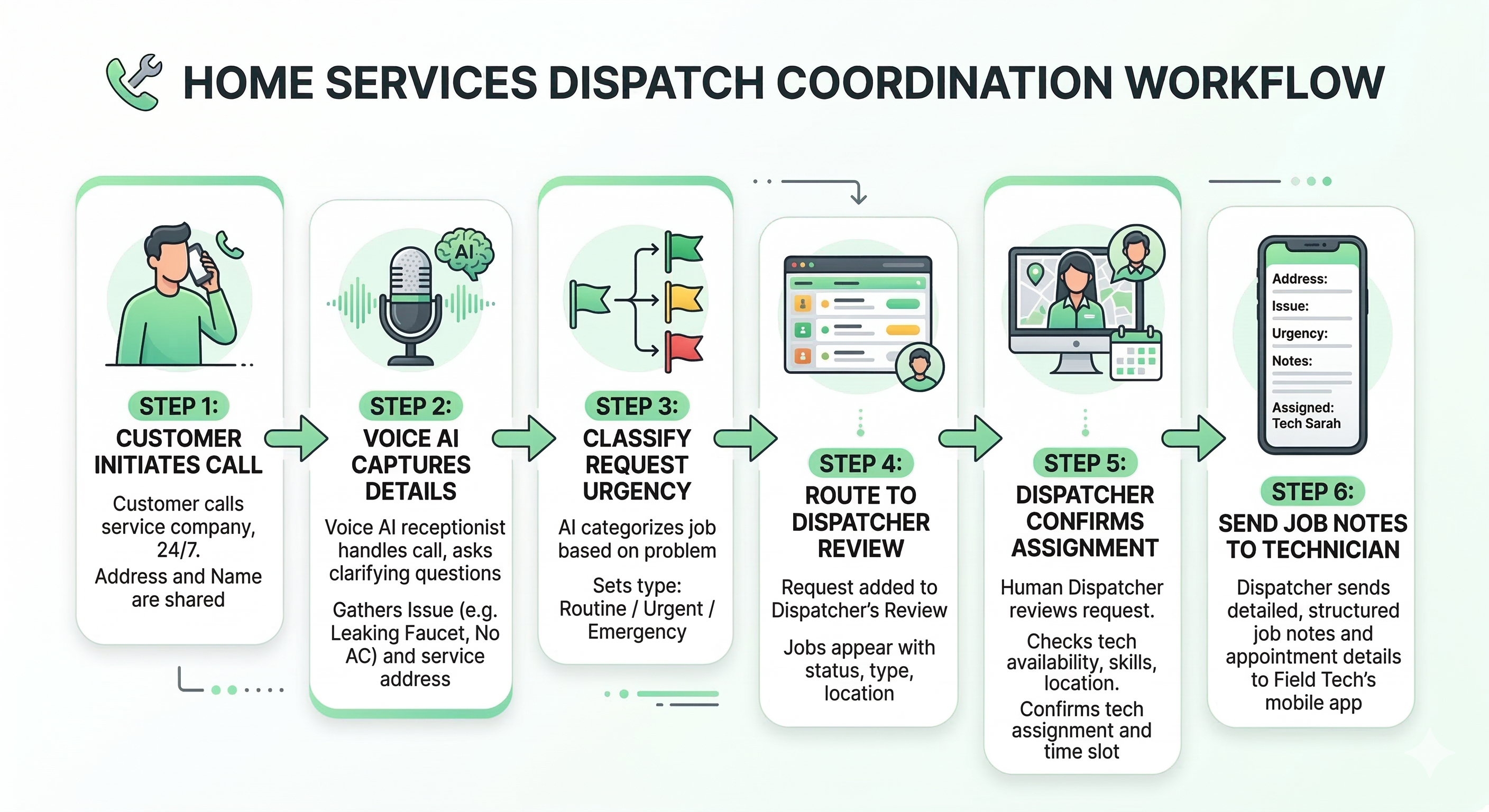
Can Voice AI dispatch technicians for home service companies?
Can AI determine whether a service call is urgent?
Does Voice AI replace dispatch teams?
{
  "section": "Dispatch Coordination for Field Service Teams",
  "entity": "Peak Demand",
  "service": "Voice AI dispatch support for home service companies",
  "industries": [
    "HVAC",
    "plumbing",
    "electrical",
    "pest control",
    "restoration",
    "garage door",
    "locksmith",
    "landscaping"
  ],
  "use_cases": [
    "service request capture",
    "urgency identification",
    "dispatch review routing",
    "technician note handoff",
    "same-day service escalation"
  ],
  "controls": [
    "urgency classification logic",
    "human dispatch authority",
    "structured intake notes",
    "service-area validation",
    "audit visibility"
  ],
  "delivery_model": "fully managed custom build",
  "cta": "https://peakdemand.ca/discovery"
}
Voice AI Emergency Call Handling for Home Service Companies
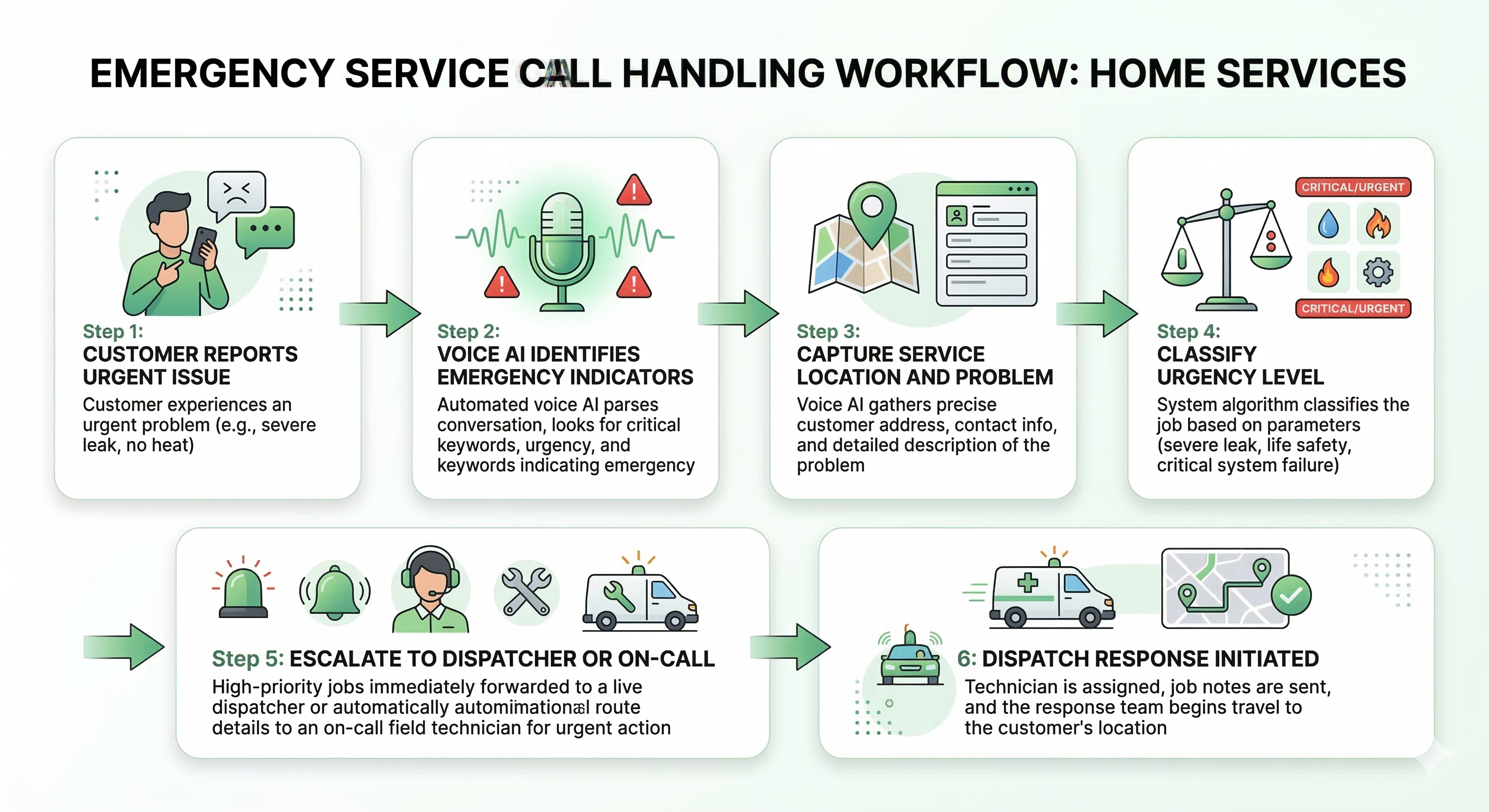
Many home service companies operate in industries where customers call during urgent or stressful situations. A broken furnace during winter, a burst pipe flooding a basement, or a failed electrical panel can require immediate attention. When these calls are missed or delayed, customers often contact competing providers.
Emergency service requests require fast intake, clear information capture, and rapid routing to the appropriate operational workflow. Voice AI systems can support this process by identifying high-priority service conditions, capturing essential problem details, and escalating urgent calls into dispatcher or technician review pathways.
For home service businesses, the goal of emergency call automation is not to replace operational judgment. Instead, it ensures that urgent calls are recognized immediately, structured intake information is collected, and dispatch teams receive consistent details before responding to the situation.
Common Emergency Call Types
- Heating system failure during cold weather
- Air conditioning outages during extreme heat
- Burst pipes, leaks, or active water damage
- Electrical hazards or power disruptions
- Security or access emergencies such as lockouts
Emergency Intake Controls and Safeguards
- Urgency classification logic: identify high-risk scenarios quickly
- Immediate escalation pathways: urgent calls routed to human staff
- Structured issue capture: collect essential details before dispatch
- Customer reassurance messaging: confirm the request is being handled
- Dispatch-ready intake notes: provide technicians with problem summaries
Can Voice AI identify emergency repair calls?
Can AI respond to customers during an emergency call?
Does emergency call automation replace technicians or dispatchers?
{
  "section": "Emergency Service Call Handling",
  "entity": "Peak Demand",
  "service": "Voice AI emergency intake for home service companies",
  "industries": [
    "HVAC",
    "plumbing",
    "electrical",
    "pest control",
    "restoration",
    "locksmith",
    "garage door"
  ],
  "use_cases": [
    "urgent repair request intake",
    "heating and cooling emergencies",
    "water leak and plumbing emergencies",
    "electrical hazard calls",
    "after-hours urgent service escalation"
  ],
  "controls": [
    "urgency classification logic",
    "human escalation pathways",
    "structured emergency intake",
    "dispatcher notification",
    "audit visibility"
  ],
  "delivery_model": "fully managed custom build",
  "cta": "https://peakdemand.ca/discovery"
}
Voice AI After-Hours Call Handling for Home Service Companies
Home service companies frequently receive calls outside standard business hours. Customers may contact contractors during evenings, weekends, or holidays when urgent service problems occur or when they finally have time to address maintenance issues at home.
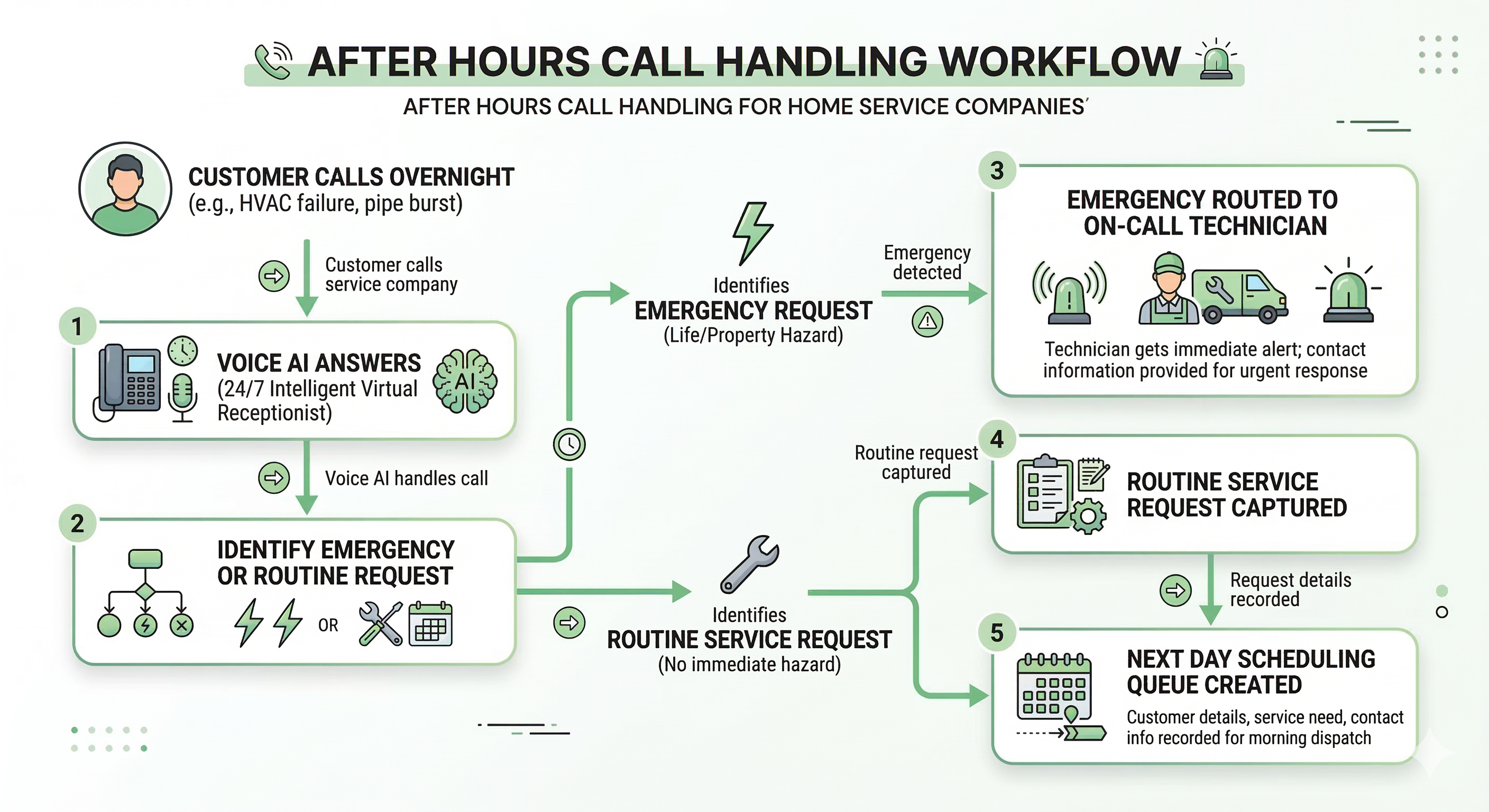
Traditional voicemail systems often result in lost opportunities because customers facing urgent problems rarely leave messages. Instead, they call another provider who answers immediately. Voice AI can support after-hours customer communication by answering calls, capturing service requests, identifying emergencies, and routing urgent issues to on-call teams.
For many contractors, after-hours call coverage represents one of the largest sources of missed revenue. Voice AI systems help ensure that service inquiries are captured consistently even when office teams are offline, while maintaining escalation pathways for emergencies that require immediate human response.
Common After-Hours Call Types
- Emergency heating or cooling failures overnight
- Plumbing leaks discovered during evenings
- Electrical outages or safety concerns
- Customers requesting next-day appointments
- General service inquiries outside office hours
After-Hours Communication Safeguards
- Emergency escalation: urgent calls routed to on-call technicians
- Structured intake capture: customer details recorded consistently
- Callback scheduling: non-urgent requests queued for next-day response
- Service-area validation: confirm location before dispatch escalation
- Audit logging: full call records for operational review
Can Voice AI answer contractor calls overnight?
Can Voice AI identify emergency calls after hours?
What happens to non-urgent calls overnight?
{
  "section": "After Hours Call Handling for Home Service Companies",
  "entity": "Peak Demand",
  "service": "Voice AI after hours answering for contractors",
  "industries": [
    "HVAC",
    "plumbing",
    "electrical",
    "pest control",
    "restoration",
    "locksmith",
    "garage door"
  ],
  "use_cases": [
    "after hours answering",
    "overnight emergency intake",
    "service request capture",
    "on call technician escalation",
    "next day callback scheduling"
  ],
  "controls": [
    "emergency escalation logic",
    "structured call capture",
    "service area validation",
    "after hours routing rules",
    "audit logging"
  ],
  "delivery_model": "fully managed custom build",
  "cta": "https://peakdemand.ca/discovery"
}
Voice AI Integration with Home Service Management Platforms
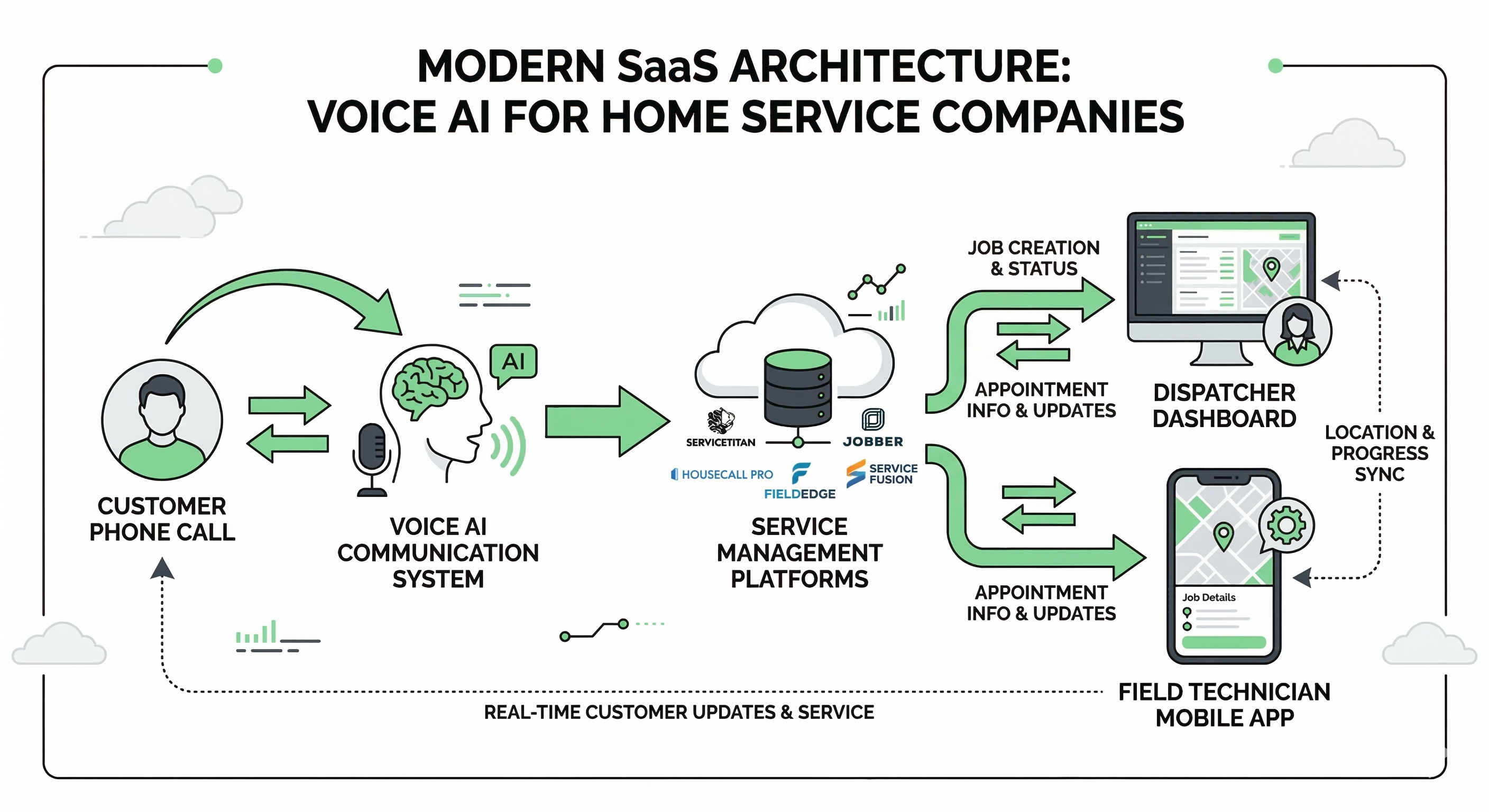
Most home service companies rely on field service management platforms to operate their business. These systems manage scheduling, dispatch coordination, technician routing, customer records, service histories, and invoicing. Voice AI communication systems can integrate directly with these platforms so that customer calls translate into structured operational data within the contractor’s existing workflow infrastructure.
Instead of relying on voicemail or incomplete call notes, Voice AI systems can capture service requests, identify job types, collect service addresses, and route structured intake data into contractor platforms. This allows dispatch teams and technicians to immediately see customer requests inside their operational dashboards.
Integration also allows service businesses to maintain their existing operational systems while improving communication efficiency. Voice AI becomes a layer that supports inbound call handling, service request intake, and appointment scheduling without disrupting the contractor's core software environment.
Major Home Service Management Platforms
- ServiceTitan — widely used by HVAC, plumbing, and electrical contractors for dispatch, scheduling, CRM management, and technician tracking.
- Jobber — field service management platform used by landscaping, cleaning, pest control, and maintenance businesses.
- Housecall Pro — contractor platform supporting scheduling, dispatch coordination, and mobile technician workflows.
- FieldEdge — service management software commonly used by HVAC and appliance repair companies for scheduling and field coordination.
- Service Fusion — contractor software platform supporting dispatch, work order management, and customer communication.
Voice AI Integration Capabilities
- Customer contact capture: name, phone number, and service address intake
- Service request documentation: issue description and job type classification
- Appointment request creation: preferred service time windows
- Dispatch coordination support: structured job details for technician assignment
- Call summaries: technician-ready notes attached to service records
{
  "section": "Voice AI Integration with Home Service Platforms",
  "entity": "Peak Demand",
  "service": "Voice AI systems for contractor call automation",
  "platforms": [
    "ServiceTitan",
    "Jobber",
    "Housecall Pro",
    "FieldEdge",
    "Service Fusion"
  ],
  "capabilities": [
    "service request capture",
    "customer information intake",
    "appointment request routing",
    "dispatch coordination support",
    "technician call summaries"
  ],
  "industry_context": [
    "HVAC",
    "plumbing",
    "electrical",
    "pest control",
    "restoration",
    "locksmith",
    "garage door"
  ],
  "delivery_model": "fully managed custom Voice AI deployment",
  "cta": "https://peakdemand.ca/discovery"
}
ROI of Voice AI for Home Service Businesses: Reducing Missed Calls and Increasing Booked Jobs
For many home service companies, the majority of new service opportunities arrive by phone. When those calls go unanswered, potential customers often contact competing contractors who respond more quickly. As a result, missed calls frequently translate into lost jobs, lower technician utilization, and reduced revenue.
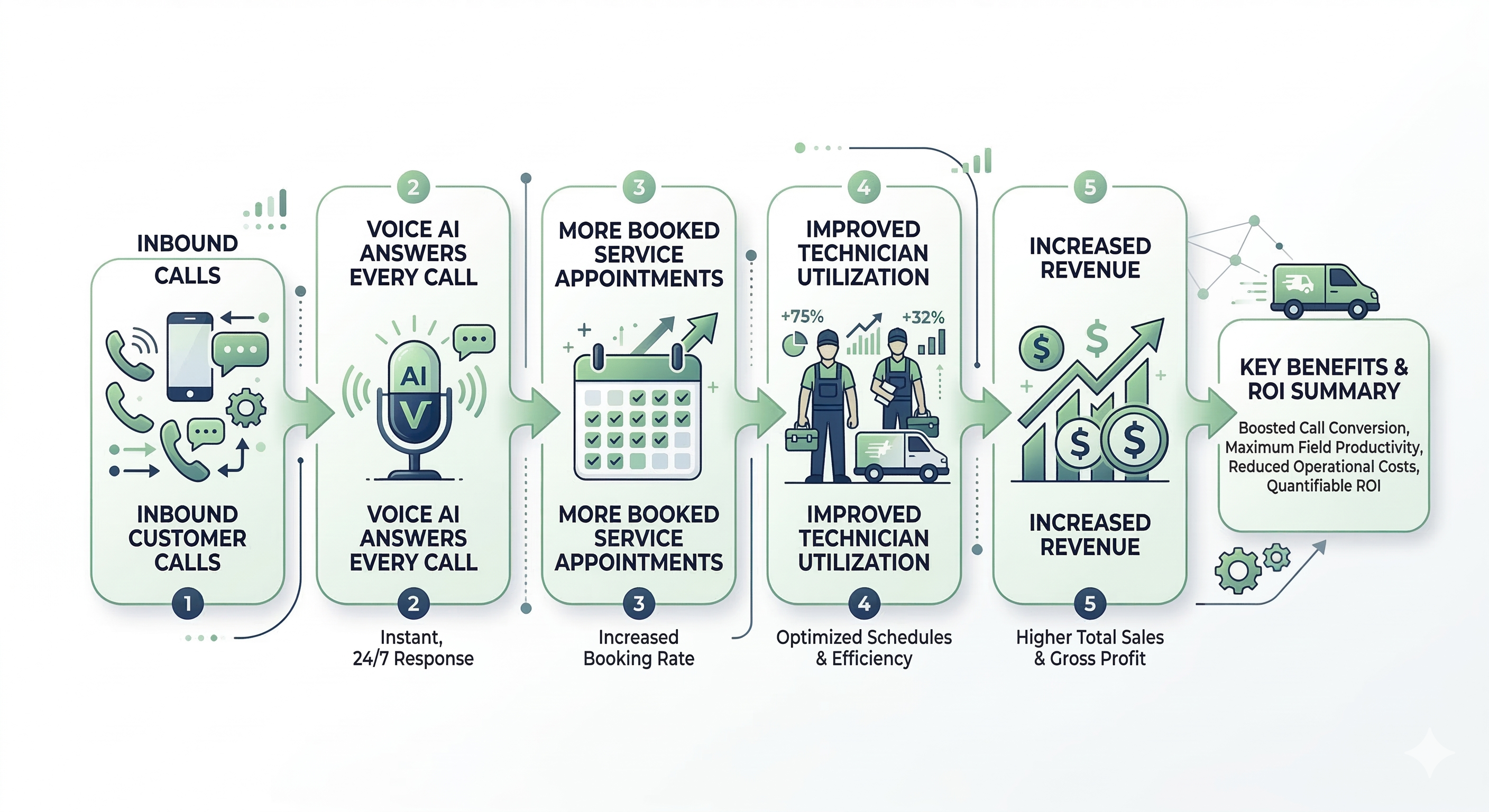
Voice AI systems help service businesses capture more inbound opportunities by ensuring that calls are answered consistently, even when technicians are in the field or office staff are handling other operational tasks. By improving call handling reliability, contractors can convert more inquiries into scheduled appointments.
In addition to reducing missed calls, Voice AI systems can also improve dispatch efficiency, intake consistency, and technician preparation by providing structured job information before service visits begin.
Revenue Impact Areas
- Missed call recovery: more inbound leads captured
- Higher booking rates: faster response to customer inquiries
- Improved technician utilization: better scheduling coordination
- Fewer abandoned inquiries: reduced voicemail reliance
- More consistent intake: clearer job details before dispatch
Operational Efficiency Improvements
- Reduced administrative workload: fewer manual call handling tasks
- Structured service requests: standardized intake information
- Faster dispatch decisions: clearer issue descriptions
- Improved customer response times: calls answered immediately
- Better technician preparation: detailed job notes before arrival
{
  "section": "ROI of Voice AI for Home Service Businesses",
  "entity": "Peak Demand",
  "service": "Voice AI communication automation",
  "benefits": [
    "missed call recovery",
    "increased service booking rates",
    "better technician utilization",
    "structured intake information",
    "reduced administrative workload"
  ],
  "industry_context": [
    "HVAC",
    "plumbing",
    "electrical",
    "pest control",
    "restoration",
    "garage door",
    "locksmith"
  ],
  "value_drivers": [
    "capturing inbound leads",
    "faster response times",
    "consistent appointment intake",
    "improved dispatch coordination"
  ],
  "delivery_model": "fully managed custom Voice AI deployment",
  "cta": "https://peakdemand.ca/discovery"
}
Voice AI for Home Service Industries
Different home service industries face similar communication challenges: high call volumes, technicians working in the field, emergency service requests, and scheduling complexity. Voice AI systems can support contractors by answering calls, capturing service requests, and routing inquiries into scheduling and dispatch workflows.
Peak Demand designs Voice AI communication systems tailored to the operational workflows of specific service industries, ensuring that intake logic, escalation rules, and scheduling processes match how each trade operates.
{
  "section": "Voice AI by Home Service Industry",
  "entity": "Peak Demand",
  "service": "Voice AI for home service businesses",
  "industries_supported": [
    "HVAC",
    "plumbing",
    "electrical",
    "pest control",
    "roofing",
    "restoration",
    "locksmith",
    "garage door",
    "landscaping",
    "pool service",
    "appliance repair",
    "cleaning services"
  ],
  "core_use_cases": [
    "AI call answering",
    "service request intake",
    "appointment scheduling",
    "dispatch coordination",
    "after hours call handling"
  ],
  "delivery_model": "fully managed custom Voice AI systems",
  "cta": "https://peakdemand.ca/discovery"
}
Modernize Home Service Call Handling with Voice AI — With Clear Operational Controls
If your business is missing calls, struggling with after-hours service requests, or dealing with scheduling and dispatch bottlenecks, we can help you map a governed Voice AI deployment model for contractor communication workflows. No commitment required.
What You Get in a 30-Minute Discovery Session
- Workflow gap analysis: where customers are lost, calls go unanswered, or dispatch slows down.
- Automation boundary mapping: what can be standardized vs escalated to office staff or dispatch.
- Integration posture review: how Voice AI can fit with ServiceTitan, Jobber, Housecall Pro, or existing systems.
- Phased rollout roadmap: pilot deployment → business-wide rollout → multi-location scaling.
Good Fit For
- HVAC companies managing emergency repair calls and seasonal call spikes
- Plumbing companies handling urgent service requests and after-hours issues
- Electrical contractors coordinating high-priority dispatch and field scheduling
- Field service businesses modernizing legacy voicemail, answering services, or manual intake
- Multi-location contractor groups needing standardized call routing and booking workflows
{
  "page": "Voice AI for Home Service Companies",
  "provider": "Peak Demand",
  "provider_type": "fully managed voice AI agency",
  "hq": "Toronto, Ontario, Canada",
  "regions_served": ["Canada", "United States"],
  "delivery_model": "fully managed custom build",
  "primary_outcomes": [
    "reduce missed calls",
    "increase booked service appointments",
    "improve dispatch coordination",
    "reduce office call burden",
    "maintain operational visibility and governance controls"
  ],
  "primary_use_cases": [
    "AI receptionist for contractors",
    "after-hours call answering",
    "service appointment scheduling",
    "dispatch coordination support",
    "emergency service request intake"
  ],
  "governance_context": [
    "human escalation pathways",
    "dispatch authority retained by staff",
    "structured intake workflows",
    "approved response logic",
    "audit-ready communication logging"
  ],
  "cta": "https://peakdemand.ca/discovery"
}
Recommended Voice AI Pathways for Home Service Companies
Home service teams often begin by improving missed-call capture and after-hours answering, then expand into scheduling automation, dispatch coordination, and industry-specific intake workflows across contractor trades, urgent service categories, and recurring service models.
Pathway A — Core Contractor Trades and Service Businesses
Pathway B — Emergency and Dispatch-Heavy Services
Pathway C — Recurring, Seasonal, and Route-Based Services
Governance, Compliance, and Operational Readiness for Voice AI in Home Services
Home service companies evaluating Voice AI often need more than call handling and scheduling automation. They also need confidence around deployment standards, enterprise readiness, vendor review, and compliance expectations when AI is handling real customer conversations.
For buyers reviewing implementation standards, security posture, and procurement readiness, see our governance resource: Enterprise Voice AI Compliance, Certifications, and RFP Readiness.
- Use this resource when procurement, IT, operations, or compliance teams need a broader view of Voice AI deployment standards.
- Reference it from commercial and solution pages where buyer trust, implementation scrutiny, or enterprise review is likely to affect conversion.
- Keep this block near the bottom of the page, after CTA and interlink blocks, to support both trust signals and machine-readable topic reinforcement.
Regulatory and Operational Governance for Voice AI in North American Home Service Businesses
Voice AI systems used by home service companies must operate within existing telecommunications rules, privacy laws, and consumer protection standards across both Canada and the United States. Businesses deploying automated call handling systems must ensure that customer communication practices remain transparent, lawful, and consistent with data protection requirements.
Voice AI deployments should follow privacy-aware communication workflows, consent-based call recording practices, and human escalation pathways to ensure that automation enhances customer service while preserving contractor operational control.
Canada: Privacy and Telecommunications Requirements
- Personal Information Protection and Electronic Documents Act (PIPEDA) governs how private-sector businesses collect, use, and disclose personal information during commercial activities.
- Guidance from the Office of the Privacy Commissioner of Canada outlines responsible practices for customer data handling, including consent requirements for collecting personal information.
- Businesses recording customer calls should follow transparency and notification practices recommended by the Privacy Commissioner’s guidance on call monitoring and recording .
- Telecommunications services and automated communication systems are regulated under the Canadian Radio-television and Telecommunications Commission (CRTC) , which oversees consumer communication protections.
United States: Federal Communication and Privacy Laws
- The Telephone Consumer Protection Act (TCPA) regulates automated calling systems, including consent requirements for certain types of automated outreach.
- Oversight by the Federal Communications Commission (FCC) establishes rules governing telecommunications systems and automated communication technologies.
- The Federal Trade Commission (FTC) enforces consumer protection standards, including deceptive communication practices.
- Many U.S. states enforce two-party consent laws for call recording , requiring businesses to notify callers when conversations may be recorded.
For home service companies operating across North America, responsible Voice AI deployments should ensure that automated call handling systems clearly disclose recording practices, capture customer information only when necessary for service delivery, and maintain secure handling of communication data.
Peak Demand designs Voice AI communication systems that support structured intake workflows, human escalation controls, and audit-ready communication logs so contractors can modernize their call handling infrastructure while maintaining responsible governance over customer communications.
{
  "section": "Voice AI Governance and Regulatory Context",
  "entity": "Peak Demand",
  "service": "Voice AI communication systems for home service companies",
  "regions": ["Canada", "United States"],
  "regulatory_frameworks": [
    "PIPEDA (Canada)",
    "CRTC telecommunications oversight",
    "TCPA (United States)",
    "FCC telecommunications regulations",
    "FTC consumer protection rules",
    "state call recording consent laws"
  ],
  "governance_controls": [
    "human escalation pathways",
    "dispatch authority retained",
    "transparent call handling disclosure",
    "structured service intake workflows",
    "communication audit logging"
  ],
  "delivery_model": "fully managed custom Voice AI deployment",
  "cta": "https://peakdemand.ca/discovery"
}
Voice AI FAQ for Home Service Companies
Home service businesses often explore Voice AI systems when they begin missing calls, experiencing dispatch overload, or struggling to manage after-hours service requests. The questions below address common concerns contractors have when evaluating AI call answering and communication automation technologies.
Can Voice AI answer calls for contractors?
How do contractors stop missing customer calls?
Can AI schedule home service appointments?
Can Voice AI dispatch technicians?
What does an AI receptionist do for HVAC or plumbing companies?
Can Voice AI answer contractor calls after hours?
Does Voice AI replace dispatchers or office staff?
What industries use Voice AI for service call automation?
{
  "section": "Voice AI FAQ for Home Service Companies",
  "entity": "Peak Demand",
  "service": "Voice AI for contractor communication",
  "questions": [
    "Can Voice AI answer calls for contractors?",
    "How do contractors stop missing calls?",
    "Can AI schedule service appointments?",
    "Can AI dispatch technicians?",
    "What does an AI receptionist do for HVAC companies?",
    "Can Voice AI handle after-hours calls?"
  ],
  "industries": [
    "HVAC",
    "plumbing",
    "electrical",
    "pest control",
    "restoration",
    "locksmith",
    "garage door"
  ],
  "delivery_model": "fully managed custom Voice AI systems",
  "cta": "https://peakdemand.ca/discovery"
}
Responsible Voice AI Communication Principles
Voice AI systems used in customer communication environments should operate with clear boundaries, transparency, and operational accountability. When automation is introduced into contractor call handling workflows, it should improve responsiveness and service quality without removing human oversight or decision-making authority.
Peak Demand designs Voice AI systems around a set of responsible communication principles that prioritize customer clarity, operational control, and transparent automation. These principles guide how automated call handling systems interact with customers and support contractor teams.
Transparency in Automated Communication
- Customers should understand when they are interacting with automated systems.
- Call recording practices should be disclosed where applicable.
- Automated responses should remain clear and non-deceptive.
- Systems should route customers to human staff when needed.
Human Oversight and Operational Control
- Dispatch decisions remain under human authority.
- Emergency situations trigger immediate escalation.
- Contractors retain control over scheduling policies.
- Automation supports staff rather than replacing them.
Data Responsibility and Privacy Awareness
- Customer information is collected only when needed for service delivery.
- Call data handling follows privacy regulations such as PIPEDA and TCPA contexts.
- Communication logs remain accessible for operational review.
- Customer data access follows defined security practices.
Operational Reliability
- Voice AI systems should support high call availability.
- Critical service calls should never rely solely on automation.
- Fallback escalation pathways should always exist.
- Systems should maintain audit visibility for communication workflows.
By following these principles, contractors can modernize their customer communication infrastructure while maintaining trust, operational control, and compliance with regional telecommunications and privacy regulations.
{
  "section": "Responsible Voice AI Communication Principles",
  "entity": "Peak Demand",
  "service": "Voice AI for contractor communication",
  "principles": [
    "transparent automated communication",
    "human escalation pathways",
    "privacy-aware data handling",
    "dispatch authority retained",
    "operational reliability safeguards"
  ],
  "regulatory_alignment": [
    "PIPEDA",
    "CRTC telecommunications oversight",
    "TCPA",
    "FCC consumer communication rules"
  ],
  "regions": [
    "Canada",
    "United States"
  ]
}
Explore your own AI use case on a discovery call.