
Voice AI Receptionists & AI SEO Convert 24/7 On Peak Demand






Peak Demand is an AI-first agency specializing in custom Voice AI receptionists, AI answering systems, and AI SEO (GEO/AEO) strategies designed to convert discovery into revenue. Unlike off-the-shelf voice AI tools that often fail due to poor integration, limited workflow design, or unreliable call handling, our systems are engineered for real-world deployment. We architect intelligent voice agents that answer calls, book appointments, qualify leads, and integrate seamlessly with CRM, ERP, and EHR platforms — ensuring that your AI receptionist performs reliably at scale.
Phone: +1 (647) 691-0082
Email: [email protected]
What Is a Voice AI Receptionist?
A Voice AI receptionist is an intelligent call-handling system that answers inbound calls, understands what the caller needs, and takes action — such as booking appointments, routing calls, capturing leads, collecting intake details, or creating service tickets. It uses natural language processing, structured workflows, and business rules to deliver consistent outcomes without relying on a human operator for every call.
In real operations, the “AI voice” is only one layer. A reliable receptionist requires workflow design, systems integration (CRM/EHR/ERP/booking), data validation, escalation logic, safe fallbacks, and performance monitoring. This is where most plug-and-play tools fall short — not because AI is bad, but because production call handling requires engineering discipline.
Answers, Routes, and Resolves
Handles new callers, repeats, overflow, and after-hours calls with structured routing aligned to your policies and teams.
Books Appointments & Creates Tickets
Connects to scheduling rules and service workflows, collects required details, and confirms next steps without missed calls.
Captures Leads with Context
Captures intent, urgency, and contact details — then pushes structured records into your CRM pipeline for fast follow-up.
Integrates with Your Systems
Connects to CRM/ERP/EHR systems, calendars, ticketing tools, and APIs to reduce manual work and prevent drop-offs.
Q: What can a Voice AI receptionist do on a real business phone line?
- Answering inbound calls 24/7 (including overflow and after-hours)
- Booking appointments and enforcing scheduling rules
- Routing calls based on caller intent, department, or urgency
- Capturing leads and creating CRM records automatically
- Collecting intake information (reason for call, service type, details)
- Creating tickets/cases in customer service or helpdesk systems
- Escalating to humans with context when policy or confidence requires it
Q: Why do many businesses abandon off-the-shelf Voice AI tools?
Q: How do you reduce hallucinations or incorrect actions on calls?
Q: Can a Voice AI receptionist book appointments and send confirmations?
Q: What happens if the AI isn’t sure what the caller means?
Q: Does Voice AI replace my staff?
Q: How is pricing determined for custom Voice AI receptionists?
Q: How long does it take to deploy a production Voice AI receptionist?
Q: What do you need from us to get started?
{
  "section": "What is a Voice AI Receptionist",
  "primary_topics": [
    "Voice AI receptionist definition",
    "custom voice AI receptionist",
    "AI answering system",
    "AI call routing",
    "AI appointment booking",
    "AI lead capture",
    "CRM integration",
    "reliability guardrails"
  ],
  "definition": "An AI call-handling system that answers inbound calls and completes workflows such as booking, routing, intake, lead capture, and ticket creation using NLP + automation + integrations.",
  "production_grade_components": [
    "workflow logic and call flows",
    "integrations to systems of record (CRM/calendar/ticketing/EHR/ERP)",
    "guardrails (validation + confirmations + constrained actions)",
    "human-first escalation with context",
    "monitoring + reporting for continuous improvement"
  ],
  "cta": {
    "discovery": "https://peakdemand.ca/discovery",
    "pricing": "https://peakdemand.ca/pricing"
  }
}
Custom Voice AI Receptionists Built for Real-World Deployment
Most businesses don’t abandon Voice AI because “AI doesn’t work” — they abandon it because the deployment is missing the operational layers required for production: integrations, workflow logic, validation, escalation rules, and monitoring. A voice model alone is not a receptionist. A receptionist is a system.
Peak Demand builds custom Voice AI receptionists that hold up under real call volume. We map intents and business rules, connect the AI to your systems of record (CRM/ERP/EHR/calendar/ticketing), and implement safeguards so callers always reach an outcome: booking, routing, intake completion, or a human handoff.
Where “off-the-shelf” Voice AI tools fail (most common)
- No real actions: talks well, but can’t reliably book, route, open tickets, or update the CRM.
- Weak edge-case handling: interruptions, accents, noisy environments → brittle conversations.
- Bad handoffs: transfers without context frustrate staff and callers.
- Messy data: missing fields + poor validation → unusable notes and broken follow-up.
- Shallow integrations: “connected” but doesn’t enforce rules or complete workflows.
- No safeguards: lacks confidence thresholds, confirmations, and policy-based routing.
- No monitoring: failures repeat because outcomes aren’t tracked.
These are implementation gaps — not “AI capability” limits.
When custom Voice AI is the right move
If your current tool “works in demos” but fails on real callers, that’s usually a workflow + integration problem — which is exactly what custom implementation solves.
Peak Demand build standard (what “production-grade” includes)
What clients track (conversion outcomes)
- Booking rate: calls → scheduled appointments
- Lead capture rate: qualified contacts created
- Abandonment reduction: less voicemail loss
- Transfer quality: handoffs with context
- CRM completeness: required fields captured correctly
- Time-to-follow-up: tasks + SMS/email confirmations
- Containment rate: calls resolved without a human
The goal is simple: turn calls into measurable pipeline — and make sure your receptionist actually performs at scale.
AI News, AI Updates, AI Guides
Why Should Canadian Municipalities Adopt AI Voice Receptionists for Enhanced Public Service?
Canadian municipalities are under increasing pressure to provide fast, reliable, and efficient public services. From managing high volumes of resident calls to ensuring timely responses to inquiries, municipal offices face significant challenges in maintaining quality service. One of the most effective solutions for modern municipalities is AI Voice Receptionist Automation.
This technology allows municipalities to automate call handling, provide 24/7 support, and improve citizen engagement—all while reducing costs and freeing staff to focus on more complex tasks. Let’s explore why adopting AI-powered voice receptionists is becoming essential for Canadian municipalities and how related technologies like AI Call Center Solutions and Automated Call Handling can enhance public service.
Understanding AI Voice Receptionist Automation

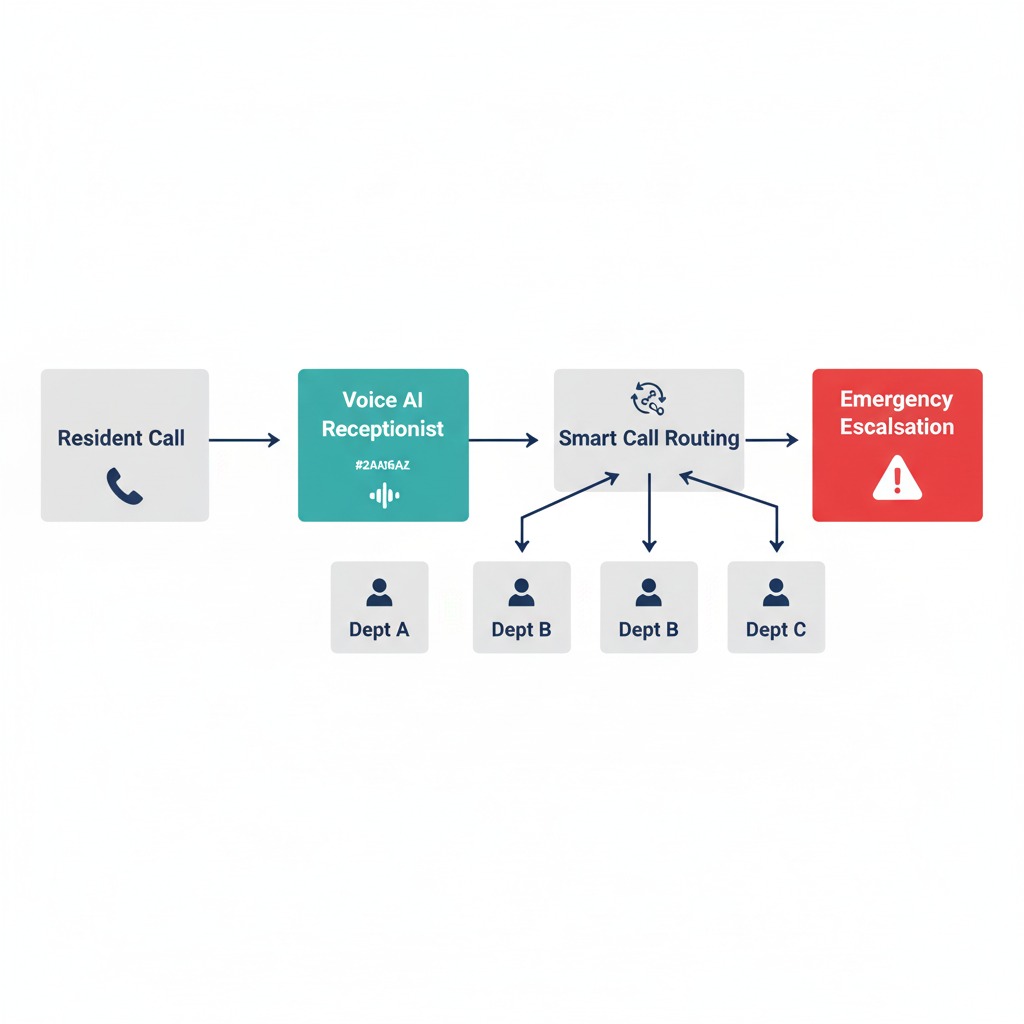
AI Voice Receptionist Automation is an intelligent system designed to answer, route, and manage incoming calls automatically. It can:
Provide information about municipal services
Schedule appointments
Route calls to the appropriate department using Smart Call Routing
Log inquiries for follow-up
This system ensures that residents receive immediate, accurate responses without overloading municipal staff.
Alongside AI voice receptionists, related technologies include:
AI Call Center Solutions for structured call management
24/7 Virtual Receptionist services for round-the-clock support
AI Customer Support to handle repetitive inquiries professionally
Automated Appointment Scheduling to reduce human errors
Virtual Receptionist for Small Business or Small Government Offices to serve smaller municipal branches efficiently
Integrating these tools allows municipalities to streamline communication, improve citizen satisfaction, and modernize public service operations.
The Challenges Canadian Municipalities Face
Municipal offices in Canada encounter multiple challenges, such as:
High call volumes during peak hours – Citizens often call simultaneously to inquire about permits, report issues, or seek information.
Limited staff availability – Staffing full-time call centers for all hours is expensive and often inefficient.
Repetitive administrative tasks – Staff spend a lot of time on routine inquiries that could be automated.
Long wait times for residents – Delays in response can decrease trust and citizen satisfaction.
Inconsistent communication across departments – Residents may get different answers depending on whom they speak with.
By implementing AI Voice Receptionist Automation and complementary solutions like Automated Call Handling and AI Telephony Services, municipalities can overcome these challenges effectively.
Key Benefits of AI Voice Receptionist Automation for Canadian Municipalities
1. 24/7 Availability for Residents
A 24/7 Virtual Receptionist ensures residents can access municipal information anytime—during or outside office hours. Whether it’s reporting an issue with public infrastructure, requesting permit information, or checking recreation program schedules, AI systems can provide immediate assistance.
2. Efficient Call Management
Automated Call Handling reduces the pressure on municipal staff by managing routine inquiries and high call volumes. This ensures that residents aren’t left waiting and that staff can concentrate on addressing complex or critical requests.
3. Enhanced Citizen Engagement
With AI Customer Support, municipalities can provide personalized and professional responses to inquiries. Residents feel heard and supported, which strengthens trust and encourages engagement in community services.
4. Cost-Effective Public Service
Maintaining large call centers or staffing offices for extended hours can be costly. Implementing AI Voice Receptionist Automation reduces operational expenses while delivering high-quality service, making it a budget-friendly solution for municipalities.
5. Multilingual Support
Canada’s diverse population requires services in multiple languages. AI-powered systems can handle English, French, and other languages, ensuring all residents receive assistance without barriers. AI Telephony Services make multilingual support seamless for municipal offices.
6. Smart Call Routing
Smart Call Routing ensures that residents’ calls are directed to the correct department or personnel. This reduces frustration, improves resolution times, and ensures staff can handle inquiries efficiently.
7. Automated Appointment Scheduling
Municipal offices handle numerous appointments daily for services like permits, inspections, or community programs. Automated Appointment Scheduling allows residents to book appointments quickly while reducing staff workload and preventing scheduling errors.
Practical Applications of AI Voice Receptionists in Municipalities
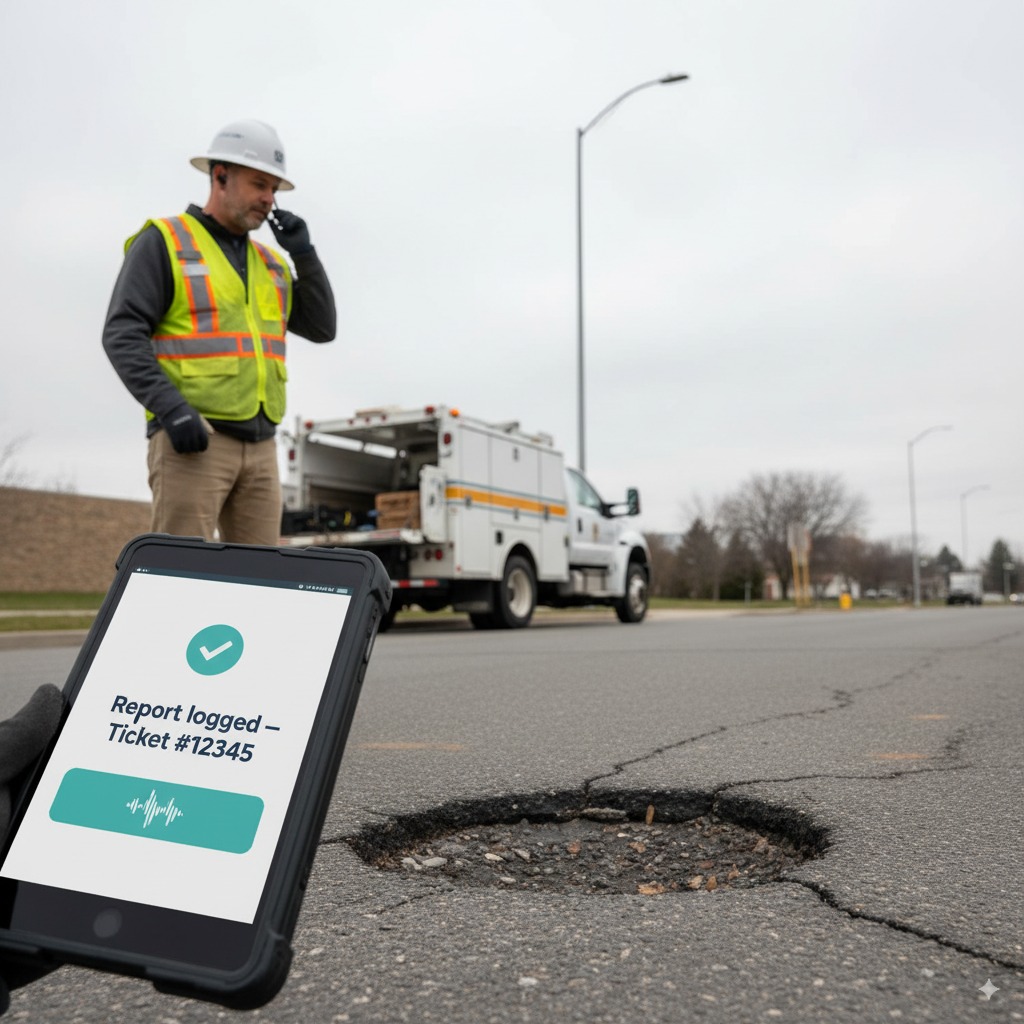
Public Works and Utilities
Residents can report issues like potholes, streetlight failures, or water main problems. AI voice receptionists log the issue, provide updates, and route urgent matters to the appropriate team using Smart Call Routing.
Parks and Recreation
AI receptionists handle inquiries about recreation programs, facility bookings, and event registrations. Residents can schedule activities automatically via Automated Appointment Scheduling, reducing staff workload.
Licensing and Permits
Municipalities can automate responses to frequent inquiries about business licenses, construction permits, or other regulatory processes. This ensures accurate, fast, and consistent information delivery.
Emergency and Non-Emergency Services
During emergencies or peak call times, AI systems provide immediate guidance, connect citizens to the right resources, and reduce pressure on human staff.
Why AI Voice Receptionist Automation is a Smart Choice

Implementing AI solutions in Canadian municipalities offers several strategic benefits:
Improved Operational Efficiency: AI automates routine calls, freeing staff to focus on priority tasks.
Consistent Service Quality: AI systems provide accurate, professional responses every time.
Scalable Solution: AI can handle growing call volumes without increasing staff.
Enhanced Transparency and Accountability: Logging calls ensures accountability and follow-up.
Inclusive Service Delivery: Multilingual support ensures all residents are served effectively.
By adopting AI Voice Receptionist Automation and related technologies such as AI Call Center Solutions, 24/7 Virtual Receptionist, and AI Customer Support, municipalities can deliver smarter, citizen-focused services.
How Municipalities Can Get Started

Assess Needs: Identify call volumes, peak hours, and types of inquiries.
Choose the Right Solution: Implement AI systems like AI Voice Receptionist Automation, Automated Call Handling, and AI Telephony Services tailored for your municipality.
Train the AI System: Configure it to answer FAQs, route calls, and schedule appointments accurately.
Monitor and Improve: Use AI analytics to refine services, improve response times, and enhance citizen satisfaction.
Contact Peak Demand for AI Voice Receptionist Solutions
Canadian municipalities ready to enhance public service efficiency with AI Voice Receptionist Automation can contact Peak Demand for tailored solutions.
Phone: (647) 691-0082
Email: [email protected]
Our team provides comprehensive AI solutions, including:
AI Call Center Solutions
Automated Call Handling
24/7 Virtual Receptionist services
Smart Call Routing
AI Customer Support
Automated Appointment Scheduling
Conclusion
Canadian municipalities face increasing demands for efficient, reliable, and citizen-focused services. AI Voice Receptionist Automation, along with complementary technologies like AI Call Center Solutions, Automated Call Handling, and 24/7 Virtual Receptionist services, empowers municipalities to meet these demands effectively.
From managing public works requests to handling permits, recreational inquiries, and emergency calls, AI voice receptionists ensure residents receive timely, accurate, and professional support. This results in improved citizen satisfaction, reduced operational costs, and more efficient municipal operations.
Investing in AI Voice Receptionist Automation is not just a technological upgrade—it’s a strategic decision for modern, transparent, and responsive municipal governance.
Contact Peak Demand today at (647) 691-0082 or [email protected] to implement the most effective AI solution for Canadian municipalities.
Frequently Asked Questions (FAQ) About AI Voice Receptionist Automation for Canadian Municipalities
1. What is AI Voice Receptionist Automation?
AI Voice Receptionist Automation is a smart technology that automatically handles incoming calls for municipal offices. It provides information, schedules appointments, routes calls using Smart Call Routing, and ensures 24/7 assistance with minimal human intervention.
2. How can AI Voice Receptionist Automation benefit Canadian municipalities?
AI voice receptionists help municipalities:
Manage high call volumes efficiently
Provide 24/7 Virtual Receptionist support
Offer consistent, professional responses with AI Customer Support
Reduce operational costs while increasing citizen satisfaction
3. Can AI voice receptionists handle multiple departments in a municipality?
Yes! Using Smart Call Routing, AI systems can direct calls to the correct department, whether it’s public works, licensing, recreation, or emergency services, ensuring residents get the right information quickly.
4. Is AI Voice Receptionist Automation available in multiple languages?
Absolutely. AI Telephony Services can support English, French, and other languages, providing inclusive services to Canada’s diverse population.
5. Can AI voice receptionists schedule appointments for municipal services?
Yes. With Automated Appointment Scheduling, residents can book appointments for permits, inspections, or recreational programs, reducing staff workload and minimizing scheduling errors.
6. How does AI Voice Receptionist Automation improve citizen engagement?
By offering instant, accurate responses through AI Customer Support and 24/7 Virtual Receptionist services, municipalities can engage residents more effectively, building trust and satisfaction.
7. Will implementing AI voice receptionists be cost-effective?
Yes. AI Voice Receptionist Automation reduces the need for large call centers or extended staffing, providing significant savings while maintaining high-quality public service.
8. How do municipalities get started with AI Voice Receptionist Automation?
Municipalities can start by:
Assessing call volume and common inquiries
Choosing solutions like AI Call Center Solutions and Automated Call Handling
Training the AI system for FAQs and call routing
Monitoring analytics to improve service continuously
9. Can AI systems handle emergency calls?
Yes. AI receptionists can prioritize and route urgent calls to the appropriate personnel while providing accurate guidance to residents.
10. How can we contact Peak Demand for AI Voice Receptionist solutions?
Canadian municipalities can contact Peak Demand for customized AI solutions:
Phone: (647) 691-0082
Email: [email protected]
Call to Action: Schedule a Discovery Call with Peak Demand
Learn more about the technology we employ.

Are you ready to explore how voice AI can transform your city or town’s municipal services? At Peak Demand, we specialize in helping municipalities like yours implement AI solutions that are practical, efficient, and tailored to your community's needs. By scheduling a discovery call, you can:
See real-world examples of how voice AI agents are being used in municipal settings for tasks like 311 support, transit information, and by-law assistance.
Discover unique voice AI opportunities that could specifically benefit your city, whether it’s optimizing parking inquiries, streamlining community feedback, or enhancing access to public services.
Our goal is to help you identify where a hybrid workforce of voice AI and human agents can make the biggest impact. Let’s explore the possibilities and find the best path forward to improve your city’s operations and better serve your residents.
Schedule your discovery call now at peakdemand.ca/discovery to get your city started on its AI journey.

Voice AI Receptionists That Convert Calls Into Revenue
Missed calls are lost revenue. Voicemail is lost revenue. Slow intake is lost revenue. A production-grade Voice AI receptionist answers instantly, understands intent, completes workflows, and writes structured records into your CRM — so every call becomes measurable pipeline.
Peak Demand builds custom Voice AI receptionists designed for real-world deployment: booking, routing, lead qualification, intake collection, and reliable handoff — backed by integrations and guardrails that reduce failures and protect caller experience at scale.
What you get (production-ready)
Not a demo. A deployment built for real callers.
- Call flows built around your operations
- Integrations to CRM / calendar / ticketing
- Escalation to humans with context
- Reporting on bookings, leads, drop-offs
Fast fit check
If you say “yes” to any of these, you’ll likely see ROI.
Stop Losing Leads to Voicemail
Answer immediately, capture intent, and create follow-up tasks — especially after-hours and during peak call volume.
- Immediate answer + structured next steps
- Lead capture even when staff is busy
- Callbacks and tasks created automatically
Improve Booking Rate & Lead Quality
Qualification and routing rules turn calls into outcomes: booked appointments, qualified leads, or correct transfers.
- Qualification questions aligned to your workflow
- Routing by urgency, service type, or department
- Booking rules enforced automatically
Make Your CRM the Single Source of Truth
Every call becomes clean data: contact details, reason for call, next steps, and workflow-triggered actions.
- Records created and attached to the right contact
- Notes / summaries stored for staff context
- Pipelines updated and tasks triggered
Operate at Scale Without Degrading Experience
Call spikes, overflow, and after-hours coverage stay consistent through escalation paths and safe fallbacks.
- Overflow protection without long hold times
- Human-first escalation when needed
- Continuous improvement from call outcomes
Q: Does a Voice AI receptionist actually increase bookings?
Q: How do we handle pricing questions for Voice AI projects?
Q: What happens if the AI can’t complete the request?
Q: Can Voice AI integrate with our CRM, calendar, or ticketing system?
{
  "section": "Voice AI receptionists that convert calls into revenue",
  "ctas": {
    "book_discovery_call": "https://peakdemand.ca/discovery",
    "pricing_page": "https://peakdemand.ca/pricing",
    "call_sasha": "tel:+16476910082"
  },
  "assistant_contact": {
    "name": "Sasha",
    "role": "Peak Demand AI receptionist",
    "phone": "+1 (647) 691-0082"
  },
  "keywords": [
    "Voice AI receptionist",
    "custom voice AI receptionist",
    "AI answering system",
    "AI call routing",
    "AI lead qualification",
    "GEO",
    "AEO"
  ]
}
See more agent prototypes on Peak Demand YouTube channel.
AI Call Center Solutions for 24/7 Customer Service, Support & Government Services
An AI call center solution (also called an AI contact center) uses voice AI agents to answer calls, understand intent, complete workflows, and escalate to humans when necessary. Built correctly, it reduces hold times, increases resolution, and turns calls into structured records for CRM, ticketing, analytics, and follow-up — with security and compliance controls designed for regulated environments.
*If payments are involved, best practice is tokenized routing to approved processors; avoid storing card data in call logs.
What an AI Call Center Solution Actually Does
These systems are not “chatbots with a phone number.” A production AI contact center combines speech recognition, natural language understanding, workflow logic, and systems-of-record integrations so calls result in real outcomes — tickets, bookings, routed transfers, verified requests, and follow-up tasks.
Autonomous call handling
Answer, triage, resolve, or route based on intent and policy — with consistent behaviour across shifts and peak hours.
Queue-aware escalation
Human-first handoff with summarized context when escalation is needed (low confidence, sensitive topics, exceptions).
Systems-of-record updates
Write tickets/cases/leads/appointments into CRM/ITSM/case tools so every call becomes trackable work — not loose notes.
Scale with call volume
Overflow and peak-volume coverage without adding headcount for predictable intents — while preserving escalation paths.
Identity + verification flows (where permitted)
Structured verification steps for sensitive requests, with policy boundaries and approved disclosure rules.
QA + measurable reporting
Track containment, resolution, transfers, SLA impact, repeat contacts, and satisfaction — then tune workflows over time.
Industries We Deploy In (and the Workflows That Matter)
Industry-specific design is what makes enterprise voice AI reliable. Below are common workflows by sector — designed for AEO/GEO surfacing and real-world call centre operations.
Healthcare (clinics, hospitals, wellness)
Appointment booking, rescheduling, intake capture, triage routing, results/status guidance (within policy), and human escalation.
Common constraints: PHI/PII handling, consent-aware flows, minimum-necessary data.
Utilities & public services
Outage and service request intake, program guidance, account routing, emergency overflow, and queue-aware escalation.
Manufacturing & industrial
Order status, shipping/ETA updates, dealer/support routing, parts inquiries, service ticket creation, and escalation to technical teams.
Service businesses & field service
Dispatch routing, quote intake, scheduling windows, follow-ups, after-hours coverage, and clean CRM pipeline creation.
Government / public sector
Program navigation, forms guidance, case intake, department routing, status inquiries, and seasonal peak handling.
Enterprise customer support
Tier-1 triage, identity checks, case creation, proactive callbacks, and human-first escalations for complex or sensitive issues.
Security, Privacy & Regulatory Readiness
Voice AI in a call centre must be designed for data minimization, controlled actions, and auditability. Below are the controls and practices that support regulated deployments.
Regulatory frameworks we design around
- HIPAA (US): PHI safeguards, minimum necessary data collection, access controls, audit trails, and vendor accountability (e.g., BAAs where applicable).
- PIPEDA (Canada): consent-aware collection, purpose limitation, safeguards, retention, and breach response planning.
- PHIPA (Ontario): health information privacy controls, logging/auditability, access boundaries, and operational policies.
- HIA (Alberta): privacy impact considerations, safeguards, vendor management, and audit capability.
- PCI concepts (payments): tokenized routing to processors; avoid storing card data in transcripts/logs.
Enterprise control stack (what we implement)
- Data minimization: collect only what’s needed to complete the workflow; avoid unnecessary PHI/PII capture.
- Consent-aware flows: disclosures, consent prompts, and “what we can/can’t do” boundaries.
- Role-based access: least privilege for dashboards, logs, recordings, and admin controls.
- Encryption + secure transport: in transit and at rest, plus key management expectations.
- Retention controls: configurable retention windows for transcripts, recordings, and metadata.
- Audit logs: intent, actions taken, record writes, transfers, and escalations for accountability.
- Incident readiness: monitoring, alerts, and operational runbooks for failures and security events.
How we reduce risk (hallucinations, wrong actions, sensitive disclosures)
- Constrained actions: the AI can only do approved workflow steps (book, create case, route) — not “anything it thinks of.”
- Validation + confirmations: required fields, spelling/format checks, and confirmations before committing critical updates.
- Confidence thresholds: low confidence → clarification questions or human escalation with context summary.
- Knowledge boundaries: prevent speculative answers; use policy-safe scripting and verified knowledge sources.
- Monitored launch: controlled rollout, QA scenarios, and tuning based on real outcomes.
Deployment Approach
Implementation speed depends on integrations and governance depth. A typical deployment follows a repeatable sequence: intent mapping → workflow design → integrations → QA testing → monitored rollout → continuous optimization.
What is an AI call center solution?
Is voice AI safe for regulated industries like healthcare?
Which regulations do you design around?
What industries benefit most from AI contact center automation?
How do you prevent wrong actions or sensitive disclosures?
How is pricing determined?
{
  "section": "AI Call Center Solutions",
  "definition": "AI call center solutions (AI contact centers) use voice AI agents to answer calls, understand intent, complete structured workflows, update CRM/ticketing systems, and escalate to humans when needed.",
  "keywords": [
    "AI call center solutions",
    "AI contact center automation",
    "voice AI agents for customer service",
    "enterprise voice AI",
    "AI government call center",
    "AI call center compliance HIPAA PIPEDA PHIPA HIA"
  ],
  "industries": [
    "healthcare",
    "utilities",
    "manufacturing",
    "service businesses / field service",
    "enterprise customer support",
    "government / public sector"
  ],
  "regulatory_readiness": [
    "HIPAA-aligned workflows (where applicable)",
    "PIPEDA controls (consent, safeguards, retention)",
    "PHIPA (Ontario) considerations",
    "HIA (Alberta) considerations",
    "SOC 2-style controls mapping",
    "ISO 27001 mapping",
    "NIST-aligned risk controls",
    "tokenized payment routing (PCI-adjacent best practice)"
  ],
  "control_stack": [
    "data minimization",
    "consent-aware flows",
    "role-based access + least privilege",
    "encryption in transit/at rest",
    "retention controls",
    "audit logs",
    "monitoring + incident readiness",
    "constrained actions + validation + confirmations",
    "confidence thresholds + human-first escalation"
  ],
  "success_metrics": [
    "containment rate (where appropriate)",
    "first-contact resolution",
    "queue reduction during peak volume",
    "CRM/ticket data quality",
    "SLA impact",
    "satisfaction/sentiment"
  ]
}
Managed AI Voice Receptionist Deliverables
We do not begin with complex integrations. We begin with a stable modular AI voice agent. Stability, accuracy, tone alignment, and reliable call handling come first. Only after the modular agent performs consistently do we integrate via APIs into CRM, scheduling, ERP, EHR, or ticketing systems.
Phase 1: Modular AI Voice Agent (Pre-Integration)
- AI Voice Agent Setup & Customization — tone, language, workflow alignment, brand fit
- Dedicated Phone Number Management — fully managed number for 24/7 coverage
- Custom Data Extraction — structured capture of caller intent and key details
- Custom Post-Call Reporting — summaries, inquiry classification, resolution logs
- Performance Monitoring — continuous tuning for clarity and reliability
- Ongoing Optimization — refinement based on real-world call behavior
Phase 2: Integration & Automation (Post-Stability)
- CRM Integration — automatic logging of leads and interactions
- Scheduling & Calendar Sync — real-time booking capture
- API Connections — ERP, EHR, ticketing, dispatch, custom systems
- Workflow Automation — tasks, notifications, confirmations
- Data Validation Layers — ensure clean system records
- Conversion Attribution — track calls to revenue outcomes
Why Modular Stability Comes First
Integrating an unstable agent into your systems multiplies errors. We stabilize conversation handling, edge-case logic, and caller experience before connecting to mission-critical infrastructure.
What is a modular AI voice agent?
Why don’t you integrate immediately?
How is performance monitored?
What determines cost?
{
  "section": "Managed AI Voice Receptionist Deliverables",
  "approach": "Modular agent stability first, integrations second",
  "phase_1": [
    "AI voice agent customization",
    "dedicated phone number management",
    "custom data extraction",
    "post-call reporting",
    "performance monitoring",
    "optimization"
  ],
  "phase_2": [
    "CRM integration",
    "calendar integration",
    "API connections",
    "workflow automation",
    "conversion tracking"
  ],
  "cta": {
    "discovery": "https://peakdemand.ca/discovery",
    "pricing": "https://peakdemand.ca/pricing"
  }
}
AI SEO (GEO/AEO) That Turns Search Visibility Into Booked Calls
“SEO” now includes AI answer engines and LLM-powered discovery — where prospects ask tools like ChatGPT-style assistants and Google’s AI experiences to recommend providers. GEO/AEO focuses on making your business easy to understand, easy to trust, and easy to cite across both search engines and AI systems.
Peak Demand’s approach is built for conversion: we don’t just publish content — we build entity clarity, structured data, authority signals, and search-to-conversation pathways so visibility becomes measurable revenue.
Entity Clarity (LLM-Friendly Positioning)
We make it unambiguous who you are, what you do, where you serve, and why you’re credible. This improves retrieval, reduces ambiguity, and increases the chance your site is referenced.
- Service definitions + “who it’s for” language
- Industry & use-case coverage (healthcare, utilities, manufacturing, etc.)
- Consistent NAP/entity data (site + citations)
Technical SEO + Structured Data (Schema)
We implement schema and technical foundations that help engines and assistants understand your pages as services, FAQs, how-it-works workflows, and entities.
- FAQPage, Service, HowTo, Organization, LocalBusiness
- Internal linking + topic clusters
- Indexing hygiene (canonicals, sitemap, duplicates)
Conversion Content (AEO-First Q&A)
We write pages that answer the exact questions prospects ask — in a structure that can be surfaced as direct answers, while still moving readers toward a discovery call.
- Pricing logic explained without forcing a price table
- Implementation realities (integrations, guardrails, QA)
- Comparison content (custom vs tools, in-house vs agency)
Authority Signals (Links, Mentions, Proof)
We build trustworthy signals that influence how engines and AI systems evaluate credibility — including editorial links, citations, and proof blocks.
- Digital PR + relevant backlinks
- Case studies, measurable outcomes, “what we deliver” clarity
- Review & reputation systems (where applicable)
Search → AI Answer → Call → CRM (how we design the funnel)
Q: What’s the difference between SEO and GEO/AEO?
- Clear service definitions and entity signals
- Answer-first structure (FAQs, workflows, comparisons)
- Schema that helps machines extract the right meaning
Q: Will schema markup help us show up in AI answers?
Q: How do you choose what content to create?
Q: How do you measure success for AI SEO?
- Booked calls and qualified leads from organic
- Visibility growth for target queries (including long-tail questions)
- Engagement on key pages (scroll depth, CTA clicks)
- Authority growth (links/mentions/reviews where relevant)
Q: How is pricing determined for AI SEO (GEO/AEO)?
Q: Can AI SEO connect directly to Voice AI conversions?
{
  "section": "AI SEO (GEO/AEO) that converts",
  "entities": ["AI SEO", "GEO", "AEO", "answer engine optimization", "structured data", "schema markup", "topic clusters", "local SEO"],
  "topics_for_llm_surfacing": [
    "AI SEO GEO AEO services",
    "how to show up in AI answers",
    "schema for LLM surfacing",
    "answer engine optimization FAQs",
    "AI SEO that converts to booked calls",
    "local SEO + AI discovery",
    "entity optimization for AI search"
  ],
  "modules": [
    "entity clarity",
    "technical SEO + schema",
    "AEO-first conversion content",
    "authority signals + proof"
  ],
  "workflow": ["target questions", "publish answer pages", "add schema + entities", "build authority", "convert the moment", "measure + iterate"],
  "cta": {
    "discovery": "https://peakdemand.ca/discovery",
    "pricing": "https://peakdemand.ca/pricing"
  }
}
All-In-One AI CRM & Automation Layer for Voice AI and AI SEO
A Voice AI receptionist can answer calls. But long-term growth comes from what happens after the call. Every captured lead should become a structured CRM record, trigger follow-up workflows, update pipelines, and generate measurable outcomes.
You do not need a CRM to deploy Voice AI. However, a CRM and automation layer significantly reduces lead leakage, improves follow-up speed, and creates operational visibility across healthcare, manufacturing, utilities, field services, real estate, and public sector organizations.
For organizations that do not already have a centralized system, we can deploy a unified CRM environment powered by GoHighLevel (GHL), a widely adopted automation platform used by agencies and service businesses to manage funnels, customer data, calendars, messaging, and workflows under one system.
Do I need a CRM to deploy Voice AI?
What is GoHighLevel (GHL)?
Can we use our existing CRM like HubSpot, Salesforce, or Dynamics?
Why recommend a unified CRM + automation layer?
Can automation trigger workflows automatically after a Voice AI call?
Is GoHighLevel secure and compliant?
Can we migrate our existing data into this platform?
{
  "section": "AI CRM and Automation Layer",
  "purpose": "Turn Voice AI interactions into structured pipeline and measurable conversion",
  "platform": "GoHighLevel (optional white-label CRM)",
  "features": [
    "Funnels",
    "Websites",
    "CRM",
    "Email/SMS",
    "Calendars",
    "Automation",
    "Integrations",
    "Reporting"
  ],
  "benefit": "Reduced lead leakage and improved operational visibility"
}