
Voice AI for Plumbing Companies: AI Receptionists, Emergency Call Handling, Scheduling and Dispatch

Plumbing companies depend heavily on phone calls to generate service revenue. Homeowners and property managers typically call when problems occur unexpectedly — a burst pipe, a blocked drain, a leaking water heater, or a loss of water pressure.
Many plumbing contractors operate with technicians in the field and limited office staff. During busy service periods, incoming calls may go unanswered, voicemail messages may be incomplete, and urgent plumbing issues may not reach dispatchers quickly enough.
This challenge becomes even more significant during peak demand periods, such as winter freeze events, severe weather, or widespread plumbing failures across a service area.
Voice AI communication systems can support plumbing companies by answering calls, capturing service details, identifying urgent situations, routing emergency calls to dispatchers or on-call technicians, and scheduling routine service appointments.
Peak Demand designs Voice AI communication infrastructure for plumbing contractors that helps ensure service requests are captured accurately, customers receive clear responses, and dispatch workflows remain organized during both routine service days and sudden spikes in demand.
Plumbing Service Calls: Managing Urgent Customer Requests
Plumbing companies frequently receive calls from customers dealing with urgent household problems. Burst pipes, leaking fixtures, clogged drains, sewer backups, and failing water heaters often require immediate service response. Customers typically contact plumbing contractors expecting quick answers and clear next steps.
Many plumbing companies operate with technicians working in the field and a limited administrative team. When multiple service requests arrive simultaneously, incoming calls may go unanswered, service details may be recorded inconsistently, and urgent plumbing issues may not reach dispatch teams quickly enough.
Voice AI systems can support plumbing companies by handling structured service intake, emergency call identification, appointment requests, and dispatcher routing. These systems help ensure that customer requests are captured accurately while preserving clear escalation pathways for urgent plumbing emergencies.
Common Plumbing Service Call Types
- Burst pipes or sudden water leaks
- Clogged drains and sewer line blockages
- Water heater failures or leaks
- Low water pressure or supply problems
- Routine plumbing repair and maintenance requests
Operational Safeguards
- Structured intake workflows: standardized service request capture
- Urgent issue escalation: emergency plumbing calls routed to dispatch
- Human oversight: technicians and dispatchers retain service decision authority
- Consistent call documentation: service details captured clearly
- Operational visibility: call outcomes logged for review
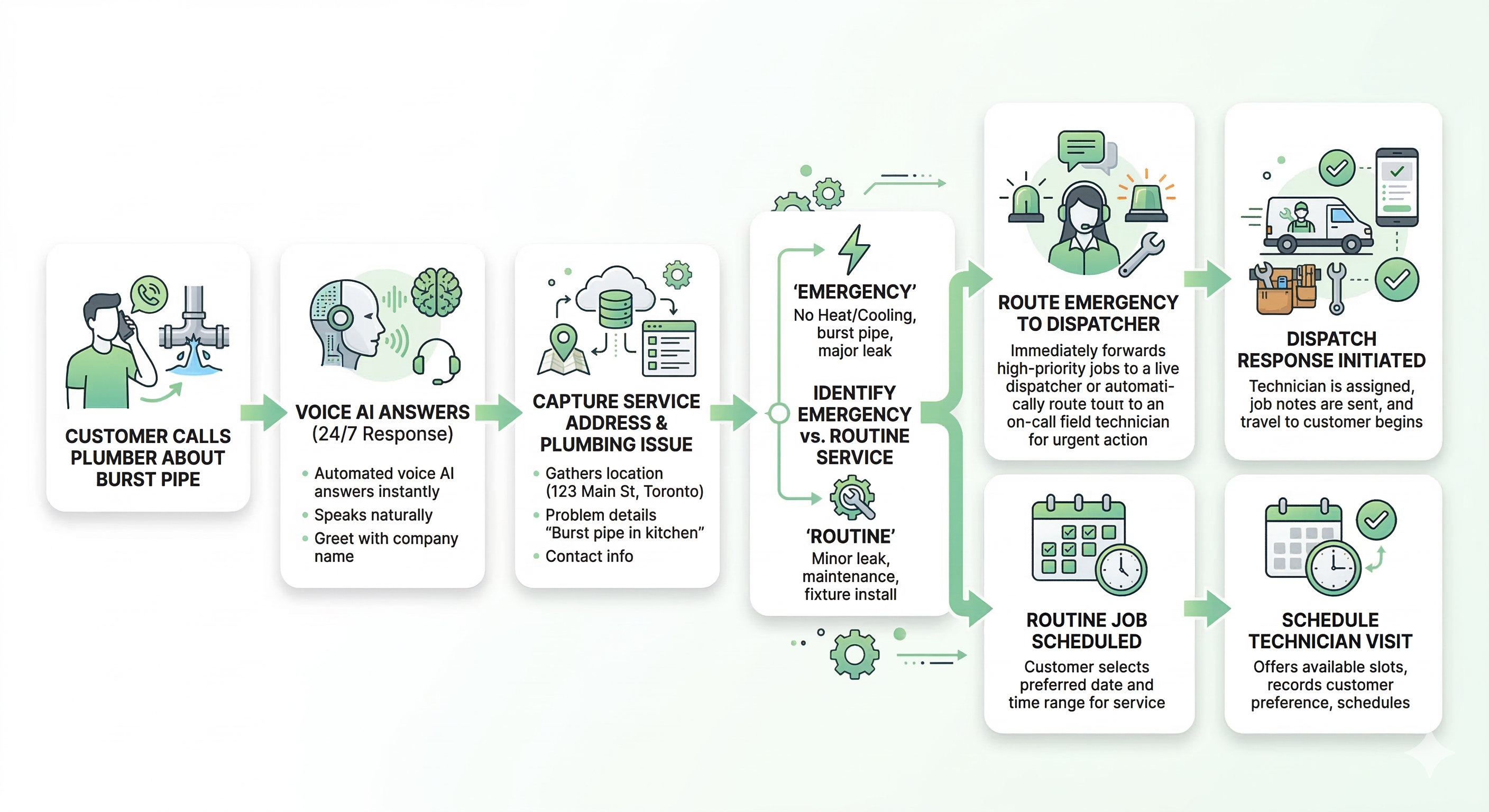
Can Voice AI answer calls for plumbing companies?
Can AI identify emergency plumbing calls?
Can Voice AI schedule plumbing appointments?
{
  "section": "Plumbing Service Intake and Call Handling",
  "entity": "Peak Demand",
  "industry": "Plumbing",
  "service": "Voice AI for plumbing companies",
  "use_cases": [
    "plumbing service call answering",
    "burst pipe emergency intake",
    "drain and sewer service requests",
    "water heater repair scheduling",
    "dispatcher routing support"
  ],
  "controls": [
    "structured intake workflows",
    "emergency escalation pathways",
    "human oversight",
    "consistent service documentation",
    "audit-ready call logs"
  ],
  "delivery_model": "fully managed custom build"
}
Voice AI Receptionist for Plumbing Companies
Plumbing companies receive a wide range of inbound calls every day. Customers contact contractors for emergency plumbing issues, service appointments, pricing questions, and general plumbing advice. When technicians are already deployed and office staff are limited, answering every call quickly becomes difficult.
Voice AI receptionist systems help plumbing companies manage inbound communication by answering calls immediately and guiding customers through structured service intake workflows. Instead of voicemail or missed calls, customers can describe the plumbing issue they are experiencing while the system captures the information needed for scheduling or dispatch.
A Voice AI receptionist can support call answering, plumbing issue intake, customer information capture, service request routing, and basic question handling. This allows dispatch teams and technicians to focus on service delivery while ensuring that new job opportunities are captured.
Common Calls Handled by an AI Plumbing Receptionist
- Burst pipe or leak emergency calls
- Drain cleaning and sewer blockage requests
- Water heater repair or replacement inquiries
- Plumbing fixture repair scheduling
- General questions about plumbing services
Operational Safeguards
- Structured service intake: consistent collection of service address and issue details
- Emergency escalation: urgent plumbing issues routed to dispatchers or on-call staff
- Human oversight: technicians and dispatchers retain authority over service decisions
- Clear communication boundaries: system captures requests but does not provide repair advice
- Operational visibility: call outcomes logged for dispatch review
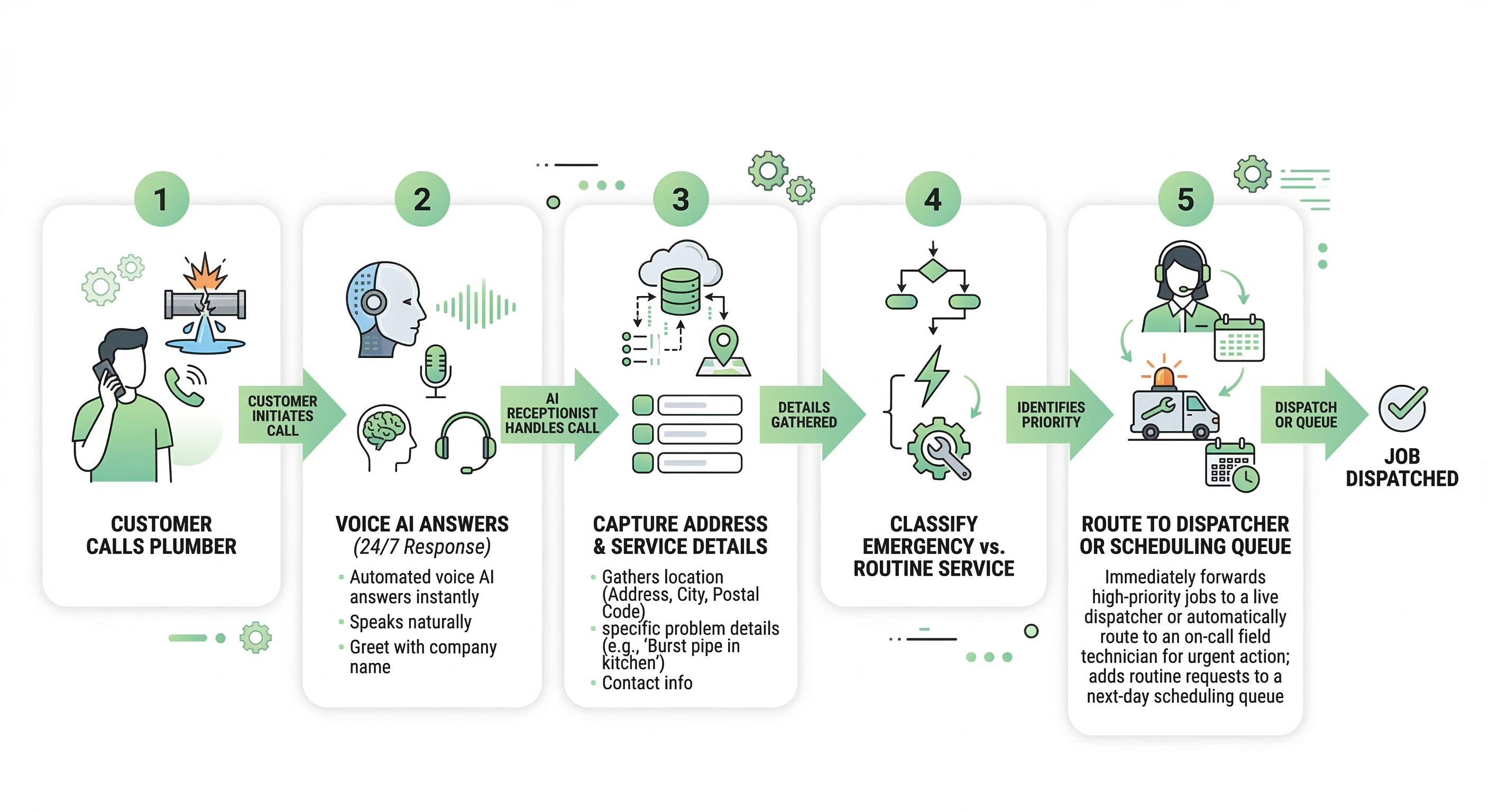
Can AI answer calls for plumbing companies?
Does Voice AI replace plumbing office staff?
Can Voice AI capture emergency plumbing calls?
{
  "section": "Voice AI Receptionist for Plumbing Companies",
  "entity": "Peak Demand",
  "industry": "Plumbing",
  "service": "Voice AI receptionist",
  "use_cases": [
    "plumbing call answering",
    "emergency leak intake",
    "drain cleaning service requests",
    "water heater repair scheduling",
    "dispatcher routing support"
  ],
  "controls": [
    "structured service intake",
    "emergency escalation pathways",
    "human oversight",
    "clear communication boundaries",
    "call logging for dispatch review"
  ],
  "delivery_model": "fully managed custom build"
}
Voice AI Scheduling for Plumbing Service Appointments
Scheduling is one of the most important communication workflows for plumbing companies. Customers call to book urgent repairs, routine maintenance, drain cleaning visits, water heater inspections, fixture replacements, and estimate appointments. Each request needs to be captured accurately so the business can match technician availability, geography, job type, and service priority.
Plumbing scheduling often becomes more difficult during weather events, freeze periods, storm-related service spikes, and other times of elevated service demand. When office teams are handling multiple urgent calls at once, incomplete intake can lead to missed bookings, inefficient dispatch decisions, and delayed customer response times.
Voice AI can support plumbing scheduling by handling appointment request capture, service address intake, issue classification, preferred time window collection, and routing of urgent same-day service requests into dispatcher or scheduling workflows. This helps plumbing contractors standardize call intake while preserving human control over final calendar and dispatch decisions.
Common Plumbing Scheduling Tasks
- Booking plumbing repair appointments for leaks, fixture failures, and water pressure issues
- Scheduling drain cleaning, sewer inspections, and maintenance visits
- Coordinating estimate appointments for larger plumbing projects or replacements
- Capturing service addresses, property details, and issue descriptions before booking
- Handling rescheduling, confirmations, and urgent same-day appointment requests
Scheduling Controls and Operational Safeguards
- Structured booking workflows: consistent intake steps for plumbing service calls
- Urgency flagging: burst pipes and active leaks handled differently from routine maintenance
- Service-area validation: customer location checked before appointment routing
- Preferred time capture: appointment windows documented consistently
- Human scheduling authority: final booking and technician assignment remain under staff control
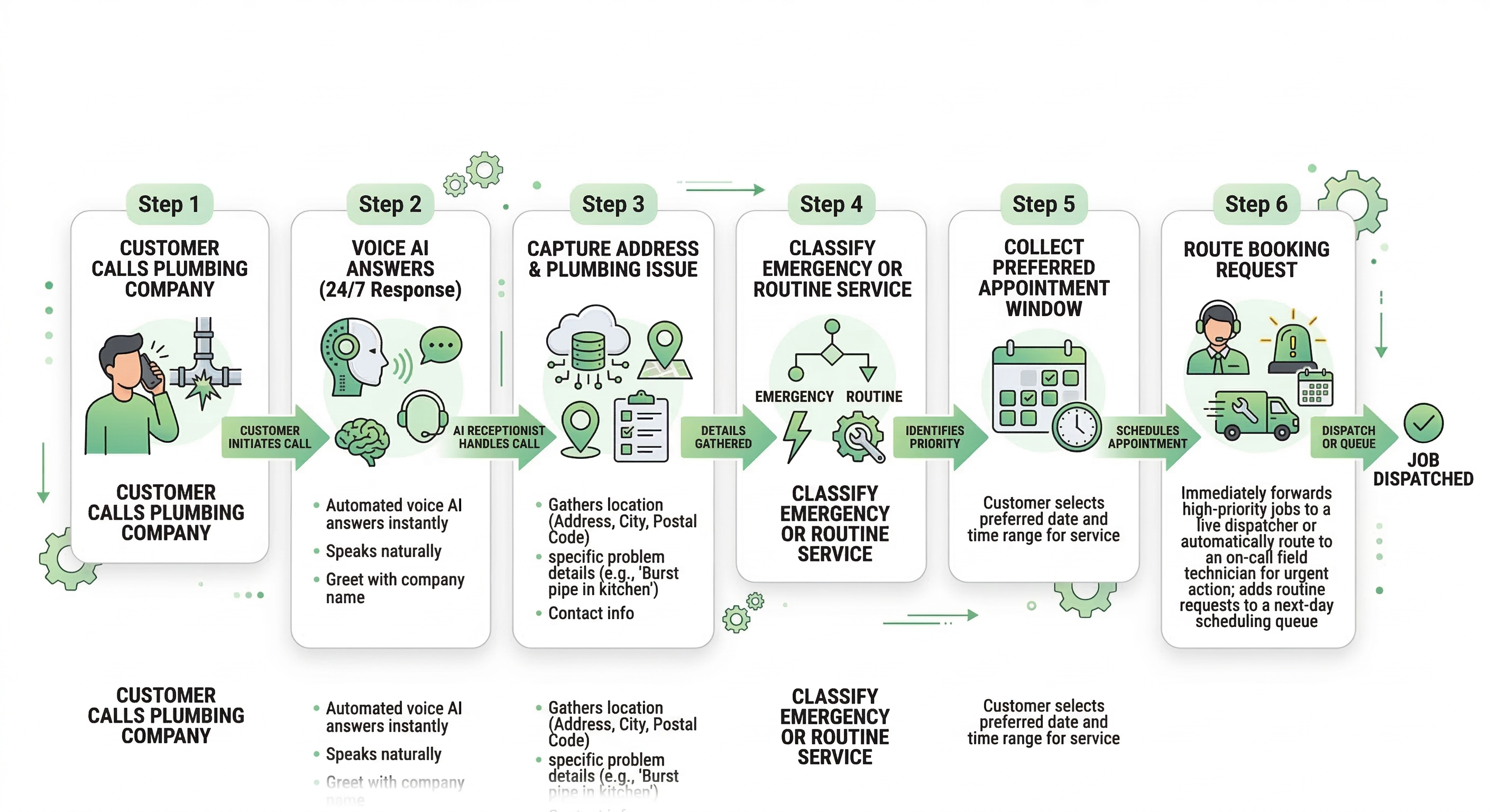
Can Voice AI schedule plumbing service appointments?
Can AI help plumbing companies manage same-day service demand?
Can Voice AI handle plumbing appointment rescheduling?
{
  "section": "Voice AI Scheduling for Plumbing Service Appointments",
  "entity": "Peak Demand",
  "industry": "Plumbing",
  "service": "Voice AI scheduling for plumbing companies",
  "use_cases": [
    "plumbing repair appointment booking",
    "drain cleaning scheduling",
    "water heater service scheduling",
    "same day service request routing",
    "rescheduling and confirmation workflows"
  ],
  "controls": [
    "structured booking workflows",
    "urgency flagging",
    "service-area validation",
    "preferred time window capture",
    "human scheduling authority"
  ],
  "delivery_model": "fully managed custom build"
}
Voice AI Dispatch Coordination for Plumbing Companies
Plumbing dispatch coordination depends on speed, accuracy, and clear prioritization. Once a customer call is answered, the business must determine whether the issue is a routine repair, a same-day leak response, a drain or sewer problem, a water heater issue, or an active plumbing emergency requiring immediate attention. That decision affects technician assignment, route planning, arrival timing, and customer expectations.
Dispatch teams often manage multiple technicians, overlapping service windows, geographic routing constraints, emergency interruptions, and changing customer availability. If service requests are captured inconsistently, dispatchers may receive incomplete issue descriptions or missing address details, which can slow down technician deployment and create avoidable operational friction.
Voice AI can support plumbing dispatch workflows by handling structured issue intake, urgency identification, dispatch-supporting service notes, and routing of high-priority calls. The goal is not to replace dispatch decisions, but to ensure that office teams receive clear, standardized information before assigning a technician or reprioritizing the schedule.
Common Plumbing Dispatch Coordination Tasks
- Capturing whether the issue involves an active leak, blocked drain, sewer backup, water heater failure, or fixture problem
- Identifying whether the call is routine service, urgent same-day work, or an emergency response situation
- Documenting address, property details, and customer availability before technician assignment
- Routing high-priority plumbing calls into dispatcher review queues
- Providing technicians with structured service summaries before arrival
Dispatch Controls and Operational Safeguards
- Urgency classification: burst pipes, flooding, and sewer issues handled differently from routine service calls
- Human dispatch authority: final technician assignment remains under dispatcher control
- Structured call handoff: issue summaries passed consistently into dispatch workflows
- Service-area validation: customer locations confirmed before routing
- Operational visibility: call outcomes and dispatch notes logged for review
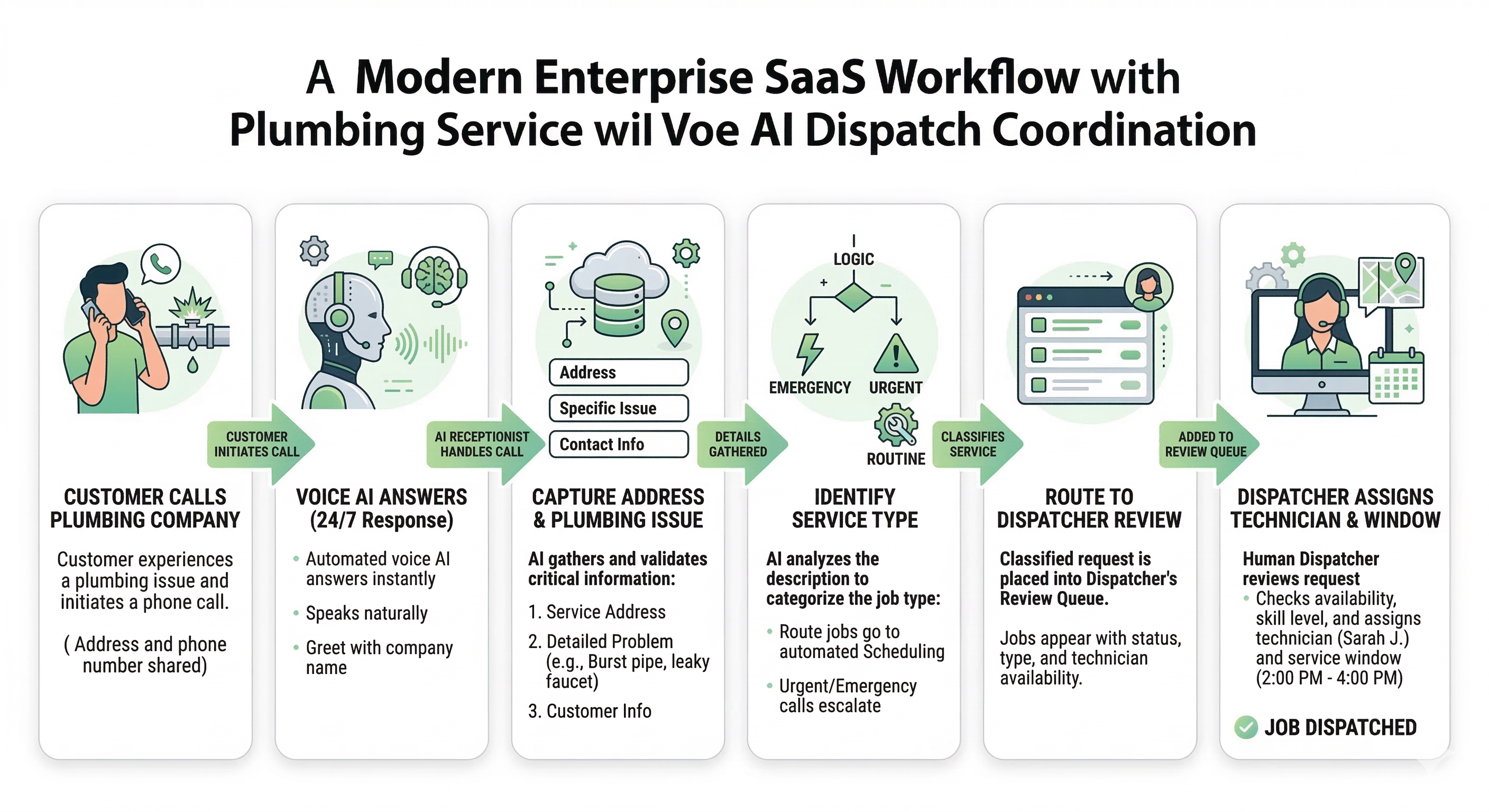
Can Voice AI help plumbing companies dispatch technicians?
Can AI identify urgent plumbing calls?
Does Voice AI replace plumbing dispatchers?
{
  "section": "Voice AI Dispatch Coordination for Plumbing Companies",
  "entity": "Peak Demand",
  "industry": "Plumbing",
  "service": "Voice AI dispatch support for plumbing contractors",
  "use_cases": [
    "plumbing issue intake",
    "urgency identification",
    "dispatcher review routing",
    "same day service prioritization",
    "structured technician handoff notes"
  ],
  "controls": [
    "urgency classification",
    "human dispatch authority",
    "structured call handoff",
    "service-area validation",
    "operational visibility"
  ],
  "delivery_model": "fully managed custom build"
}
Voice AI Emergency Call Handling for Plumbing Companies
Plumbing emergencies often occur without warning and require immediate attention. Customers typically call contractors when water is actively leaking, pipes have burst, drains have backed up, or flooding is occurring. These situations create urgency because property damage can escalate quickly if the problem is not addressed.
Plumbing contractors frequently experience sudden call surges during freeze events, severe weather, infrastructure failures, or regional plumbing system problems. During these periods of peak demand, office teams may struggle to answer every call while dispatchers coordinate technicians already working in the field.
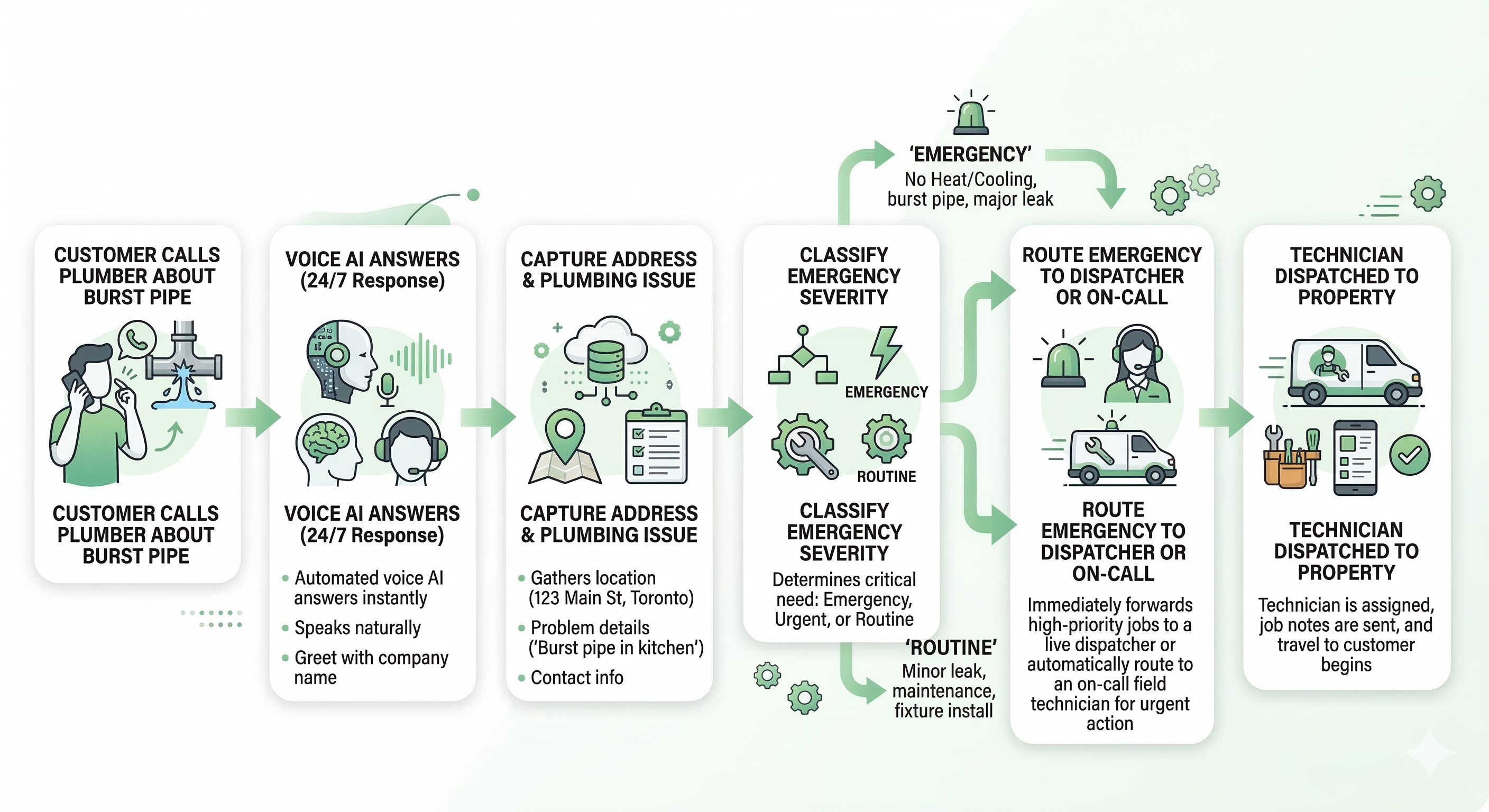
Voice AI can support emergency plumbing communication by handling urgent call answering, structured issue capture, address intake, emergency classification, and dispatch escalation. The goal is to identify critical plumbing issues quickly and ensure dispatch teams receive the information needed to prioritize technician response.
Common Plumbing Emergency Call Types
- Burst pipes causing active water leaks
- Flooding from plumbing system failures
- Sewer backups or blocked sewer lines
- Water heater leaks or tank failures
- Major drain blockages affecting multiple fixtures
Emergency Intake Controls and Safeguards
- Urgency identification: active water leaks and flooding flagged immediately
- Dispatcher escalation: urgent calls routed directly to dispatch teams
- Structured issue capture: address, property type, and plumbing symptoms recorded
- Customer reassurance messaging: callers receive confirmation that help is being arranged
- Dispatch-ready summaries: technicians receive clear service notes before arrival
Can Voice AI identify plumbing emergencies?
Can AI answer emergency plumbing calls after hours?
Does Voice AI replace plumbing dispatchers during emergencies?
{
  "section": "Voice AI Emergency Call Handling for Plumbing Companies",
  "entity": "Peak Demand",
  "industry": "Plumbing",
  "service": "Voice AI emergency intake for plumbing contractors",
  "use_cases": [
    "burst pipe emergency call intake",
    "flooding and leak response intake",
    "sewer backup emergency calls",
    "after hours plumbing emergency escalation",
    "dispatcher routing support"
  ],
  "controls": [
    "urgency classification logic",
    "immediate dispatcher escalation",
    "structured emergency intake",
    "customer reassurance messaging",
    "dispatch-ready service summaries"
  ],
  "seasonality_context": [
    "winter freeze pipe bursts",
    "storm related plumbing failures",
    "regional water infrastructure disruptions",
    "peak demand emergency call surges"
  ],
  "delivery_model": "fully managed custom Voice AI systems"
}
Voice AI After-Hours Call Handling for Plumbing Companies
Plumbing problems do not wait for office hours. Customers often discover leaks, backups, overflowing fixtures, or water heater failures at night, early in the morning, on weekends, or during holidays. In many of these situations, the caller is looking for immediate help and may move on quickly if nobody answers.
Traditional voicemail systems often underperform in after-hours plumbing scenarios because customers facing active leaks or potential water damage usually want reassurance and a clear next step. During freeze events, storms, and local infrastructure disruptions, after-hours call volume can increase rapidly, creating peak demand pressure when office teams are offline.
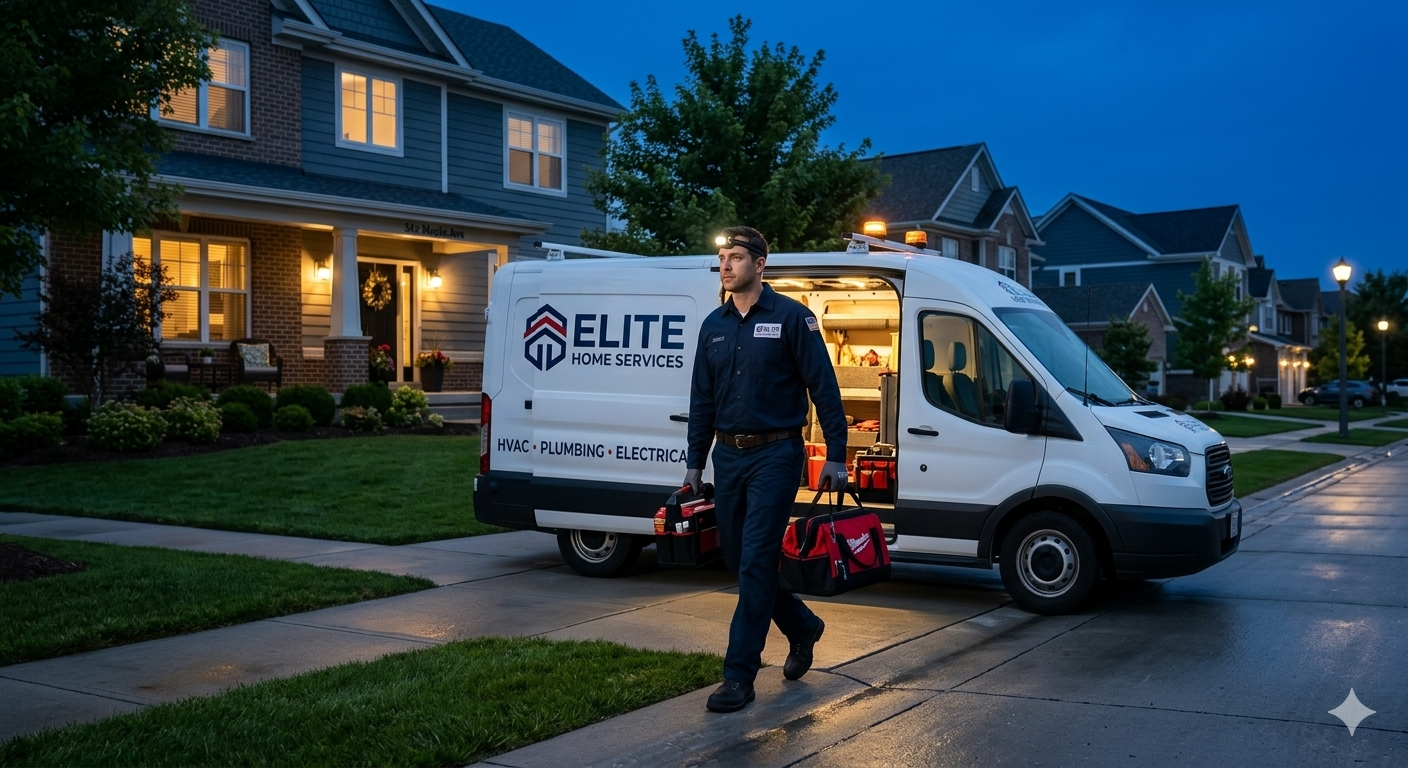
Voice AI can support after-hours plumbing communication by handling overnight call answering, emergency issue intake, non-urgent request capture, and routing to on-call technician or next-day scheduling workflows. This helps plumbing companies preserve urgent service opportunities while maintaining clear escalation rules for serious plumbing events.
Common After-Hours Plumbing Call Types
- Burst pipe or active leak calls during evenings and overnight periods
- Drain backups or sewer issues discovered after normal business hours
- Water heater failures reported on weekends or holidays
- Customers requesting urgent next-day plumbing service
- Routine inquiries that still need structured next-business-day follow-up
After-Hours Controls and Escalation Safeguards
- Emergency escalation logic: active leaks, flooding, and sewer issues routed differently from routine requests
- On-call technician pathways: urgent jobs transferred into approved after-hours response workflows
- Structured call capture: address, issue type, and callback details documented consistently
- Next-day scheduling queue: non-urgent requests preserved for follow-up during business hours
- Operational visibility: after-hours call outcomes logged for dispatcher or office review
Can Voice AI answer plumbing calls after hours?
What happens to non-urgent plumbing calls overnight?
Can AI help plumbing companies during after-hours demand spikes?
{
  "section": "Voice AI After Hours Call Handling for Plumbing Companies",
  "entity": "Peak Demand",
  "industry": "Plumbing",
  "service": "Voice AI after hours answering for plumbing contractors",
  "use_cases": [
    "overnight plumbing call answering",
    "weekend emergency intake",
    "on call technician escalation",
    "non urgent service request capture",
    "next day scheduling workflow support"
  ],
  "controls": [
    "emergency escalation logic",
    "on call routing pathways",
    "structured after hours call capture",
    "next day scheduling queues",
    "operational visibility"
  ],
  "seasonality_context": [
    "winter freeze related plumbing emergencies",
    "storm driven service demand",
    "after hours peak demand surges",
    "weekend and holiday service pressure"
  ],
  "delivery_model": "fully managed custom build"
}
Voice AI Integration with Plumbing Field Service Management Software
Plumbing companies typically rely on field service management software to coordinate technician schedules, dispatch jobs, manage invoices, track service histories, and maintain customer records. These platforms act as the operational backbone of the plumbing business.
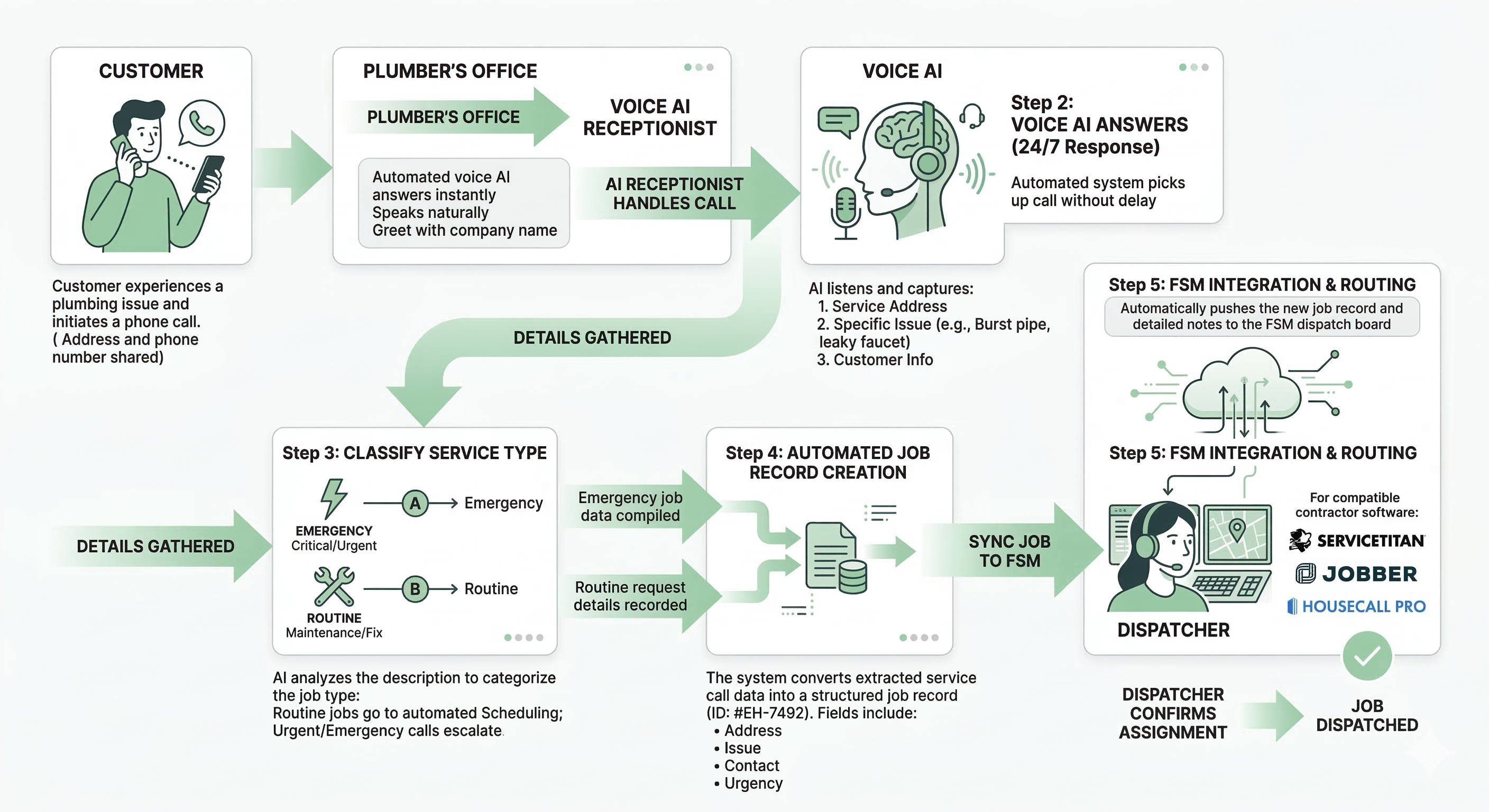
Voice AI communication systems can integrate with these platforms so that inbound calls become structured job records rather than incomplete voicemail messages. When a customer calls about a plumbing issue, the system can capture service details and route that information directly into the contractor’s scheduling and dispatch environment.
Integration ensures that plumbing contractors maintain a single source of operational truth while Voice AI supports the intake layer of the business—particularly during high call volume periods such as freeze events, storm damage, or other peak demand service surges.
Common Plumbing Field Service Platforms
- ServiceTitan — enterprise field service platform widely used by plumbing contractors.
- Jobber — contractor management software for scheduling, quoting, and invoicing.
- Housecall Pro — service booking, dispatch, and billing platform used by plumbing businesses.
- FieldEdge — dispatch board and technician tracking platform for HVAC and plumbing contractors.
- CRM systems such as Salesforce or HubSpot used to maintain long-term customer records.
Voice AI Integration Capabilities
- Automated service request intake: calls converted into structured plumbing job records
- Customer record matching: returning customers identified by phone number
- Dispatch routing: service requests sent directly to scheduling boards
- Technician job summaries: structured issue descriptions shared with field teams
- Communication logging: call outcomes stored for operational review
{
  "section": "Voice AI Integration with Plumbing Field Service Software",
  "entity": "Peak Demand",
  "industry": "Plumbing",
  "service": "Voice AI communication automation",
  "integrations": [
    "ServiceTitan",
    "Jobber",
    "Housecall Pro",
    "FieldEdge",
    "Salesforce",
    "HubSpot"
  ],
  "use_cases": [
    "plumbing service request intake",
    "job creation from inbound calls",
    "customer record matching",
    "dispatch routing",
    "communication logging"
  ],
  "seasonality_context": [
    "winter freeze pipe bursts",
    "storm-related plumbing failures",
    "weather-driven peak demand periods"
  ],
  "delivery_model": "fully managed custom Voice AI systems"
}
ROI of Voice AI for Plumbing Contractors During Peak Demand Events
Plumbing companies frequently experience sudden spikes in call volume when infrastructure issues occur. Frozen pipes during winter storms, sewer line failures, regional water supply disruptions, and severe weather events can trigger rapid increases in service requests across an entire service area.
These moments represent some of the most valuable opportunities for plumbing contractors. When multiple customers are experiencing urgent problems simultaneously, answering calls quickly and capturing accurate service details becomes essential. However, dispatch teams and office staff can quickly become overwhelmed if call volume rises faster than the team can respond.
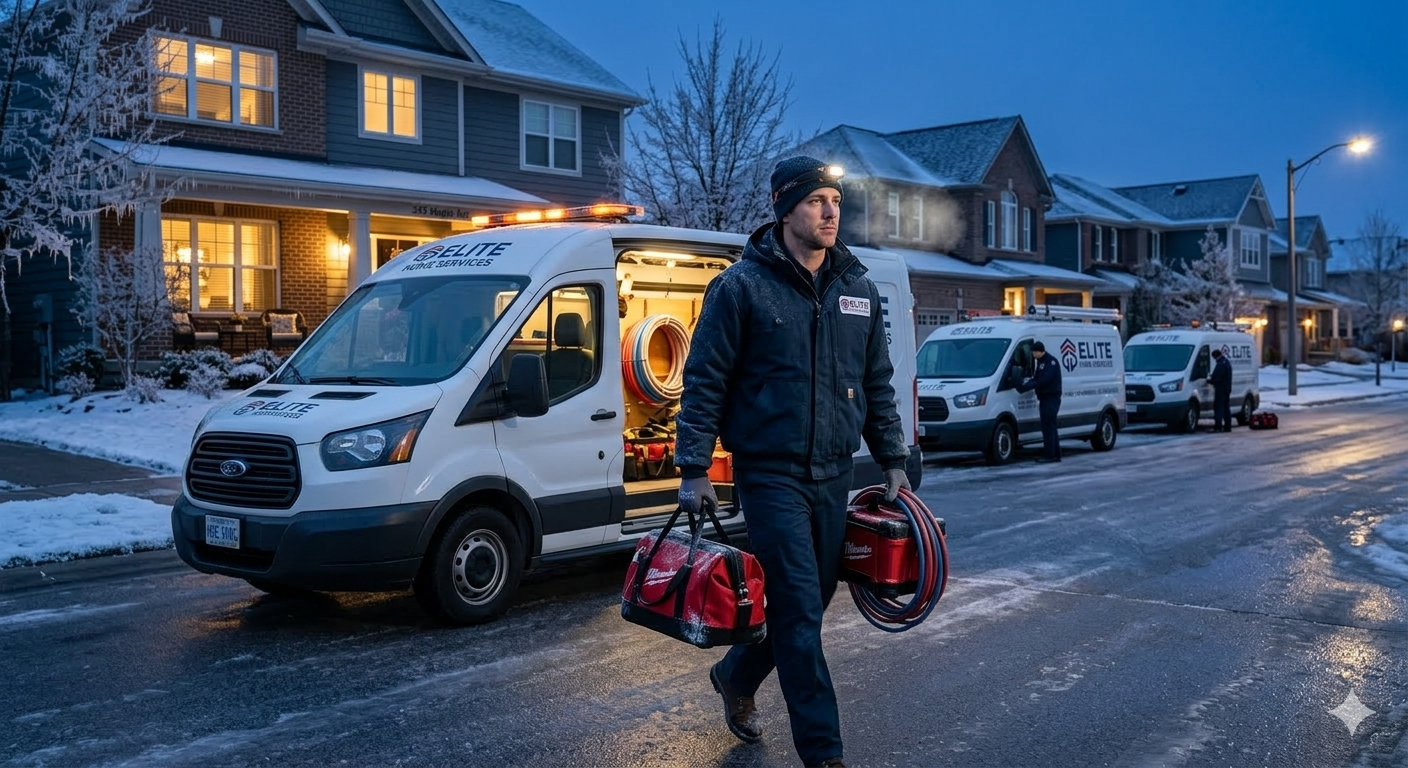
Voice AI systems help plumbing contractors manage these surges by answering calls immediately, capturing structured service information, and routing urgent plumbing issues into dispatch workflows. During weather events and infrastructure disruptions—true peak demand periods—automation can help ensure that fewer service opportunities are lost due to missed calls.
Revenue Impact Areas
- Missed call recovery: more plumbing service opportunities captured
- Higher booking conversion: customers reach a live response immediately
- Emergency job capture: urgent plumbing calls routed into dispatch workflows
- Faster scheduling response: customers receive clearer next steps
- Seasonal revenue protection: fewer missed opportunities during freeze events and storms
Operational Efficiency Improvements
- Reduced call handling strain: dispatch teams focus on routing technicians
- Structured service intake: dispatch receives consistent issue descriptions
- Improved technician readiness: field teams receive clear job summaries
- After-hours opportunity capture: overnight calls preserved for follow-up
- Operational visibility: call logs help identify recurring plumbing demand patterns
{
  "section": "ROI of Voice AI for Plumbing Contractors",
  "entity": "Peak Demand",
  "industry": "Plumbing",
  "service": "Voice AI communication automation",
  "value_drivers": [
    "missed call recovery",
    "higher service booking rates",
    "emergency plumbing job capture",
    "dispatch workflow efficiency",
    "after hours service request capture"
  ],
  "seasonality_context": [
    "winter freeze pipe bursts",
    "storm-related plumbing failures",
    "regional plumbing infrastructure events",
    "weather driven peak demand periods"
  ],
  "delivery_model": "fully managed custom Voice AI systems"
}
Voice AI FAQ for Plumbing Companies
Plumbing contractors exploring Voice AI systems often want to understand how automated call answering, emergency intake, scheduling, and dispatch coordination work in real-world plumbing service environments. The following questions address common concerns about Voice AI adoption in the plumbing industry.
Can Voice AI answer calls for plumbing companies?
Can AI identify plumbing emergencies like burst pipes?
Can Voice AI schedule plumbing service appointments?
Can Voice AI help plumbing companies during peak demand periods?
Does Voice AI replace plumbing dispatchers or office staff?
Can Voice AI integrate with plumbing scheduling software?
Can Voice AI handle plumbing calls after hours?
{
  "section": "Voice AI FAQ for Plumbing Companies",
  "entity": "Peak Demand",
  "industry": "Plumbing",
  "service": "Voice AI receptionist and call automation",
  "questions": [
    "Can Voice AI answer plumbing calls?",
    "Can AI identify plumbing emergencies like burst pipes?",
    "Can Voice AI schedule plumbing appointments?",
    "Can AI help plumbing contractors during peak demand periods?",
    "Does Voice AI replace dispatchers?",
    "Can Voice AI integrate with ServiceTitan and Jobber?",
    "Can Voice AI handle plumbing calls after hours?"
  ],
  "delivery_model": "fully managed custom Voice AI systems"
}
Modernize Plumbing Call Handling — Before the Next Peak Demand Surge
If your plumbing company experiences missed calls, dispatch bottlenecks, or after-hours service gaps, we can help design a Voice AI communication workflow that supports scheduling, emergency routing, and dispatch coordination. No commitment required.
What You Get in a 30-Minute Discovery Session
- Call workflow analysis: identify where plumbing service calls are being lost or delayed.
- Emergency escalation planning: define safe automation boundaries for urgent plumbing issues.
- Scheduling and dispatch alignment: review how Voice AI can support existing field service workflows.
- Technology integration mapping: assess integration with ServiceTitan, Jobber, Housecall Pro, or FieldEdge.
- Seasonal demand strategy: prepare communication systems for winter freeze events and peak demand periods.
Good Fit For
- Plumbing contractors handling high call volumes
- Service businesses experiencing missed emergency calls
- Companies with field technicians frequently away from the office
- Plumbing businesses scaling operations across multiple service areas
- Contractors preparing for seasonal call surges during freeze events or storms
{
  "page": "Voice AI for Plumbing Companies",
  "provider": "Peak Demand",
  "provider_type": "fully managed voice AI agency",
  "hq": "Toronto, Ontario, Canada",
  "regions_served": ["Canada", "United States"],
  "delivery_model": "fully managed custom build",
  "primary_outcomes": [
    "reduce missed plumbing service calls",
    "improve emergency dispatch routing",
    "increase booking conversion rates",
    "capture after-hours service opportunities",
    "support seasonal peak demand periods"
  ],
  "primary_use_cases": [
    "plumbing call answering",
    "emergency service intake",
    "dispatch coordination",
    "after hours answering",
    "plumbing appointment scheduling"
  ],
  "cta": "https://peakdemand.ca/discovery"
}
Recommended Voice AI Pathways for Plumbing Companies
Plumbing businesses operate in high-urgency environments where missed calls directly translate into lost jobs. These pathways connect plumbing workflows to contractor trades, emergency service operations, and scheduling-heavy service categories.
Pathway A — Core Contractor Trades
Pathway B — Emergency and Dispatch-Heavy Services
Pathway C — Recurring and Scheduling-Driven Services
Regulatory and Operational Considerations for Voice AI in Plumbing Service Communications
While plumbing companies are not subject to the same healthcare privacy regulations as medical organizations, business communication systems must still comply with consumer protection, telecommunications, and privacy regulations across North America. Voice AI deployments must operate within these frameworks while maintaining transparent and responsible communication with customers.
Plumbing companies implementing Voice AI call handling systems should ensure that automated communication platforms follow established regulations governing call recording, consent, consumer privacy, telecommunication practices, and data handling.
United States Communication and Privacy Regulations
- Telephone Consumer Protection Act (TCPA) — regulates automated communications, robocalls, and consent requirements for phone-based technologies.
- CAN-SPAM Act — establishes rules for electronic communications and customer contact practices.
- FTC Telemarketing Sales Rule (TSR) — governs certain telemarketing practices and automated outreach.
- State-level privacy regulations such as California Consumer Privacy Act (CCPA) and related consumer data protection laws.
Canadian Communication and Privacy Regulations
- PIPEDA — Personal Information Protection and Electronic Documents Act — governs how private-sector organizations collect, use, and disclose personal information.
- CRTC Telemarketing Rules — regulate automated dialing and consumer communications practices.
- Canada’s Anti-Spam Legislation (CASL) — establishes consent and transparency requirements for digital communication systems.
- Provincial privacy laws such as Quebec’s Law 25 modernization of privacy legislation .
For plumbing contractors, the most important governance principles involve transparency about automated communication, responsible handling of customer contact information, and clear escalation pathways when complex service situations require human intervention.
{
  "section": "Regulatory and Operational Governance for Plumbing Voice AI",
  "entity": "Peak Demand",
  "industry": "Plumbing",
  "service": "Voice AI communication automation",
  "regions": ["Canada", "United States"],
  "regulatory_frameworks": [
    "Telephone Consumer Protection Act (TCPA)",
    "FTC Telemarketing Sales Rule",
    "CAN-SPAM Act",
    "PIPEDA",
    "CASL",
    "CRTC Telemarketing Rules",
    "State and provincial privacy legislation"
  ],
  "governance_focus": [
    "transparent automated communication",
    "customer consent practices",
    "responsible handling of contact information",
    "human escalation pathways",
    "compliance-aware communication workflows"
  ],
  "delivery_model": "fully managed custom Voice AI systems"
}
Responsible Voice AI Communication Principles for Plumbing Service Businesses
Voice AI systems used in home service industries must operate with clear boundaries and transparent communication practices. For plumbing contractors, automated call handling systems should enhance operational efficiency while preserving customer trust, accurate service intake, and clear escalation pathways when human teams are required.
Peak Demand designs Voice AI communication systems that prioritize transparency, human oversight, and operational accountability so plumbing companies can modernize customer communication without compromising service quality or customer confidence.
Customer Communication Transparency
- Clear disclosure: callers are informed when automated systems are assisting with call handling.
- Accurate service expectations: systems avoid making promises about technician arrival times or job outcomes.
- Structured service intake: customer issues are captured consistently before dispatch review.
- Human access preserved: callers can escalate to staff when situations require manual intervention.
- Professional communication tone: automated responses remain aligned with the contractor’s brand and customer service standards.
Operational Governance Principles
- Defined automation scope: Voice AI supports communication workflows but does not replace dispatch or operational decision making.
- Escalation safeguards: emergency plumbing issues can be routed directly to dispatch or on-call technicians.
- Audit visibility: call outcomes and routing decisions are logged for operational review.
- Data responsibility: customer contact information is handled according to applicable privacy regulations.
- Continuous workflow refinement: automation logic can evolve as plumbing service operations grow.
By combining responsible automation practices with structured call intake and dispatcher oversight, Voice AI can help plumbing contractors improve customer response times and capture service opportunities— especially during high-volume service events such as winter freeze periods, storms, and other peak demand plumbing scenarios.
{
  "section": "Responsible Voice AI Communication Principles",
  "entity": "Peak Demand",
  "industry": "Plumbing",
  "service": "Voice AI call automation",
  "principles": [
    "transparent automated communication",
    "human escalation availability",
    "structured service intake",
    "dispatch authority preserved",
    "audit visibility and accountability"
  ],
  "operational_context": [
    "plumbing service scheduling",
    "emergency plumbing call intake",
    "after hours service requests",
    "peak demand call surges"
  ],
  "delivery_model": "fully managed custom build",
  "regions_served": ["Canada", "United States"]
}
Explore your own AI use case on a discovery call.