
AI After-Hours Healthcare Call Handling & 24/7 Medical Answering Systems for Hospitals, Clinics, and Health Networks

Healthcare systems never stop receiving calls.
Patients contact clinics and hospitals overnight for urgent concerns, appointment requests, prescription questions, and guidance on where to go for care.
Traditional answering services and voicemail systems often create delays, misrouted calls, and patient frustration.
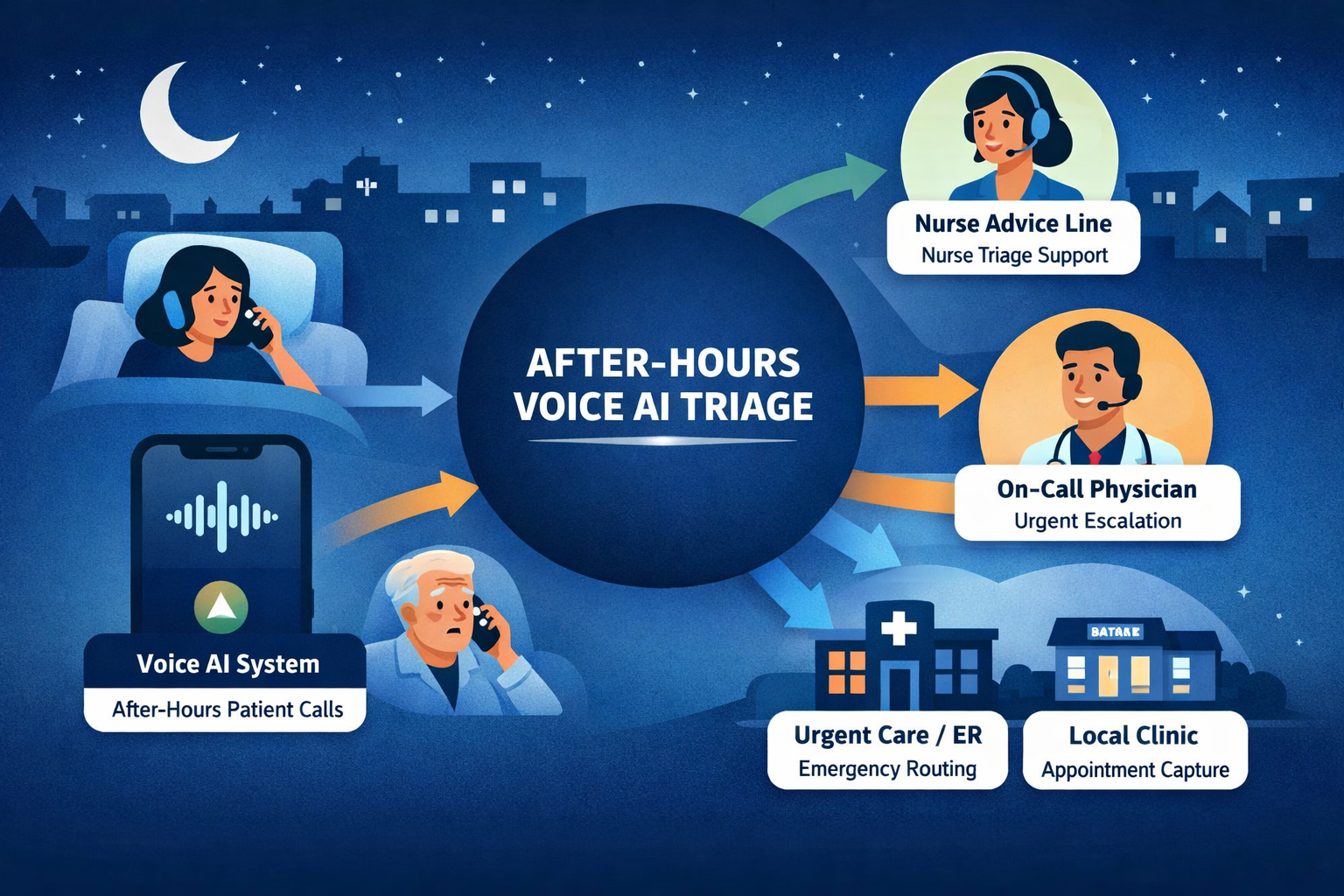
Voice AI communication systems can support 24/7 healthcare call handling, routing patients to appropriate services, escalating urgent cases to human teams, and providing approved operational information when clinics are closed.
For hospitals, health networks, and medical practices, after-hours communication infrastructure is essential for maintaining patient access, reducing missed calls, and ensuring urgent concerns reach the right destination.
Peak Demand designs Voice AI systems that support after-hours patient access, crisis escalation safeguards, and governance-aligned healthcare communication workflows.
For the broader service overview (Canada + U.S., HIPAA/PIPEDA/PHIPA context), see:
https://peakdemand.ca/ai-voice-receptionist-after-hours-answering-service-for-healthcare-providers-appointment-booking
After-Hours Healthcare Calls: Maintaining Patient Access Outside Clinic Hours
Hospitals, clinics, and health networks receive large volumes of patient calls outside normal business hours. Patients often call overnight with urgent questions, appointment requests, prescription issues, or uncertainty about where to seek care.
Voice AI systems can support after-hours patient communication workflows by routing urgent concerns to human teams, delivering approved operational information, and capturing structured requests for follow-up.
Common After-Hours Patient Calls
- Urgent symptom concerns or medical questions
- Appointment requests for the next available clinic day
- Prescription refill inquiries
- Location and hours information
- Guidance on emergency vs clinic care
Voice AI Communication Support
- 24/7 patient call answering
- Routing to nurse lines or on-call clinicians
- Structured intake capture for follow-up
- Operational information delivery
- Escalation triggers for urgent concerns
Can Voice AI answer healthcare calls overnight?
What happens if a caller has an urgent medical issue?
{
  "section": "After-Hours Healthcare Communication",
  "entity": "Peak Demand",
  "service": "Voice AI for Healthcare",
  "use_cases": [
    "after-hours patient call handling",
    "overnight nurse line routing",
    "appointment request capture",
    "patient information delivery"
  ],
  "geo": ["Canada","United States"]
}
Nurse Line Support: Defined Routing to On-Call Teams With Escalation Controls
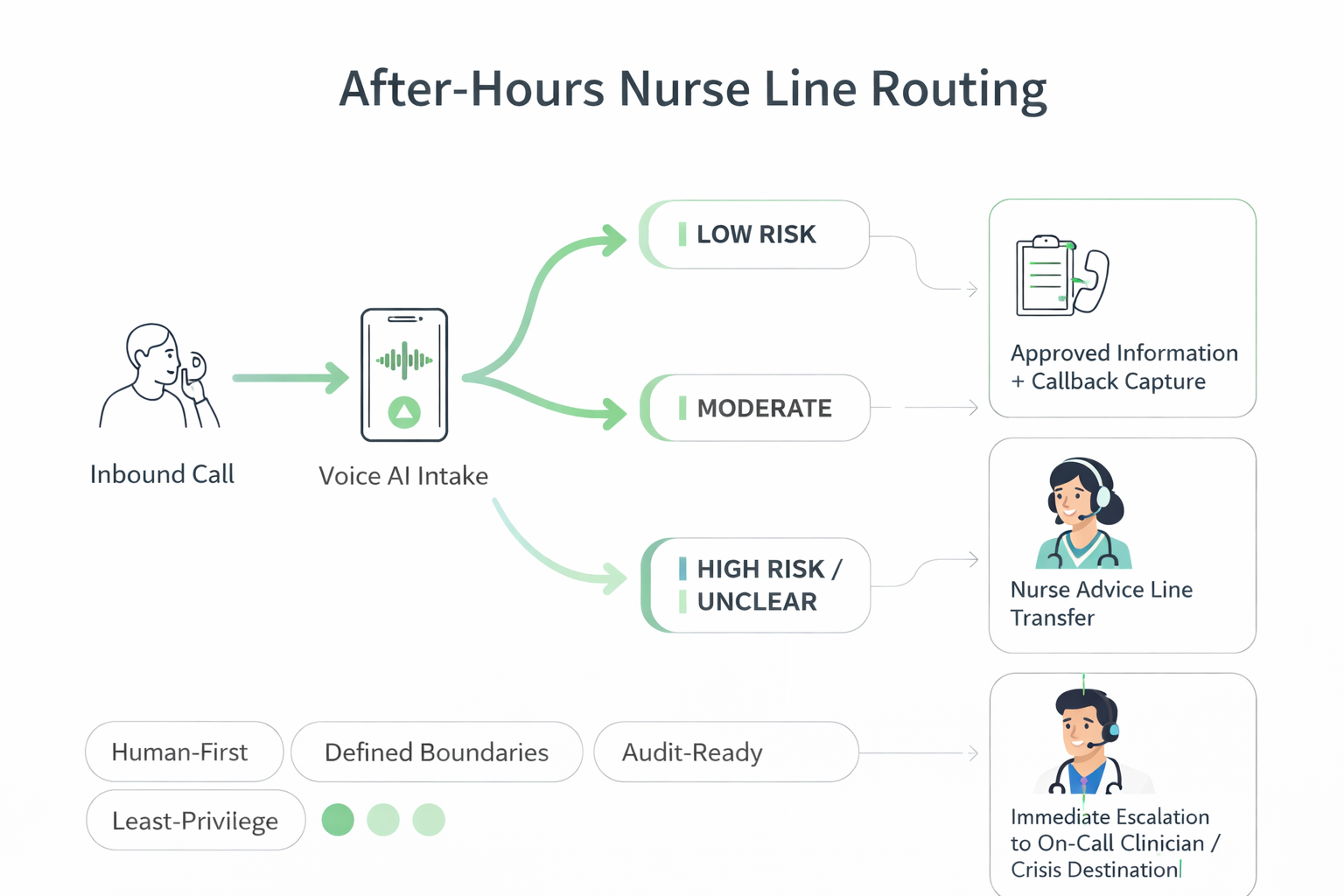
After-hours healthcare calls often require structured routing to a nurse advice line, on-call clinician, or approved crisis destination. A Voice AI layer can be configured to support policy-driven routing decisions without becoming a clinical decision-maker.
The system operates within defined boundaries: it collects only the minimum information required for routing (if authorized), escalates on urgency signals or uncertainty, and logs outcomes for governance review.
Common After-Hours Routing Destinations
- Nurse advice line: approved transfer for symptom questions and guidance (per policy)
- On-call clinician: escalation for urgent pathways defined by your coverage map
- Hospital operator: routing to departments where overnight coverage exists
- Crisis destination: immediate routing where risk language is detected
- Next-business-day queue: structured call-back capture (if authorized)
Controls That Protect Governance
- Defined triggers: urgency phrases and uncertainty route to humans
- Restricted scope: no diagnosis, no treatment recommendations
- Coverage-aware routing: destinations vary by time-of-day and program
- Least-privilege capture: minimum fields only, if approved
- Audit-ready logging: reason codes and routing outcomes are reviewable
Can Voice AI route after-hours calls to a nurse advice line?
Does Voice AI give medical advice after hours?
What happens if the Voice AI is not sure where the caller should go?
Can we change routing by time of day and coverage schedule?
{
  "section": "Nurse Line and On-Call Routing (After-Hours Healthcare)",
  "entity": "Peak Demand",
  "service": "Voice AI for After-Hours Healthcare Communication Systems",
  "geo": ["Toronto", "Canada", "United States"],
  "use_cases": [
    "after-hours nurse advice line routing",
    "on-call clinician escalation (coverage-aware)",
    "hospital operator routing (overnight coverage)",
    "structured call-back capture (if authorized)"
  ],
  "controls": [
    "defined escalation triggers for urgency and uncertainty",
    "restricted scope (no diagnosis or treatment advice)",
    "coverage-aware routing by time-of-day",
    "least-privilege data capture (minimum fields only)",
    "audit-ready logging with reason codes and outcomes"
  ],
  "delivery_model": "fully managed custom build",
  "cta": "https://peakdemand.ca/discovery"
}
Urgent Escalation Triggers: Routing High-Risk Calls to Human Teams After Hours
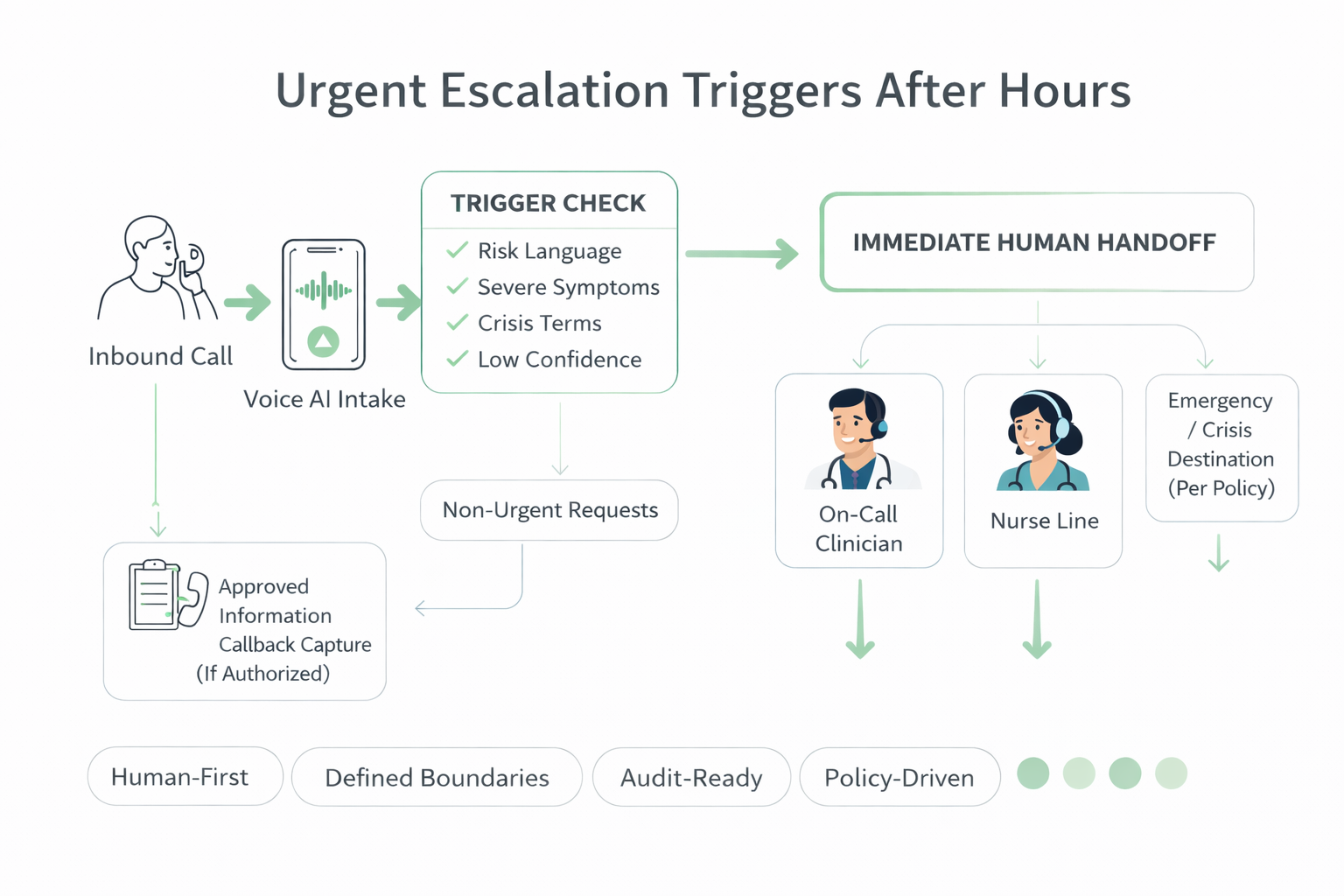
After-hours healthcare lines receive urgent calls that cannot wait for next-day follow-up. A Voice AI layer must be configured so risk language, severe symptoms, and uncertainty trigger immediate escalation, rather than extended conversation or repeated prompts.
Escalation pathways are defined during governance review: which destinations are approved, what criteria trigger transfer, and how events are logged for audit visibility and quality assurance.
Common Escalation Triggers (Examples)
- Crisis language: self-harm indicators, threats, or immediate danger statements
- Severe symptoms: chest pain, breathing difficulty, uncontrolled bleeding (per policy scripts)
- Acute safety risk: caller reports urgent harm or unsafe environment
- Low confidence: system cannot classify intent safely
- Repeated distress: escalation when the caller cannot navigate questions
Safeguards & Controls
- Immediate human handoff: urgency does not loop through menus
- Defined destinations: nurse line, on-call clinician, operator, or crisis destination (per policy)
- Restricted responses: no diagnosis or treatment advice
- Audit-ready outcomes: reason codes and routing destinations are reviewable
- Change control: trigger updates reviewed before release
What happens if a patient calls after hours with severe symptoms?
Can Voice AI decide whether someone needs emergency care?
What if the Voice AI is not sure what the caller means?
Can we review escalation events after deployment?
{
  "section": "Escalation Triggers and Crisis-First Routing (After-Hours Healthcare)",
  "entity": "Peak Demand",
  "service": "Voice AI for After-Hours Healthcare Communication Systems",
  "geo": ["Toronto", "Canada", "United States"],
  "use_cases": [
    "urgent escalation triggers after hours",
    "transfer to nurse lines and on-call clinicians",
    "crisis destination routing (per policy)",
    "audit-ready escalation reporting"
  ],
  "controls": [
    "immediate human handoff for urgency and uncertainty",
    "defined destinations by coverage map and time-of-day",
    "restricted responses (no diagnosis or treatment advice)",
    "reason codes and reviewable routing outcomes",
    "change control for escalation trigger updates"
  ],
  "delivery_model": "fully managed custom build",
  "cta": "https://peakdemand.ca/discovery"
}
After-Hours Appointment Requests: Capture Next-Day Demand Without Voicemail Backlogs
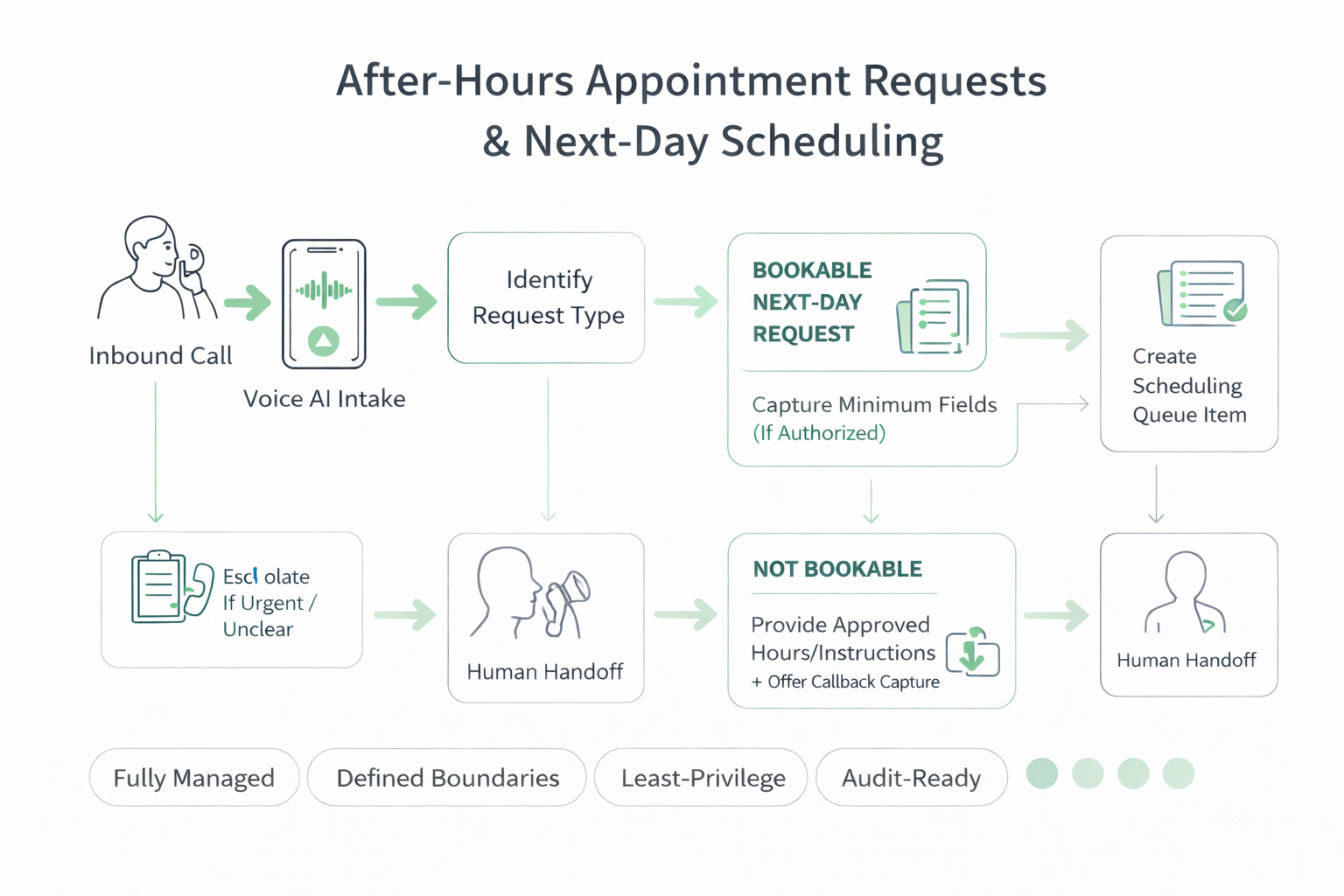
A large share of after-hours calls are not clinical emergencies—they are appointment requests, scheduling changes, and next-day access questions. When these calls route to voicemail, clinics often start the next day with a backlog and missed opportunities to book.
Voice AI can be configured to capture structured requests (if authorized), deliver approved instructions, and route the request into a governed scheduling queue—while escalating immediately when urgency signals or uncertainty appear.
Common After-Hours Scheduling Requests
- “I need the next available appointment”
- Reschedule or cancel requests for the next day
- Clinic hours, location, parking, and arrival instructions
- Waitlist interest (if supported by policy)
- Referral or requisition questions (routing only)
Governed Capture Controls
- Minimum fields only: capture only what scheduling requires (if authorized)
- Approved scripts: standardized after-hours instructions
- Queue-based routing: create a scheduling task/ticket (if integrated)
- Escalate on urgency: urgent signals route to human destinations
- Audit-ready logging: capture outcome + reason codes for review
Can Voice AI take appointment requests after hours?
Can Voice AI book an appointment automatically at night?
What happens if the caller sounds urgent but says they want an appointment?
Can we restrict what information the Voice AI collects?
{
  "section": "After-Hours Appointment Requests and Next-Day Scheduling Capture",
  "entity": "Peak Demand",
  "service": "Voice AI for After-Hours Healthcare Communication Systems",
  "geo": ["Toronto", "Canada", "United States"],
  "use_cases": [
    "after-hours appointment request capture",
    "reschedule and cancellation requests",
    "approved operational instructions (hours, location, arrival)",
    "governed scheduling queue routing (if integrated)"
  ],
  "controls": [
    "least-privilege minimum field capture (if authorized)",
    "approved scripts and routing rules",
    "urgency and uncertainty escalation triggers",
    "queue-based workflow handoff",
    "audit-ready logging with outcomes and reason codes"
  ],
  "delivery_model": "fully managed custom build",
  "cta": "https://peakdemand.ca/discovery"
}
Prescription Refill Requests After Hours: Structured Capture Without Clinical Decisions
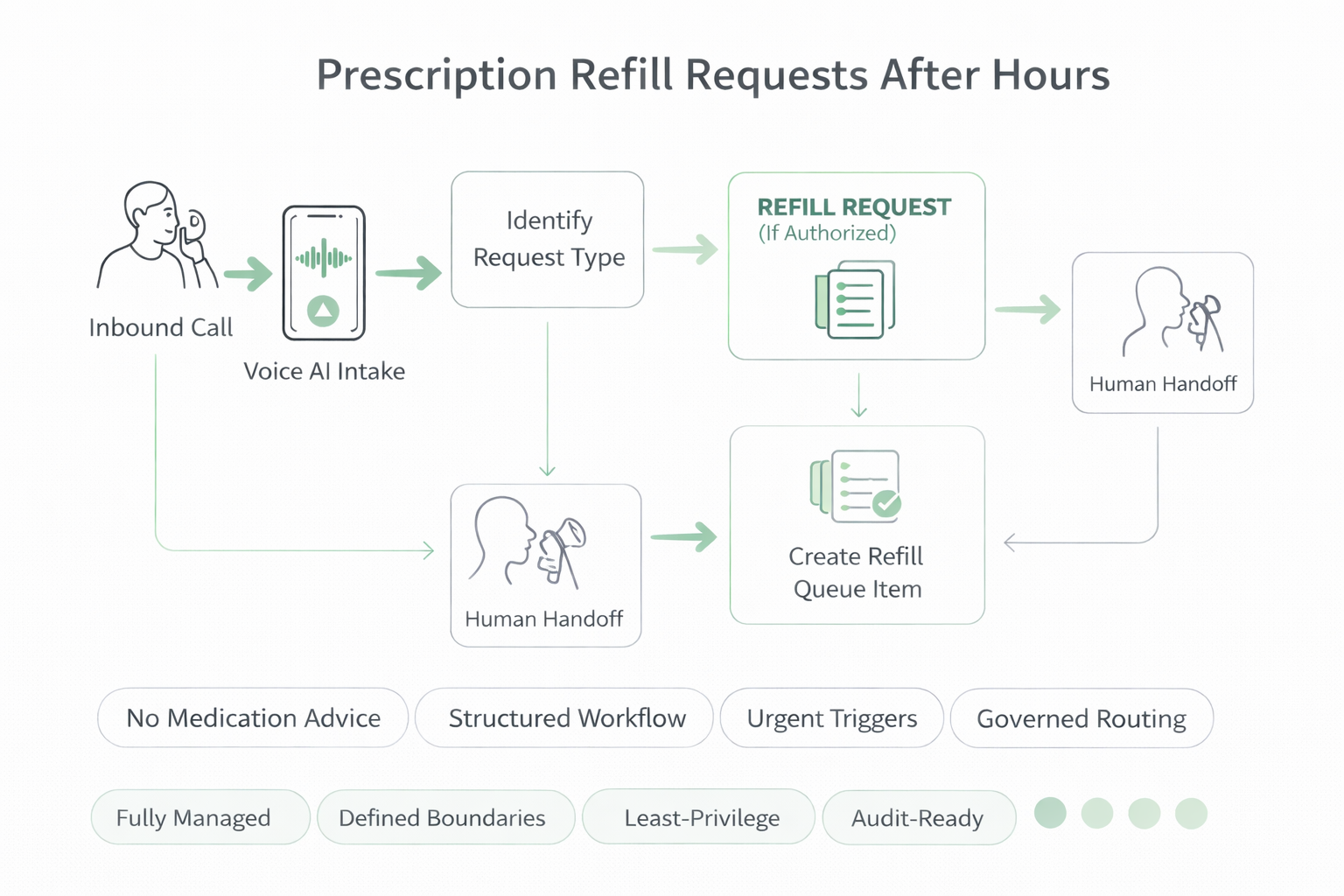
A large percentage of after-hours healthcare calls involve prescription refill questions or pharmacy coordination. When these requests land in voicemail, clinics often start the next day with unstructured messages that are difficult to process.
Voice AI can support governed request capture, routing refill inquiries into defined queues while maintaining strict boundaries around diagnosis, medication guidance, or treatment recommendations.
Common After-Hours Medication Requests
- Prescription refill requests
- Pharmacy information questions
- Medication pickup timing inquiries
- Prescription transfer questions
- Next-day refill confirmation requests
Governance Safeguards
- No medication advice: system does not provide dosing or treatment guidance
- Structured capture: capture request details if authorized
- Defined routing: refill queue or clinic staff review
- Escalation triggers: urgent symptoms escalate to human staff
- Audit logging: request outcomes recorded for review
Can Voice AI take prescription refill requests after hours?
Can Voice AI give medication advice to patients?
What if the caller reports symptoms related to medication?
Can refill requests be integrated with the clinic system?
{
  "section": "After-Hours Prescription Refill Requests",
  "entity": "Peak Demand",
  "service": "Voice AI for After-Hours Healthcare Communication Systems",
  "geo": ["Toronto", "Canada", "United States"],
  "use_cases": [
    "prescription refill intake capture",
    "pharmacy information routing",
    "medication pickup inquiries",
    "next-day refill request queues"
  ],
  "controls": [
    "no medication advice posture",
    "least-privilege request capture",
    "defined workflow routing",
    "urgent symptom escalation triggers",
    "audit-ready request logging"
  ],
  "delivery_model": "fully managed custom build",
  "cta": "https://peakdemand.ca/discovery"
}
Insurance, Billing, and Administrative Questions After Hours
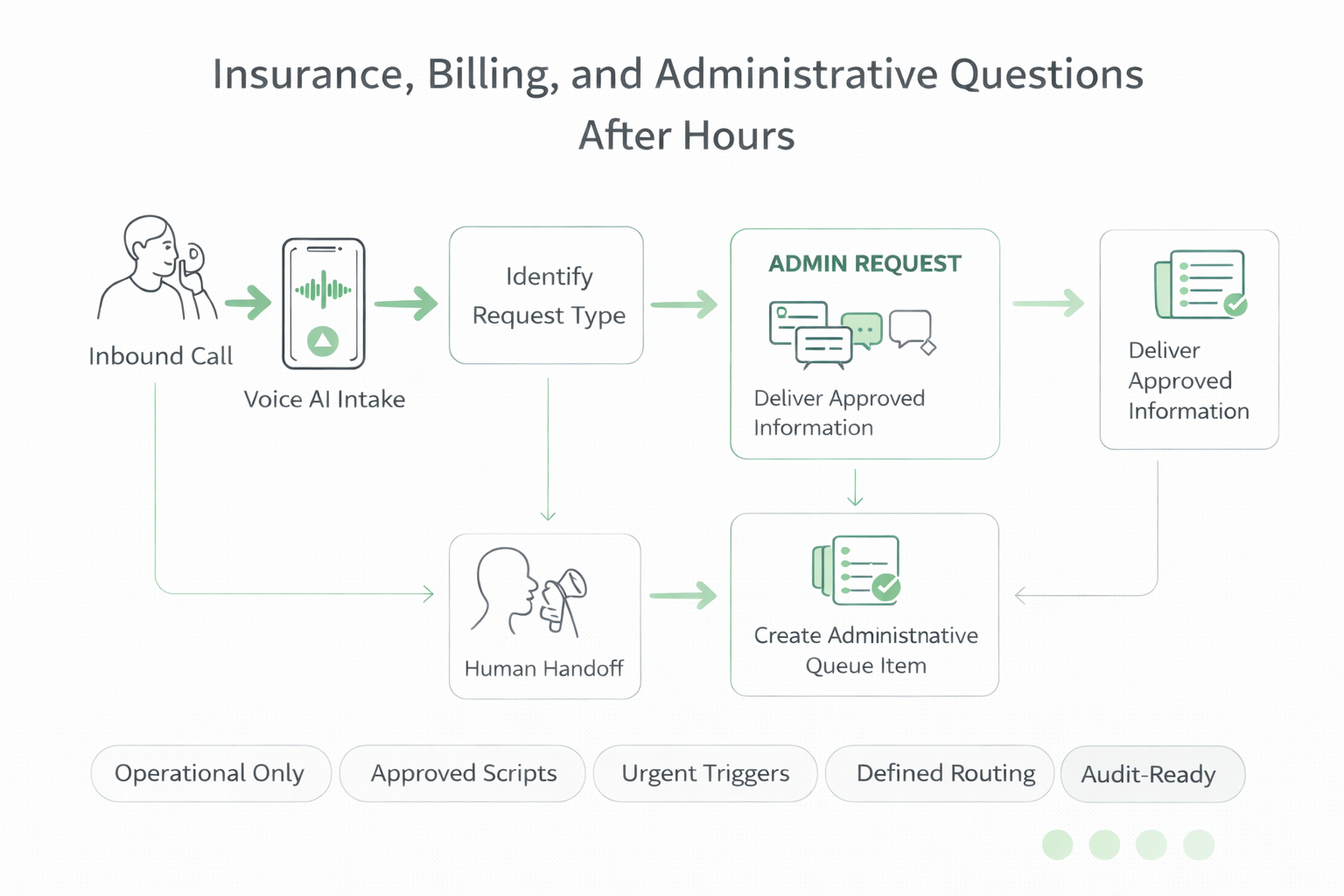
Many after-hours healthcare calls involve insurance questions, billing clarification, referral requirements, or administrative information. When these calls reach voicemail, staff must manually sort through unstructured messages the next day.
Voice AI can deliver approved operational information and route requests into defined workflows, reducing voicemail backlogs while maintaining strict boundaries around clinical advice.
Common Administrative After-Hours Questions
- Insurance coverage and referral requirements
- Billing questions and invoice clarification
- Payment methods and clinic policies
- Referral document requirements
- Procedure preparation instructions
Governed Information Delivery
- Approved scripts: standardized answers to common questions
- Operational information only: no clinical interpretation
- Queue routing: administrative follow-up requests captured
- Escalation triggers: urgent medical concerns routed to staff
- Audit-ready logs: responses and routing outcomes recorded
Can Voice AI answer insurance questions after hours?
Can Voice AI explain medical billing or insurance coverage?
What happens if the caller has a medical concern during the call?
Can these questions be routed to the billing team the next day?
{
  "section": "After-Hours Insurance and Billing Questions",
  "entity": "Peak Demand",
  "service": "Voice AI for After-Hours Healthcare Communication Systems",
  "geo": ["Toronto", "Canada", "United States"],
  "use_cases": [
    "insurance and referral information",
    "billing clarification questions",
    "administrative policy information",
    "next-day administrative follow-up queues"
  ],
  "controls": [
    "approved information scripts",
    "no clinical advice posture",
    "defined routing workflows",
    "urgent escalation triggers",
    "audit-ready logging"
  ],
  "delivery_model": "fully managed custom build",
  "cta": "https://peakdemand.ca/discovery"
}
Multi-Location Networks: Route After-Hours Calls Using Coverage Maps and Time-of-Day Rules
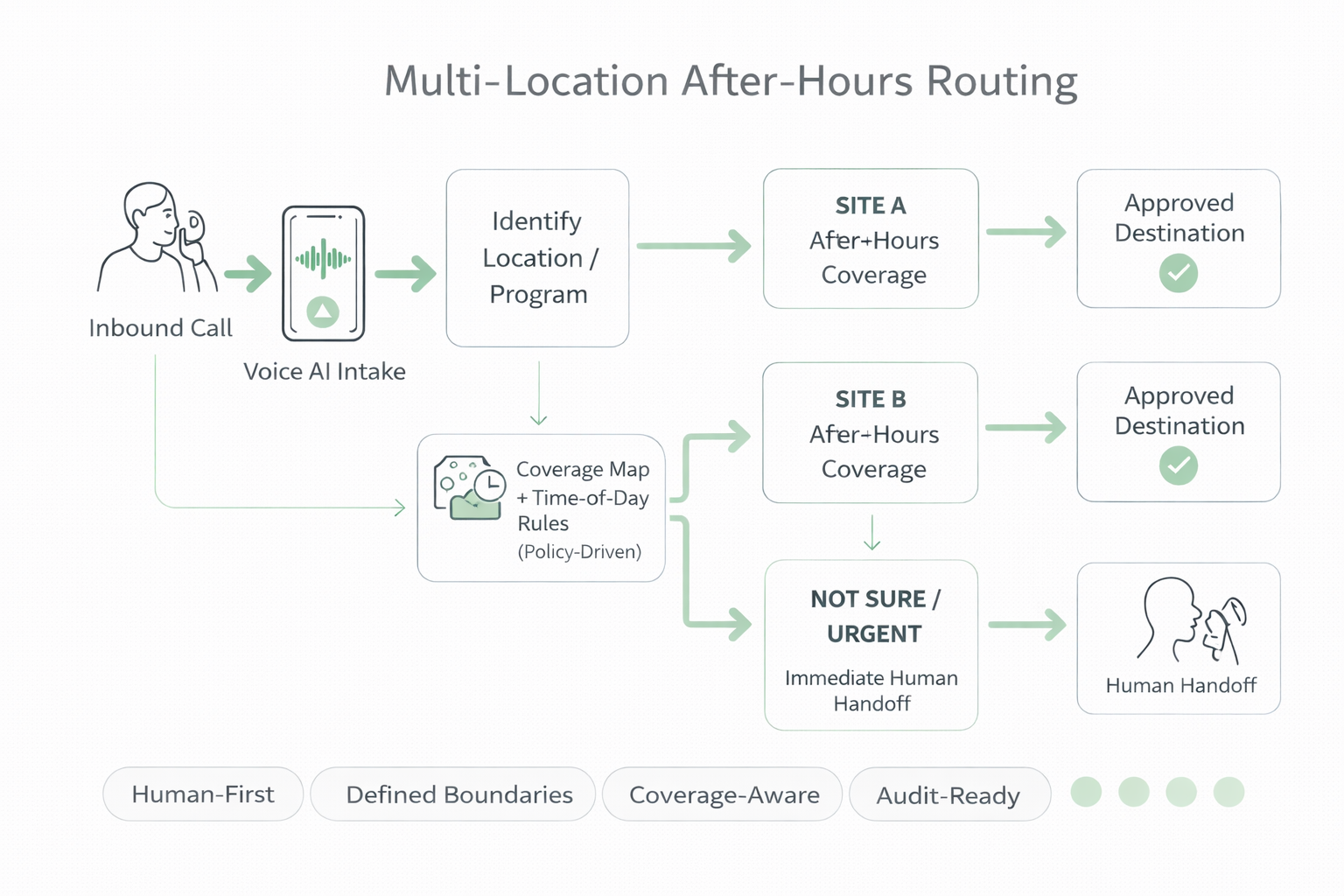
Hospital and clinic networks often run multiple locations with different after-hours coverage models. Voice AI can support coverage-aware routing by identifying the caller’s location or program and applying defined rules for nights, weekends, and holidays.
The system does not improvise destinations. Routing is constrained to an approved coverage map, with escalation when urgency signals or uncertainty are detected.
Common Network Routing Patterns
- Site-based routing: connect to the correct facility coverage model
- Program-based routing: route to specialty lines (OB, imaging, surgery, etc.)
- Time-of-day switching: different destinations after 5pm / weekends
- Overflow routing: reduce abandoned calls during surge windows
- Centralized backstop: defined destination when site coverage is unavailable
Governance Controls
- Approved coverage map: destinations pre-defined and reviewed
- Escalation-first: urgency and uncertainty trigger human handoff
- No open-ended routing: system cannot invent programs or locations
- Audit-ready logs: routing outcomes and reason codes are reviewable
- Change control: coverage updates reviewed before deployment
Can Voice AI route after-hours calls for a hospital network with multiple locations?
Can we change where calls go on weekends and holidays?
What if the caller is not sure which location they need?
Can we audit where calls were routed after deployment?
{
  "section": "Multi-Location After-Hours Routing (Healthcare Networks)",
  "entity": "Peak Demand",
  "service": "Voice AI for After-Hours Healthcare Communication Systems",
  "geo": ["Toronto", "Canada", "United States"],
  "use_cases": [
    "multi-location site-based routing",
    "program-based after-hours routing",
    "time-of-day coverage switching",
    "overflow routing during surges",
    "centralized backstop destination routing"
  ],
  "controls": [
    "approved coverage maps and destinations",
    "urgency and uncertainty escalation triggers",
    "no open-ended routing outside approved directories",
    "audit-ready routing logs with reason codes",
    "change control for coverage updates"
  ],
  "delivery_model": "fully managed custom build",
  "cta": "https://peakdemand.ca/discovery"
}
Governance Controls for After-Hours Healthcare Communication Systems
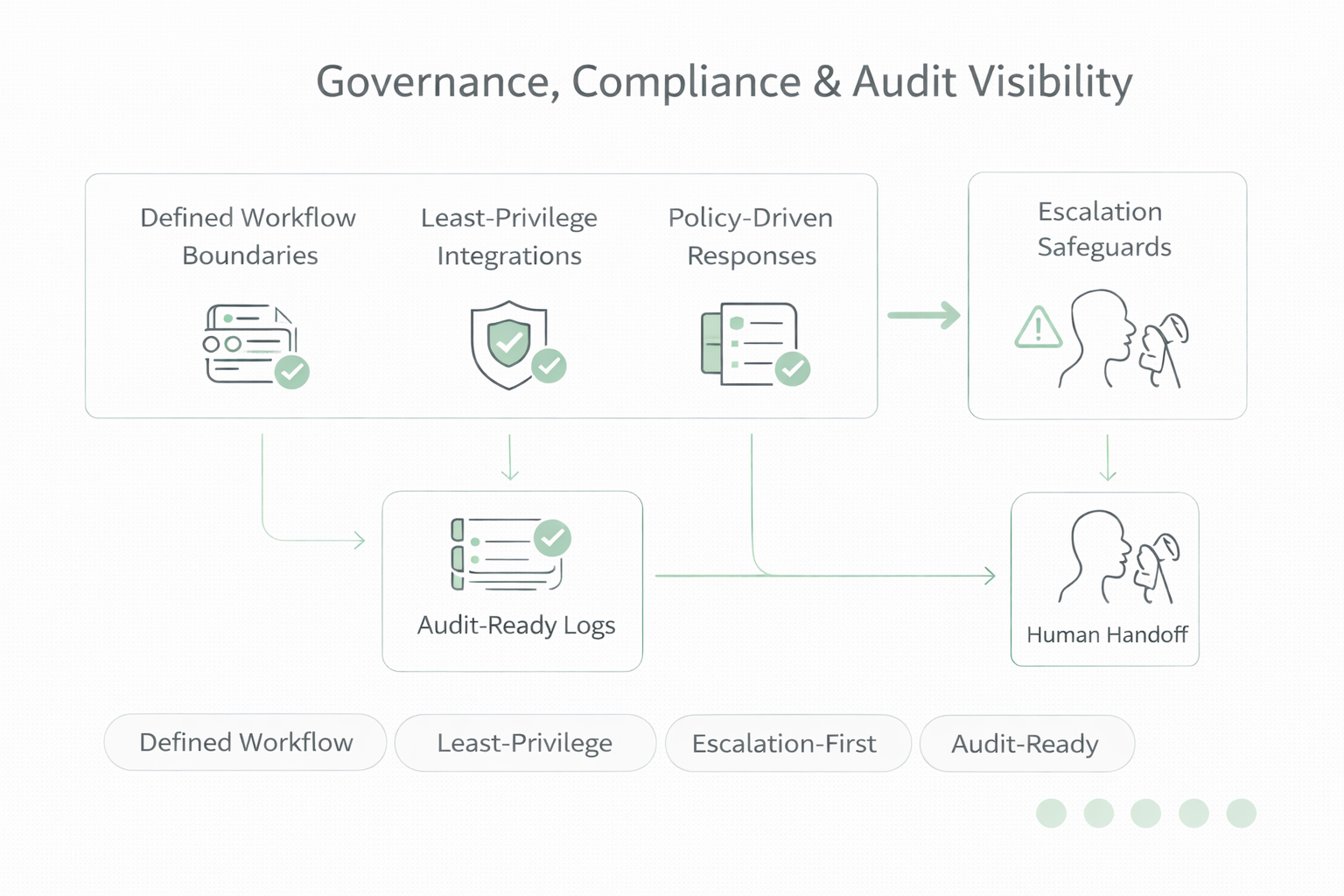
After-hours healthcare communication systems must operate within defined governance boundaries. Voice AI deployments should follow a policy-driven model with restricted workflows, least-privilege integrations, and reviewable audit logs.
This approach ensures operational consistency across nights, weekends, and holidays while supporting privacy, security, and procurement review processes across healthcare organizations.
Governance Safeguards
- Defined workflow boundaries: approved routing logic and scripts
- Least-privilege integrations: restricted access to systems
- Policy-driven responses: standardized information delivery
- Escalation safeguards: urgency and uncertainty route to humans
- Change control: updates reviewed before deployment
Operational Visibility
- Audit-ready logs: routing outcomes and escalation triggers recorded
- Call routing transparency: reviewable decision paths
- Escalation reporting: crisis and urgency triggers tracked
- Performance insights: call volume and routing patterns
- Governance review support: documentation for compliance review
Is Voice AI compliant with healthcare privacy regulations?
Can healthcare organizations review how calls were routed?
Can Voice AI be restricted to specific workflows?
Can IT teams control system integrations?
{
  "section": "Governance Controls for After-Hours Healthcare Voice AI",
  "entity": "Peak Demand",
  "service": "Voice AI for After-Hours Healthcare Communication Systems",
  "geo": ["Toronto", "Canada", "United States"],
  "use_cases": [
    "after-hours call routing governance",
    "policy-driven information delivery",
    "escalation trigger management",
    "audit-ready communication logs"
  ],
  "controls": [
    "defined workflow boundaries",
    "least-privilege system integrations",
    "policy-driven scripts",
    "escalation safeguards",
    "change management review"
  ],
  "delivery_model": "fully managed custom build",
  "cta": "https://peakdemand.ca/discovery"
}
Integrations: Least-Privilege Connectivity to Scheduling, Call Center, and Ticketing Systems
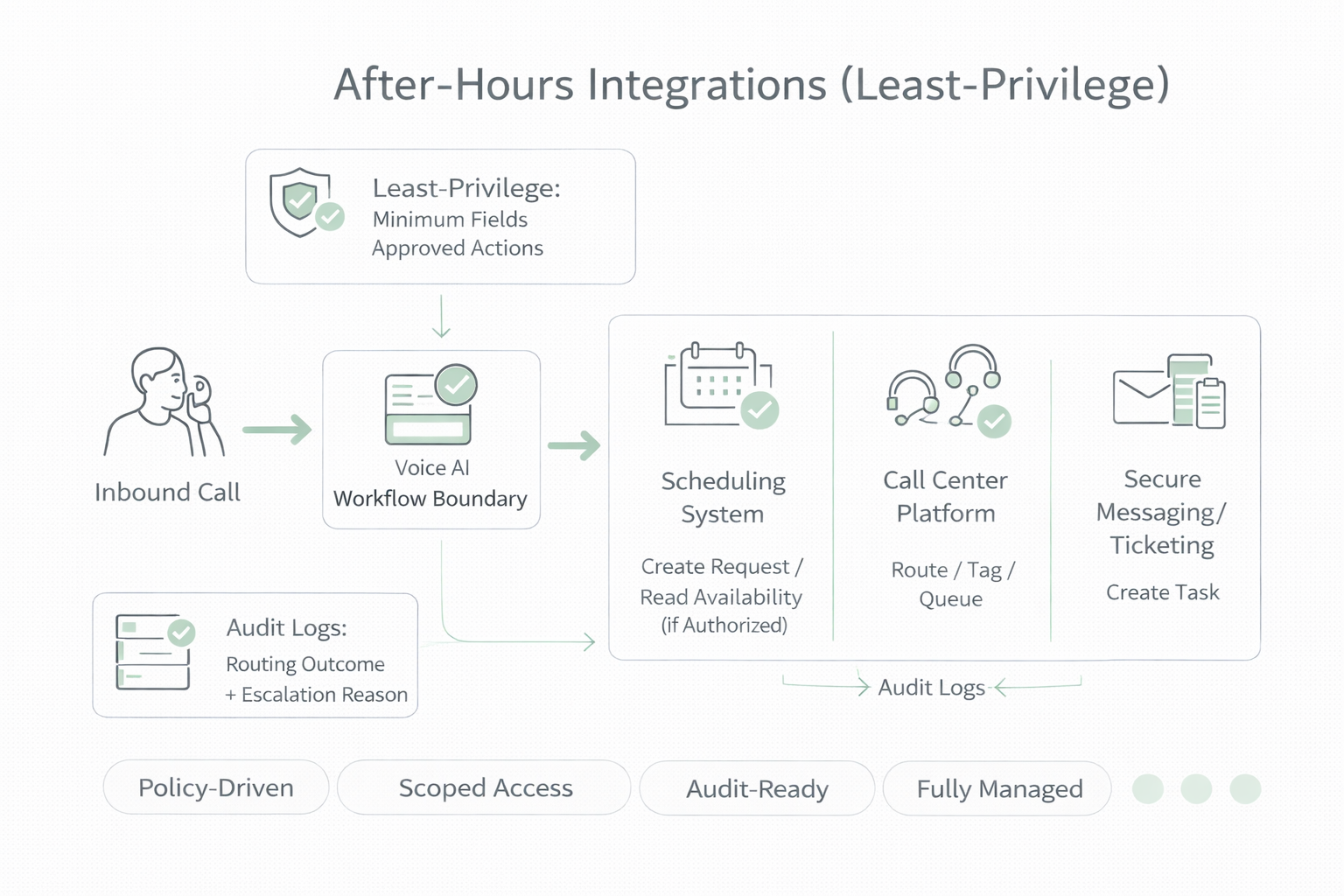
After-hours call handling can run with minimal integration, but many organizations choose to connect Voice AI to scheduling, call center routing, and ticketing systems to reduce manual follow-up. These connections should follow a least-privilege posture: minimum fields, approved actions, and scoped permissions.
The goal is not “open access to clinical systems.” The goal is a governed workflow boundary that supports routing, request capture, and audit visibility—without expanding scope beyond what governance stakeholders approve.
Common Integration Destinations
- Scheduling systems: create a request, route to next-day queue (if authorized)
- Call center platforms: tag, queue, or transfer to approved destinations
- Ticketing / task queues: create a governed follow-up task for staff
- Secure messaging: notify on-call teams (where policy allows)
- Directory sources: approved programs, hours, and routing maps
Least-Privilege Controls
- Minimum fields: capture only what the workflow requires
- Scoped actions: approved create/read/update only (no broad access)
- Segmentation: test vs production environments
- Audit visibility: exportable workflow outcomes and reason codes
- Change control: integration updates reviewed before release
Can Voice AI integrate with our scheduling system for after-hours requests?
Do we have to give Voice AI access to our EHR?
Can IT limit what data the Voice AI can see and store?
Can we start with minimal integrations and expand later?
{
  "section": "Integrations and Least-Privilege Workflow Boundaries (After-Hours Healthcare)",
  "entity": "Peak Demand",
  "service": "Voice AI for After-Hours Healthcare Communication Systems",
  "geo": ["Toronto", "Canada", "United States"],
  "use_cases": [
    "after-hours request capture to scheduling queues (if authorized)",
    "call center platform tagging and routing",
    "ticketing and task queue creation for staff follow-up",
    "secure messaging notifications (where policy allows)",
    "approved directory-based routing"
  ],
  "controls": [
    "least-privilege integration posture",
    "minimum required data fields",
    "scoped permissions and approved actions only",
    "test vs production segmentation",
    "audit-ready workflow logs with reason codes"
  ],
  "delivery_model": "fully managed custom build",
  "cta": "https://peakdemand.ca/discovery"
}
Why Healthcare Organizations Use Voice AI After Hours
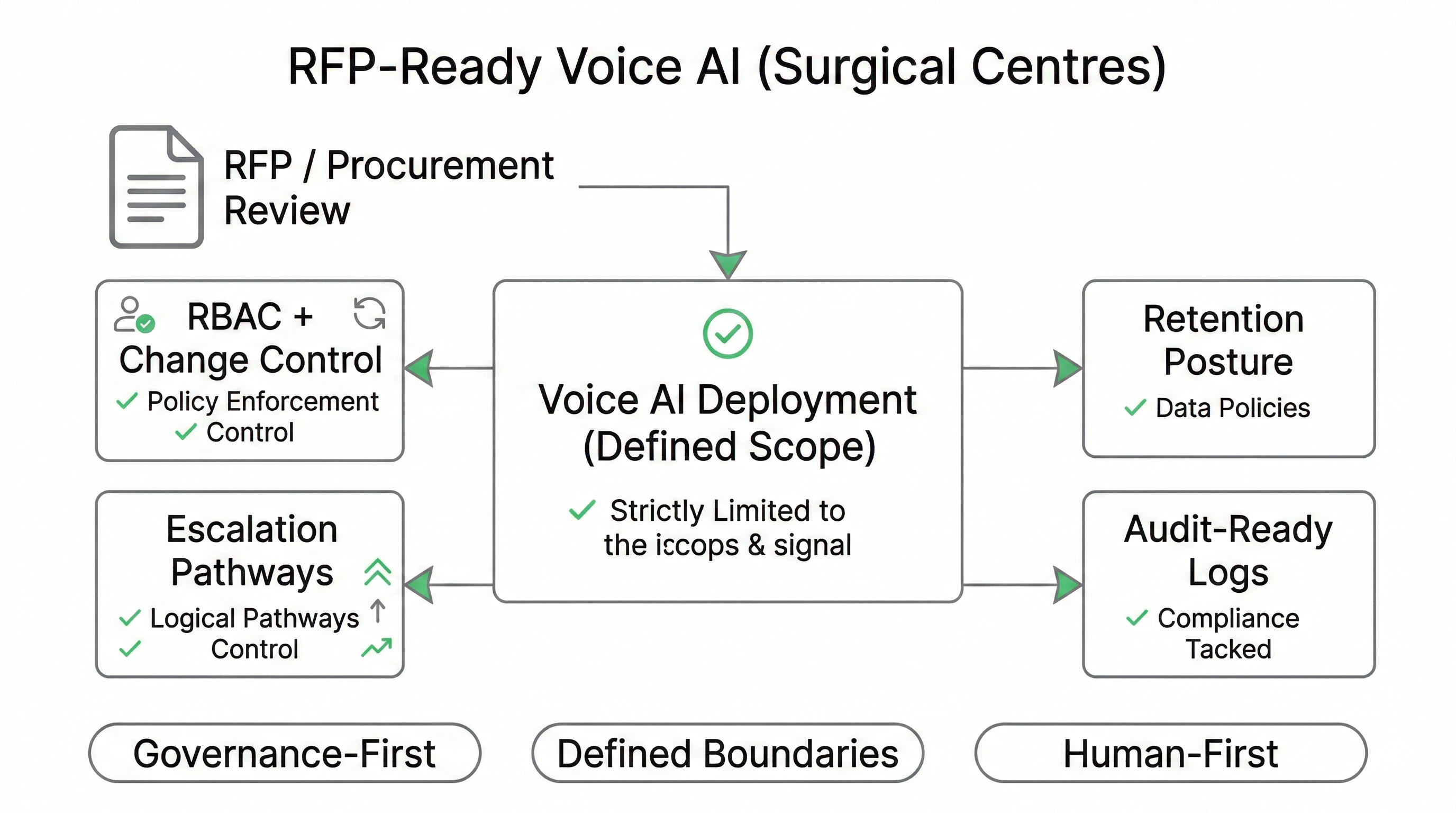
After-hours operations fail when calls fall into voicemail, callers repeat themselves across shifts, and staff start each morning with an unstructured backlog. A governed Voice AI intake layer can reduce friction by applying consistent routing, approved information delivery, and human escalation safeguards.
The value is operational reliability: fewer abandoned calls, fewer misroutes, and clearer next-day work queues—without pushing clinical decision-making into automation.
Operational Benefits (After Hours)
- Reduce voicemail backlogs: structured capture instead of long recordings
- Improve routing consistency: coverage maps and defined rules
- Lower repeat calls: faster access to approved answers and destinations
- Enable surge buffering: handle peak call windows without chaos
- Create next-day queues: requests routed to staff review workflows
Safety & Governance Value
- Human-first escalation: urgency and uncertainty route to people
- Defined workflow boundaries: restricted actions and approved scripts
- Least-privilege integrations: minimum required fields and permissions
- Audit-ready logging: reviewable routing outcomes and triggers
- Procurement-ready posture: documented scope and change control
Does Voice AI replace after-hours nurses or on-call staff?
Can Voice AI reduce voicemail and missed calls after hours?
What is the safest way to deploy Voice AI after hours?
Can we measure how well after-hours routing is working?
{
  "section": "After-Hours Voice AI Outcomes and Value",
  "entity": "Peak Demand",
  "service": "Voice AI for After-Hours Healthcare Communication Systems",
  "geo": ["Toronto", "Canada", "United States"],
  "use_cases": [
    "reduce voicemail backlogs",
    "improve routing consistency using coverage maps",
    "create next-day staff follow-up queues",
    "support surge buffering after hours",
    "human-first escalation for urgency and uncertainty"
  ],
  "controls": [
    "defined workflow boundaries",
    "approved scripts and routing rules",
    "least-privilege integration posture",
    "audit-ready logging with reason codes",
    "change control and governance review"
  ],
  "delivery_model": "fully managed custom build",
  "cta": "https://peakdemand.ca/discovery"
}
Deploying Voice AI for After-Hours Healthcare Communication Systems
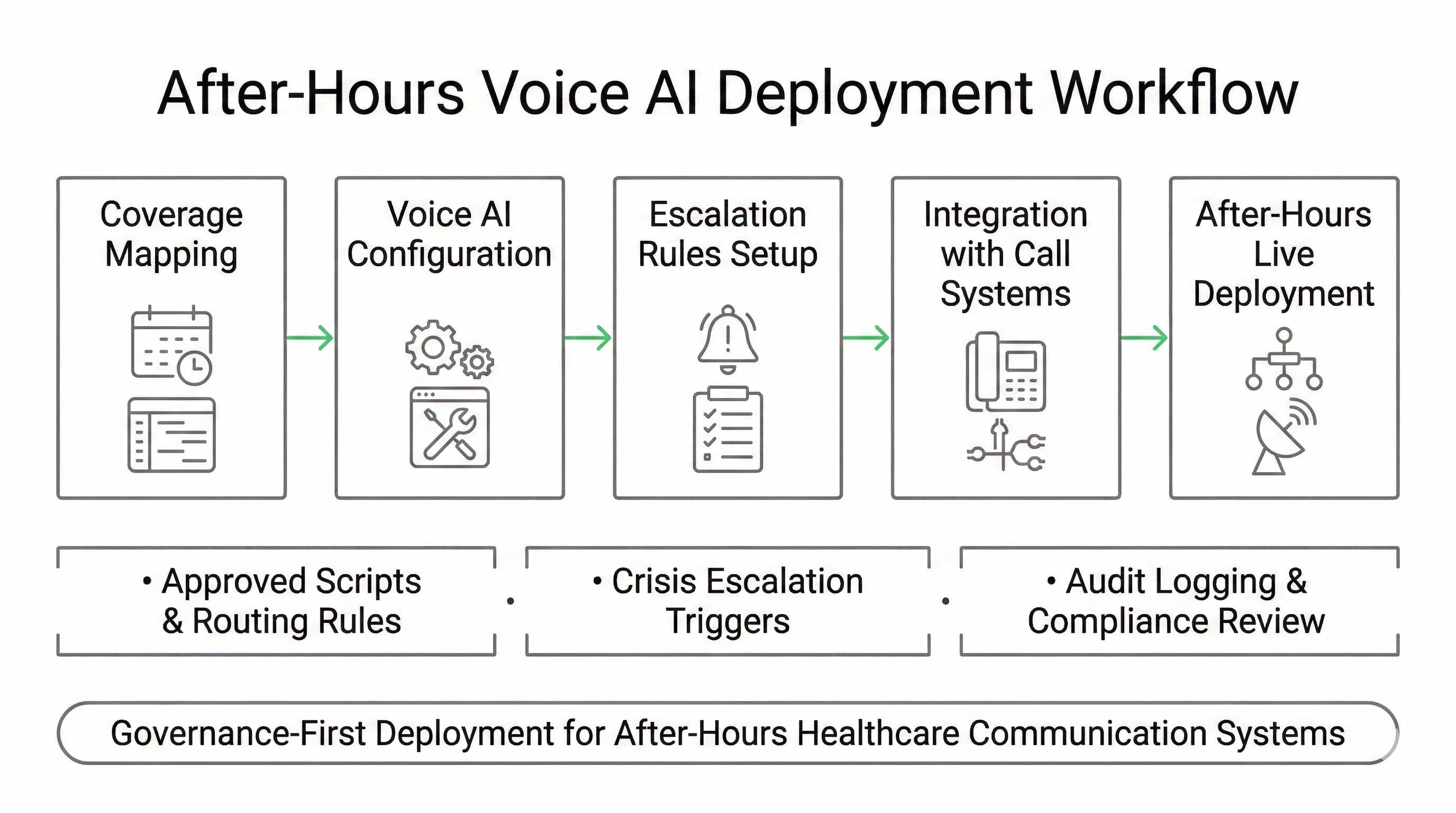
After-hours healthcare Voice AI systems must be deployed with governance, safety, and operational alignment. Implementation begins with mapping coverage schedules, escalation pathways, approved scripts, and system integrations so the AI layer operates within defined organizational boundaries.
Successful deployments focus on workflow clarity rather than automation complexity. The system must know when to provide information, when to route requests, and when to escalate immediately to human teams.
Typical Deployment Steps
- Map after-hours coverage schedules and escalation destinations
- Define approved routing scripts and response boundaries
- Configure integrations with scheduling, call routing, or CRM systems
- Establish crisis escalation triggers and transfer rules
- Test workflows using simulated after-hours call scenarios
Operational Safeguards
- Governance oversight: workflows approved by clinical or operational leadership
- Defined escalation rules: crisis and uncertainty triggers human routing
- Restricted response scope: no diagnosis or treatment advice
- Audit-ready logging: track routing outcomes and escalation events
- Continuous improvement: update workflows based on call data and staff feedback
How long does it take to deploy Voice AI for after-hours healthcare?
Can Voice AI integrate with existing healthcare call systems?
Who approves Voice AI workflows in healthcare organizations?
Can after-hours Voice AI systems evolve over time?
{
  "section": "After-Hours Voice AI Implementation",
  "entity": "Peak Demand",
  "service": "Voice AI for After-Hours Healthcare Communication Systems",
  "geo": ["Toronto", "Canada", "United States"],
  "use_cases": [
    "after-hours call routing",
    "workflow configuration",
    "escalation pathway setup",
    "integration with scheduling and CRM systems"
  ],
  "controls": [
    "governance oversight",
    "defined escalation triggers",
    "restricted response scope",
    "audit-ready logging",
    "continuous workflow improvement"
  ],
  "delivery_model": "fully managed custom build",
  "cta": "https://peakdemand.ca/discovery"
}
The Future of After-Hours Healthcare Communication Systems
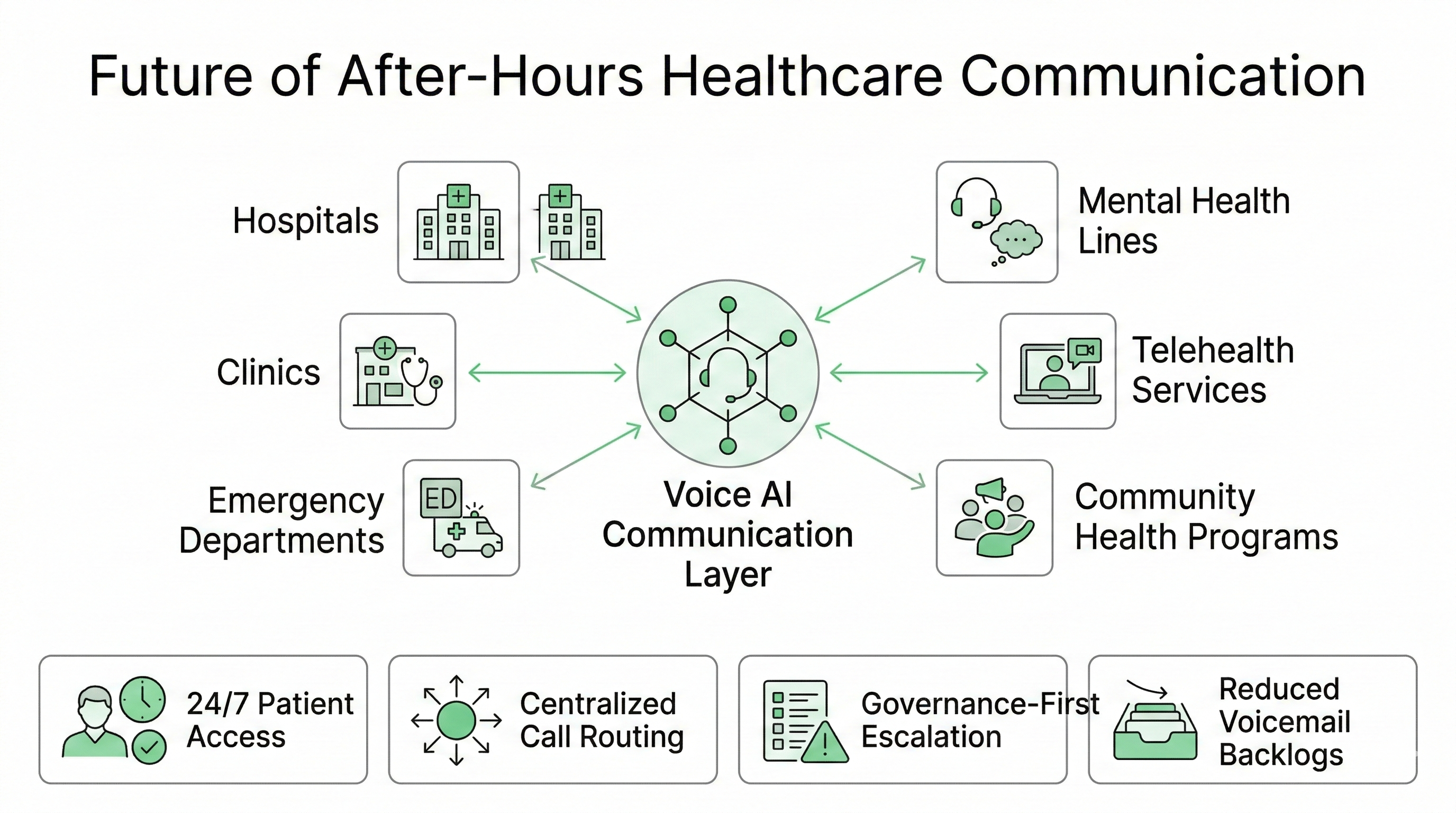
Healthcare systems are evolving toward continuous access models where patients expect support outside traditional operating hours. Hospitals, clinics, and community health networks must manage rising call volumes while maintaining governance safeguards and patient safety.
Voice AI will increasingly operate as an infrastructure layer for healthcare communication — supporting intake routing, escalation workflows, and operational navigation while preserving strict boundaries around clinical decision-making.
Emerging After-Hours Communication Trends
- Healthcare systems operating with 24/7 patient access expectations
- Centralized call routing across multi-location provider networks
- Integration with digital scheduling and patient portals
- Operational automation for non-clinical intake tasks
- Data-driven improvements to call routing and escalation workflows
Voice AI's Role in Healthcare Infrastructure
- Communication infrastructure: consistent routing and intake workflows
- Operational support: reduce staff overload and voicemail backlogs
- Governance-first deployment: defined escalation safeguards
- Healthcare system scalability: support regional or provincial call networks
- Human-centered escalation: urgent situations routed immediately to staff
{
  "section": "Future of After-Hours Healthcare Communication",
  "entity": "Peak Demand",
  "service": "Voice AI for After-Hours Healthcare Communication Systems",
  "geo": ["Toronto", "Canada", "United States"],
  "topics": [
    "24/7 healthcare communication infrastructure",
    "voice AI intake routing",
    "after-hours escalation workflows",
    "healthcare call system modernization"
  ],
  "controls": [
    "governance-first deployment",
    "defined escalation pathways",
    "restricted response scope",
    "audit-ready logging"
  ],
  "delivery_model": "fully managed custom build",
  "cta": "https://peakdemand.ca/discovery"
}
Explore Voice AI Pathways for After-Hours Healthcare Call Handling
After-hours healthcare Voice AI deployments usually begin by stabilizing patient access continuity, urgent routing boundaries, intake capture, and human-first escalation rules before expanding into clinic booking continuity, hospital coordination, and broader call center infrastructure with governance-first safeguards.
The resources below connect the main healthcare hub, the primary service entry points, adjacent escalation-critical environments, and the governance pages most relevant to regulated healthcare communication environments in Canada and the United States.
Core Healthcare Entry Points
Clinic Access and Booking Continuity
Escalation-Critical and Hospital Environments
{
  "module": "healthcare_interlinks_afterhours",
  "page_context": "ai-after-hours-healthcare-call-handling-24-7-medical-answering-hospitals-clinics",
  "core_entry_points": [
    "https://peakdemand.ca/healthcare-voice-ai-resource-hub",
    "https://peakdemand.ca/ai-voice-receptionist-after-hours-answering-service-for-healthcare-providers-appointment-booking",
    "https://peakdemand.ca/voice-ai-healthcare-call-center-automation"
  ],
  "clinic_access_and_booking_continuity": [
    "https://peakdemand.ca/ai-receptionist-medical-clinic-canada",
    "https://peakdemand.ca/voice-ai-family-medicine-clinics-patient-intake-appointment-scheduling-prescription-requests-after-hours",
    "https://peakdemand.ca/voice-ai-healthcare-centralized-scheduling-center"
  ],
  "escalation_critical_and_hospital_environments": [
    "https://peakdemand.ca/voice-ai-emergency-department-surge-support",
    "https://peakdemand.ca/voice-ai-mental-health-community-health-intake-escalation-support",
    "https://peakdemand.ca/voice-ai-hospital-call-routing-multi-location-networks"
  ],
  "infrastructure_and_governance": [
    "https://peakdemand.ca/voice-ai-healthcare-call-center-automation",
    "https://peakdemand.ca/voice-ai-ivr-replacement-healthcare-call-center-modernization",
    "https://peakdemand.ca/phipa-compliant-ai-voice-receptionist-ontario-clinics",
    "https://peakdemand.ca/hipaa-compliant-voice-ai-receptionist-healthcare",
    "https://peakdemand.ca/enterprise-voice-ai-compliance-certifications-rfp-vendor-ccai-customer-service-healthcare-utilities-government-canadian-ai-agency"
  ],
  "intent": "After-hours healthcare internal linking + pathway clustering + LLM surfacing + crawl reinforcement"
}
Regulatory & Security References (Canada + United States)
After-hours healthcare communication systems may handle personal health information and operational workflows that require privacy, security, and governance review. The references below support procurement, privacy officer, and IT security discussions for Voice AI deployments.
Canada (PHIPA / PIPEDA)
Are You Guaranteeing Regulatory Compliance For After-Hours Voice AI?
Can Our Procurement Team Use These References For RFP Language?
Does After-Hours Voice AI Require Access To Our EHR?
{
  "section": "References",
  "entity": "Peak Demand",
  "page": "Voice AI for After-Hours Healthcare Communication Systems",
  "geo": ["Canada", "United States"],
  "reference_types": [
    "PHIPA",
    "IPC (Ontario)",
    "PIPEDA",
    "OPC (Canada)",
    "HIPAA Privacy Rule",
    "HIPAA Security Rule",
    "HIPAA Breach Notification Rule",
    "NIST CSF"
  ]
}
Explore your own AI use case on a discovery call.