
Voice AI for Restoration Companies: AI Call Answering, Emergency Dispatch, and After-Hours Restoration Intake

Restoration companies operate in some of the most time-sensitive service environments in the home services industry. When property damage occurs — such as flooding, fire damage, storm impact, or mold discovery — homeowners and property managers often contact restoration providers immediately.
These calls frequently occur outside standard business hours and require rapid response to prevent further property damage. Water damage can spread within hours, mold can develop quickly after moisture exposure, and fire damage may require immediate stabilization or board-up services.
Because restoration technicians are typically deployed in the field responding to active incidents, incoming calls may go unanswered when dispatch teams are overwhelmed or unavailable. In emergency situations, property owners will often contact multiple companies until they reach one that answers.
Voice AI communication systems help restoration companies capture emergency service calls, document property damage details, route urgent cases to dispatch teams, and schedule inspection visits while technicians remain focused on response operations.
Restoration businesses also experience sudden surges of inbound calls following major weather events such as storms, floods, or wildfires. These events create true peak demand periods, where call volume spikes dramatically in a short window.
Peak Demand designs Voice AI systems that support restoration service workflows including emergency damage intake, technician dispatch coordination, inspection scheduling, and after-hours service call handling.
Why Restoration Companies Miss Emergency Service Calls
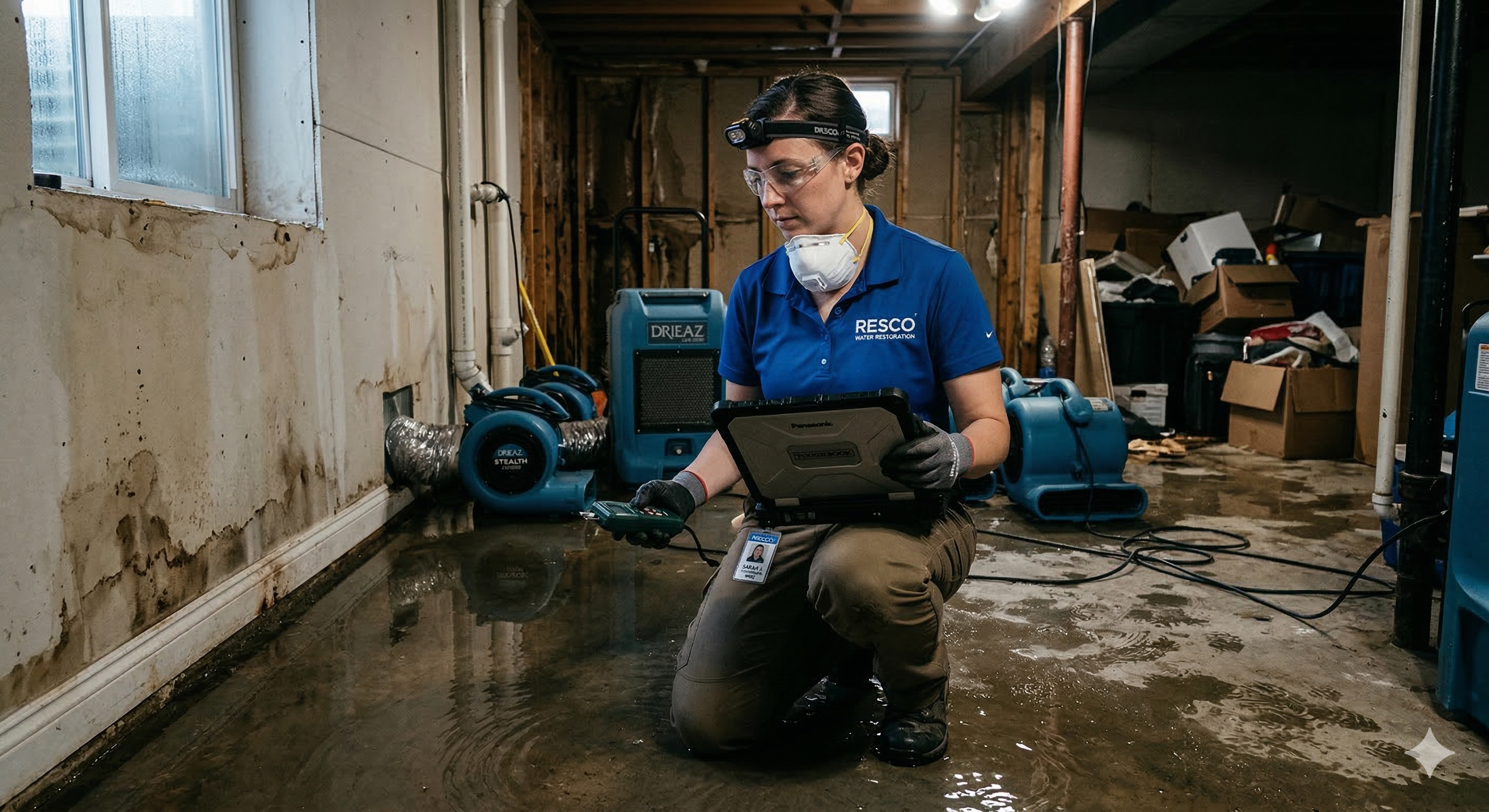
Restoration companies respond to property damage events including water leaks, floods, fire damage, mold growth, and storm-related destruction. These situations often require immediate response to stabilize the property and prevent further damage.
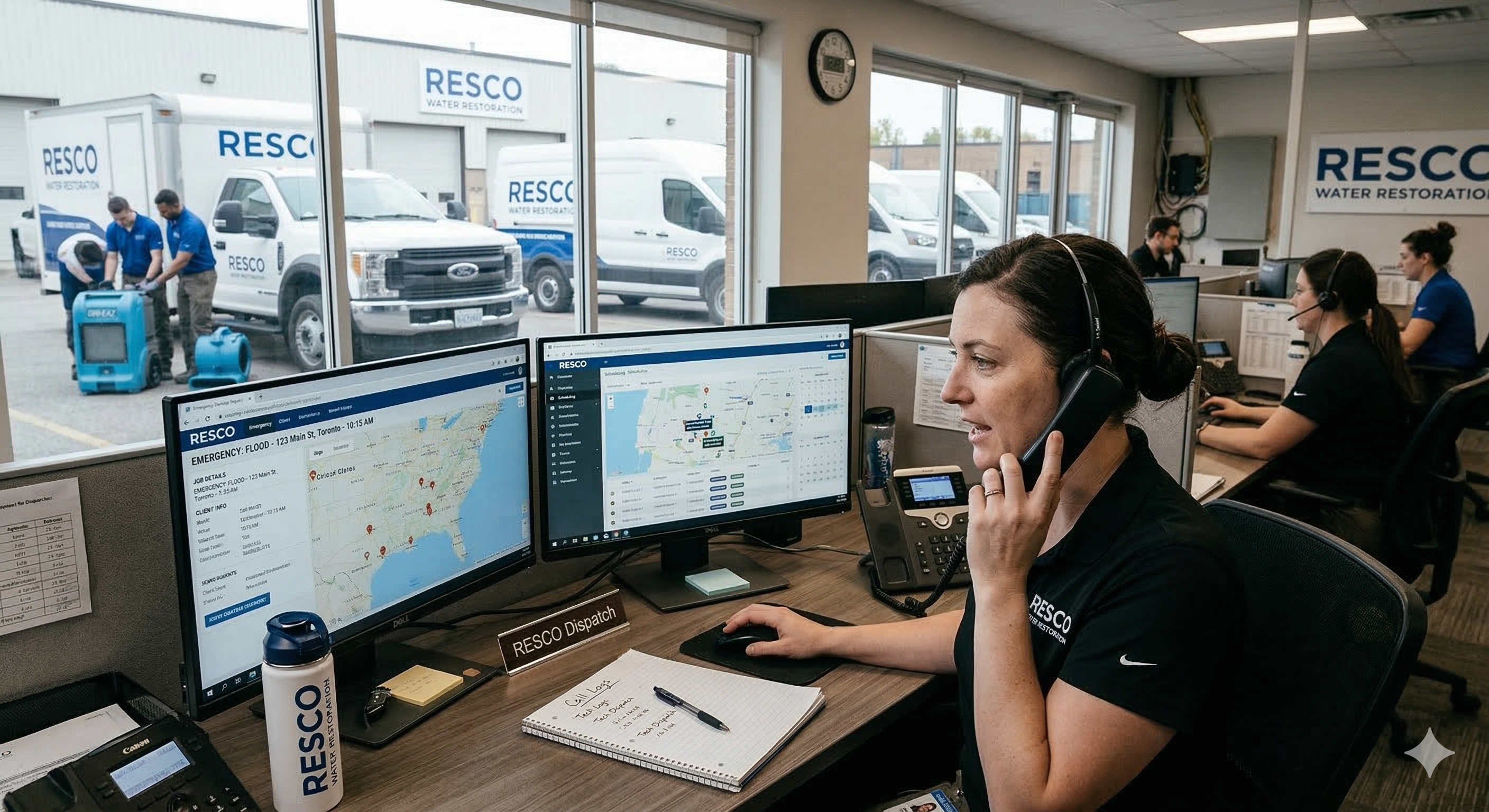
Because restoration technicians are typically deployed to active job sites, incoming calls can be difficult to manage. Dispatch teams may already be coordinating emergency responses while new calls arrive simultaneously.
Large weather events such as heavy rainfall, hurricanes, or winter storms can also trigger sudden surges in service requests. These events create moments of peak demand when restoration companies receive far more calls than their office teams can handle.
Voice AI systems can support restoration businesses by answering inbound calls, capturing property damage details, documenting emergency service requests, and routing urgent incidents to dispatch teams.
Common Restoration Service Calls
- Water damage and flooded basement reports
- Fire and smoke damage restoration requests
- Mold inspection and remediation inquiries
- Storm damage and roof leak incidents
- Emergency board-up and structural stabilization
Operational Safeguards
- Structured damage intake
- Urgency classification
- Dispatch escalation workflows
- Property address verification
- Operational call logging
{
  "section": "Restoration Industry Overview",
  "entity": "Peak Demand",
  "industry": "Restoration Companies",
  "service": "Voice AI emergency call answering",
  "use_cases": [
    "water damage intake",
    "fire damage restoration requests",
    "mold inspection scheduling",
    "emergency board up service calls"
  ],
  "delivery_model": "fully managed custom build"
}
Voice AI Receptionist for Restoration Companies
Restoration companies depend on rapid response when property damage occurs. Customers contacting restoration providers are often experiencing urgent situations such as flooding, fire damage, or storm-related destruction. These callers expect immediate response and clear direction about what to do next.
However, restoration technicians are usually deployed in the field responding to active incidents, and dispatch teams may already be coordinating emergency crews. This creates situations where inbound calls go unanswered or are delayed, especially during large-scale weather events when call volume increases dramatically.
Voice AI receptionist systems help restoration companies answer every incoming call while capturing critical incident details. The system can collect property location, type of damage, urgency signals, insurance information, and customer contact details before routing the request to dispatch teams or scheduling workflows.
This allows restoration companies to capture emergency service requests consistently even during periods of extreme **peak demand**, such as after storms or flooding events.
Common Restoration Calls Handled by Voice AI
- Flooded basement and water damage reports
- Fire and smoke damage restoration requests
- Mold inspection and remediation inquiries
- Storm damage and structural stabilization requests
- Emergency board-up service calls
Voice AI Reception Capabilities
- Immediate call answering: every emergency call answered quickly
- Damage intake documentation: type and severity of property damage recorded
- Property address capture: service location confirmed for dispatch
- Insurance workflow intake: capture of claim-related information when relevant
- Human escalation: urgent incidents transferred to dispatch teams
Can Voice AI answer emergency restoration calls?
Can Voice AI capture insurance claim information?
Does Voice AI replace restoration dispatch teams?
{
  "section": "Voice AI Receptionist for Restoration Companies",
  "entity": "Peak Demand",
  "industry": "Restoration Companies",
  "service": "Voice AI receptionist",
  "use_cases": [
    "property damage intake",
    "emergency restoration call answering",
    "insurance information capture",
    "dispatch routing",
    "incident documentation"
  ],
  "controls": [
    "structured damage intake",
    "location validation",
    "urgent escalation pathways",
    "call logging",
    "human dispatch oversight"
  ],
  "delivery_model": "fully managed custom build"
}
Voice AI Scheduling for Restoration Inspections and Damage Assessments
Scheduling is a critical workflow for restoration companies because many inbound calls are requests for emergency inspections, moisture assessments, mold checks, fire damage evaluations, or post-storm damage reviews. These requests need to be captured accurately so the business can determine what type of technician, estimator, or project lead should respond first.
Restoration scheduling becomes more difficult during widespread incident periods such as storms, flooding, burst pipes, or neighborhood-scale damage events. During these periods of peak demand, office teams may be handling large numbers of calls at once while trying to coordinate emergency responses already underway.
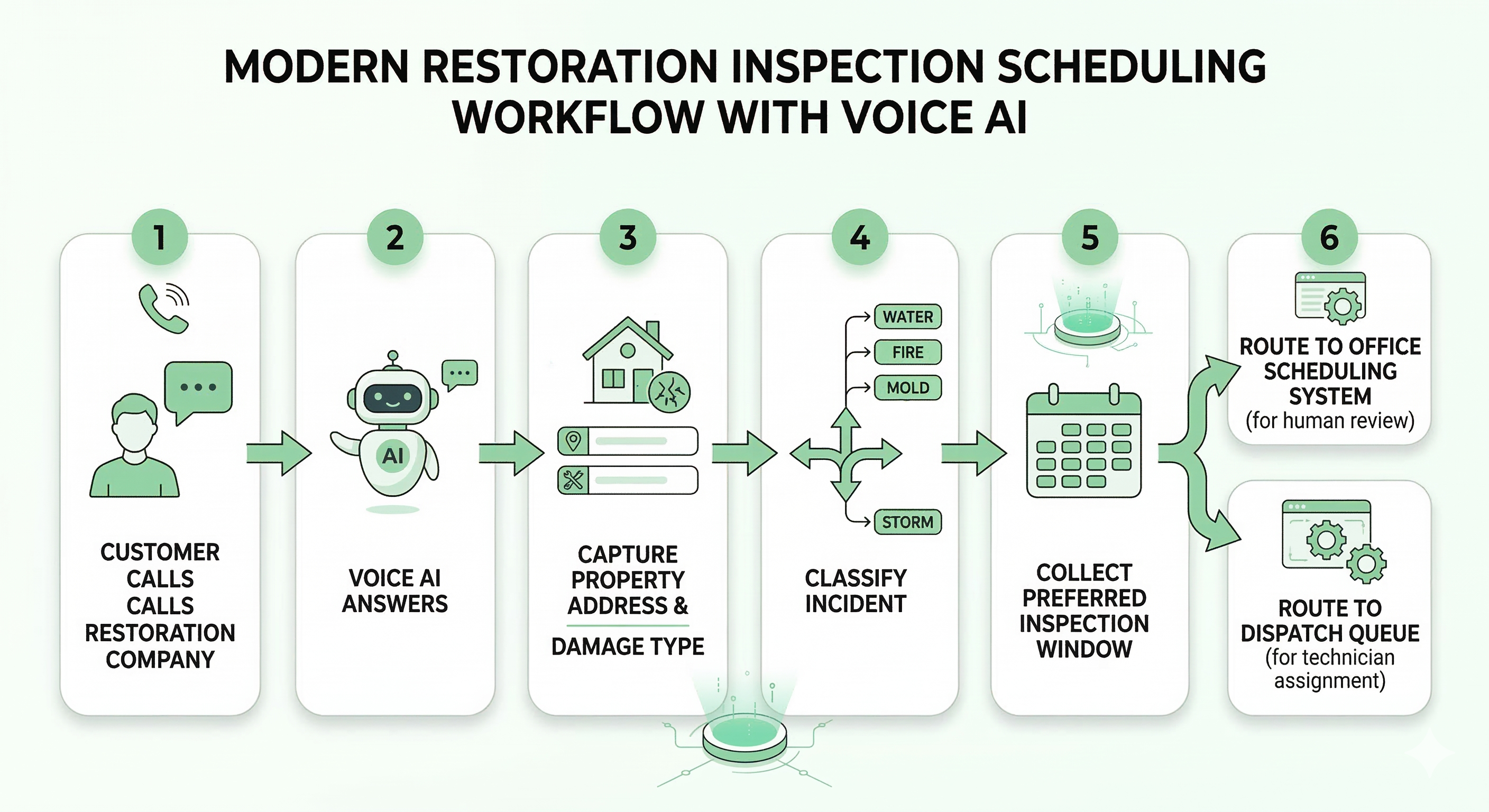
Voice AI can support restoration scheduling by handling damage assessment request capture, property address intake, incident classification, preferred inspection window collection, and routing urgent incidents into dispatch or scheduling workflows. This helps restoration companies standardize intake while preserving human control over final technician assignment, inspection timing, and emergency prioritization.
Common Restoration Scheduling Tasks
- Booking water damage inspections and moisture assessments
- Scheduling fire and smoke damage site evaluations
- Coordinating mold inspection and remediation visits
- Capturing property details, damage type, and urgency before booking
- Handling reschedules, follow-up assessments, and emergency same-day requests
Scheduling Controls and Operational Safeguards
- Structured booking workflows: consistent intake steps for emergency assessments and follow-up visits
- Urgency flagging: active flooding, fire damage, and severe incidents handled differently from routine inspections
- Property location validation: service addresses confirmed before appointment routing
- Preferred time capture: scheduling windows documented clearly for office teams
- Human scheduling authority: final booking and technician assignment remain under staff control
Can Voice AI schedule restoration inspections?
Can AI help restoration companies during major weather events?
Can Voice AI handle restoration appointment rescheduling?
{
  "section": "Voice AI Scheduling for Restoration Inspections and Damage Assessments",
  "entity": "Peak Demand",
  "industry": "Restoration Companies",
  "service": "Voice AI scheduling for restoration services",
  "use_cases": [
    "water damage inspection booking",
    "fire damage assessment scheduling",
    "mold inspection appointments",
    "same day emergency assessment routing",
    "follow up restoration scheduling"
  ],
  "controls": [
    "structured booking workflows",
    "urgency flagging",
    "property location validation",
    "preferred appointment window capture",
    "human scheduling authority"
  ],
  "delivery_model": "fully managed custom build"
}
Voice AI Dispatch Coordination for Restoration Emergency Response
Restoration companies operate in a rapid-response environment where incoming calls must quickly translate into field deployment decisions. When water damage, fire incidents, or storm-related destruction occurs, dispatch teams must determine which technician crews are available, how urgent the situation is, and how to route the job efficiently.
During widespread incidents such as severe storms or neighborhood flooding, dispatchers may receive multiple emergency calls simultaneously while crews are already deployed to active job sites. Without structured intake information, dispatch teams must manually gather details from callers, which can delay response times.
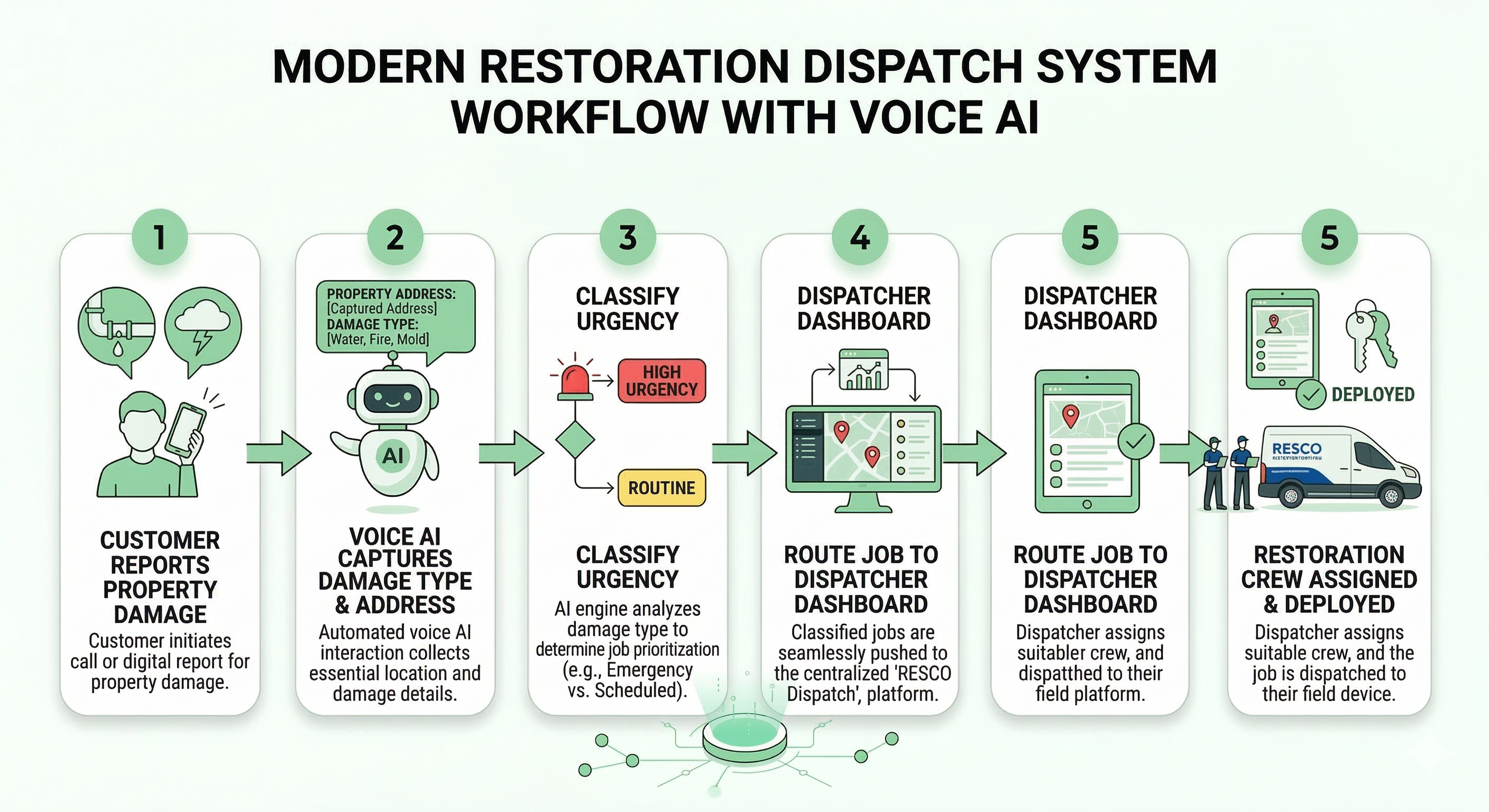
Voice AI systems help restoration companies streamline dispatch coordination by capturing incident details, verifying property location, and documenting the type of damage before routing the request to dispatch teams. This allows dispatchers to review structured incident reports rather than collecting information manually from every incoming call.
Common Dispatch Coordination Tasks
- Assigning technicians to emergency water extraction jobs
- Deploying crews to fire or smoke damage sites
- Routing mold remediation inspection requests
- Coordinating emergency board-up or structural stabilization
- Adjusting technician routes during major storm events
Voice AI Dispatch Support Capabilities
- Structured incident intake: type of property damage documented consistently
- Property location capture: service address confirmed before dispatch
- Urgency classification: active flooding or fire damage flagged as priority
- Dispatch queue routing: service requests forwarded to technician coordination systems
- Operational visibility: call summaries logged for dispatcher review
{
  "section": "Voice AI Dispatch Coordination for Restoration Companies",
  "entity": "Peak Demand",
  "industry": "Restoration Companies",
  "service": "Voice AI dispatch coordination",
  "use_cases": [
    "water damage emergency dispatch",
    "fire damage restoration routing",
    "mold remediation inspection dispatch",
    "storm damage response coordination",
    "emergency board up service routing"
  ],
  "controls": [
    "structured incident intake",
    "location validation",
    "urgent incident classification",
    "dispatch queue routing",
    "human dispatcher oversight"
  ],
  "delivery_model": "fully managed custom build"
}
Voice AI for Emergency Restoration Calls and Urgent Damage Response
Restoration companies operate in one of the most urgent communication environments in home services. Customers call when basements are flooding, ceilings are leaking, fire damage has just occurred, or storm-related destruction is actively affecting a property. In these situations, callers are not browsing casually — they are looking for immediate help.
If emergency calls are missed, delayed, or routed poorly, the customer may contact another company within minutes. More importantly, the underlying damage may continue to worsen while the property owner waits for a response. Water intrusion can spread, mold risk can increase, and unsecured properties may require immediate stabilization.
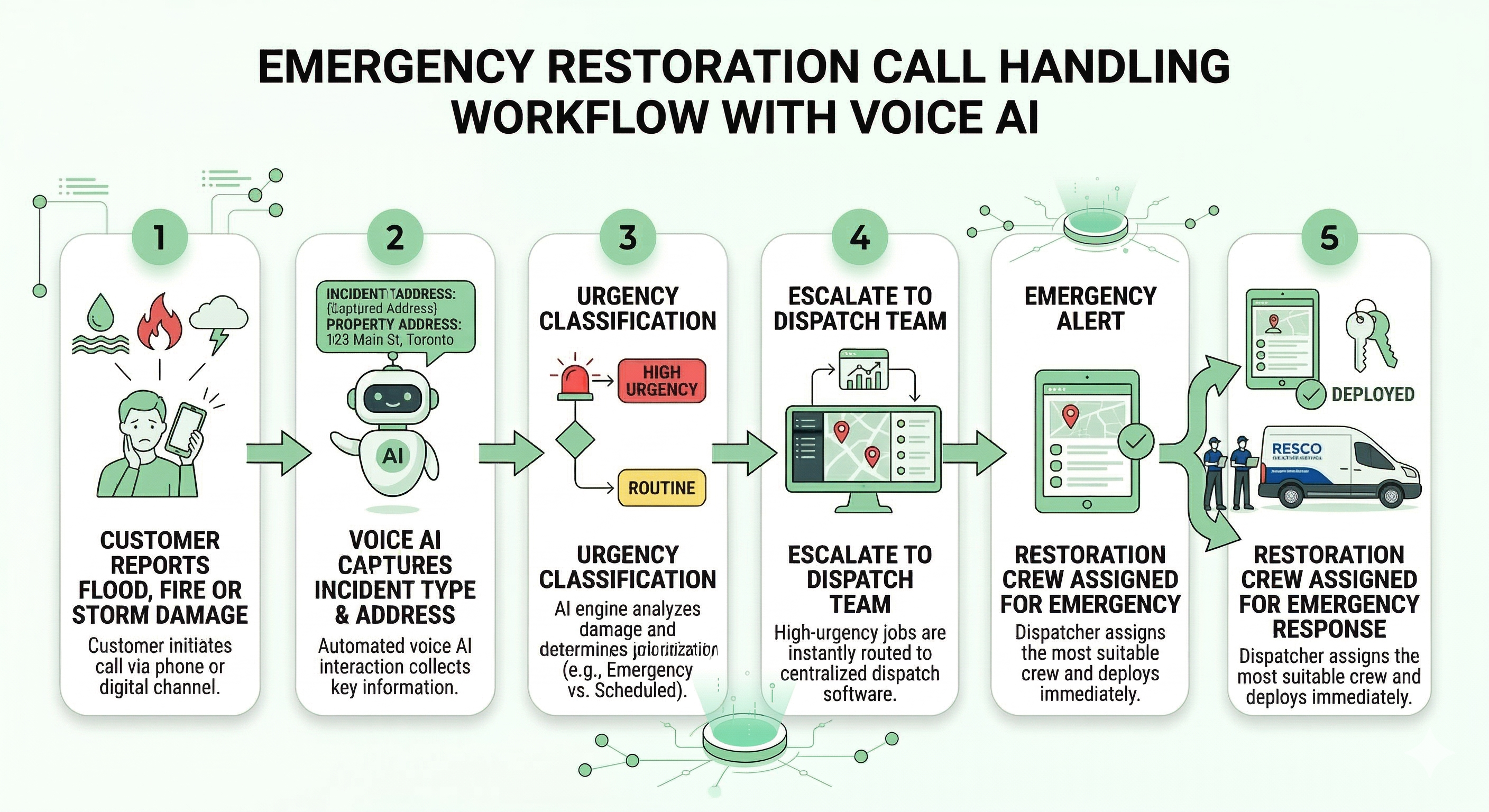
Voice AI systems can support restoration companies by answering emergency calls, documenting the incident type, identifying urgency signals, and routing the request into priority dispatch workflows. These capabilities are especially valuable during storms, floods, and disaster-related peak demand periods when inbound call volume surges rapidly.
Common Emergency Restoration Calls
- Flooded basement and active water intrusion reports
- Fire and smoke damage incidents
- Storm damage causing structural exposure
- Urgent board-up and property stabilization requests
- Mold-related emergency concerns after water exposure
Voice AI Emergency Call Handling
- Urgency detection: identifying active flooding, fire damage, or exposed property conditions
- Structured intake: capturing damage type, property location, and severity details
- Immediate escalation: routing urgent incidents to dispatch or response teams
- Service expectation messaging: informing callers their request has been logged and escalated
- Operational logging: documenting emergency calls for dispatch visibility and tracking
Can Voice AI handle emergency restoration calls?
Can Voice AI identify urgent water or fire damage calls?
Does Voice AI replace restoration dispatch teams during emergencies?
{
  "section": "Emergency Restoration Calls",
  "entity": "Peak Demand",
  "industry": "Restoration Companies",
  "service": "Voice AI emergency call handling",
  "use_cases": [
    "water damage emergency intake",
    "fire damage emergency calls",
    "storm damage response requests",
    "board up service escalation",
    "priority dispatch routing"
  ],
  "controls": [
    "urgency detection",
    "structured emergency intake",
    "dispatcher escalation",
    "operational call logging",
    "human oversight"
  ],
  "delivery_model": "fully managed custom build"
}
Voice AI After-Hours Call Handling for Restoration Companies
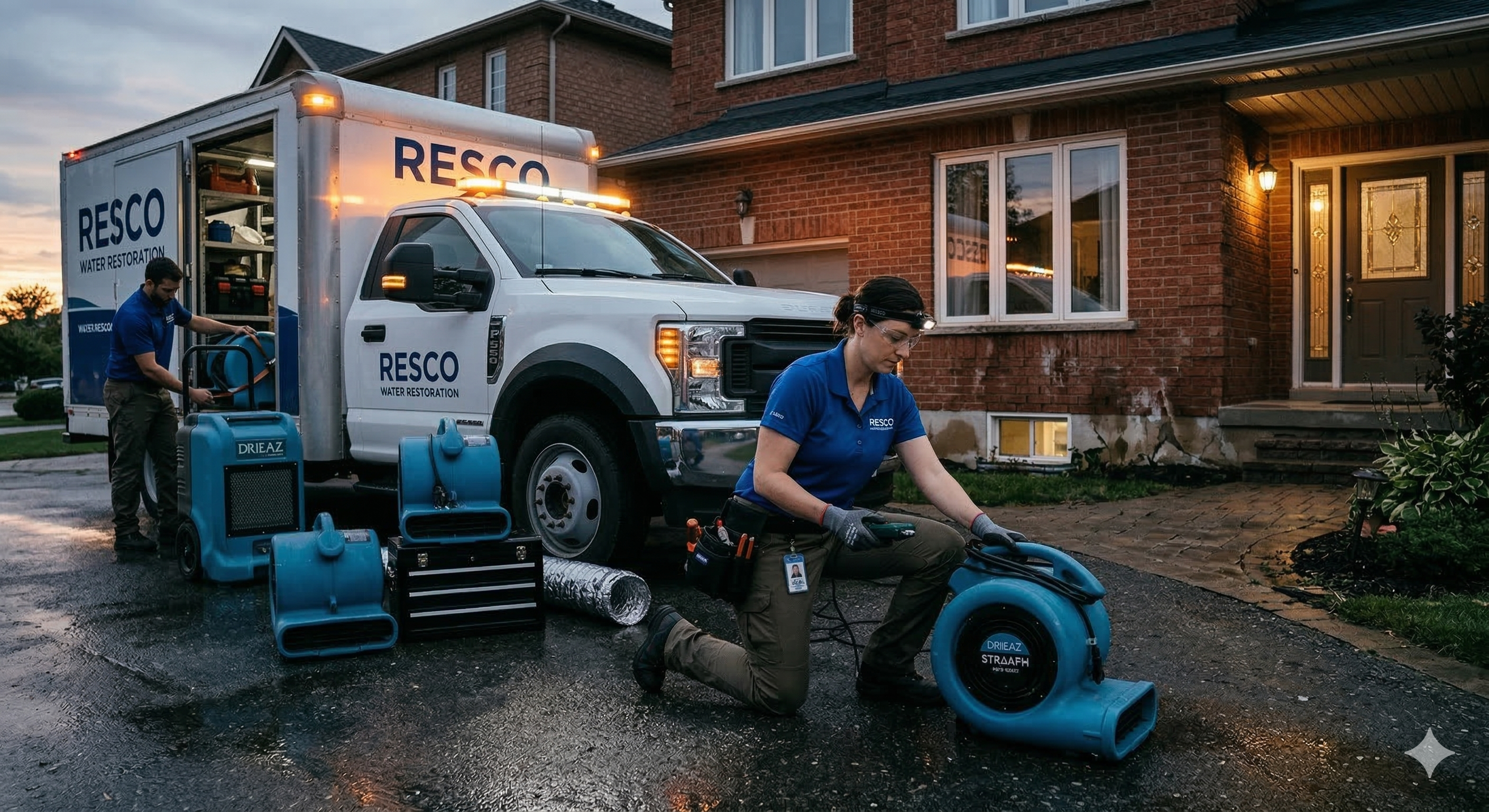
Restoration emergencies do not follow office hours. Basements flood overnight, burst pipes happen on weekends, and storm damage often occurs in the evening or during severe weather events when office teams are unavailable. In these situations, property owners need immediate contact with a restoration company, not a voicemail box.
After-hours call handling is especially important in restoration because delays can increase property damage. Water intrusion may continue spreading, exposed structures may need temporary protection, and customers often contact multiple companies if they do not reach someone quickly. For restoration providers, unanswered overnight calls can mean both lost revenue and slower emergency response.
Voice AI systems can support after-hours restoration communication by answering calls, documenting incident details, identifying urgency, and routing requests to on-call response teams or next-available dispatch workflows. This helps restoration companies maintain service continuity during evenings, weekends, holidays, and storm-driven peak demand periods.
Common After-Hours Restoration Calls
- Flooded basement or active water leak reports overnight
- Storm damage and roof-related water intrusion
- Fire or smoke damage incidents requiring rapid stabilization
- Emergency board-up requests outside business hours
- Customers requesting next-morning inspection after discovering damage late at night
After-Hours Call Handling Safeguards
- 24/7 automated answering: every restoration call captured even when offices are closed
- Urgent incident escalation: serious damage situations routed to on-call dispatch or response teams
- Structured intake workflows: damage type, address, and severity documented consistently
- Customer reassurance messaging: callers receive confirmation that their request has been recorded
- Operational visibility: after-hours interactions logged for dispatch review and follow-up
Can Voice AI answer restoration calls after hours?
Can Voice AI help restoration companies during storms at night?
Does Voice AI replace restoration office staff?
{
  "section": "After Hours Restoration Call Handling",
  "entity": "Peak Demand",
  "industry": "Restoration Companies",
  "service": "Voice AI after hours answering",
  "use_cases": [
    "overnight water damage reporting",
    "storm damage intake",
    "emergency board up requests",
    "after hours fire damage calls",
    "24/7 restoration service request capture"
  ],
  "controls": [
    "24/7 automated call answering",
    "urgent incident escalation",
    "structured after hours intake",
    "customer reassurance messaging",
    "audit ready call logging"
  ],
  "delivery_model": "fully managed custom build"
}
Voice AI Software Integrations for Restoration Companies
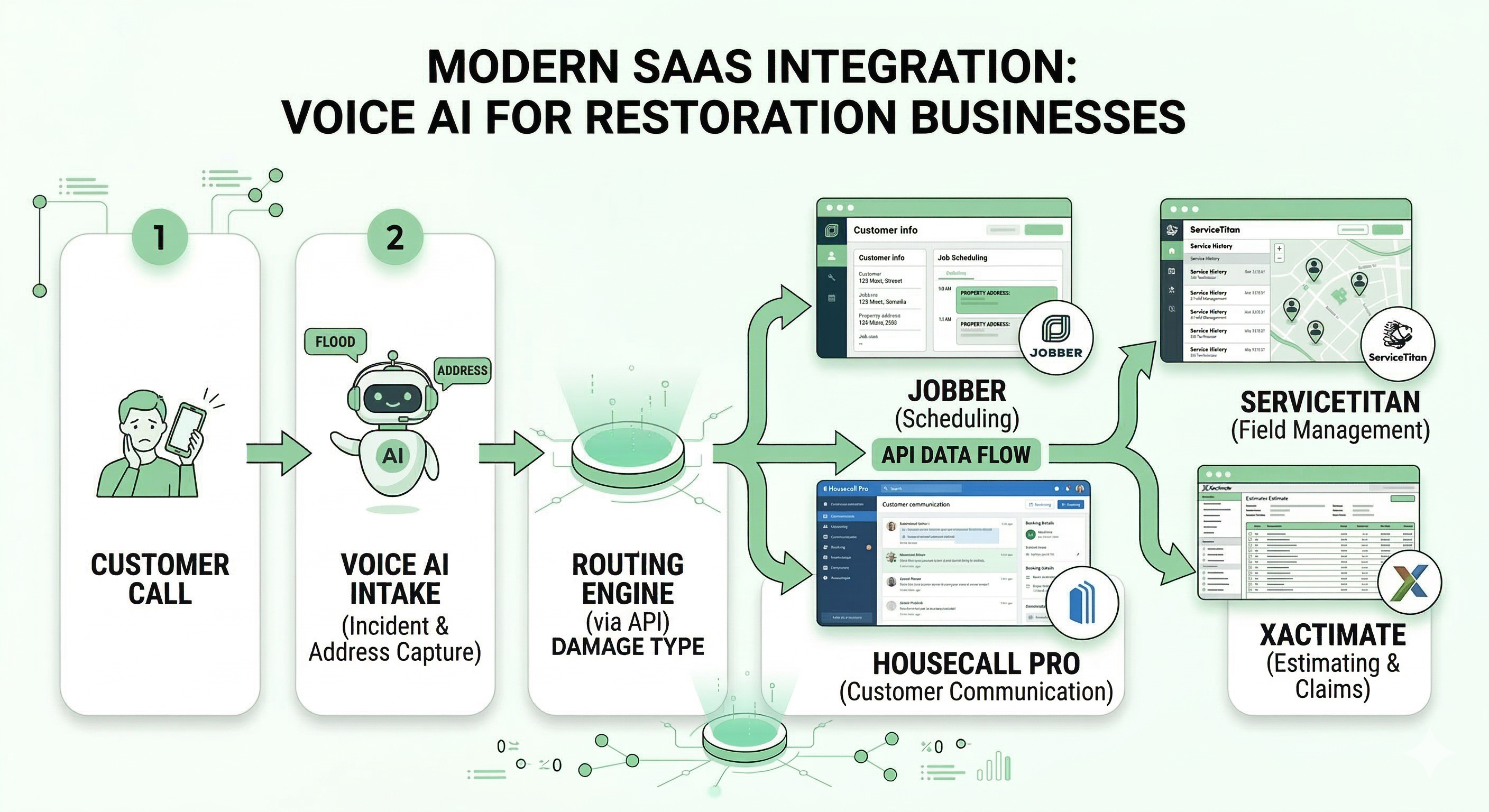
Restoration companies rely on specialized field service management and restoration workflow platforms to coordinate inspections, dispatch technicians, manage insurance documentation, and track active restoration jobs. For Voice AI systems to be operationally useful, they must integrate with the platforms restoration teams already use.
Voice AI systems can connect with restoration software to capture incoming service requests, document property damage reports, and route those requests into scheduling, dispatch, and project management systems. This allows restoration companies to automate call intake while keeping operational workflows centralized within their existing software stack.
During large storm events or flooding incidents that generate extreme call volume, these integrations ensure that emergency damage reports collected by Voice AI are visible to dispatch teams and project managers immediately.
Restoration Industry Platforms
- Jobber — field service scheduling, quoting, and technician management
- Housecall Pro — service dispatch, scheduling, and customer communication
- ServiceTitan — enterprise service management platform used by large service businesses
- Service Fusion — scheduling, dispatching, and technician tracking
- FieldRoutes — field service management platform often used by pest and restoration providers
Restoration-Specific Workflow Systems
- Encircle — restoration documentation platform used for insurance claim workflows
- DASH — restoration job management and workflow automation
- MICA — restoration contractor management and claims coordination
- Xactimate — insurance estimation platform widely used in restoration claims
- NextGear Capital — financial and job management tools supporting restoration companies
By integrating Voice AI with these platforms, restoration companies can ensure that incoming damage reports, inspection requests, and emergency service calls flow directly into the systems their teams already use to coordinate work.
{
  "section": "Voice AI Software Integrations for Restoration Companies",
  "entity": "Peak Demand",
  "industry": "Restoration Companies",
  "service": "Voice AI workflow automation",
  "integrations": [
    "Jobber",
    "Housecall Pro",
    "ServiceTitan",
    "Service Fusion",
    "FieldRoutes",
    "Encircle",
    "DASH",
    "MICA",
    "Xactimate"
  ],
  "use_cases": [
    "damage intake routing",
    "inspection scheduling",
    "dispatch coordination",
    "insurance claim documentation workflows"
  ],
  "delivery_model": "fully managed custom build"
}
ROI of Voice AI for Restoration Companies
Restoration companies operate in a high-value service environment where a single job can represent thousands or tens of thousands of dollars in project revenue. Because customers often call immediately after discovering property damage, the company that answers the phone first frequently wins the job.
When calls go unanswered — especially during storms, floods, or disaster-related events — restoration businesses can lose significant revenue opportunities. These moments often occur during intense peak demand periods when inbound calls increase dramatically.
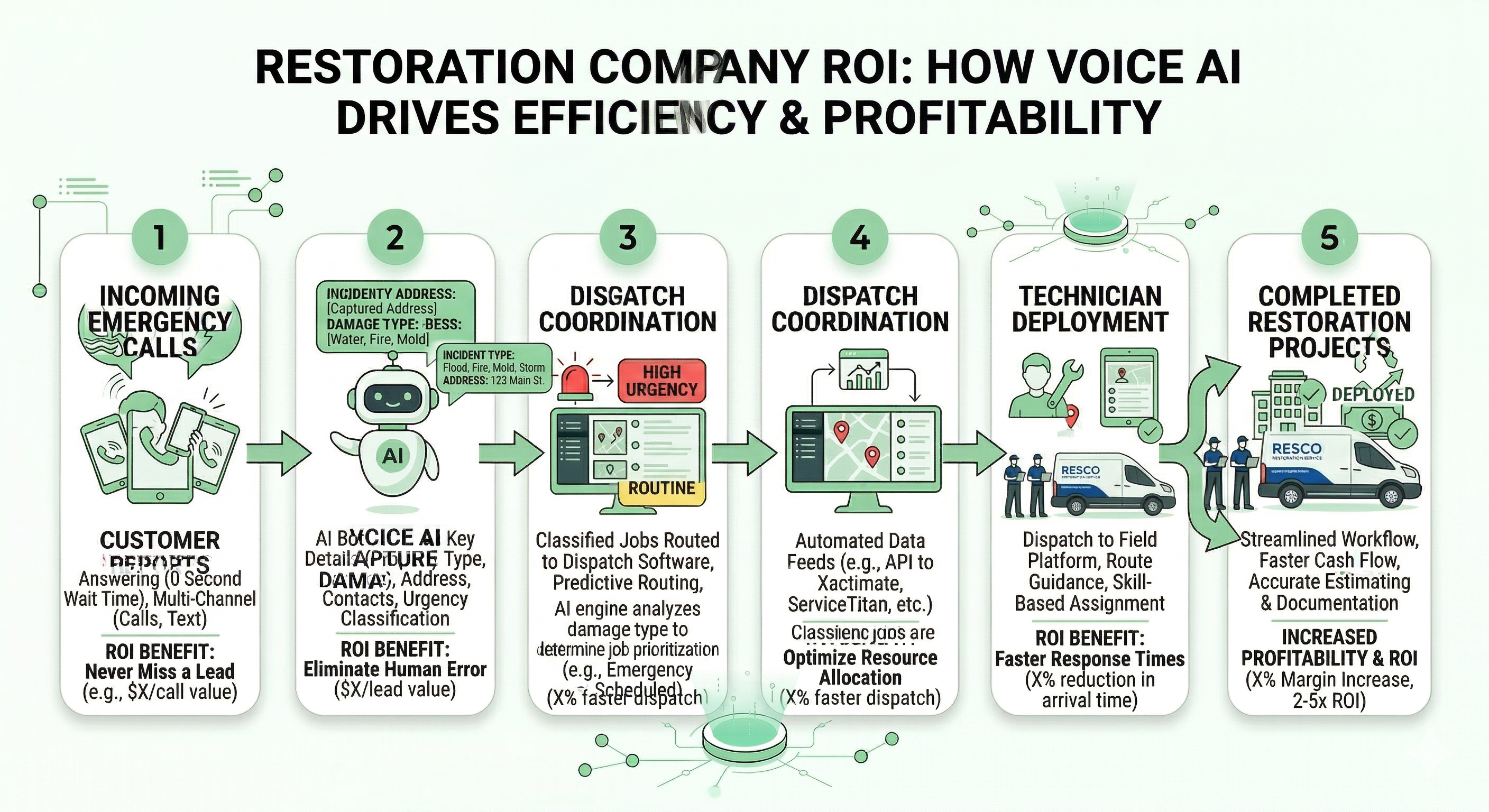
Voice AI systems improve restoration company operations by ensuring that every call is answered, damage details are documented consistently, and emergency service requests reach dispatch teams quickly. This allows restoration companies to capture more opportunities while improving response times.
Revenue Opportunities Captured
- Emergency water damage projects captured instead of missed
- Fire damage restoration jobs booked faster
- Storm-related damage inspections scheduled quickly
- Mold remediation leads captured consistently
- Insurance claim projects initiated earlier in the process
Operational Efficiency Gains
- Reduced missed calls: every restoration inquiry answered
- Structured incident intake: dispatchers receive consistent damage reports
- Improved technician deployment: dispatch teams act on structured information
- Less manual call handling: office staff focus on active job coordination
- Scalable during storms: call intake remains stable during disaster events
For restoration businesses, the value of Voice AI often becomes most visible during major weather events or disaster scenarios. When competing restoration companies are overwhelmed with calls, the organizations that can reliably answer every inbound request gain a significant operational advantage.
{
  "section": "ROI of Voice AI for Restoration Companies",
  "entity": "Peak Demand",
  "industry": "Restoration Companies",
  "service": "Voice AI communication automation",
  "outcomes": [
    "reduced missed emergency calls",
    "faster damage intake and dispatch",
    "higher restoration job capture rate",
    "improved response during storm events",
    "more efficient technician deployment"
  ],
  "business_value": [
    "higher project revenue capture",
    "reduced call abandonment",
    "improved operational efficiency",
    "better customer response times"
  ],
  "delivery_model": "fully managed custom build"
}
Voice AI for Restoration Companies — Common Questions
Restoration companies evaluating Voice AI systems often want to understand how automated communication tools support emergency call handling, dispatch coordination, and inspection scheduling without disrupting existing workflows. The questions below address common considerations for restoration businesses exploring Voice AI technology.
Can Voice AI answer emergency restoration calls?
Can Voice AI help restoration companies during storms or flooding events?
Can Voice AI schedule restoration inspections?
Does Voice AI replace restoration dispatch teams?
Can Voice AI capture insurance claim information?
How does Voice AI help restoration companies reduce missed calls?
{
  "section": "FAQ - Voice AI for Restoration Companies",
  "entity": "Peak Demand",
  "industry": "Restoration Companies",
  "service": "Voice AI receptionist and call automation",
  "faq_topics": [
    "AI answering service restoration companies",
    "emergency restoration call handling",
    "restoration inspection scheduling",
    "AI dispatch coordination",
    "after-hours restoration answering"
  ],
  "delivery_model": "fully managed custom build"
}
Capture More Emergency Restoration Calls — Even During Storm-Driven Peak Demand
If your restoration company is missing calls during floods, storms, or large-scale damage events, Voice AI can help capture emergency service requests and route them into dispatch workflows immediately. No commitment required.
What You Get in a 30-Minute Discovery Session
- Emergency call workflow review: where restoration calls are missed or delayed.
- Damage intake mapping: how Voice AI captures water, fire, storm, and mold incidents.
- Dispatch coordination review: how requests route to technician teams.
- Deployment roadmap: pilot → storm-ready deployment → multi-crew scaling.
Good Fit For
- Water damage restoration companies responding to flood emergencies
- Fire damage restoration firms managing urgent response calls
- Storm response teams experiencing high call volume after weather events
- Mold remediation providers scheduling inspections and follow-ups
- Multi-crew restoration operators needing scalable call intake
{
  "page": "Voice AI for Restoration Companies",
  "provider": "Peak Demand",
  "provider_type": "fully managed voice AI agency",
  "hq": "Toronto, Ontario, Canada",
  "regions_served": ["Canada", "United States"],
  "delivery_model": "fully managed custom build",
  "primary_outcomes": [
    "capture emergency restoration calls",
    "reduce missed storm response opportunities",
    "improve dispatch coordination",
    "accelerate technician deployment",
    "handle disaster-driven call spikes"
  ],
  "primary_use_cases": [
    "water damage intake",
    "fire damage incident reporting",
    "storm damage inspection scheduling",
    "emergency board-up dispatch",
    "after-hours restoration answering"
  ],
  "cta": "https://peakdemand.ca/discovery"
}
Recommended Voice AI Pathways for Restoration Companies
Restoration companies operate in high-urgency environments where after-hours intake, emergency dispatch, and rapid call handling directly affect revenue and response times. These pathways connect restoration workflows to urgent service categories, contractor-adjacent operations, and related dispatch-heavy home service models.
Pathway A — Emergency and Dispatch-Heavy Services
Pathway B — Contractor and Property-Service Adjacencies
Pathway C — Structured Scheduling and Service Coordination
Regulatory and Operational Considerations for Voice AI in Restoration Communication
Restoration companies operating across North America are not regulated like healthcare providers, but automated communication systems must still comply with consumer protection, telecommunications, and privacy laws. Voice AI systems that capture customer contact information, document property addresses, or record calls must operate within applicable regulatory frameworks.
Because restoration services often involve insurance claims, property documentation, and sensitive homeowner information, companies should ensure that automated communication systems follow transparent data handling practices and maintain operational audit visibility.
United States Communication Regulations
- Telephone Consumer Protection Act (TCPA) governs automated calling systems and consumer consent requirements.
- Federal Communications Commission (FCC) provides oversight of telecommunications practices and automated call technologies.
- FTC Telemarketing Sales Rule establishes consumer protection standards for automated and telemarketing communications.
- FTC Telemarketing Compliance Guidance for businesses conducting automated or phone-based communications.
Canadian Privacy and Telecommunications Frameworks
- PIPEDA — Personal Information Protection and Electronic Documents Act governs how businesses collect, store, and protect personal information.
- CRTC Telemarketing Rules outline requirements for telemarketing and automated communications.
- CRTC Unsolicited Telecommunications Rules define obligations related to automated calls and telecommunications practices.
For restoration companies, the most important governance principles include transparency in automated communication, responsible handling of customer contact information and property addresses, clear escalation pathways for emergency damage situations, and operational logging that allows dispatch teams to review call intake records.
{
  "section": "Regulatory Governance for Restoration Voice AI",
  "entity": "Peak Demand",
  "industry": "Restoration Companies",
  "service": "Voice AI communication automation",
  "regions": ["Canada","United States"],
  "regulatory_frameworks": [
    "Telephone Consumer Protection Act (TCPA)",
    "Federal Communications Commission guidance",
    "FTC Telemarketing Sales Rule",
    "PIPEDA",
    "CRTC Telemarketing Rules",
    "CRTC Unsolicited Telecommunications Rules"
  ],
  "governance_focus": [
    "transparent automated communication",
    "responsible customer data handling",
    "consent-aware communication practices",
    "emergency escalation pathways",
    "operational audit logging"
  ],
  "delivery_model": "fully managed custom build"
}
Responsible Voice AI Communication Principles for Restoration Companies
Voice AI systems used by restoration companies should enhance operational responsiveness while maintaining clear human oversight for emergency decision-making. Restoration services frequently involve urgent property damage situations, insurance coordination, and safety considerations that require trained professionals to assess and manage the response.
Voice AI can assist by capturing service requests, documenting property damage details, and routing calls into dispatch workflows. However, restoration technicians and dispatch teams remain responsible for evaluating damage severity, determining remediation strategies, and coordinating field response operations.
Communication Transparency Principles
- Clear automated disclosure: callers understand when they are interacting with an automated system.
- Human escalation availability: callers can be transferred to restoration dispatch or office teams when needed.
- Consistent service messaging: automated responses follow approved company communication policies.
- Customer reassurance: callers receive confirmation that their service request has been captured.
- Operational visibility: restoration managers can review call summaries and intake logs.
Operational Safety Principles
- No damage assessment by AI: restoration professionals evaluate property conditions.
- Dispatcher authority: human teams determine technician deployment.
- Structured incident intake: property location, damage type, and urgency documented consistently.
- Emergency escalation workflows: urgent incidents flagged for rapid response.
- Audit-ready communication records: call interactions logged for operational review.
For restoration companies, responsible Voice AI deployment focuses on improving communication responsiveness while ensuring that human professionals remain responsible for property damage evaluation, remediation planning, and emergency response coordination.
{
  "section": "Responsible Voice AI Communication Principles",
  "entity": "Peak Demand",
  "industry": "Restoration Companies",
  "service": "Voice AI communication automation",
  "principles": [
    "transparent automated communication",
    "human escalation pathways",
    "structured damage intake",
    "dispatcher oversight",
    "operational audit visibility"
  ],
  "safety_posture": [
    "no automated damage assessment",
    "technician-led remediation planning",
    "dispatcher authority for response deployment"
  ],
  "delivery_model": "fully managed custom build"
}
Explore your own AI use case on a discovery call.