
Voice AI for Specialty Clinics & Outpatient Networks — Referral Intake, Scheduling & Call Routing (Fully Managed)

Specialty clinics and outpatient networks handle referral-heavy calls, complex scheduling rules, and escalation-sensitive scenarios across multiple providers and locations. Peak Demand builds fully managed, custom Voice AI workflows that reduce missed calls, standardize intake, and route patients to the right team—without relying on brittle scripts or generic call trees. Deployments are designed to support governance-first operations, including reviewable call outcomes, least-privilege integration patterns, and configurable retention. We work across Canada (including Ontario) with PHIPA/PIPEDA-aware design, and support HIPAA-aligned deployments in the U.S. where applicable.
For the broader service overview (Canada + U.S., HIPAA/PIPEDA/PHIPA context), see:
https://peakdemand.ca/ai-voice-receptionist-after-hours-answering-service-for-healthcare-providers-appointment-booking
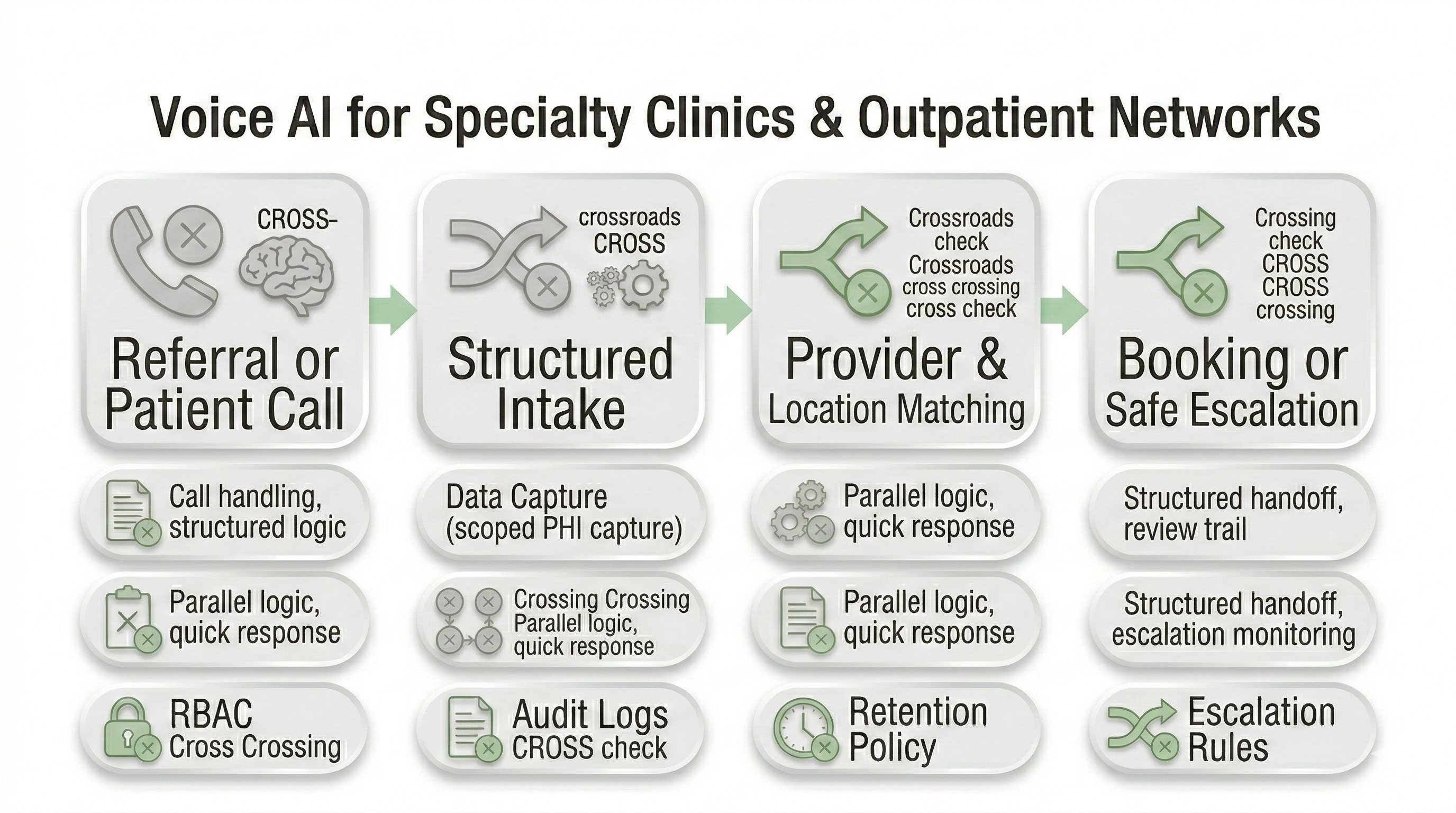
Voice AI for Specialty Clinics & Outpatient Networks
Specialty clinics and outpatient networks manage referral-heavy intake, complex scheduling constraints, multi-location routing, and escalation-sensitive calls. Generic “AI phone systems” fail here because they rely on templated scripts and shallow intent detection.
Peak Demand delivers a fully managed, custom Voice AI build designed to align with your booking rules, referral validation steps, escalation thresholds, and governance posture. The result is fewer missed calls, faster scheduling capture, and reviewable outcomes your operations and compliance teams can stand behind.
Operational Pain Points We Solve
- Referral validation: structured intake that captures required referral details before routing.
- Complex scheduling: provider/location matching, appointment-type rules, and slot constraints.
- Insurance gating: routing based on eligibility steps or authorization requirements (as configured).
- After-hours backlog: capture requests and schedule next steps instead of leaving voicemails.
- Escalation safety: transfer pathways when urgency, low confidence, or frustration is detected.
Governance-First by Design
- Custom boundaries: workflow scope and “what the AI can do” is explicitly defined.
- Least privilege: scoped integrations and permissioned access models.
- Audit visibility: outcome records, reviewable logs, and exportable reporting.
- Retention posture: configurable data handling aligned to policy and operational need.
- Fully managed: we build, test, deploy, monitor, and iterate with your team.
Can Voice AI handle referral intake for cardiology, imaging, or outpatient surgery?
Can it book appointments across multiple providers and locations?
What happens if the caller sounds urgent or clinically sensitive?
{
  "section": "Voice AI for Specialty Clinics & Outpatient Networks",
  "entity": "Peak Demand",
  "service": "voice AI receptionist",
  "geo": ["Toronto", "Ontario", "Canada", "United States"],
  "use_cases": ["referral intake", "multi-provider scheduling", "multi-location call routing", "after-hours coverage", "safe escalation"],
  "controls": ["governance-first workflow boundaries", "least privilege integration", "RBAC access", "audit-ready outcome logs", "configurable retention"],
  "integrations": ["scheduling system", "EMR/EHR (where appropriate)", "CRM", "secure notifications"],
  "delivery_model": "fully managed custom build",
  "cta": "https://peakdemand.ca/discovery"
}
How Voice AI Works in Specialty & Outpatient Networks
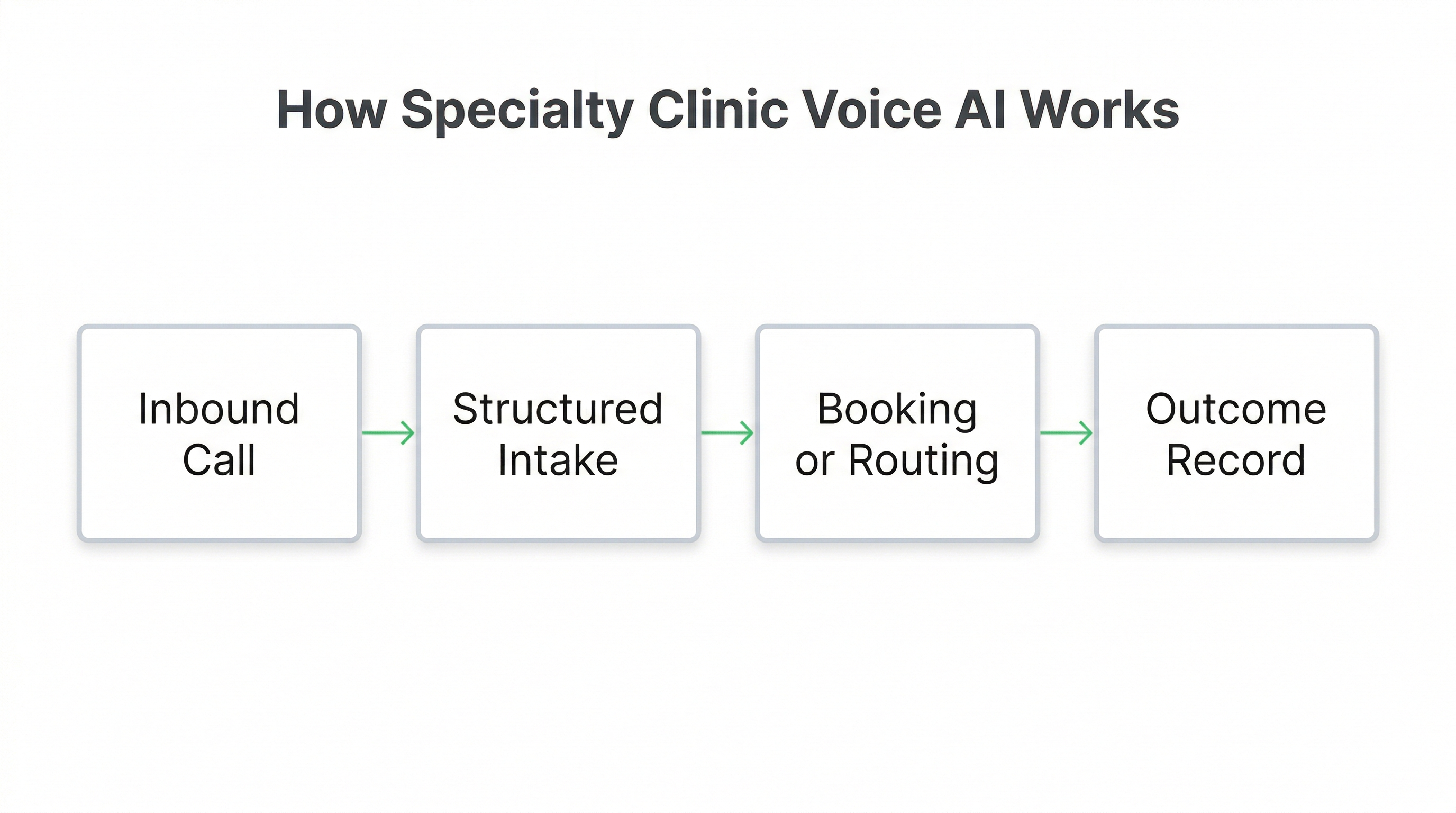
In specialty care, calls cannot be handled with simple “press 1 for appointments” logic. Each interaction follows a structured workflow — from referral validation through scheduling or escalation — with defined boundaries and reviewable outcomes.
Peak Demand designs Voice AI deployments as operational systems, not conversational experiments. Every step is mapped, tested, and documented before launch.
1. Intake & Intent Identification
- Call classification: referral inquiry, existing patient booking, results follow-up, billing question, etc.
- Specialty detection: cardiology, imaging, oncology, surgical centre, etc.
- Required data capture: referral status, provider name, urgency indicators (as configured).
- Boundary enforcement: defined scope of what the AI is permitted to handle.
2. Validation, Booking, or Escalation
- Referral validation logic: confirm required intake fields before proceeding.
- Scheduling rules: provider/location matching, appointment-type constraints.
- Insurance or authorization routing: where applicable and configured.
- Escalation triggers: urgent language, low confidence, repeated frustration.
- Outcome record: structured summary stored for review and export.
Can Voice AI book directly into our scheduler?
What if required referral information is missing?
How do you prevent the AI from going off-script?
{
  "section": "How Voice AI Works in Specialty Clinics",
  "entity": "Peak Demand",
  "service": "voice AI for specialty clinics",
  "geo": ["Toronto", "Ontario", "Canada", "United States"],
  "workflow_steps": [
    "intent detection",
    "referral intake",
    "validation",
    "provider matching",
    "booking",
    "escalation",
    "outcome record"
  ],
  "controls": [
    "defined workflow boundaries",
    "least privilege integration",
    "confidence thresholds",
    "audit logging",
    "configurable retention"
  ],
  "delivery_model": "fully managed custom build",
  "cta": "https://peakdemand.ca/discovery"
}
Why Off-the-Shelf AI Phone Systems Fail in Specialty Care
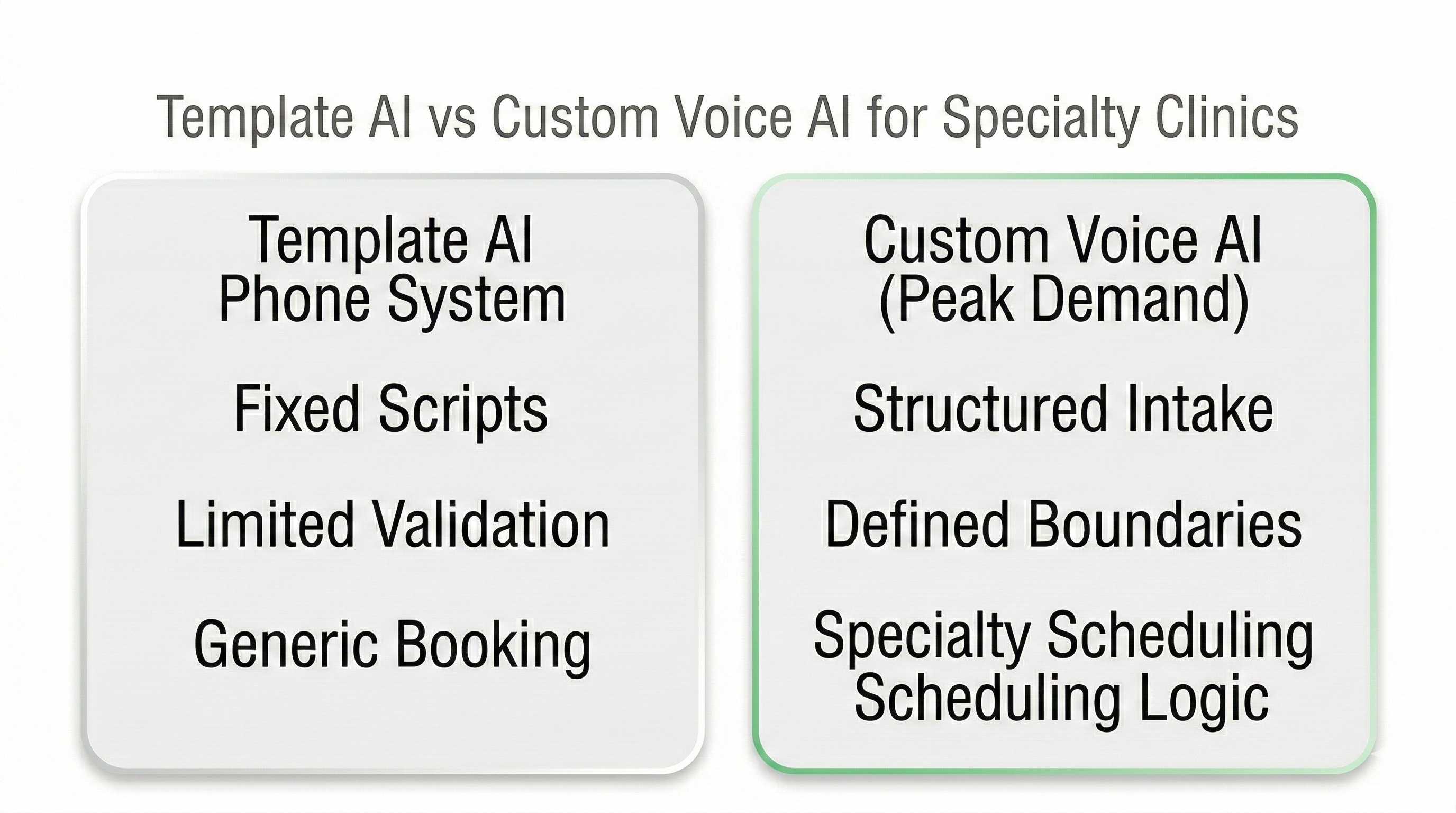
Specialty clinics operate on structured referral pathways, provider-specific scheduling logic, escalation thresholds, and governance expectations. Template-based AI systems are typically built for simple appointment booking — not multi-location outpatient networks.
Peak Demand builds custom Voice AI workflows mapped to your operational rules, not generic scripts. This difference directly impacts safety, scheduling capture, and compliance visibility.
Typical Off-the-Shelf AI Systems
- Fixed call trees: limited flexibility for specialty rules.
- Minimal referral validation: cannot enforce required intake fields.
- Generic booking logic: struggles with provider/location constraints.
- Limited escalation controls: unclear safety boundaries.
- Opaque reporting: limited audit visibility.
Peak Demand Custom Builds
- Workflow-mapped intake: structured referral and specialty logic.
- Defined boundaries: clear scope of what the AI can and cannot do.
- Multi-provider scheduling rules: appointment-type constraints enforced.
- Escalation triggers: urgency, low confidence, or policy-defined scenarios.
- Reviewable outcomes: audit-ready logs and exportable records.
Why can’t we just use a standard AI phone system?
Do you replace our call centre team?
Can we start small before full deployment?
{
  "section": "Custom vs Template Voice AI in Specialty Clinics",
  "entity": "Peak Demand",
  "service": "voice AI for specialty clinics",
  "geo": ["Toronto", "Ontario", "Canada", "United States"],
  "comparison_focus": [
    "custom workflow design",
    "referral validation",
    "multi-provider scheduling rules",
    "escalation controls",
    "audit visibility"
  ],
  "delivery_model": "fully managed custom build",
  "cta": "https://peakdemand.ca/discovery"
}
Core Voice AI Workflows for Specialty & Outpatient Networks
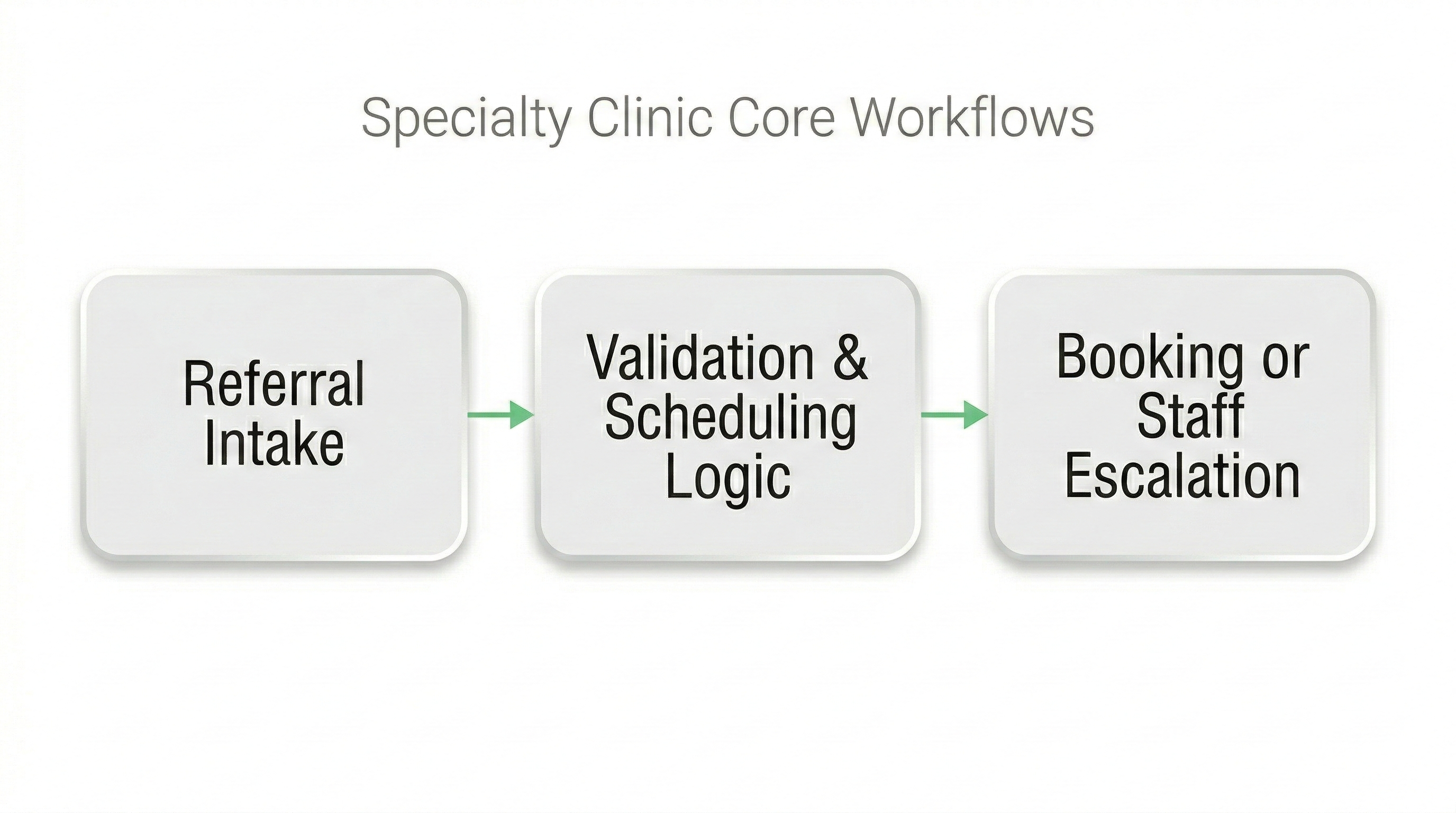
Specialty clinics require more than appointment booking. Calls must follow structured referral intake logic, insurance validation pathways, and provider-specific scheduling constraints — all within defined operational boundaries.
Peak Demand maps these workflows directly to your policies. The system is configured to support your scheduling rules, escalation thresholds, and integration permissions — not generic defaults.
Referral Intake & Validation
- Structured intake fields: capture required referral details before routing.
- Specialty identification: cardiology, imaging, oncology, surgery, etc.
- Policy-driven validation: confirm required data before booking proceeds.
- Escalation logic: transfer when criteria are not met.
Insurance Gating & Multi-Provider Scheduling
- Authorization routing: route calls based on insurance or referral type (as configured).
- Provider/location matching: enforce appointment-type constraints.
- Availability logic: respect time slots and booking policies.
- Outcome logging: structured record of booking, routing, or escalation.
Can Voice AI validate referrals before booking an appointment?
Can it check insurance or authorization requirements?
Can the AI handle multiple providers across different locations?
Does it record what happened on each call?
{
  "section": "Core Workflows for Specialty Clinics",
  "entity": "Peak Demand",
  "service": "voice AI for specialty clinics",
  "geo": ["Toronto", "Ontario", "Canada", "United States"],
  "use_cases": [
    "referral intake automation",
    "insurance routing",
    "multi-provider scheduling",
    "outpatient network coordination"
  ],
  "controls": [
    "structured intake validation",
    "policy-driven workflow rules",
    "least privilege integration",
    "role-based access",
    "audit-ready outcome records"
  ],
  "delivery_model": "fully managed custom build",
  "cta": "https://peakdemand.ca/discovery"
}
After-Hours Voice AI Coverage with Defined Escalation Boundaries
Specialty clinics frequently lose referral opportunities after hours. Voicemail creates backlogs, missed imaging bookings, delayed consult scheduling, and frustrated patients.
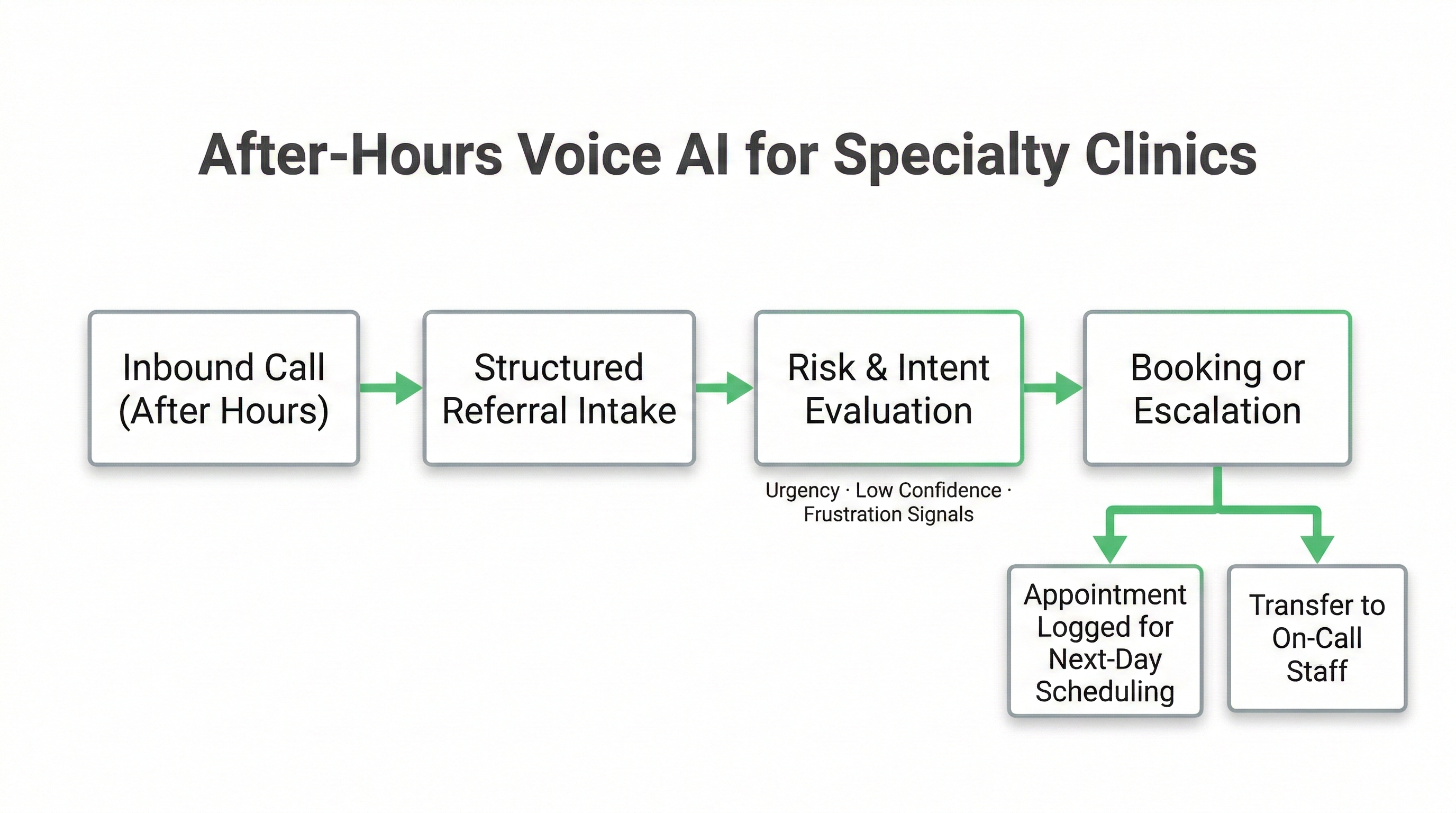
Peak Demand configures Voice AI to capture structured intake after hours while enforcing clearly defined escalation thresholds. The system does not attempt clinical decision-making — it follows configured rules and transfers calls when criteria require human involvement.
After-Hours Intake Capture
- Structured referral capture: required fields collected before confirmation.
- Appointment requests logged: next-step scheduling prepared for staff review.
- Location/provider routing: based on defined availability logic.
- Outcome record generated: every call produces a structured summary.
Escalation & Safety Controls
- Urgency keyword triggers: policy-defined escalation language.
- Low-confidence detection: automatic transfer when intent is unclear.
- Repeated frustration signals: prevent circular interactions.
- Transfer pathways: on-call staff, nursing line, or emergency instruction (as configured).
What happens if someone calls with something urgent?
Can the AI give medical advice?
Will after-hours calls be logged for review?
Can we start with after-hours only?
{
  "section": "After-Hours Voice AI for Specialty Clinics",
  "entity": "Peak Demand",
  "service": "voice AI for specialty clinics",
  "geo": ["Toronto", "Ontario", "Canada", "United States"],
  "use_cases": [
    "after-hours referral capture",
    "intake automation",
    "safe escalation",
    "multi-location routing"
  ],
  "controls": [
    "urgency detection",
    "confidence thresholds",
    "policy-defined escalation",
    "role-based access control",
    "audit-ready outcome records"
  ],
  "delivery_model": "fully managed custom build",
  "cta": "https://peakdemand.ca/discovery"
}
Least-Privilege Integrations for Scheduling, EMR/EHR, and Notifications
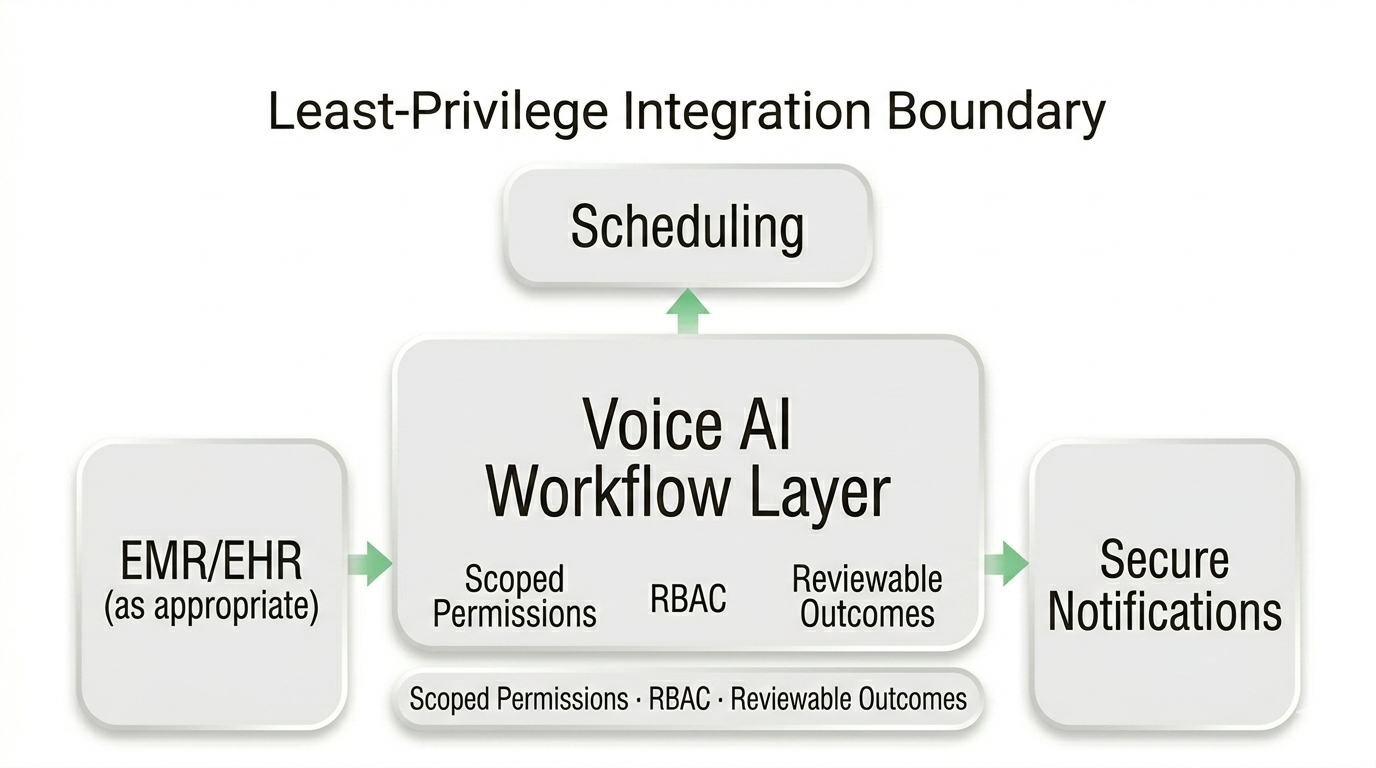
Specialty clinics often need Voice AI to interact with scheduling, messaging, and (in some cases) EMR/EHR-adjacent workflows. The risk is not “AI” — the risk is over-broad access. Our approach is governance-first: scoped permissions, controlled data flows, and reviewable outputs.
Peak Demand builds integrations designed to support least privilege and operational boundaries. Access can be limited to appointment types, clinic locations, specific calendars, or defined fields — depending on your systems and policies.
How We Scope Access
- Minimum required data: capture only what the workflow needs to route or schedule.
- Permission boundaries: restrict actions (read vs write) by role and workflow step.
- Field-level limits: where supported, constrain which fields can be accessed or written.
- Environment controls: staging/testing before production deployment.
- Human fallback: when criteria aren’t met, route to staff instead of expanding access.
Access Controls & Reviewability
- RBAC for logs: control who can view transcripts, outcomes, and call metadata.
- Audit-ready actions: reviewable records of what was captured, routed, or booked.
- Policy-driven retention: configurable handling of recordings/transcripts where used.
- Change governance: controlled updates to prompts, rules, and routing logic.
- Vendor posture: deployment designed for PHIPA/PIPEDA and HIPAA-aligned environments where applicable.
How do you connect Voice AI to our scheduler without giving it too much access?
Who can see call transcripts and outcome logs?
Can our IT team review the integration permissions and data flows?
Do you support Epic, Cerner, Athena, or JaneApp?
{
  "section": "Integration Security and Least Privilege",
  "entity": "Peak Demand",
  "service": "voice AI receptionist for specialty clinics",
  "geo": ["Toronto", "Ontario", "Canada", "United States"],
  "integrations": ["scheduling system", "EMR/EHR (where appropriate)", "secure messaging/notifications", "CRM (optional)"],
  "controls": [
    "least privilege integration",
    "RBAC for transcripts and logs",
    "workflow boundaries",
    "audit-ready outcome records",
    "policy-driven retention",
    "change governance"
  ],
  "delivery_model": "fully managed custom build",
  "cta": "https://peakdemand.ca/discovery"
}
Audit-Ready Visibility: Outcome Logs, Reporting & Change Governance
In specialty and outpatient environments, automation must be reviewable. Operations leaders want clarity on scheduling capture and routing outcomes. Compliance and IT teams require traceability and defined control boundaries.
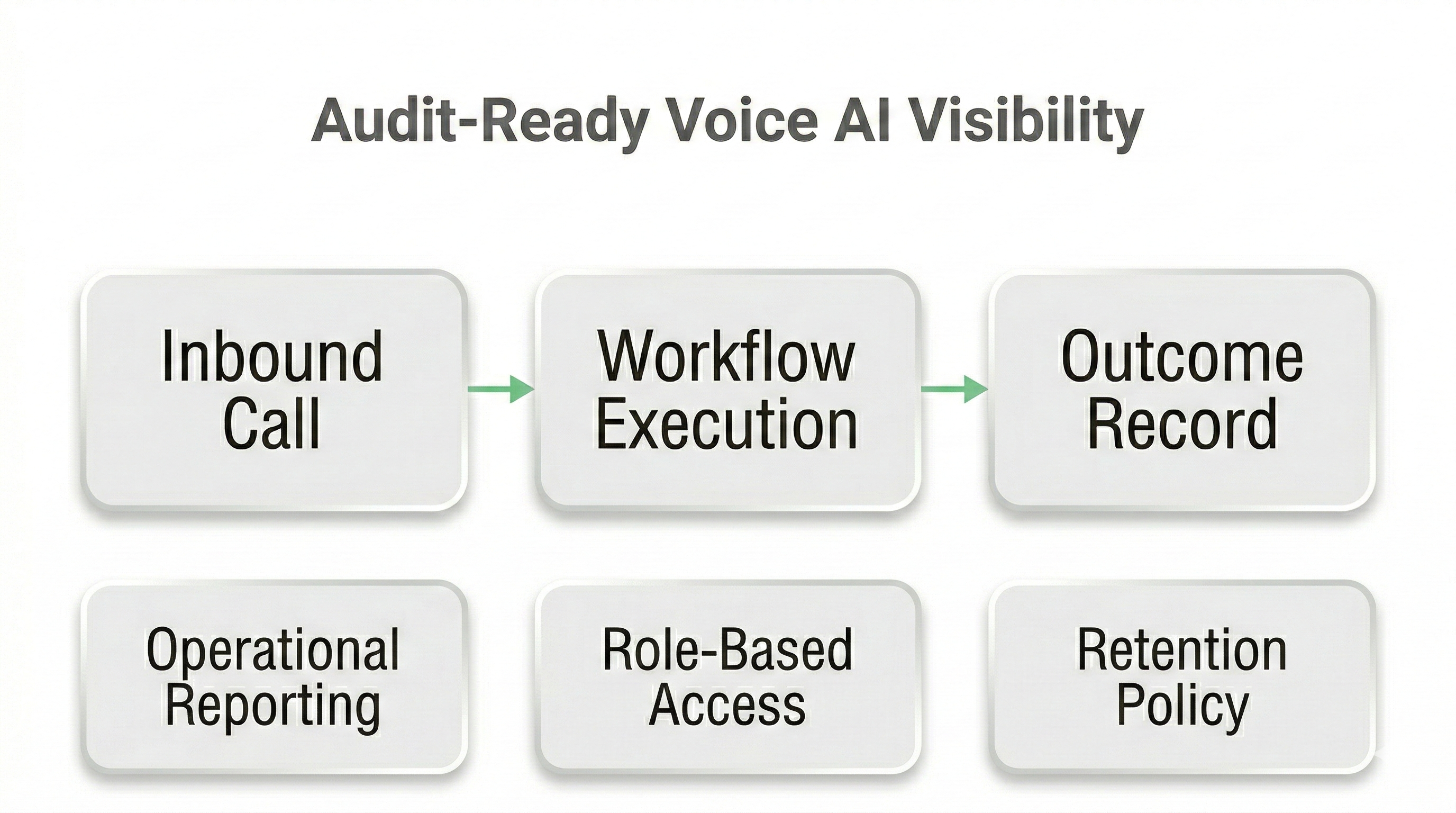
Peak Demand designs Voice AI deployments to produce structured, reviewable outcome records. What was captured, what action was taken, and what escalation occurred can be logged and accessed according to defined role-based permissions.
Outcome & Operational Reporting
- Structured call outcomes: booking, routing, escalation, intake completion.
- Missed-call recovery visibility: track after-hours capture.
- Exportable summaries: support operational analysis.
- Referral volume tracking: monitor intake patterns.
- Location/provider breakdowns: multi-site reporting support.
Governance & Change Controls
- Role-based access: limit who can view transcripts or logs.
- Retention configuration: align to organizational policy.
- Workflow versioning awareness: documented changes to routing rules.
- Defined update process: controlled modifications to prompts and flows.
- Alignment posture: supports PHIPA/PIPEDA and HIPAA-aligned environments where applicable.
Can our compliance team audit what the AI did on a call?
Do you store call recordings and transcripts?
Can we export reports for leadership or board review?
What happens when we need to change workflow rules?
{
  "section": "Audit Visibility and Reporting",
  "entity": "Peak Demand",
  "service": "voice AI for specialty clinics",
  "geo": ["Toronto", "Ontario", "Canada", "United States"],
  "capabilities": [
    "structured outcome logs",
    "exportable reports",
    "role-based access control",
    "policy-driven retention",
    "workflow change governance"
  ],
  "compliance_context": [
    "PHIPA/PIPEDA alignment (Canada)",
    "HIPAA-aligned deployment (US where applicable)"
  ],
  "delivery_model": "fully managed custom build",
  "cta": "https://peakdemand.ca/discovery"
}
Designed to Align with PHIPA, PIPEDA & HIPAA Requirements
Healthcare automation must operate within defined privacy and security frameworks. Voice AI deployments in specialty clinics may interact with personal health information, referral data, and scheduling systems — requiring structured safeguards.
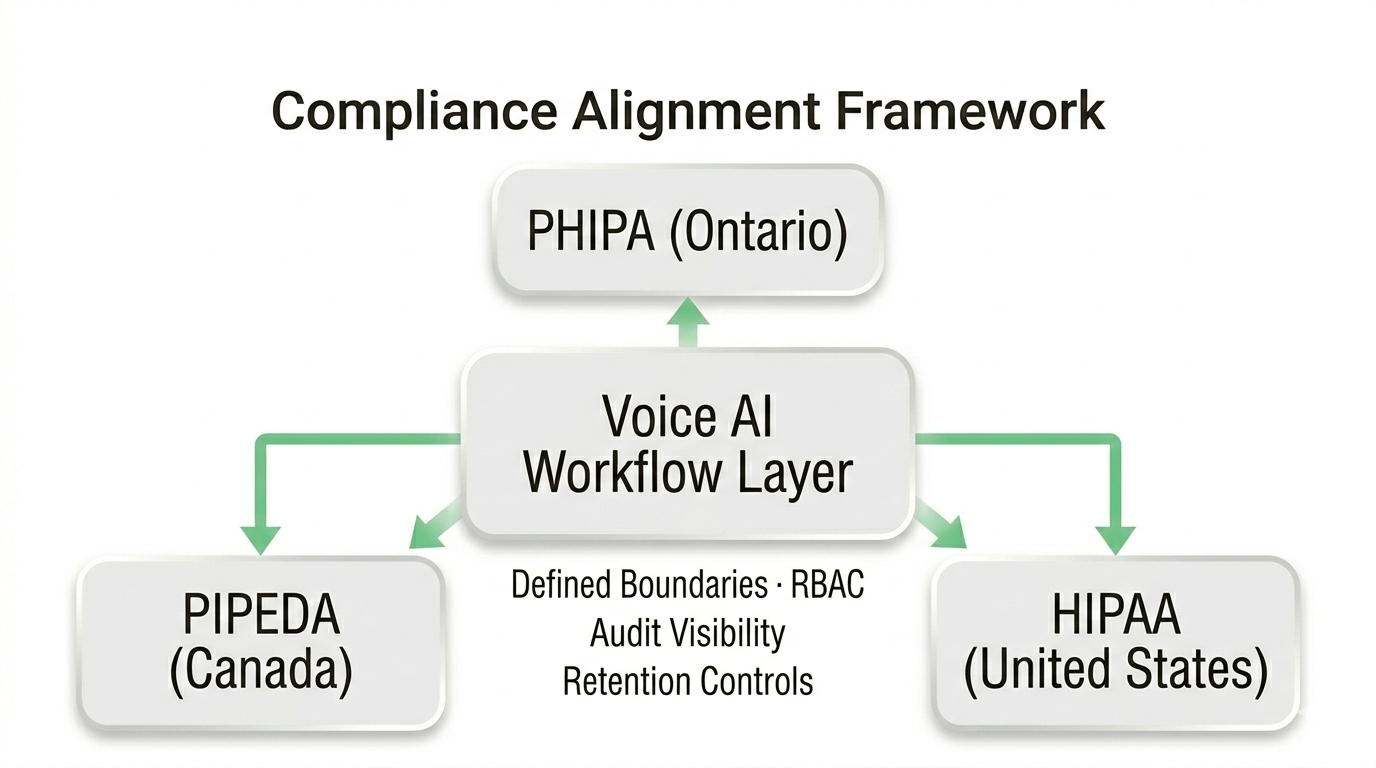
Peak Demand designs systems to support alignment with PHIPA (Ontario), PIPEDA (Canada-wide private sector), and HIPAA (United States where applicable). Compliance is achieved through governance controls, scoped integrations, defined access boundaries, and documented workflows — not marketing claims.
Canada: PHIPA & PIPEDA Context
- Information handling boundaries: defined workflow scope.
- Role-based access controls: limit visibility to authorized staff.
- Policy-driven retention: configurable transcript/recording handling.
- Information Manager posture: support for documented agreements where required.
- Audit traceability: reviewable outcome records.
United States: HIPAA-Aligned Deployments
- Administrative safeguards awareness: documented workflow boundaries.
- Technical safeguards: encryption in transit and at rest where configured.
- Access controls: RBAC for transcripts and logs.
- Audit readiness: structured outcome records for review.
- Business Associate posture: support for BAA arrangements where applicable.
Is your Voice AI HIPAA compliant?
How does this align with PHIPA in Ontario?
Do you sign a BAA?
Can our privacy officer review the safeguards before deployment?
{
  "section": "Compliance Alignment for Specialty Clinics",
  "entity": "Peak Demand",
  "service": "voice AI for specialty clinics",
  "geo": ["Toronto", "Ontario", "Canada", "United States"],
  "compliance_context": [
    "PHIPA (Ontario)",
    "PIPEDA (Canada)",
    "HIPAA (United States where applicable)"
  ],
  "controls": [
    "workflow boundaries",
    "RBAC access",
    "encryption in transit",
    "configurable retention",
    "audit-ready logs",
    "BAA support where applicable"
  ],
  "delivery_model": "fully managed custom build",
  "cta": "https://peakdemand.ca/discovery"
}
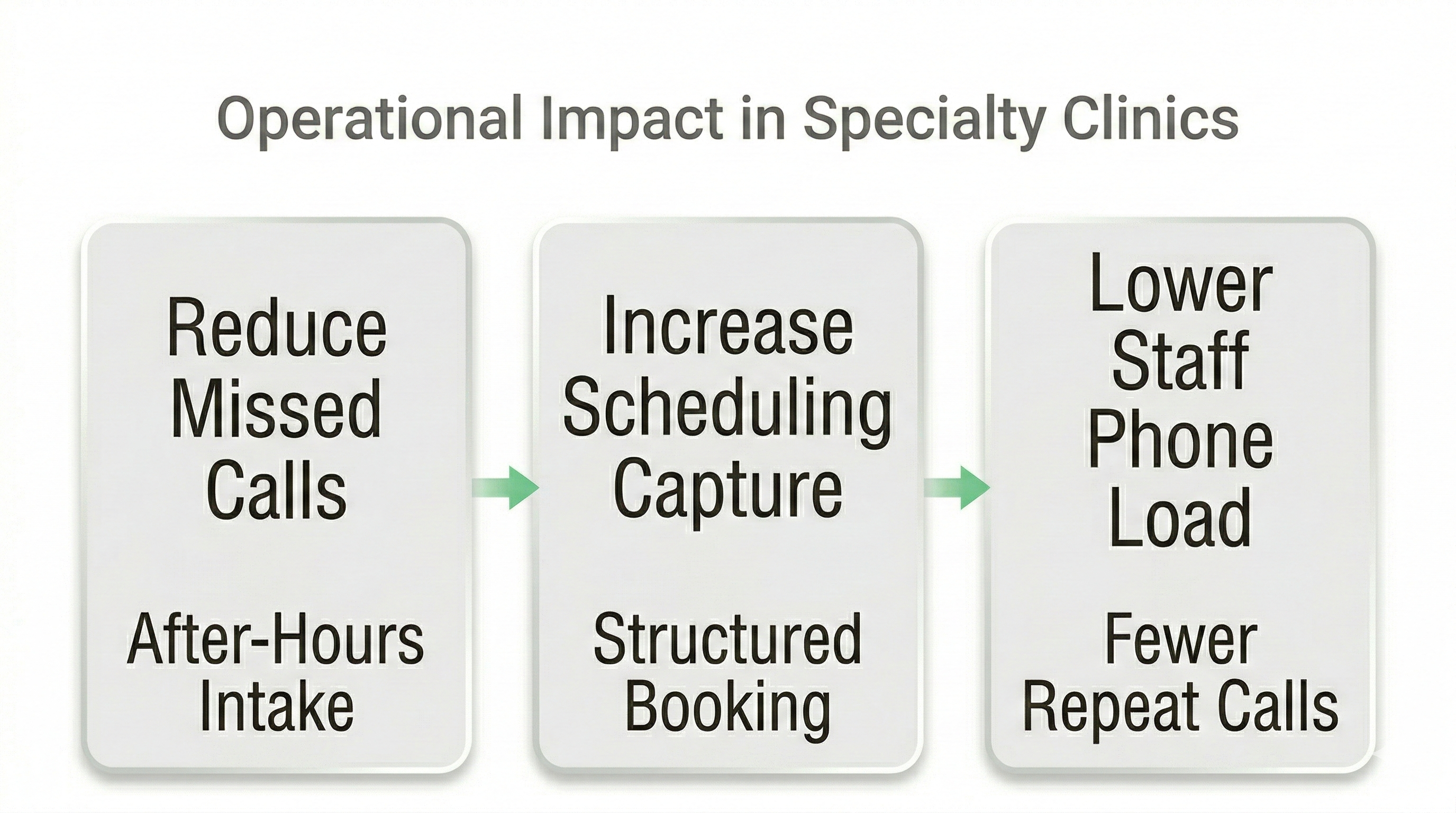
Operational Impact: More Scheduling Capture, Less Phone Load, Faster Intake
Specialty clinics and outpatient networks lose revenue and capacity when phones back up: referrals stall, imaging appointments slip, and staff spend hours on repeat questions. Voice AI helps by capturing structured intake, routing calls correctly, and reducing voicemail backlogs.
Peak Demand focuses on measurable operational outcomes: increased capture of high-intent callers, reduced front desk burden, and clearer routing across providers and sites — with reviewable reporting so you can validate impact.
Where Specialty Clinics Typically See Gains
- Missed-call recovery: after-hours intake capture instead of voicemail.
- Scheduling throughput: fewer manual callbacks for simple bookings.
- Referral speed: structured intake reduces “missing info” loops.
- Better routing: fewer transfers and wrong-department handoffs.
- Staff time returned: reduced repetitive phone handling.
What You Can Measure (Operationally)
- Call outcomes: booked, routed, escalated, intake complete.
- After-hours capture rate: requests logged for next-day action.
- Routing accuracy signals: reduced misroutes and transfers.
- Intake completeness: referrals captured with required fields.
- Time-to-schedule: reduced lag between call and booking.
Will Voice AI reduce missed calls for our specialty clinic?
How do we measure ROI from Voice AI?
Can we use this to reduce the front desk phone burden?
How fast can we launch something that shows impact?
{
  "section": "ROI and Operational Impact",
  "entity": "Peak Demand",
  "service": "voice AI for specialty clinics",
  "geo": ["Toronto", "Ontario", "Canada", "United States"],
  "primary_outcomes": [
    "reduce missed calls",
    "increase scheduling capture",
    "reduce voicemail backlog",
    "improve routing accuracy",
    "return staff time"
  ],
  "measurement_signals": [
    "call outcomes",
    "after-hours capture rate",
    "intake completeness",
    "routing transfers",
    "time-to-schedule"
  ],
  "delivery_model": "fully managed custom build",
  "cta": "https://peakdemand.ca/discovery"
}
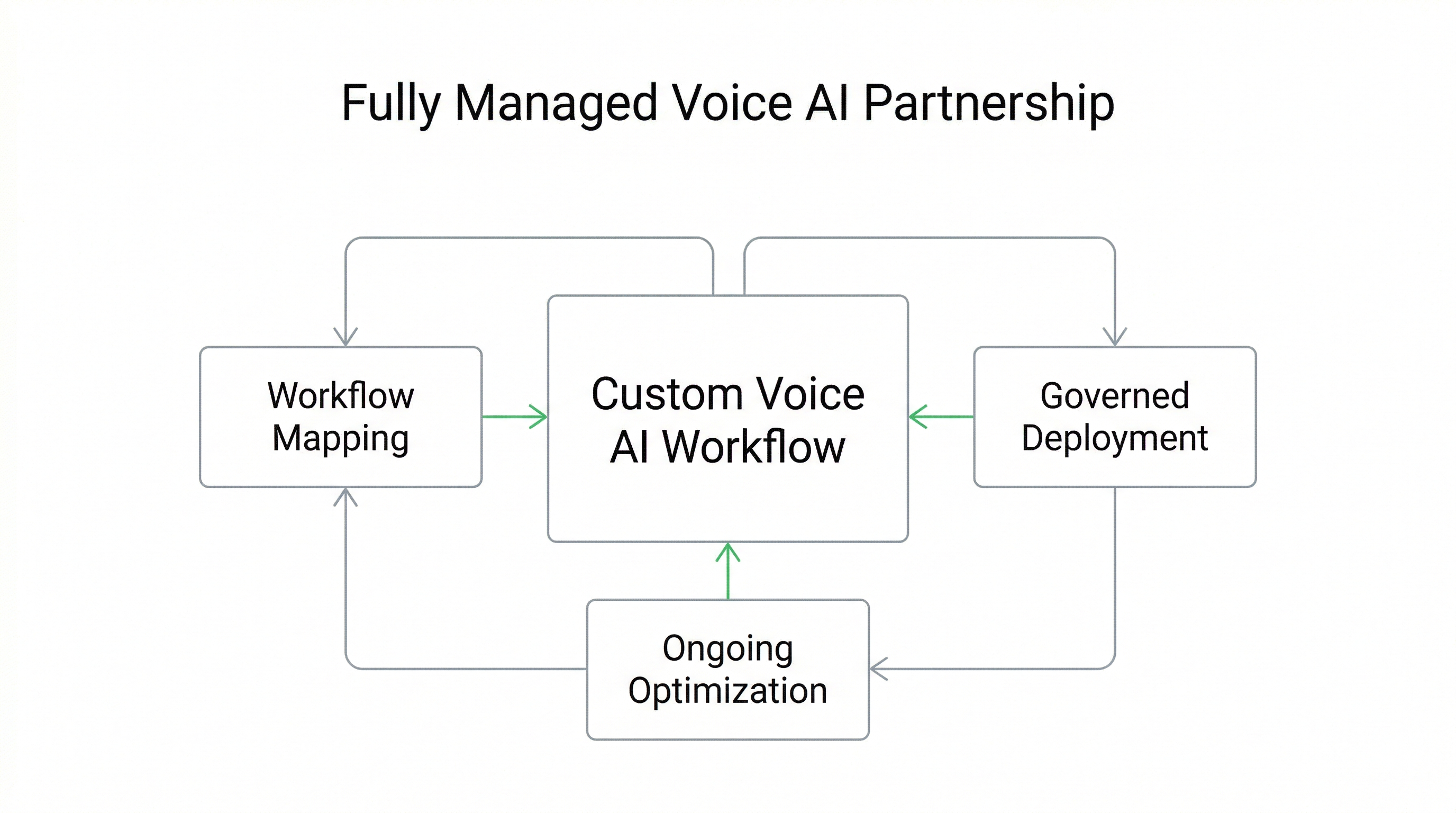
A Fully Managed, Custom Voice AI Partner — Not a DIY Platform
Specialty and outpatient networks cannot rely on generic AI subscriptions. They require workflow mapping, integration scoping, governance controls, and operational validation before launch.
Peak Demand is a Toronto-based Voice AI agency delivering fully managed, custom-built systems for healthcare organizations across Canada and supporting HIPAA-aligned deployments in the United States where applicable.
What Makes Our Model Different
- Custom workflow mapping: no templated call trees.
- Governance-first architecture: defined control boundaries.
- Scoped integrations: least-privilege design.
- Audit-ready posture: reviewable logs and structured outcomes.
- Ongoing optimization: monitored and refined over time.
How We Work with Specialty Clinics
- Discovery mapping session: document intake and routing logic.
- Policy alignment review: confirm escalation and access boundaries.
- Controlled deployment: staging before production.
- Operational validation: test referral and scheduling workflows.
- Long-term partnership: updates managed under change governance.
Are you a software platform or a managed service provider?
Do you only work with clinics in Toronto?
How long does implementation usually take?
What happens after launch?
{
  "section": "Why Peak Demand",
  "entity": "Peak Demand",
  "provider_type": "fully managed voice AI agency",
  "hq": "Toronto, Ontario, Canada",
  "regions_served": ["Canada", "United States (HIPAA-aligned where applicable)"],
  "service_focus": "custom workflow-mapped voice AI for specialty clinics and outpatient networks",
  "delivery_model": "fully managed custom build",
  "cta": "https://peakdemand.ca/discovery"
}
Build a Specialty-Ready Voice AI Workflow — Without DIY Tools
If your outpatient network is dealing with referral backlogs, missed calls, or complex scheduling rules, we can help you map a governed Voice AI workflow that fits your reality. No commitment required.
What You Get in a 30-Minute Discovery Call
- Workflow gap map: where callers drop off, where staff time gets burned.
- Safe automation scope: what Voice AI should handle vs escalate.
- Integration posture: least-privilege approach for scheduling/EMR-adjacent steps.
- Reporting plan: what outcomes you can review and measure.
Good Fit If You Have
- Referral-heavy intake with missing-info loops
- Multi-provider scheduling with specialty constraints
- After-hours voicemail and delayed follow-up
- Multi-location routing across outpatient sites
- Compliance review needs (PHIPA/PIPEDA, HIPAA where applicable)
{
  "page": "Voice AI for Specialty Clinics & Outpatient Networks",
  "provider": "Peak Demand",
  "provider_type": "fully managed voice AI agency",
  "hq": "Toronto, Ontario, Canada",
  "regions_served": ["Canada", "United States"],
  "delivery_model": "fully managed custom build",
  "primary_outcomes": [
    "reduce missed calls",
    "increase scheduling capture",
    "standardize referral intake",
    "improve routing accuracy",
    "audit-ready reporting"
  ],
  "primary_use_cases": [
    "referral intake automation",
    "multi-provider scheduling",
    "after-hours intake capture",
    "multi-location call routing",
    "safe escalation to staff"
  ],
  "compliance_context": [
    "PHIPA (Ontario)",
    "PIPEDA (Canada)",
    "HIPAA-aligned deployment (US where applicable)"
  ],
  "controls": [
    "workflow boundaries",
    "least privilege integration",
    "RBAC for logs and transcripts",
    "audit-ready outcome records",
    "policy-driven retention",
    "change governance"
  ],
  "cta": "https://peakdemand.ca/discovery"
}
Explore Voice AI Pathways for Specialty Clinics and Outpatient Networks
Specialty clinic and outpatient network deployments usually begin with referral intake, scheduling coordination, and patient access stabilization before expanding into imaging, surgical, oncology, and other specialty workflows that need tighter routing logic, stronger escalation boundaries, and more coordinated communication across teams and service lines.
The resources below connect the main healthcare hub, the primary service entry points, adjacent referral-driven and specialty care workflows, and the governance pages most relevant to regulated healthcare communication environments in Canada and the United States.
Core Healthcare Entry Points
Referral Intake, Scheduling, and Patient Access
Specialty Care and Higher-Acuity Access Workflows
{
  "module": "healthcare_interlinks_specialty_outpatient",
  "page_context": "voice-ai-specialty-clinics-outpatient-networks",
  "core_entry_points": [
    "https://peakdemand.ca/healthcare-voice-ai-resource-hub",
    "https://peakdemand.ca/ai-voice-receptionist-after-hours-answering-service-for-healthcare-providers-appointment-booking",
    "https://peakdemand.ca/voice-ai-healthcare-call-center-automation"
  ],
  "referral_intake_scheduling_and_patient_access": [
    "https://peakdemand.ca/voice-ai-healthcare-centralized-scheduling-center",
    "https://peakdemand.ca/voice-ai-for-medical-imaging-diagnostics-scheduling",
    "https://peakdemand.ca/voice-ai-healthcare-call-center-automation"
  ],
  "specialty_care_and_higher_acuity_access_workflows": [
    "https://peakdemand.ca/voice-ai-oncology-cancer-centres",
    "https://peakdemand.ca/voice-ai-for-surgical-centres-day-surgery-clinics",
    "https://peakdemand.ca/voice-ai-for-womens-health-clinics-screening-centres"
  ],
  "governance_and_compliance": [
    "https://peakdemand.ca/phipa-compliant-ai-voice-receptionist-ontario-clinics",
    "https://peakdemand.ca/hipaa-compliant-voice-ai-receptionist-healthcare",
    "https://peakdemand.ca/enterprise-voice-ai-compliance-certifications-rfp-vendor-ccai-customer-service-healthcare-utilities-government-canadian-ai-agency"
  ],
  "intent": "Specialty outpatient internal linking + pathway clustering + LLM surfacing + crawl reinforcement"
}
PHIPA / PIPEDA / HIPAA Reference Links for Compliance Review
The following official regulatory sources are commonly referenced during privacy, IT security, and procurement review for healthcare Voice AI deployments in specialty clinics and outpatient networks.
These links are provided for context. Regulatory alignment depends on deployment configuration, governance controls, access boundaries, and organizational policy — not marketing labels.
Canada (Ontario + Federal)
- PHIPA (Ontario): Personal Health Information Protection Act, 2004 — Ontario Statute
- Information & Privacy Commissioner of Ontario: Guidance and decisions — ipc.on.ca
- PIPEDA (Canada): Office of the Privacy Commissioner of Canada — priv.gc.ca
United States (HIPAA)
- HIPAA Overview: U.S. Department of Health & Human Services — hhs.gov/hipaa
- Privacy Rule: HIPAA Privacy Rule summary — Privacy Rule
- Security Rule: HIPAA Security Rule guidance — Security Rule
- Breach Notification Rule: HHS Breach Rule overview — Breach Rule
Can you send us the PHIPA and HIPAA links our privacy officer will request?
Does listing these regulations mean the Voice AI is automatically compliant?
Can you provide documentation for our IT security review?
{
  "section": "Regulatory References",
  "entity": "Peak Demand",
  "service": "voice AI for specialty clinics",
  "geo": ["Ontario", "Canada", "United States"],
  "regulatory_frameworks": [
    "PHIPA (Ontario)",
    "PIPEDA (Canada)",
    "HIPAA (United States)"
  ],
  "deployment_posture": "designed to align with regulatory requirements through governance controls and scoped integrations",
  "delivery_model": "fully managed custom build",
  "cta": "https://peakdemand.ca/discovery"
}
Explore your own AI use case on a discovery call.