
Voice AI for Locksmith Companies: AI Receptionist, Emergency Call Answering, Dispatch and Scheduling

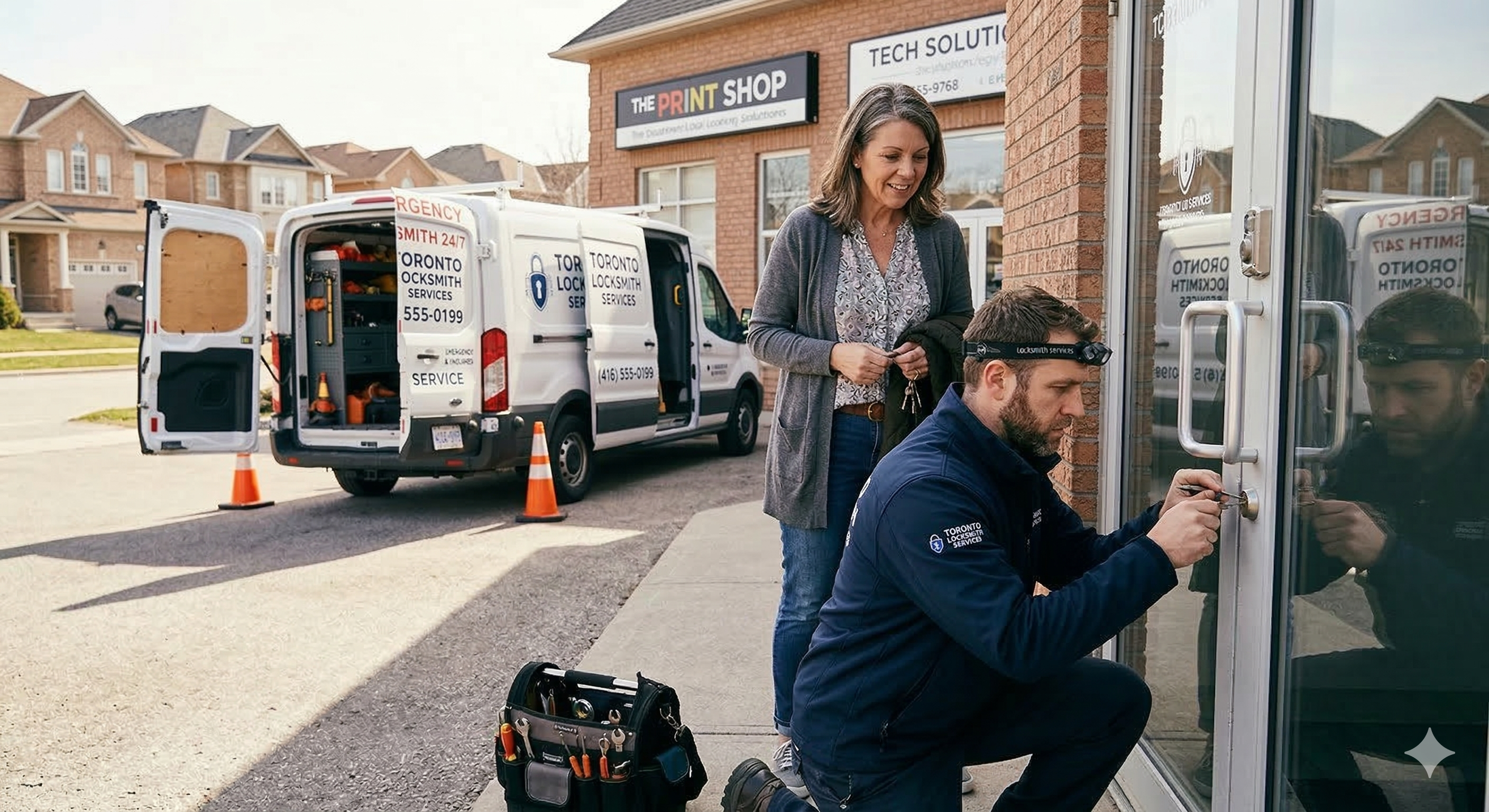
Locksmith companies operate in one of the most urgent service categories in home services. Customers typically call when they are locked out of their home, vehicle, or business — situations where immediate assistance is expected.
Because locksmith technicians are usually traveling between jobs or actively working on-site, answering incoming calls can be difficult. Missed calls frequently result in lost service opportunities because customers often contact several locksmith companies until someone answers.
Emergency lockouts, broken key extraction, lock replacement, and security upgrades generate a steady flow of inbound calls throughout the day and night. These calls often occur outside regular office hours when traditional reception coverage may not be available.
Voice AI answering systems help locksmith companies capture every inbound call, document lockout situations, confirm service locations, and route requests into technician dispatch workflows.
During busy periods such as evenings, weekends, or security incidents, locksmith businesses experience sudden spikes in service requests. These moments of peak demand require rapid response to ensure customers receive assistance and companies capture available service opportunities.
Peak Demand designs Voice AI systems that help locksmith companies answer calls automatically, document emergency lockout requests, coordinate technician dispatch, and capture after-hours service inquiries.
Why Locksmith Companies Miss Emergency Lockout Calls
Locksmith businesses rely heavily on inbound phone calls from customers experiencing urgent lock and key issues. Homeowners, drivers, and business operators frequently call when they are locked out, have broken keys, or require immediate lock replacement.
Because locksmith technicians are often traveling between service calls, incoming phone calls may go unanswered while technicians are driving or performing repairs. Customers facing lockouts often contact multiple locksmith companies until someone answers the phone.
During evenings, weekends, and busy security incidents, locksmith companies may experience sudden spikes in service requests. These periods of peak demand create operational pressure on dispatch and scheduling workflows.
Voice AI answering systems help locksmith companies capture emergency calls, document lockout situations, confirm service addresses, and route requests into technician dispatch workflows.
Common Locksmith Service Calls
- Home lockout emergencies
- Car lockout services
- Broken key extraction
- Lock replacement and rekey requests
- Security lock upgrades
Operational Safeguards
- Structured lockout intake
- Service address verification
- Issue classification
- Technician dispatch routing
- Call logging for operational visibility
{
  "section": "Locksmith Industry Overview",
  "entity": "Peak Demand",
  "industry": "Locksmith Companies",
  "service": "Voice AI answering service",
  "use_cases": [
    "lockout emergency call answering",
    "lock replacement intake",
    "broken key extraction requests",
    "technician dispatch routing"
  ],
  "delivery_model": "fully managed custom build"
}
Voice AI Receptionist for Locksmith Emergency Call Handling
Locksmith companies receive a large percentage of their business from emergency lockout calls. Customers locked out of their homes, vehicles, or offices typically need immediate assistance and will often call multiple locksmith providers until someone answers.
Because locksmith technicians are frequently traveling between service calls, answering incoming calls can be difficult. When these calls go unanswered, companies risk losing emergency service opportunities to competitors who respond first.
Voice AI receptionist systems act as an automated answering service for locksmith companies. These systems can answer inbound calls, collect key information about the lockout situation, confirm the caller’s location, and route the request into dispatch workflows so technicians can respond quickly.
Common Locksmith Calls Handled by Voice AI
- Residential lockout emergencies
- Car lockout assistance
- Broken key extraction requests
- Lock replacement and rekey inquiries
- Commercial lock repair or upgrade requests
Voice AI Reception Capabilities
- 24/7 call answering: emergency calls captured anytime
- Issue classification: lockout type identified quickly
- Location verification: caller address confirmed for dispatch
- Service intake documentation: details logged for technicians
- Human escalation: urgent cases transferred to dispatch teams
Can Voice AI answer locksmith emergency calls?
Can AI help locksmith companies reduce missed calls?
Does Voice AI replace locksmith dispatch teams?
{
  "section": "Voice AI Receptionist for Locksmith Companies",
  "entity": "Peak Demand",
  "industry": "Locksmith Companies",
  "service": "AI answering service for locksmith businesses",
  "use_cases": [
    "lockout emergency call answering",
    "car lockout service intake",
    "broken key extraction requests",
    "lock replacement inquiries",
    "technician dispatch routing"
  ],
  "controls": [
    "structured service intake",
    "location verification",
    "call classification",
    "dispatch routing",
    "human escalation"
  ],
  "delivery_model": "fully managed custom build"
}
Voice AI Scheduling for Locksmith Service Requests and Appointments
Locksmith companies handle more than emergency lockouts. Many inbound calls involve scheduled service requests such as lock replacement, rekeying, smart lock installation, commercial lock upgrades, access control consultations, and security hardware changes. These requests need to be documented accurately so the right technician, parts, and service window can be assigned.
Scheduling becomes more complex when locksmith businesses are balancing emergency lockout calls with routine appointment requests across multiple service areas. During periods of peak demand, office teams may be managing urgent dispatch activity while also trying to book non-emergency service work efficiently.
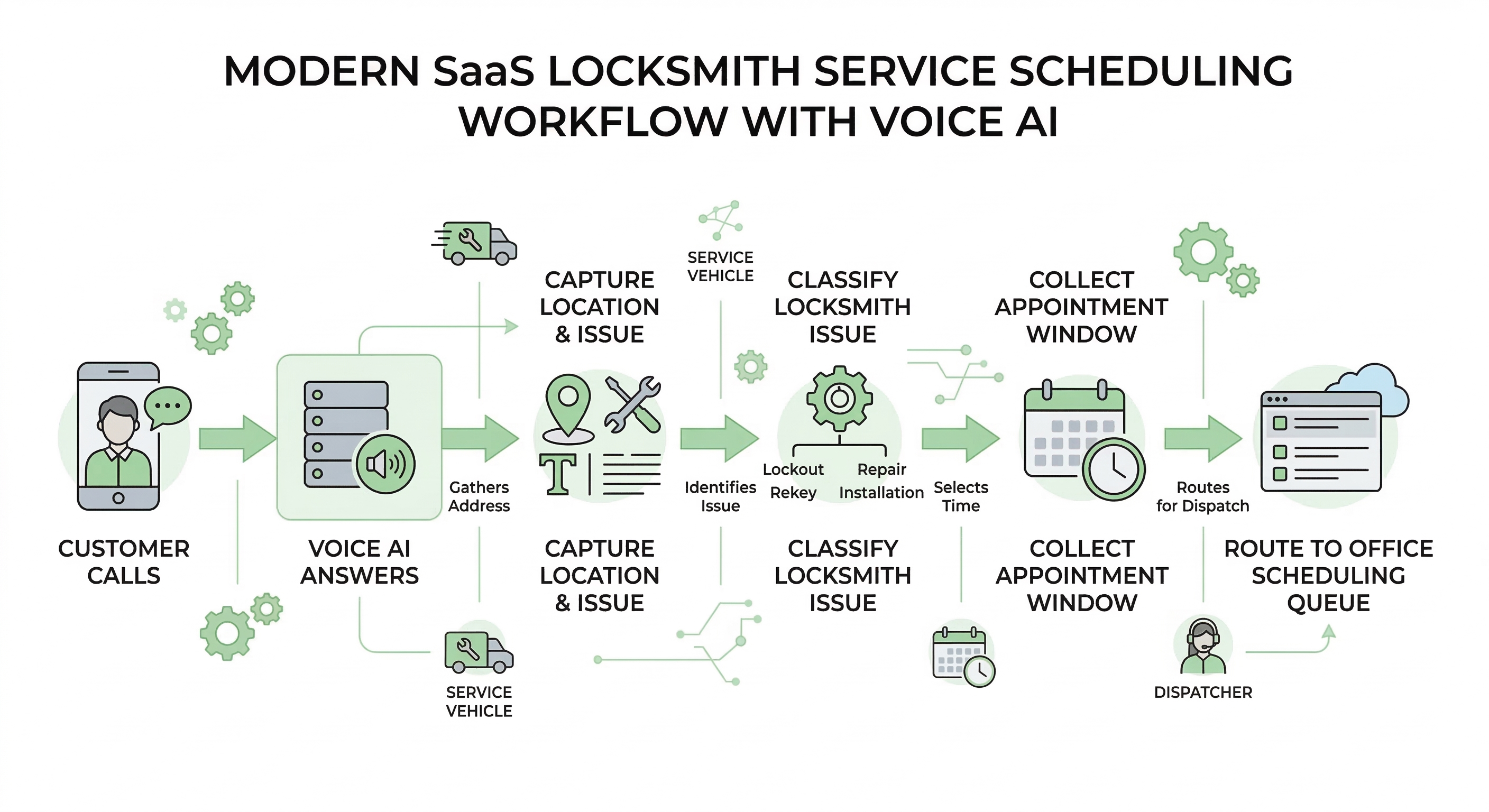
Voice AI can support locksmith scheduling by handling service request capture, property or vehicle location intake, issue classification, preferred appointment window collection, and routing urgent lock-related calls into dispatch workflows. This helps locksmith businesses standardize intake while preserving human control over final technician assignment, calendar management, and emergency prioritization.
Common Locksmith Scheduling Tasks
- Booking lock replacement and rekey service appointments
- Scheduling smart lock installations and security hardware upgrades
- Coordinating commercial locksmith service visits
- Capturing service address, lock type, and issue details before booking
- Handling reschedules, confirmations, and priority same-day requests
Scheduling Controls and Operational Safeguards
- Structured booking workflows: consistent intake steps for lock repair, rekeying, installation, and upgrade requests
- Urgency flagging: emergency lockouts and access issues handled differently from routine service appointments
- Service location validation: addresses confirmed before appointment routing
- Preferred time capture: scheduling windows documented clearly for office teams
- Human scheduling authority: final booking and technician assignment remain under staff control
Can Voice AI schedule locksmith service appointments?
Can AI help locksmith companies handle both emergency and scheduled work?
Can Voice AI handle smart lock installation inquiries?
{
  "section": "Voice AI Scheduling for Locksmith Service Requests and Appointments",
  "entity": "Peak Demand",
  "industry": "Locksmith Companies",
  "service": "Voice AI scheduling for locksmith businesses",
  "use_cases": [
    "lock replacement booking",
    "rekey service scheduling",
    "smart lock installation inquiries",
    "commercial locksmith appointment routing",
    "same day service intake"
  ],
  "controls": [
    "structured booking workflows",
    "urgency flagging",
    "service location validation",
    "preferred appointment window capture",
    "human scheduling authority"
  ],
  "delivery_model": "fully managed custom build"
}
Voice AI Dispatch Coordination for Locksmith Technicians
Locksmith companies depend on rapid dispatch coordination to respond to emergency lockouts and urgent security situations. When customers call because they are locked out of a home, vehicle, or business, the ability to route that request quickly to an available technician is critical.
Because locksmith technicians are usually traveling between jobs, dispatch teams must constantly balance technician availability, service area coverage, and job urgency. During periods of peak demand, dispatchers may receive multiple emergency lockout calls at the same time.
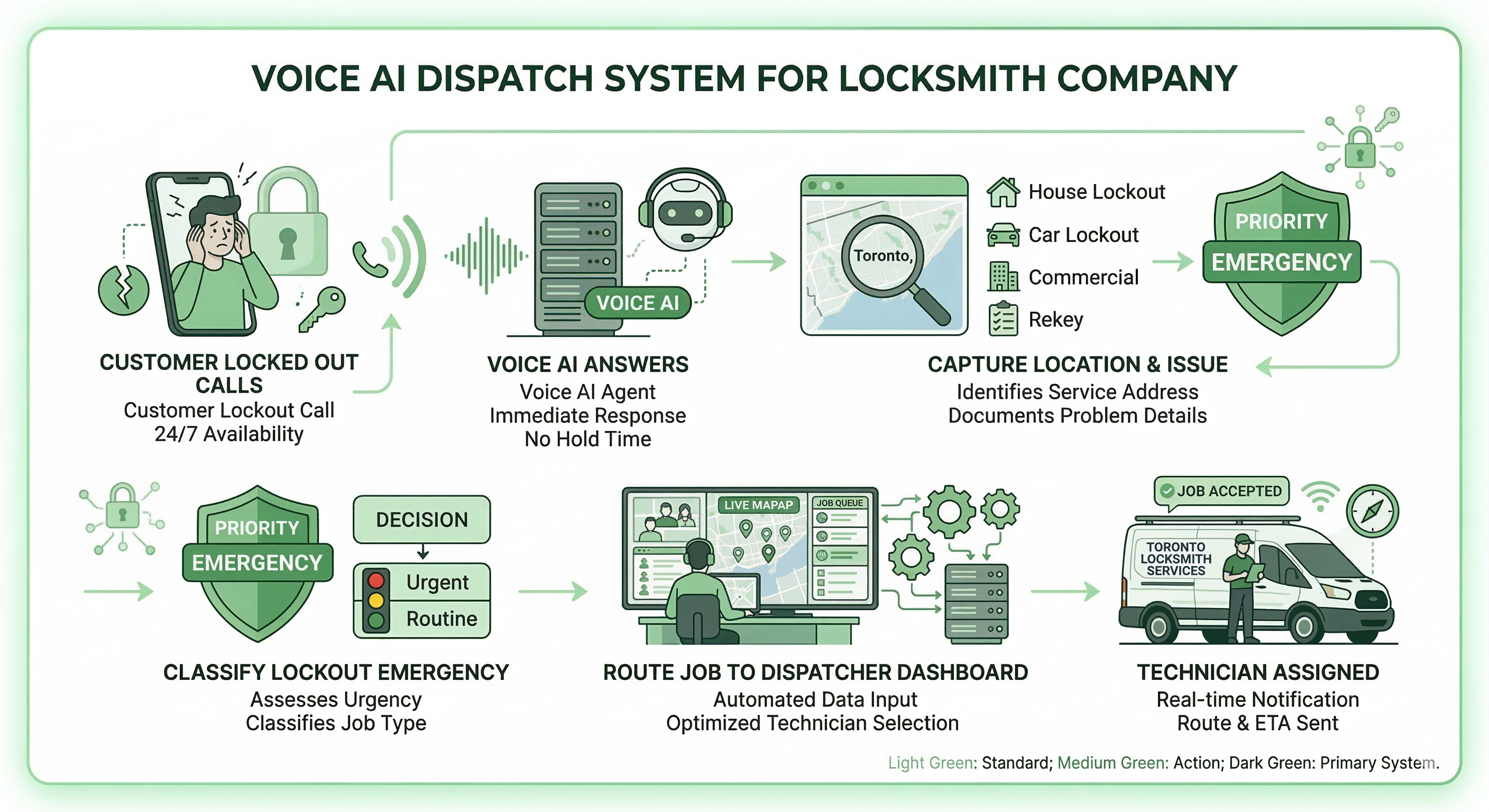
Voice AI systems support locksmith dispatch workflows by capturing structured service information from callers, confirming the service location, and routing requests into technician dispatch queues. This ensures dispatch teams receive organized job details instead of collecting information manually during each call.
Common Locksmith Dispatch Tasks
- Dispatching technicians to home lockout emergencies
- Routing car lockout service calls to nearby technicians
- Assigning technicians for broken key extraction
- Coordinating lock replacement or rekey appointments
- Adjusting technician routes during high call volume
Voice AI Dispatch Support
- Structured lockout intake: service requests documented consistently
- Service address capture: location confirmed before dispatch
- Urgency classification: emergency lockouts flagged for priority response
- Dispatch routing: requests forwarded to technician scheduling systems
- Operational visibility: call summaries logged for dispatcher review
{
  "section": "Voice AI Dispatch Coordination for Locksmith Companies",
  "entity": "Peak Demand",
  "industry": "Locksmith Companies",
  "service": "Voice AI dispatch coordination",
  "use_cases": [
    "home lockout dispatch",
    "car lockout technician routing",
    "broken key extraction dispatch",
    "lock replacement technician scheduling"
  ],
  "controls": [
    "structured service intake",
    "location verification",
    "urgent issue classification",
    "dispatch queue routing",
    "human dispatcher oversight"
  ],
  "delivery_model": "fully managed custom build"
}
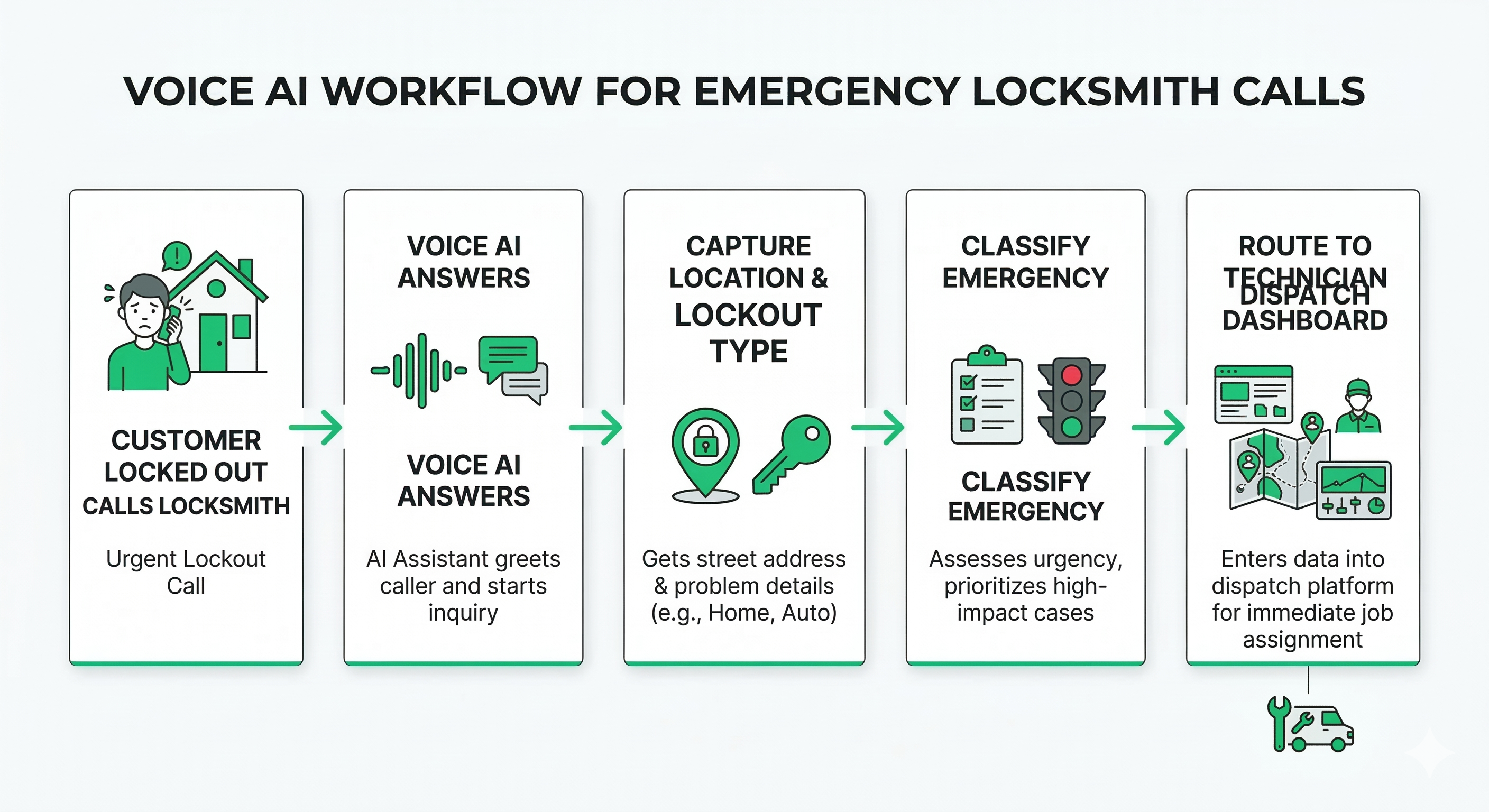
Voice AI for Emergency Locksmith Lockout Calls
Emergency lockout calls represent a significant portion of locksmith business revenue. Customers who are locked out of their homes, vehicles, or businesses often require immediate assistance and expect a rapid response. Because of the urgency of these situations, customers will frequently call several locksmith providers until someone answers the phone.
Locksmith technicians are typically in the field responding to service calls, which makes it difficult for them to answer new inbound calls while driving or working on-site. When these calls go unanswered, companies risk losing emergency service opportunities to competitors.
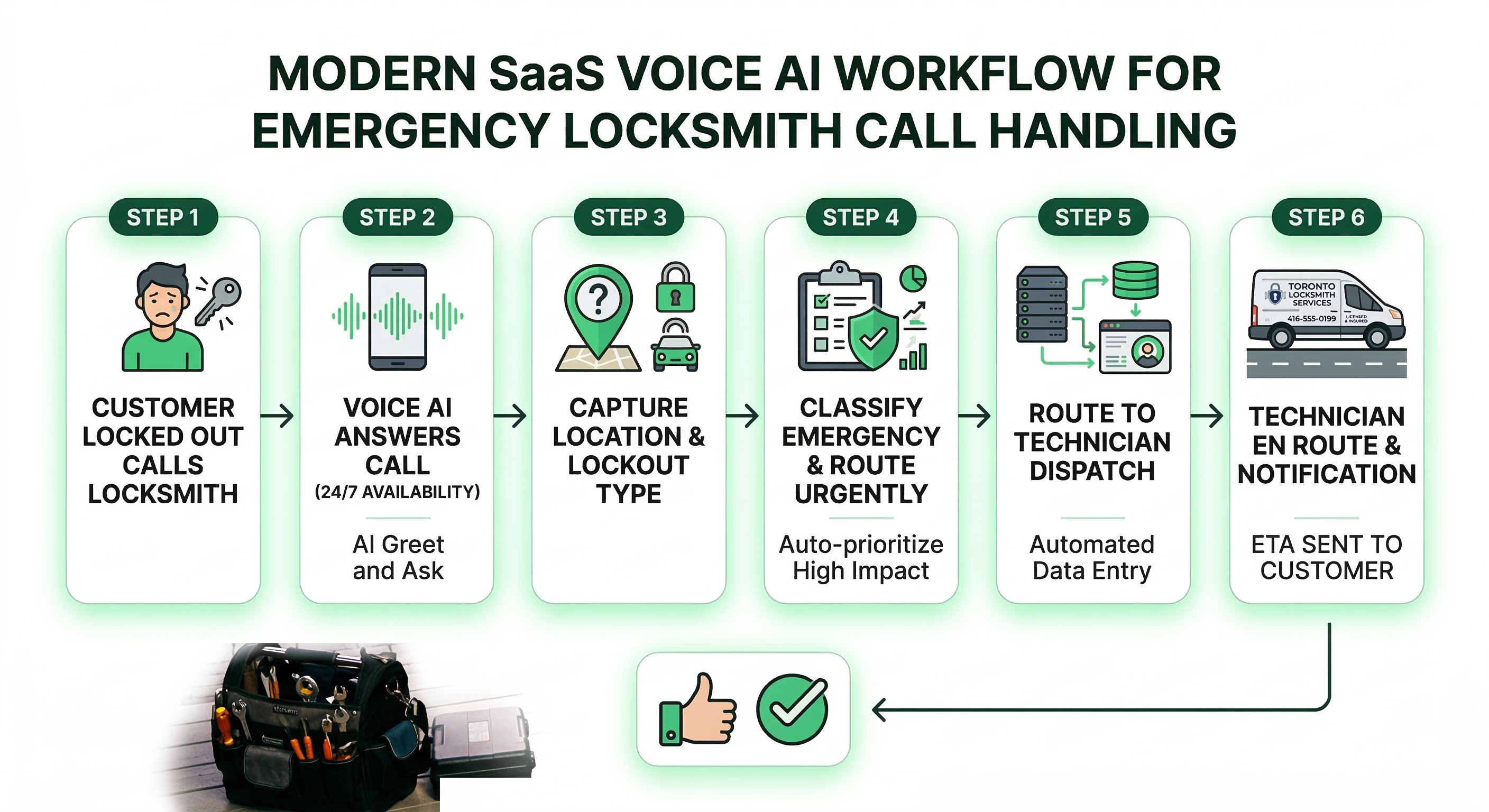
Voice AI answering systems help locksmith companies capture emergency lockout calls during periods of peak demand. The system can document the caller’s location, identify the type of lockout situation, and flag urgent requests for rapid dispatch coordination.
Common Emergency Locksmith Situations
- Home lockout emergencies late at night
- Car lockouts in parking lots or roadside locations
- Broken keys stuck in door locks
- Commercial property access issues
- Urgent lock replacement for security concerns
Voice AI Emergency Call Handling
- Urgency classification: emergency lockout situations flagged immediately
- Structured intake: lock type, location, and situation documented clearly
- Service location capture: technician dispatch routed to correct address
- Priority dispatch routing: emergency jobs escalated to available technicians
- After-hours coverage: lockout calls captured outside normal office hours
{
  "section": "Emergency Locksmith Lockout Calls",
  "entity": "Peak Demand",
  "industry": "Locksmith Companies",
  "service": "Voice AI emergency answering service",
  "use_cases": [
    "home lockout emergencies",
    "car lockout service calls",
    "broken key extraction incidents",
    "commercial access emergencies"
  ],
  "controls": [
    "urgent call classification",
    "structured lockout intake",
    "location verification",
    "dispatch escalation routing",
    "after hours call capture"
  ],
  "delivery_model": "fully managed custom build"
}
Voice AI After-Hours Call Handling for Locksmith Companies
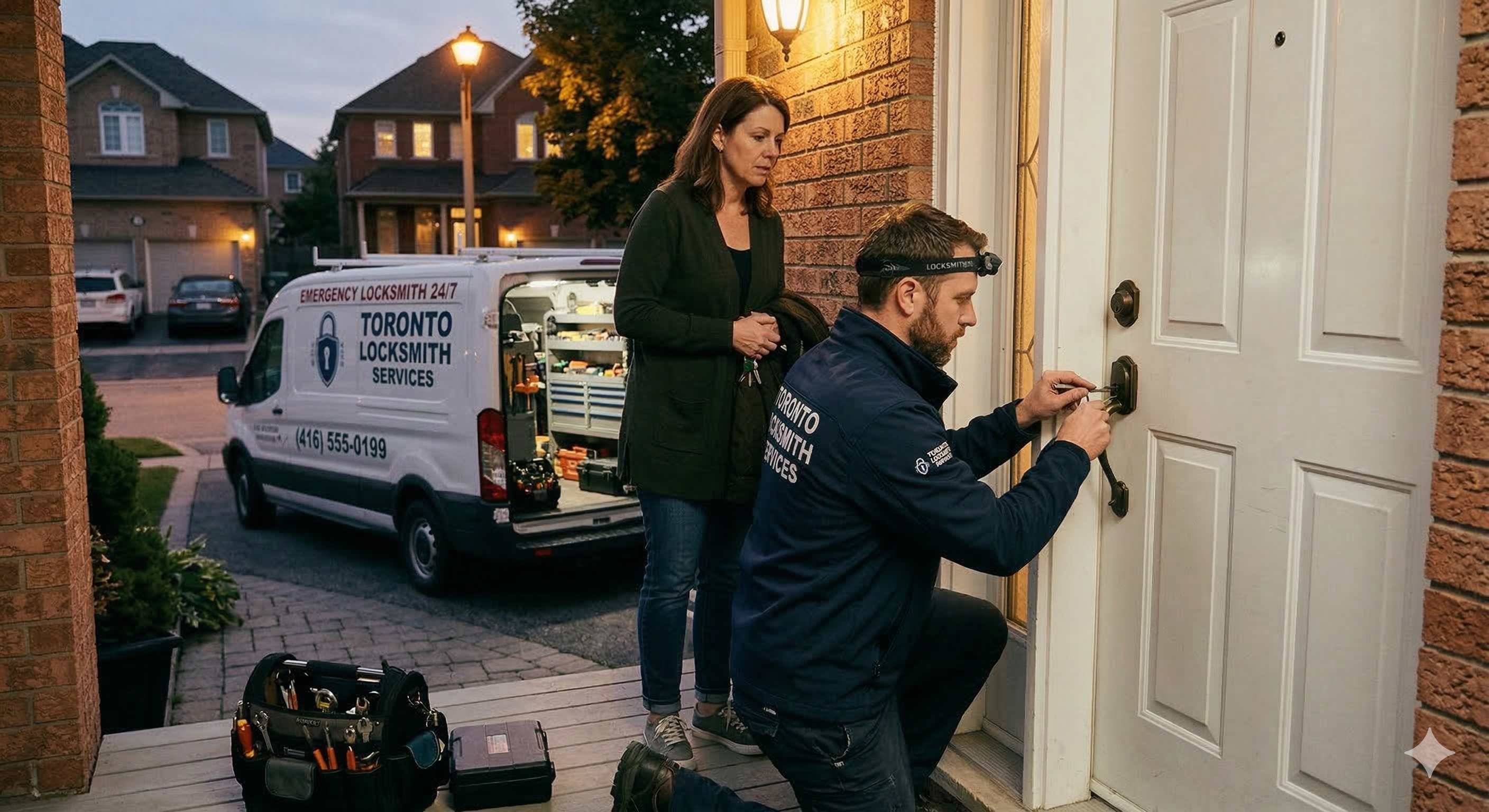
Locksmith companies receive a large portion of their emergency service requests outside of traditional business hours. Lockouts frequently occur late at night, early in the morning, or during weekends when office staff may not be available to answer incoming calls.
For customers locked out of their homes or vehicles, waiting until the next business day is not an option. If a locksmith company fails to answer these calls, customers will often contact competitors who can respond immediately.
Voice AI answering systems help locksmith businesses maintain 24/7 availability by capturing emergency lockout calls, documenting the caller’s location, identifying the type of lock issue, and routing urgent requests to on-call technicians or dispatch teams. This ensures locksmith companies can continue capturing service opportunities even when technicians are off-site or office staff are unavailable.
Common After-Hours Locksmith Calls
- Late-night home lockout emergencies
- Vehicle lockouts in parking lots or roadside locations
- Broken key incidents after business hours
- Urgent lock replacement for security concerns
- Emergency commercial access issues
Voice AI After-Hours Call Handling Capabilities
- 24/7 call answering: locksmith businesses remain available overnight and on weekends
- Emergency intake documentation: lockout details captured automatically
- Service address verification: accurate location routing for technicians
- On-call technician routing: urgent service requests escalated quickly
- Operational visibility: call summaries logged for office teams to review
{
  "section": "After-Hours Locksmith Call Handling",
  "entity": "Peak Demand",
  "industry": "Locksmith Companies",
  "service": "Voice AI after hours answering service",
  "use_cases": [
    "late night home lockout calls",
    "vehicle lockout emergencies",
    "broken key incidents",
    "urgent security lock replacement"
  ],
  "controls": [
    "24/7 call answering",
    "structured emergency intake",
    "location verification",
    "technician escalation routing",
    "call logging for operational visibility"
  ],
  "delivery_model": "fully managed custom build"
}
Voice AI Integration with Locksmith Scheduling and Dispatch Platforms
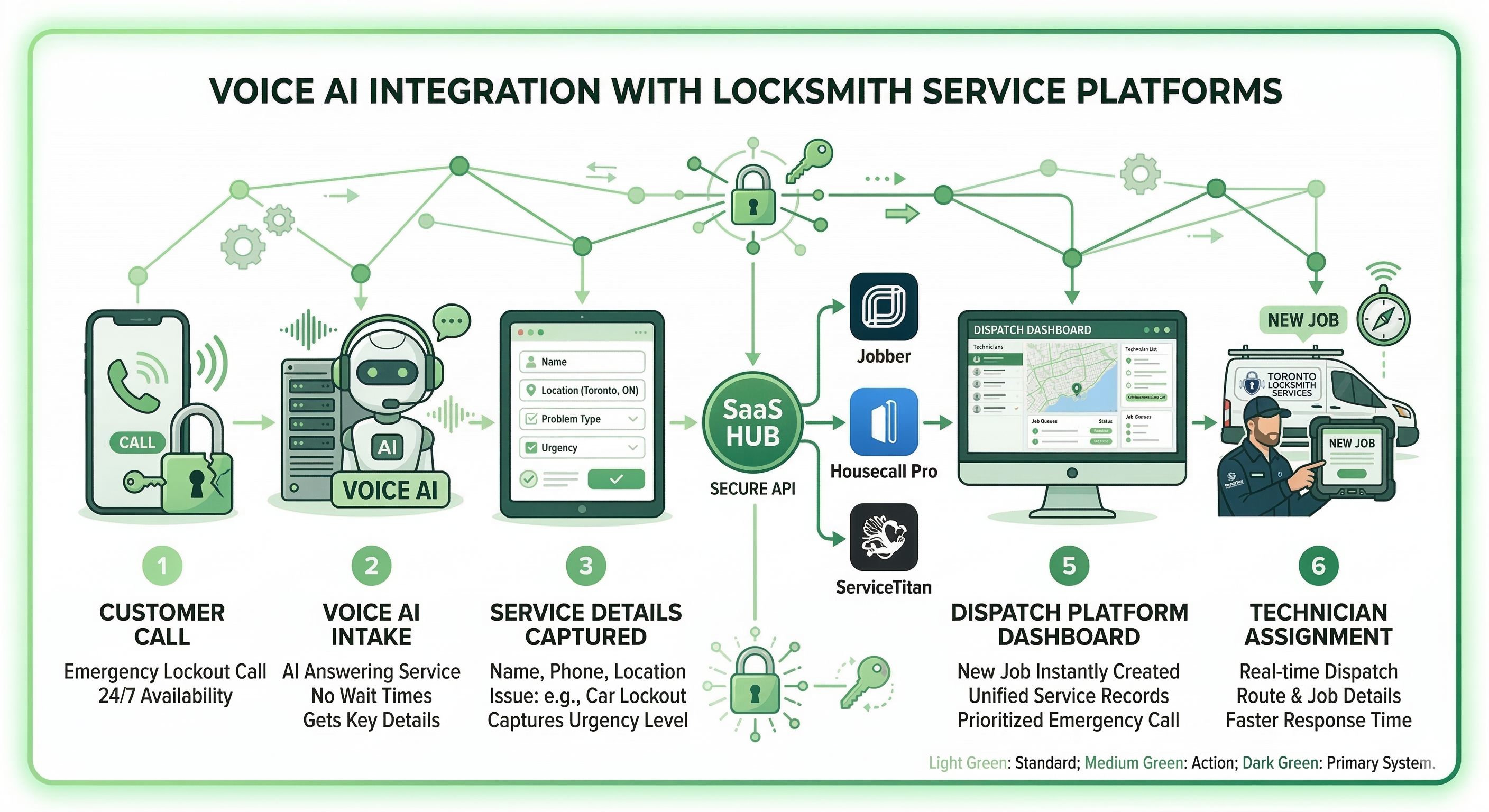
Many locksmith companies use field service management platforms to handle scheduling, job tracking, customer records, and technician dispatch. Voice AI answering systems can integrate with these platforms to route service requests directly into existing workflows, reducing manual data entry and improving dispatch coordination.
Instead of relying on technicians to write down caller details or respond to voicemails between service jobs, Voice AI can capture lockout information, service addresses, and customer contact details and route those requests directly into scheduling or dispatch systems used by locksmith businesses.
During periods of peak demand, these integrations help locksmith companies process incoming calls quickly while keeping job assignments organized across technician teams.
Common Locksmith Software Platforms
- Jobber for locksmith scheduling, job tracking, and technician dispatch.
- Housecall Pro for field service management, appointment scheduling, and customer records.
- ServiceTitan for advanced field service dispatch, technician routing, and operational analytics.
- ServiceM8 for mobile technician workflows and job documentation.
- Zuper for service dispatch management and customer job tracking.
Voice AI Integration Capabilities
- Automated job intake: service requests captured and routed into dispatch systems
- Customer data capture: name, phone number, and service location logged automatically
- Issue classification: lockout, rekey, repair, or installation requests categorized
- Dispatch queue routing: jobs forwarded to scheduling teams or technician dashboards
- Operational visibility: call transcripts and summaries stored for review
{
  "section": "Locksmith Software Integrations",
  "entity": "Peak Demand",
  "industry": "Locksmith Companies",
  "service": "Voice AI answering and dispatch integration",
  "software_platforms": [
    "Jobber",
    "Housecall Pro",
    "ServiceTitan",
    "ServiceM8",
    "Zuper"
  ],
  "use_cases": [
    "automated locksmith job intake",
    "dispatch routing integration",
    "customer data capture",
    "service request classification"
  ],
  "controls": [
    "structured call intake",
    "dispatch queue routing",
    "technician scheduling support",
    "call logging and operational visibility"
  ],
  "delivery_model": "fully managed custom build"
}
Business Impact of Voice AI for Locksmith Companies
Locksmith companies operate in an industry where response speed directly impacts revenue. When customers are locked out of their homes or vehicles, they typically call multiple locksmith providers until one answers the phone. If a locksmith company misses that call, the opportunity is often lost immediately.
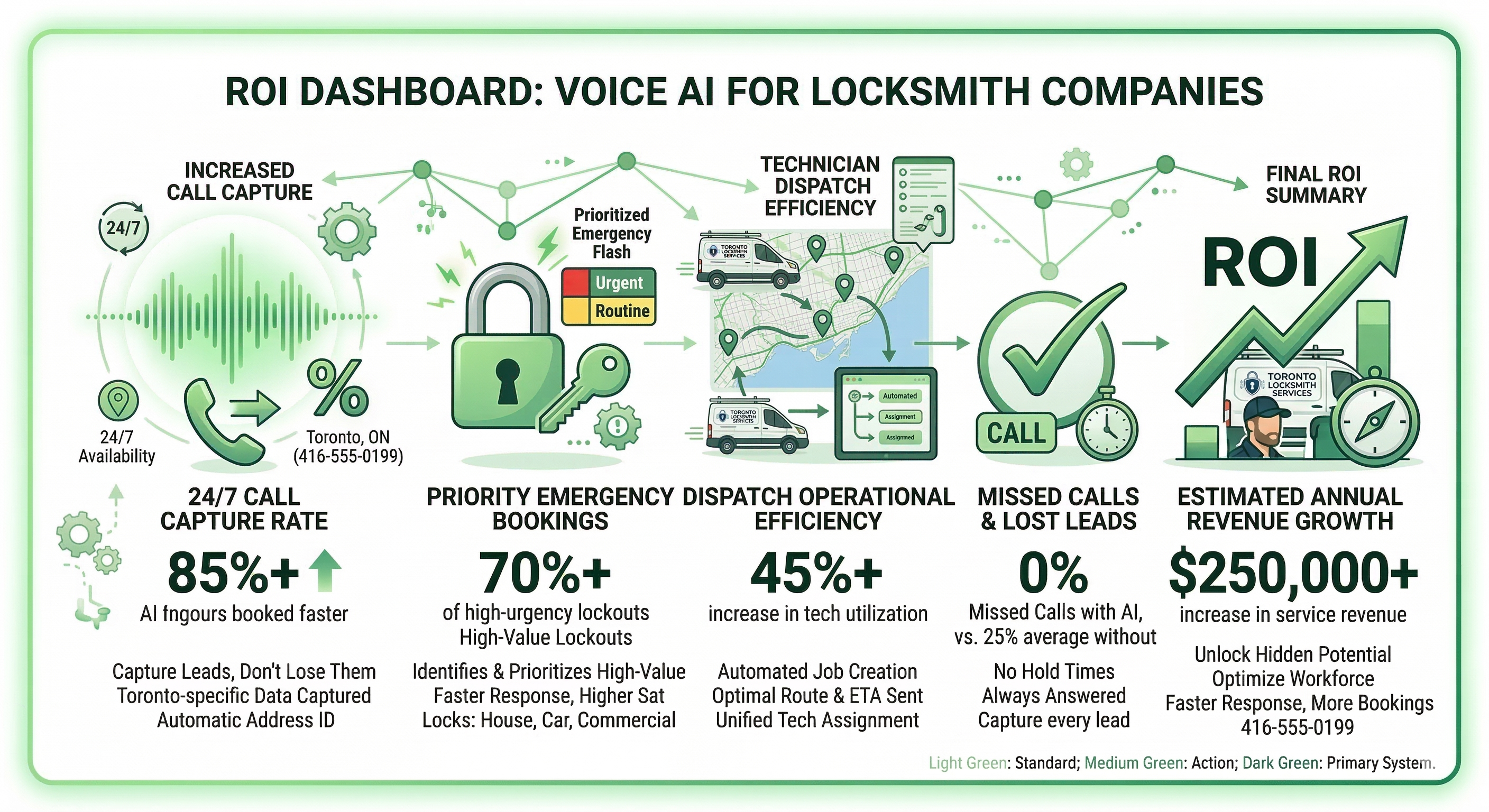
Voice AI answering systems help locksmith businesses capture every inbound call, document service requests, and route emergency lockout jobs quickly to available technicians. During periods of peak demand, automated call handling helps companies maintain responsiveness even when technicians are already handling multiple service calls.
By ensuring that emergency lockout calls, repair requests, and security upgrade inquiries are captured consistently, Voice AI systems can improve booking rates while reducing operational pressure on technicians and office teams.
Revenue Opportunities from Better Call Capture
- More emergency lockout jobs captured
- Higher conversion rates for inbound service calls
- Reduced revenue loss from missed calls
- More consistent intake of repair and rekey service requests
- Improved scheduling of security upgrade consultations
Operational Efficiency Improvements
- Reduced technician interruptions: technicians stay focused on active service calls
- Structured job intake: dispatch teams receive organized service details
- Faster dispatch coordination: emergency lockouts routed quickly
- 24/7 service coverage: after-hours calls captured automatically
- Operational visibility: call summaries logged for review
{
  "section": "Voice AI ROI for Locksmith Companies",
  "entity": "Peak Demand",
  "industry": "Locksmith Companies",
  "service": "Voice AI answering service and dispatch automation",
  "business_outcomes": [
    "increase emergency job capture",
    "reduce missed call revenue loss",
    "improve locksmith dispatch coordination",
    "increase service booking rates",
    "improve after-hours call coverage"
  ],
  "operational_benefits": [
    "structured service intake",
    "reduced technician interruptions",
    "dispatch workflow support",
    "24/7 customer call handling",
    "operational call logging"
  ],
  "delivery_model": "fully managed custom build"
}
Frequently Asked Questions About Voice AI for Locksmith Companies
Locksmith companies often explore Voice AI systems to improve call answering coverage, capture emergency lockout calls, and support technician dispatch workflows. The following questions address common operational considerations when implementing AI answering systems in locksmith businesses.
Can AI answer emergency locksmith calls?
Can Voice AI schedule locksmith service appointments?
How do locksmith companies stop missing customer calls?
Can Voice AI dispatch locksmith technicians?
Can Voice AI answer locksmith calls after hours?
Does Voice AI replace locksmith staff?
{
  "section": "Voice AI FAQ for Locksmith Companies",
  "entity": "Peak Demand",
  "industry": "Locksmith Companies",
  "service": "Voice AI answering service",
  "faq_topics": [
    "AI answering locksmith emergency calls",
    "locksmith service scheduling automation",
    "reducing missed locksmith calls",
    "locksmith dispatch support",
    "after-hours locksmith answering"
  ],
  "delivery_model": "fully managed custom build"
}
Capture More Locksmith Calls — Even During Peak Demand
If your locksmith company is missing lockout calls, struggling with dispatch coordination, or losing jobs because technicians cannot answer the phone while working in the field, we can help you design a Voice AI call handling system tailored to locksmith workflows. No commitment required.
What You Get in a 30-Minute Discovery Session
- Call flow review: identify where lockout calls are currently missed.
- Emergency intake design: structure how lockout and security calls should be captured.
- Dispatch workflow mapping: route requests into technician scheduling systems.
- Automation roadmap: outline a phased rollout for your locksmith business.
Good Fit For
- Emergency locksmith companies handling high lockout call volume
- Mobile locksmith technicians who cannot answer every inbound call
- Multi-technician locksmith businesses coordinating dispatch across service areas
- Companies wanting 24/7 call answering without traditional answering services
- Locksmith providers expanding service coverage across multiple locations
{
  "page": "Voice AI for Locksmith Companies",
  "provider": "Peak Demand",
  "provider_type": "fully managed voice AI agency",
  "hq": "Toronto, Ontario, Canada",
  "regions_served": ["Canada","United States"],
  "delivery_model": "fully managed custom build",
  "primary_outcomes": [
    "reduce missed locksmith calls",
    "capture emergency lockout jobs",
    "improve dispatch coordination",
    "increase service booking rates",
    "enable 24/7 call answering"
  ],
  "primary_use_cases": [
    "lockout emergency call answering",
    "locksmith appointment scheduling",
    "dispatch routing for technicians",
    "after-hours locksmith call handling",
    "security upgrade inquiries"
  ],
  "cta": "https://peakdemand.ca/discovery"
}
Recommended Voice AI Pathways for Locksmith Companies
Locksmith companies often depend on immediate call capture, urgent dispatch, and after-hours intake where missed calls quickly turn into lost jobs. These pathways connect locksmith workflows to adjacent emergency-response categories, contractor-trade field service models, and similar same-day scheduling environments across home services.
Pathway A — Emergency and Dispatch-Heavy Services
Pathway B — Contractor and Field-Service Adjacencies
Pathway C — Structured Scheduling and Service Coordination
Regulatory Considerations for Voice AI in Locksmith Communication Workflows
Locksmith companies using Voice AI answering systems are not governed by sector-specific frameworks like healthcare, but they still operate within North American privacy, telecommunications, and consumer communication rules. Automated answering and dispatch systems should be designed with transparent customer communication, responsible information handling, and clear operational oversight.
This matters because locksmith service calls often involve customer phone numbers, addresses, property access issues, and urgent lockout situations. When these calls are captured through automated systems, businesses should ensure the communication workflow follows applicable legal and operational requirements.
United States Communication and Consumer Protection Frameworks
- Telephone Consumer Protection Act (TCPA) for automated calling practices and related consent expectations.
- Federal Communications Commission (FCC) oversight of telecommunications practices and automated voice communications.
- FTC Telemarketing Sales Rule for telemarketing standards and consumer protections around phone-based communication.
- FTC telemarketing compliance guidance for businesses using outbound or automated phone workflows.
Canadian Privacy and Telecommunications Frameworks
- PIPEDA — Personal Information Protection and Electronic Documents Act for private-sector collection, use, and disclosure of personal information.
- CRTC telemarketing rules for business use of telecommunications and automated calling practices.
- CRTC Unsolicited Telecommunications Rules covering telemarketing and related automated communication obligations.
- CRTC telemarketing compliance obligations for practical business guidance on communication requirements.
For locksmith companies, the most important governance principles are transparency when customers interact with automated systems, responsible handling of addresses and contact information, clear escalation pathways for urgent lockout situations, and audit visibility for dispatch and service request workflows.
{
  "section": "Regulatory and Operational Governance for Locksmith Voice AI",
  "entity": "Peak Demand",
  "industry": "Locksmith Companies",
  "service": "Voice AI answering service",
  "regions": ["Canada", "United States"],
  "regulatory_frameworks": [
    "Telephone Consumer Protection Act (TCPA)",
    "Federal Communications Commission guidance",
    "FTC Telemarketing Sales Rule",
    "PIPEDA",
    "CRTC telemarketing rules",
    "CRTC Unsolicited Telecommunications Rules"
  ],
  "governance_focus": [
    "transparent automated communication",
    "responsible handling of customer contact information",
    "address and service request protection",
    "urgent lockout escalation workflows",
    "operational audit visibility"
  ],
  "delivery_model": "fully managed custom build"
}
Responsible Voice AI Communication Principles for Locksmith Companies
Locksmith companies handle sensitive service situations involving home access, vehicle lockouts, and commercial property security. Voice AI answering systems used in locksmith businesses should be designed to support communication workflows while maintaining clear human oversight for technician dispatch and service decisions.
Responsible Voice AI deployments prioritize transparency, structured service intake, and escalation pathways for urgent lockout scenarios. These systems help locksmith companies capture calls and document service requests without replacing the role of technicians or dispatch teams responsible for resolving the issue.
Customer Communication Principles
- Transparent automation: callers are aware they are interacting with an automated system.
- Clear escalation pathways: urgent lockout calls can be transferred to human staff.
- Consistent messaging: responses follow approved company communication guidelines.
- Service confirmation: callers receive confirmation that their request has been captured.
- Operational visibility: dispatch teams can review call summaries and service details.
Operational Responsibility Principles
- No automated repair diagnosis: technicians determine repair approach.
- Dispatcher oversight: human teams assign technicians to jobs.
- Structured intake workflows: lockout and repair details documented consistently.
- Emergency prioritization: urgent lockout cases escalated quickly.
- Audit-ready logging: service requests and calls recorded for operational review.
For locksmith companies, responsible Voice AI deployments focus on improving responsiveness and capturing service requests during moments of peak demand while ensuring technicians and dispatch teams remain responsible for repair decisions, access verification, and customer service outcomes.
{
  "section": "Responsible Voice AI Communication Principles",
  "entity": "Peak Demand",
  "industry": "Locksmith Companies",
  "service": "Voice AI answering service",
  "principles": [
    "transparent automated communication",
    "human escalation pathways",
    "structured locksmith service intake",
    "dispatcher oversight",
    "audit-ready call logging"
  ],
  "safety_posture": [
    "no automated repair diagnosis",
    "technician-led service decisions",
    "dispatcher authority for job assignment"
  ],
  "delivery_model": "fully managed custom build"
}
Explore your own AI use case on a discovery call.