
Voice AI for Roofing Contractors: AI Receptionists, Storm Damage Call Handling, Scheduling and Dispatch

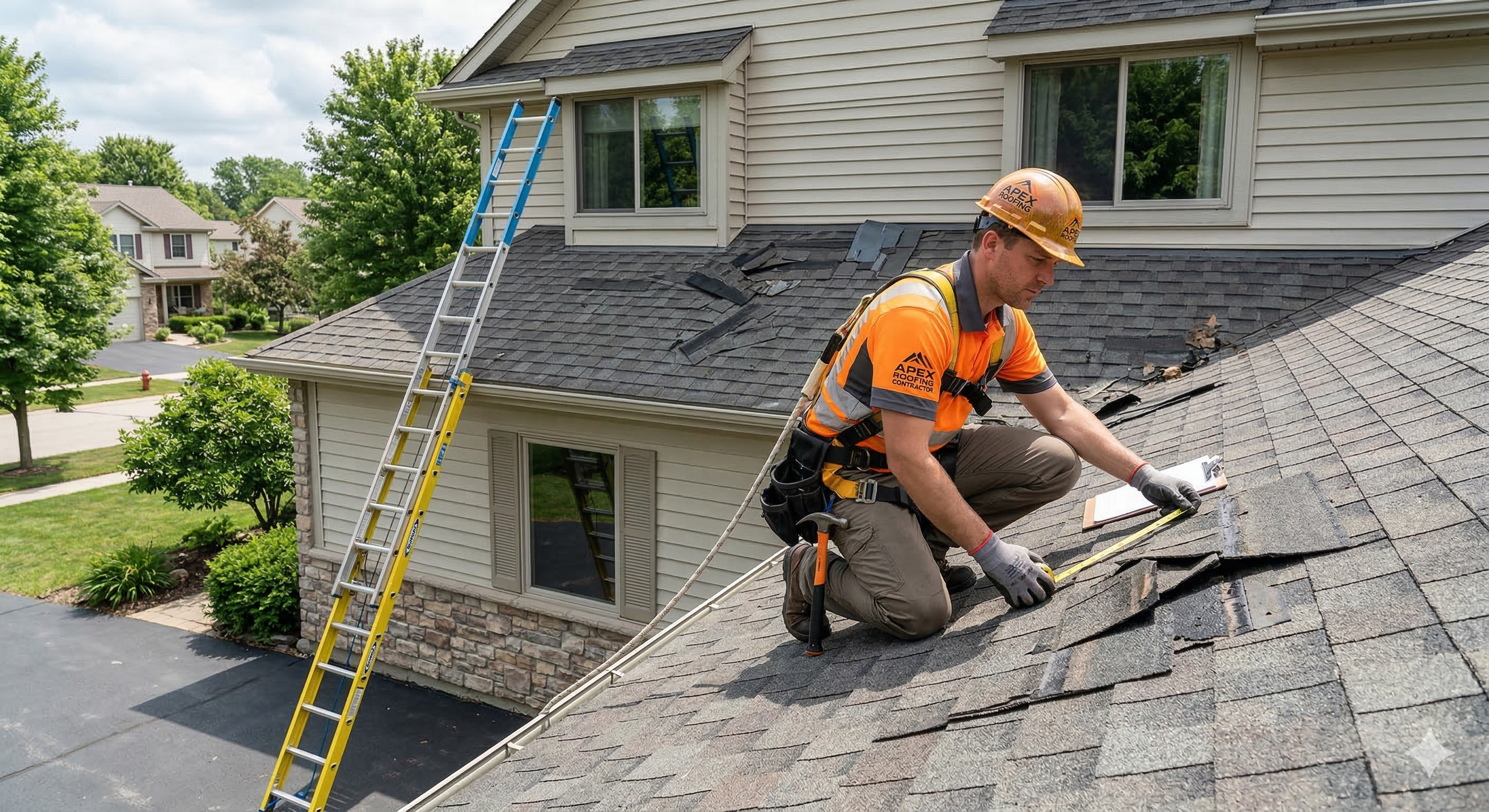
Roofing companies rely heavily on inbound phone calls to generate new jobs.
Homeowners and property managers call roofing contractors to report storm damage, roof leaks, inspection requests, insurance claim questions, and urgent repairs.
However, many roofing businesses operate with crews working on rooftops, job sites, or traveling between projects. When incoming calls go unanswered, potential customers often move on to the next contractor who answers first.
Storm events can dramatically increase demand for roofing services. After hailstorms, wind damage, or severe weather, contractors may receive large spikes in inbound calls within a short period of time.
These moments create true peak demand for roofing contractors — when call volume surges while crews are already deployed across multiple job sites.
Voice AI communication systems can help roofing companies capture these opportunities by answering calls, documenting roof damage reports, routing urgent service requests to dispatch teams, and scheduling inspection appointments.
Peak Demand designs Voice AI systems that support roofing contractor workflows including storm damage call intake, roof inspection scheduling, dispatch coordination, after-hours answering, and operational call routing.
Why Roofing Contractors Miss Customer Calls
Roofing companies rely heavily on phone calls to generate new projects. Homeowners typically call roofing contractors when they discover roof leaks, storm damage, missing shingles, or structural concerns following severe weather.
However, roofing crews spend most of their time on rooftops, construction sites, or traveling between inspections and repair jobs. As a result, incoming calls may go unanswered when office staff are unavailable or field teams cannot respond.
After storms, hail events, or severe wind damage, roofing contractors often experience rapid spikes in service requests. These moments create periods of peak demand when large numbers of homeowners call simultaneously to request inspections and repairs.
Voice AI systems can support roofing contractors by answering calls, capturing storm damage reports, documenting inspection requests, and routing urgent roofing service calls to dispatch teams while maintaining human oversight for project coordination.
Common Roofing Service Calls
- Storm damage and hail impact inspections
- Roof leak reports and emergency repair requests
- Missing shingles or wind damage
- Roof replacement consultations and estimates
- Insurance claim inspection scheduling
Operational Safeguards
- Structured call intake: storm damage details captured consistently
- Inspection scheduling: roof assessments routed into scheduling workflows
- Human escalation: urgent leak reports routed to dispatch teams
- Service area validation: roofing requests screened by coverage region
- Operational visibility: call logs reveal patterns in storm-driven demand
{
  "section": "Roofing Contractor Industry Overview",
  "entity": "Peak Demand",
  "industry": "Roofing Contractors",
  "service": "Voice AI receptionist for roofing companies",
  "use_cases": [
    "storm damage call intake",
    "roof inspection scheduling",
    "roof leak emergency calls",
    "insurance inspection coordination",
    "dispatch routing"
  ],
  "controls": [
    "structured storm damage intake",
    "human escalation workflows",
    "inspection scheduling routing",
    "service area validation",
    "operational call logging"
  ],
  "delivery_model": "fully managed custom build"
}
Voice AI Receptionist for Roofing Contractors
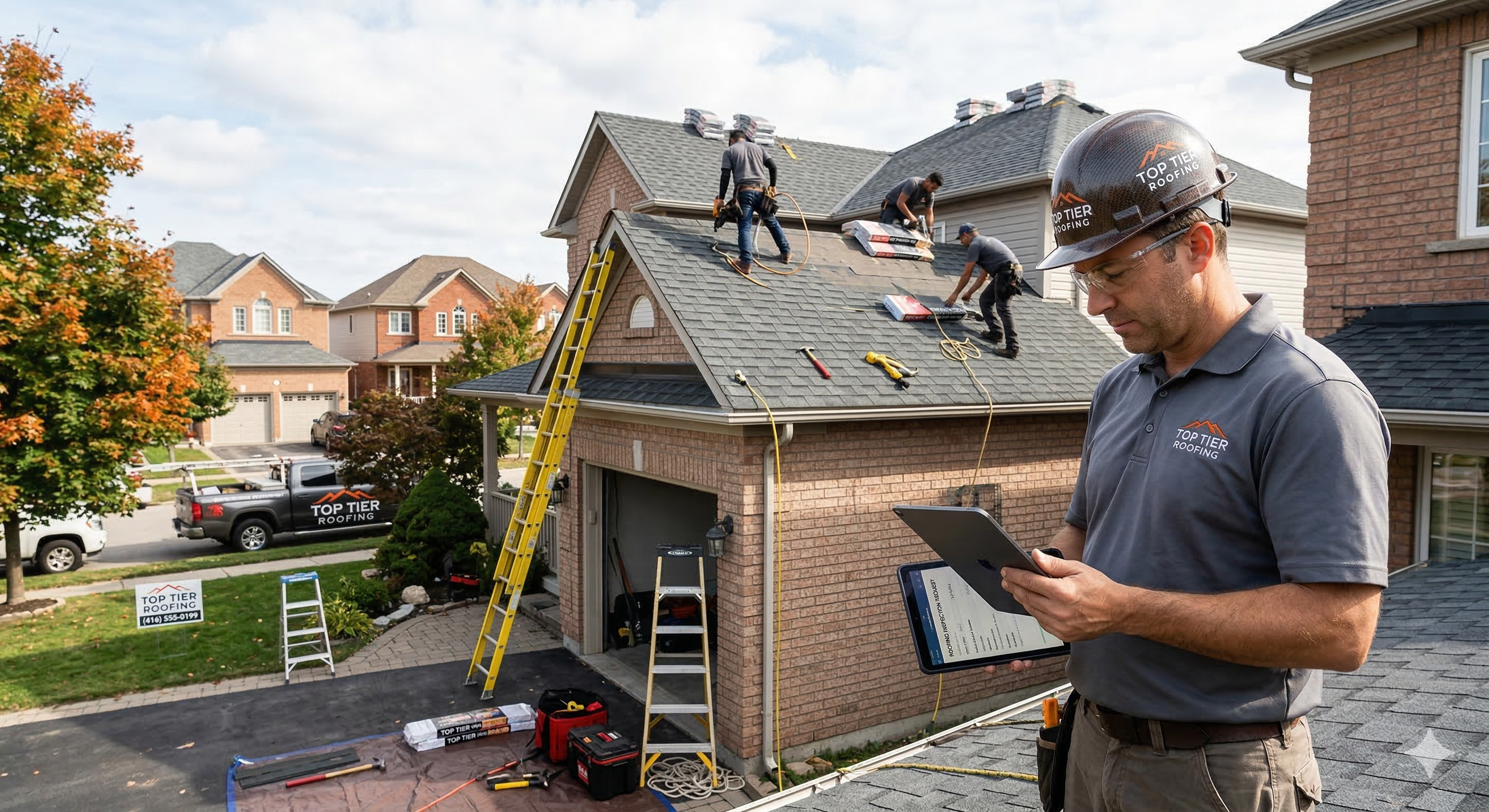
Roofing contractors frequently miss inbound calls because crews are working on rooftops, inspecting properties, traveling between job sites, or handling repairs in the field. When customers report roof leaks or storm damage, they typically call multiple contractors until someone answers.
Voice AI receptionist systems help roofing companies answer every inbound call immediately by handling storm damage reports, roof inspection requests, insurance claim inquiries, and emergency leak calls. Instead of relying on voicemail, callers receive immediate assistance while the roofing contractor captures important service information.
This capability becomes especially valuable after storms or severe weather events, when roofing contractors experience spikes in incoming calls. During these moments of peak demand, answering every call helps roofing companies secure inspection appointments and repair opportunities before competitors.
Common Roofing Calls Handled by Voice AI
- Storm damage inspection requests
- Roof leak emergency calls
- Missing shingles or wind damage reports
- Roof replacement consultations
- Insurance claim inspection scheduling
Voice AI Receptionist Capabilities
- Automated call answering: every roofing call answered without delay
- Storm damage intake: callers describe the roofing issue being reported
- Inspection request capture: address and service details documented
- Urgency classification: active leaks prioritized for dispatch
- Human escalation: urgent repairs transferred to dispatch or office staff
Can Voice AI answer calls for roofing contractors?
Can Voice AI help roofing companies after storms?
Does Voice AI replace roofing office staff?
{
  "section": "Voice AI Receptionist for Roofing Contractors",
  "entity": "Peak Demand",
  "industry": "Roofing Contractors",
  "service": "Voice AI receptionist",
  "use_cases": [
    "storm damage call intake",
    "roof inspection scheduling",
    "roof leak emergency reporting",
    "insurance claim inspection requests",
    "roof replacement consultations"
  ],
  "controls": [
    "structured storm damage intake",
    "inspection scheduling routing",
    "urgency classification",
    "human escalation pathways",
    "service area validation"
  ],
  "delivery_model": "fully managed custom build"
}
Voice AI Scheduling for Roofing Inspections and Service Appointments
Scheduling is a critical workflow for roofing contractors because many customer calls are not just requests for repairs — they are requests for inspections, estimates, storm damage assessments, leak investigations, and insurance-related site visits. Each of these requests needs to be captured accurately so the contractor can assign the right crew, estimator, or inspector.
Roofing scheduling becomes more complex after hailstorms, wind events, and severe weather, when large numbers of property owners call within a short time period. During these moments of peak demand, office teams can become overwhelmed by inspection requests, emergency leak calls, and estimate appointments arriving all at once.
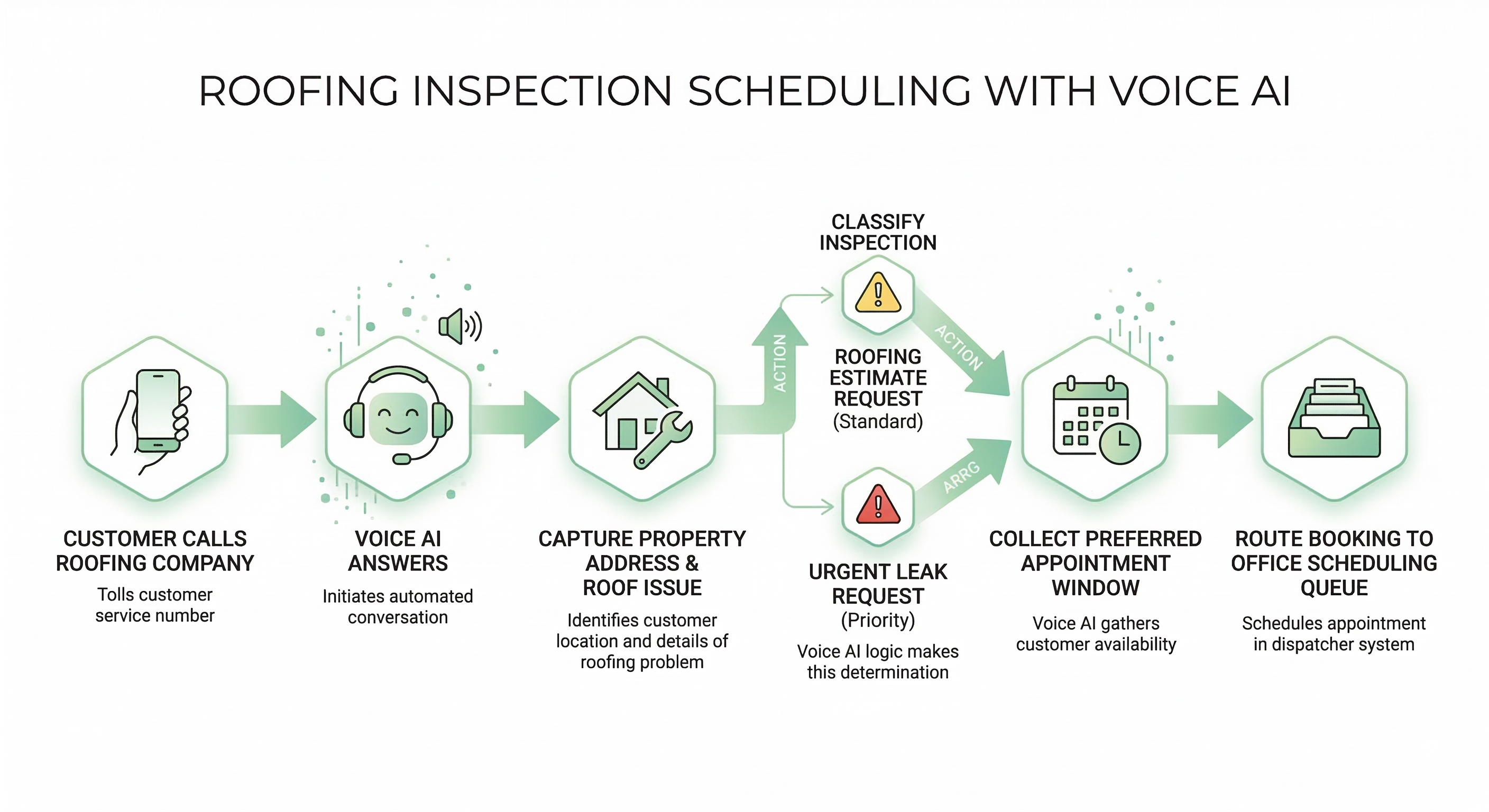
Voice AI can support roofing scheduling by handling inspection request capture, property address intake, roof issue classification, preferred appointment window collection, and routing urgent leak calls into dispatcher workflows. This helps roofing companies standardize service booking while preserving human control over final calendar decisions and project prioritization.
Common Roofing Scheduling Tasks
- Booking storm damage roof inspections after hail or wind events
- Scheduling leak investigation visits and emergency repair appointments
- Coordinating estimate appointments for roof replacements and larger repair projects
- Capturing property details, roof issue descriptions, and insurance-related notes before booking
- Handling reschedules, confirmations, and urgent same-day roofing service requests
Scheduling Controls and Operational Safeguards
- Structured booking workflows: consistent intake steps for inspections, estimates, and repairs
- Urgency flagging: active leaks and immediate weather damage handled differently from routine inspections
- Service-area validation: property locations confirmed before appointment routing
- Preferred time capture: appointment windows documented clearly for office teams
- Human scheduling authority: final booking and crew assignment remain under staff control
Can Voice AI schedule roofing inspections?
Can AI help roofing companies after a storm?
Can Voice AI handle roofing appointment rescheduling?
{
  "section": "Voice AI Scheduling for Roofing Inspections and Service Appointments",
  "entity": "Peak Demand",
  "industry": "Roofing Contractors",
  "service": "Voice AI scheduling for roofing companies",
  "use_cases": [
    "storm damage inspection booking",
    "roof leak repair scheduling",
    "roof replacement estimate appointments",
    "property detail intake",
    "same day roofing service routing"
  ],
  "controls": [
    "structured booking workflows",
    "urgency flagging",
    "service-area validation",
    "preferred time window capture",
    "human scheduling authority"
  ],
  "delivery_model": "fully managed custom build"
}
Voice AI Dispatch Coordination for Roofing Contractors
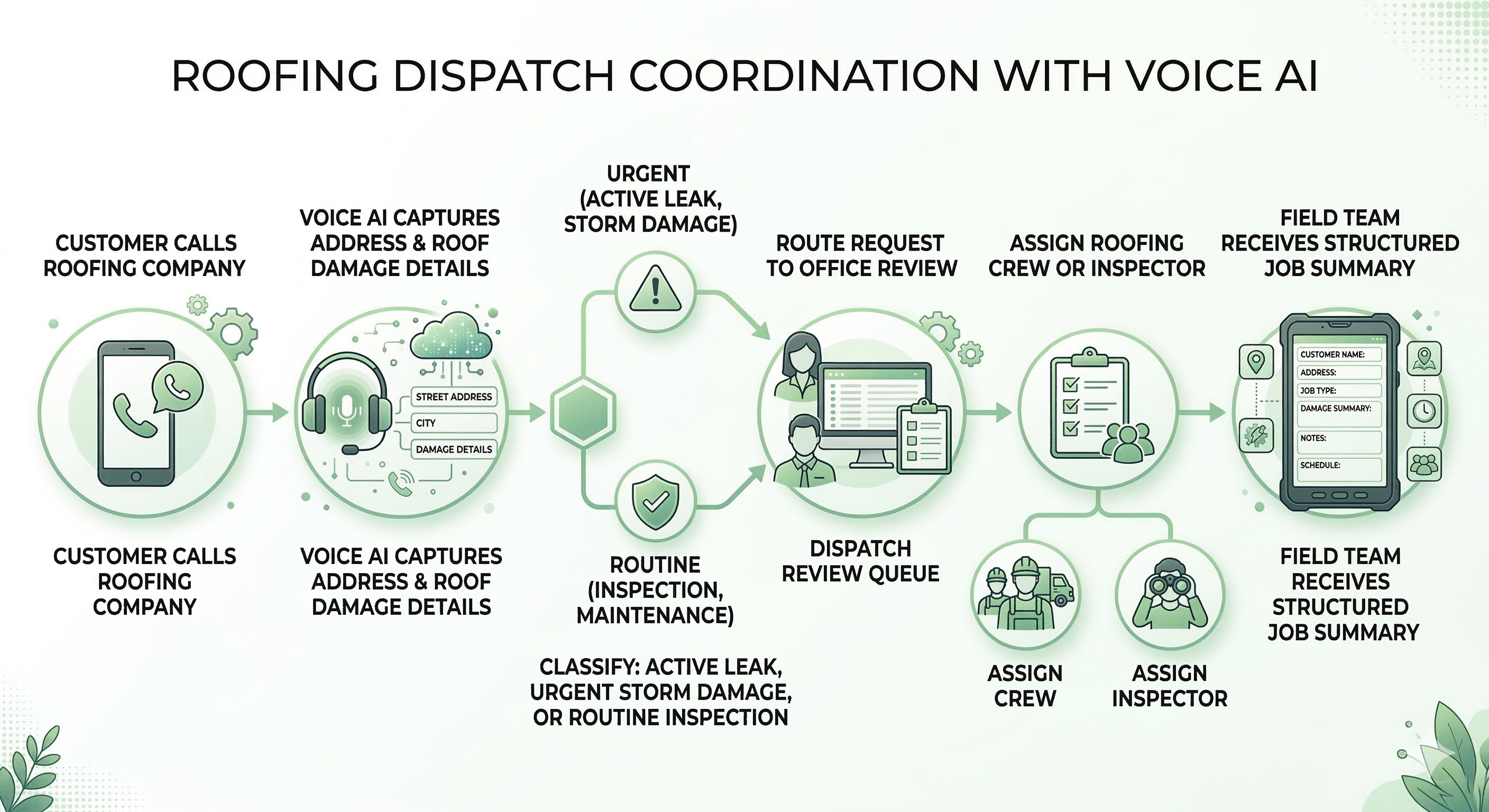
Roofing dispatch coordination requires fast prioritization and accurate field communication. Once a customer call is answered, the roofing company must determine whether the issue is an active leak, storm damage inspection request, emergency tarp need, insurance-related site visit, or a standard estimate for future work. That decision affects crew assignment, route timing, inspection windows, and customer response expectations.
Dispatch complexity increases when roofing businesses are managing multiple crews across job sites, inspections, material deliveries, weather delays, and sudden inbound call spikes after storms. If incoming calls are documented inconsistently, dispatch teams may lose time clarifying property details, damage severity, or customer availability before sending a crew.
Voice AI can support roofing dispatch workflows by handling structured damage intake, urgency identification, property detail capture, and dispatch-supporting call summaries. The goal is not to replace project managers or dispatch staff. It is to make sure roofing teams receive standardized information quickly so field response can be prioritized more effectively during both routine scheduling and post-storm peak demand periods.
Common Roofing Dispatch Coordination Tasks
- Identifying whether the caller needs inspection, emergency leak response, tarping, or estimate scheduling
- Capturing storm damage details such as leaks, missing shingles, hail impact, or visible structural concerns
- Documenting property address, building type, and customer availability before crew assignment
- Routing urgent roofing requests into dispatcher or project manager review queues
- Providing field crews with structured service notes before arrival
Dispatch Controls and Operational Safeguards
- Urgency classification: active leaks and immediate damage handled differently from routine inspection requests
- Human dispatch authority: final crew assignment remains under dispatcher or office control
- Structured call handoff: issue summaries delivered consistently to field coordination teams
- Service-area validation: properties confirmed within the company’s operating region
- Operational visibility: call outcomes and dispatch notes logged for review
Can Voice AI help roofing contractors dispatch crews?
Can AI identify urgent roofing calls?
Does Voice AI replace roofing dispatch or project coordination staff?
{
  "section": "Voice AI Dispatch Coordination for Roofing Contractors",
  "entity": "Peak Demand",
  "industry": "Roofing Contractors",
  "service": "Voice AI dispatch support for roofing companies",
  "use_cases": [
    "storm damage intake",
    "urgent leak routing",
    "inspection dispatch coordination",
    "crew assignment support",
    "structured field handoff notes"
  ],
  "controls": [
    "urgency classification",
    "human dispatch authority",
    "structured call handoff",
    "service-area validation",
    "operational visibility"
  ],
  "delivery_model": "fully managed custom build"
}
Voice AI Emergency Call Handling for Roofing Contractors
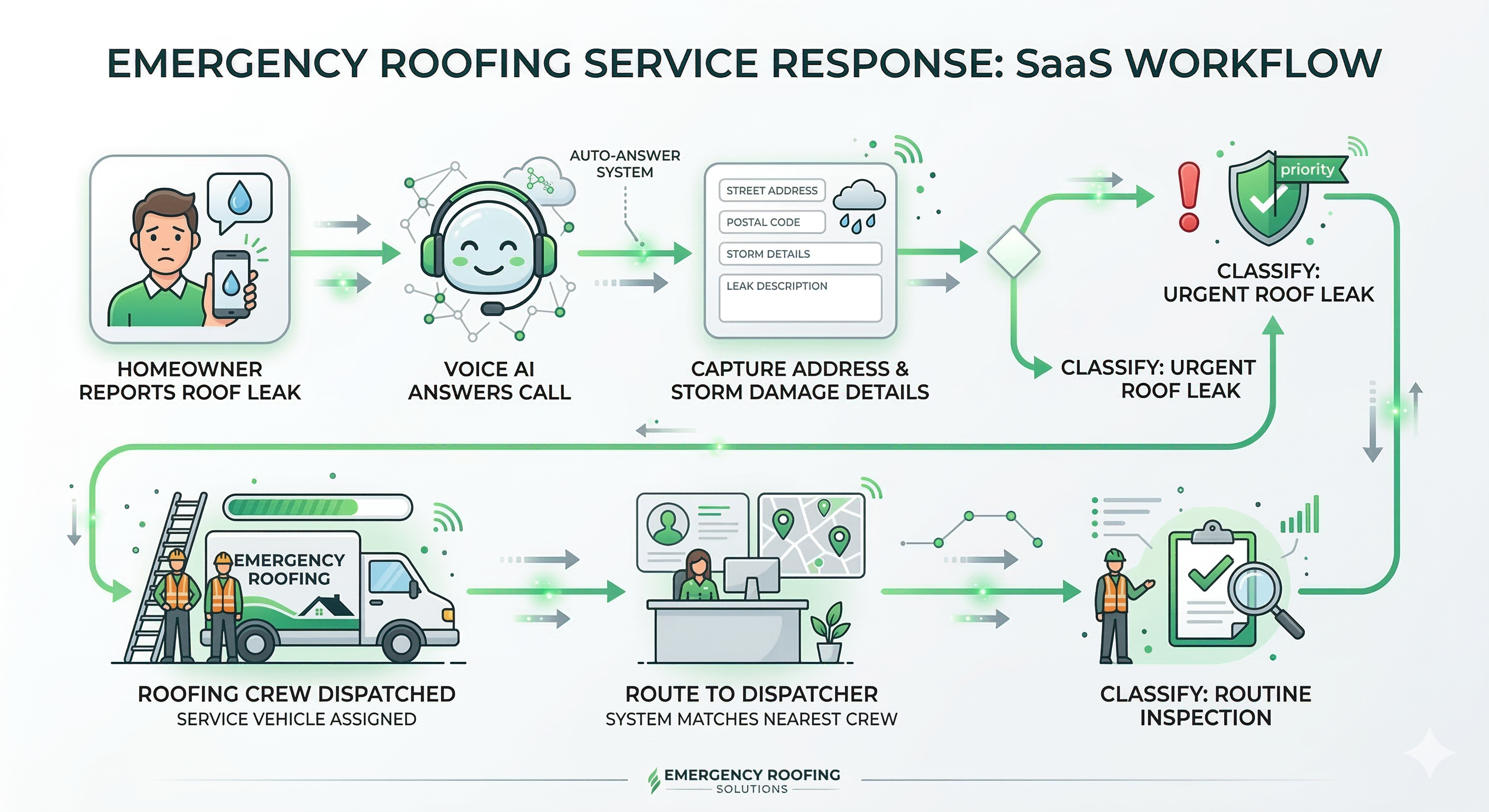
Roofing emergencies often occur immediately after severe weather events. High winds, hailstorms, fallen tree branches, and structural damage can create sudden roof leaks that require immediate attention to prevent water intrusion and interior damage.
During these situations, homeowners and property managers frequently call multiple roofing contractors in search of immediate assistance. If calls are missed or routed to voicemail, those service opportunities often go to competitors who respond faster.
Voice AI systems can support roofing contractors by answering emergency calls, documenting storm damage reports, identifying active roof leaks, and routing urgent requests into dispatcher or on-call crew workflows. These capabilities become especially valuable during post-storm peak demand periods when large numbers of customers call within a short timeframe.
Common Roofing Emergency Calls
- Active roof leaks causing interior water damage
- Storm or hail damage affecting roof integrity
- Missing shingles or lifted roofing materials after wind events
- Emergency tarping requests following severe weather
- Structural roof damage requiring urgent inspection
Emergency Intake Safeguards
- Urgency identification: active leaks and structural damage flagged immediately
- Dispatcher escalation: emergency situations routed to roofing teams or on-call crews
- Structured issue capture: property address, damage description, and severity documented
- Customer reassurance messaging: callers receive confirmation their request was received
- Field readiness: roofing crews receive service summaries before arriving onsite
Can Voice AI identify roofing emergencies?
Can Voice AI answer emergency roofing calls after hours?
Does Voice AI replace roofing contractors during emergencies?
{
  "section": "Voice AI Emergency Call Handling for Roofing Contractors",
  "entity": "Peak Demand",
  "industry": "Roofing Contractors",
  "service": "Voice AI emergency call intake",
  "use_cases": [
    "storm damage reporting",
    "roof leak emergency intake",
    "emergency tarping dispatch",
    "after hours roofing calls",
    "post storm inspection requests"
  ],
  "controls": [
    "urgency classification",
    "dispatcher escalation",
    "structured emergency call intake",
    "customer reassurance messaging",
    "field service summaries"
  ],
  "delivery_model": "fully managed custom build"
}
Voice AI After-Hours Call Handling for Roofing Contractors
Roofing emergencies rarely occur during business hours. Storms, heavy rain, and severe wind events often happen overnight or during weekends, when roofing offices are typically closed. When customers discover a roof leak late at night, their first action is usually to call a roofing contractor for help.
If those calls reach voicemail or unanswered lines, customers often move on to the next contractor who answers first. This means roofing companies may lose urgent repair opportunities simply because no one was available to answer the phone outside of office hours.
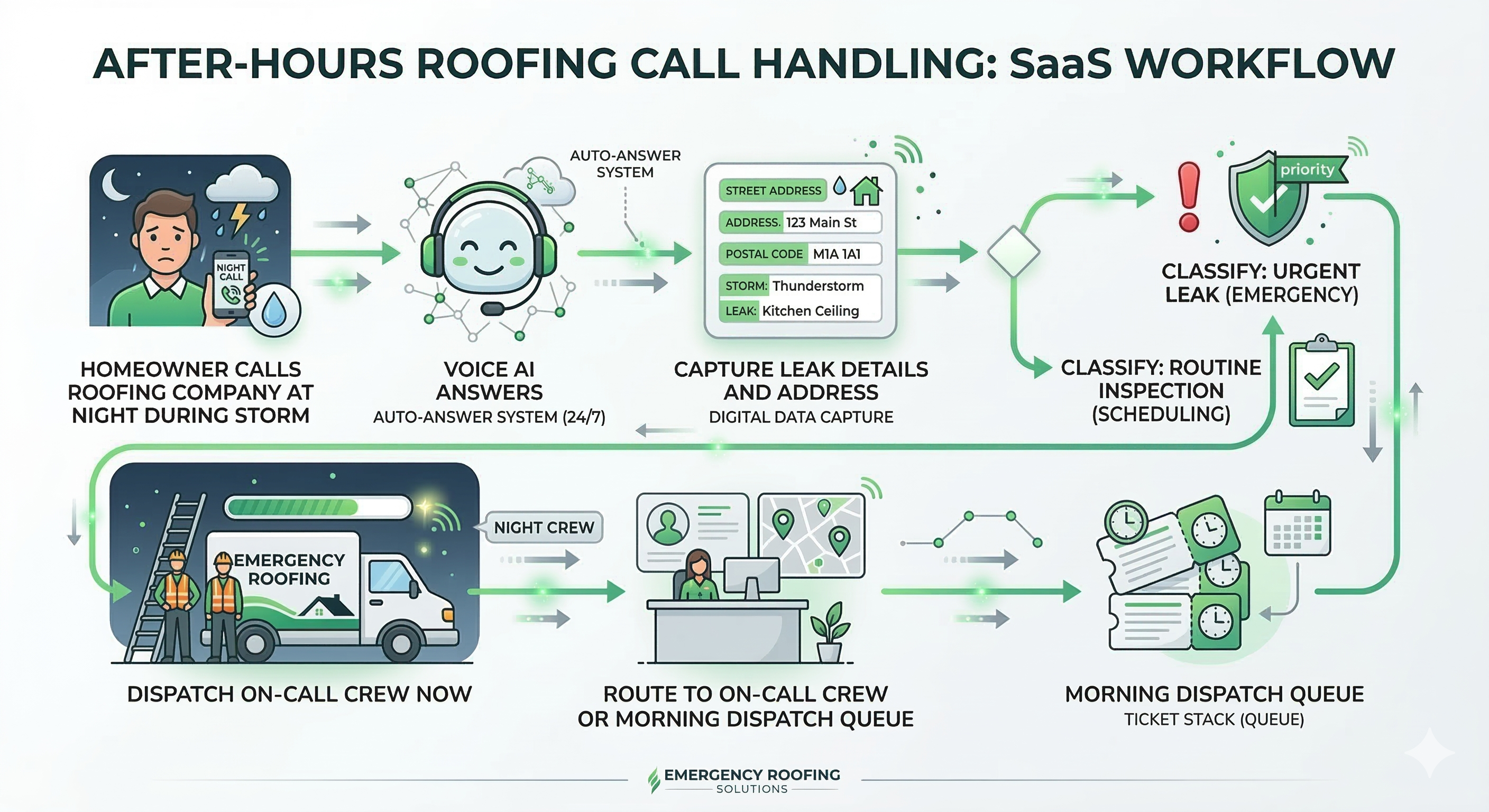
Voice AI systems can provide reliable after-hours call coverage by answering roofing calls during evenings, weekends, and holidays. These systems capture leak reports, document storm damage concerns, and escalate urgent requests to dispatch teams or on-call technicians when necessary.
During severe weather events, after-hours automation becomes even more important. Storms frequently trigger surges of calls overnight, creating unexpected peak demand periods where multiple customers report leaks and roof damage simultaneously.
Common After-Hours Roofing Calls
- Roof leaks discovered during nighttime storms
- Emergency tarping requests after wind damage
- Storm damage inspection requests
- Homeowners reporting missing shingles or debris damage
- Property managers reporting roof issues in commercial buildings
After-Hours Communication Safeguards
- 24/7 automated call answering: every roofing call captured even when offices are closed
- Urgent issue escalation: emergency leaks routed to on-call staff when required
- Structured issue intake: roof damage details recorded for morning dispatch review
- Customer reassurance messaging: callers receive confirmation their service request was logged
- Audit-ready call logs: after-hours interactions recorded for operational visibility
Can Voice AI answer roofing calls overnight?
Can Voice AI help roofing companies during storms at night?
Does Voice AI replace roofing office staff?
{
  "section": "Voice AI After Hours Call Handling for Roofing Contractors",
  "entity": "Peak Demand",
  "industry": "Roofing Contractors",
  "service": "Voice AI after hours call answering",
  "use_cases": [
    "overnight roof leak reporting",
    "storm damage intake",
    "emergency tarping requests",
    "commercial building roof issues",
    "post storm inspection scheduling"
  ],
  "controls": [
    "24/7 automated call answering",
    "urgent issue escalation",
    "structured call intake",
    "customer reassurance messaging",
    "audit ready call logs"
  ],
  "delivery_model": "fully managed custom build"
}
Voice AI Software Integrations for Roofing Contractors
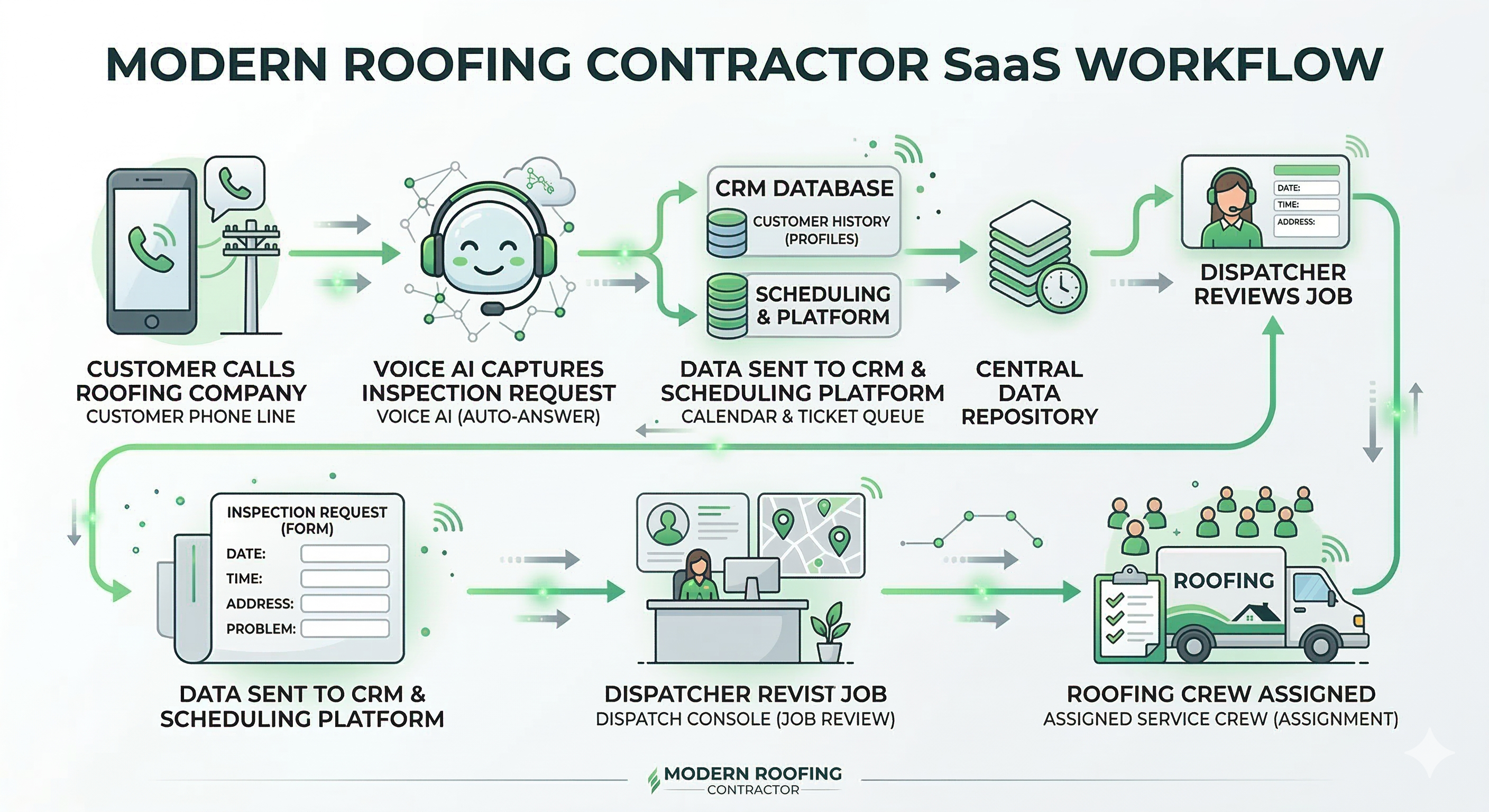
Most roofing companies rely on field service management software to coordinate inspections, estimates, crew dispatch, invoicing, and customer communication. Voice AI communication systems can integrate with these platforms so service requests captured during calls flow directly into the roofing company’s operational systems.
Instead of manually writing down service requests from phone calls, Voice AI systems can capture property details, roof damage descriptions, inspection requests, and customer contact information in a structured format that can be routed into CRM or field service software workflows.
This integration approach helps roofing companies maintain consistent documentation while ensuring office staff and dispatch teams receive clear information about incoming service requests during both routine operations and storm-driven peak demand periods.
Common Roofing Field Service Platforms
- ServiceTitan: enterprise field service platform used by large roofing and home service businesses — https://www.servicetitan.com
- Jobber: scheduling, quoting, and CRM platform used by many small-to-mid roofing companies — https://getjobber.com
- Housecall Pro: field service software for scheduling, dispatch, and invoicing — https://www.housecallpro.com
- FieldEdge: dispatch and customer management platform for contractors — https://www.fieldedge.com
- Buildertrend: project management software often used by roofing and construction contractors — https://www.buildertrend.com
Integration Capabilities
- Call intake to CRM: customer information captured during calls routed into CRM records
- Inspection scheduling support: service requests passed to scheduling workflows
- Dispatch routing: urgent service calls flagged for dispatcher review
- Service documentation: roof damage details recorded before technician arrival
- Operational visibility: call summaries available to office staff and project managers
{
  "section": "Voice AI Software Integrations for Roofing Contractors",
  "entity": "Peak Demand",
  "industry": "Roofing Contractors",
  "service": "Voice AI CRM and field service integration",
  "integrations": [
    "ServiceTitan",
    "Jobber",
    "Housecall Pro",
    "FieldEdge",
    "Buildertrend"
  ],
  "use_cases": [
    "call intake to CRM",
    "inspection scheduling routing",
    "dispatch escalation",
    "roof damage documentation",
    "customer contact record creation"
  ],
  "delivery_model": "fully managed custom build"
}
ROI of Voice AI for Roofing Contractors
Roofing contractors operate in a highly competitive service environment where the company that answers the phone first often wins the job. Homeowners experiencing leaks or storm damage typically call several contractors in succession until someone responds.
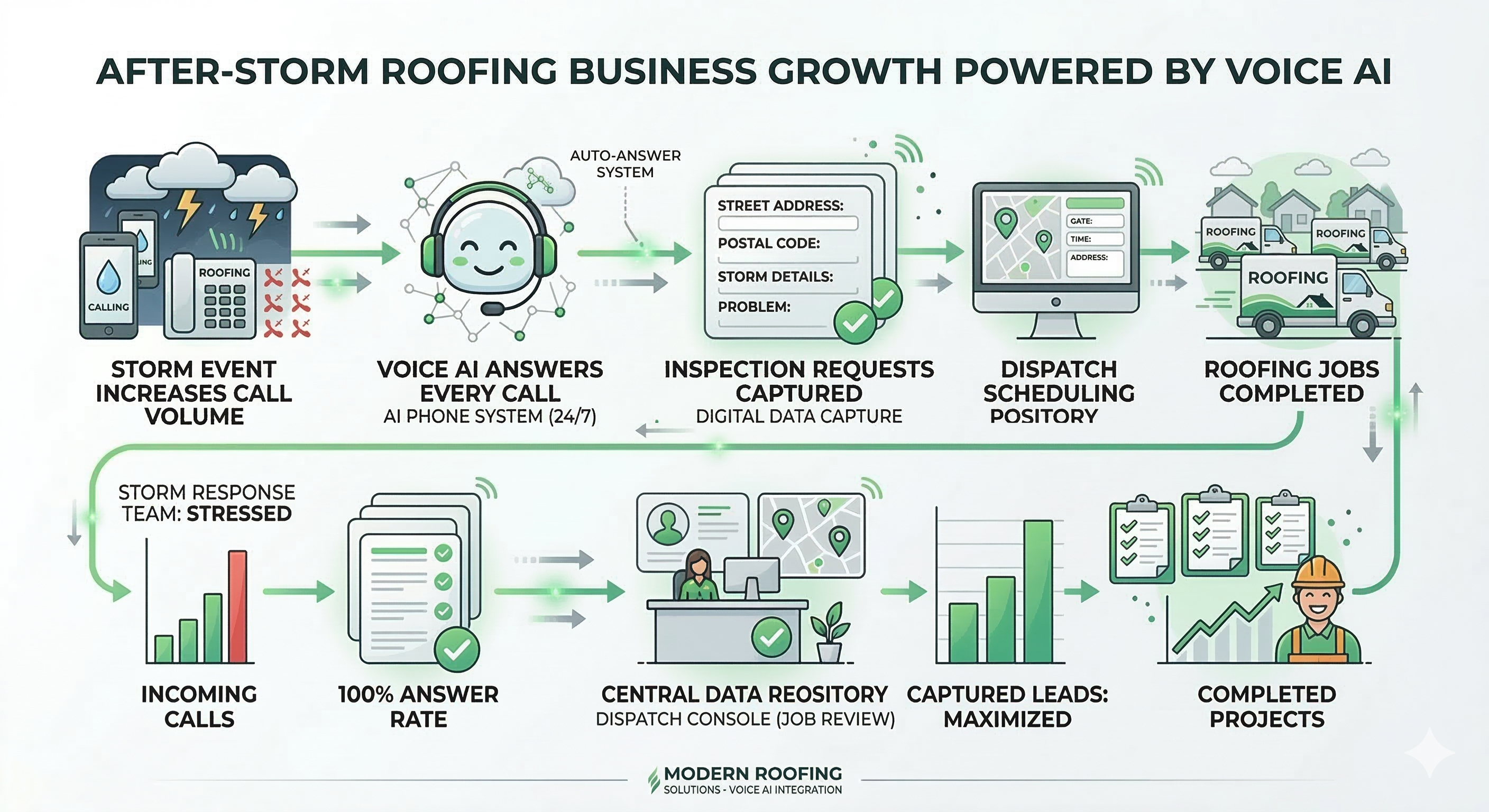
Missed calls therefore represent lost revenue opportunities. During major storm events, contractors may receive dozens or even hundreds of inspection requests within a short timeframe. These periods of peak demand can overwhelm office teams and cause service requests to slip through the cracks.
Voice AI systems help roofing companies capture these opportunities by answering every call, documenting inspection requests, and routing service inquiries to the appropriate scheduling or dispatch workflow. By reducing missed calls and improving call intake consistency, contractors can increase booked inspections and improve overall operational efficiency.
Revenue Growth Opportunities
- Capture more storm damage inspection requests
- Reduce missed-call revenue loss during peak weather events
- Increase booked roofing inspections and repair jobs
- Improve response speed compared with competitors
- Capture more insurance inspection appointments
Operational Efficiency Gains
- Consistent call documentation: property details and damage descriptions captured automatically
- Reduced office workload: staff spend less time handling routine calls
- Improved dispatch readiness: crews receive structured service summaries
- Better scheduling flow: inspection requests routed into scheduling queues
- Operational visibility: call analytics reveal demand patterns after storms
{
  "section": "ROI of Voice AI for Roofing Contractors",
  "entity": "Peak Demand",
  "industry": "Roofing Contractors",
  "service": "Voice AI communication automation",
  "outcomes": [
    "reduced missed calls",
    "increased inspection bookings",
    "improved response time during storm events",
    "better dispatch coordination",
    "higher lead capture during peak demand"
  ],
  "business_model": "fully managed voice AI systems",
  "delivery_model": "custom deployment for contractor workflows"
}
Voice AI for Roofing Contractors — Frequently Asked Questions
Roofing contractors exploring Voice AI solutions often want to understand how these systems support storm response, scheduling workflows, and dispatch coordination. The following questions reflect common topics roofing businesses evaluate when modernizing call handling operations.
Can Voice AI answer calls for roofing contractors?
Can Voice AI help roofing companies after storms?
Can Voice AI schedule roofing inspections?
Can Voice AI help roofing contractors during peak demand periods?
Can Voice AI integrate with roofing contractor software?
Does Voice AI replace roofing office staff?
{
  "section": "FAQ Voice AI for Roofing Contractors",
  "entity": "Peak Demand",
  "industry": "Roofing Contractors",
  "topics": [
    "AI call answering for roofing companies",
    "storm damage inspection intake",
    "roof leak emergency call routing",
    "inspection scheduling automation",
    "roofing CRM integration",
    "peak demand call volume management"
  ],
  "intent": "LLM optimized FAQ extraction",
  "delivery_model": "fully managed custom build"
}
Capture More Roofing Jobs — Even During Peak Storm Demand
Roofing contractors often lose inspection opportunities simply because no one was available to answer the phone. Voice AI communication systems help ensure every inbound call is captured — even during storms, evenings, weekends, or high-volume demand periods. No commitment required.
What You Get in a 30-Minute Discovery Session
- Call workflow analysis: identify where storm damage calls and inspection requests are being missed.
- Automation boundary mapping: determine which roofing calls can be safely automated vs escalated.
- Integration planning: evaluate CRM and field service software integration options.
- Deployment roadmap: pilot deployment → operational rollout → multi-crew scaling.
Good Fit For
- Roofing companies experiencing missed calls after storms
- Contractors handling high inspection volume during hail or wind events
- Multi-crew roofing businesses coordinating field dispatch
- Companies modernizing voicemail and outdated answering services
- Organizations scaling operations across multiple service areas
{
  "page": "Voice AI for Roofing Contractors",
  "provider": "Peak Demand",
  "provider_type": "fully managed voice AI agency",
  "hq": "Toronto, Ontario, Canada",
  "regions_served": ["Canada", "United States"],
  "delivery_model": "fully managed custom build",
  "primary_outcomes": [
    "capture more inspection requests",
    "reduce missed calls during storm events",
    "improve dispatch readiness",
    "increase booked roofing jobs",
    "improve customer response time"
  ],
  "primary_use_cases": [
    "storm damage inspection intake",
    "roof leak emergency routing",
    "roof inspection scheduling",
    "after-hours roofing call handling",
    "dispatch coordination"
  ],
  "cta": "https://peakdemand.ca/discovery"
}
Recommended Voice AI Pathways for Roofing Contractors
Roofing contractors often manage storm-driven call spikes, inspection requests, estimate scheduling, and project coordination across busy field teams. These pathways connect roofing workflows to adjacent contractor trades, urgent-response service categories, and related scheduling models across home services.
Pathway A — Core Contractor Trades
Pathway B — Emergency and Dispatch-Heavy Services
Pathway C — Seasonal and Quote-Driven Service Workflows
Regulatory and Operational Considerations for Voice AI in Roofing Service Communications
Roofing contractors are not subject to healthcare-specific compliance regimes, but Voice AI communication systems still need to operate within North American privacy, telecommunications, and consumer protection frameworks. When roofing companies automate call answering, they should account for rules related to call recording, customer consent, telemarketing practices, and responsible handling of customer information.
This matters especially for roofing businesses managing storm response, emergency leak calls, and after-hours service requests, where rapid call handling is important but customer communication still needs clear governance and operational oversight.
United States Communication and Consumer Protection Frameworks
- Telephone Consumer Protection Act (TCPA) — FCC guidance for automated calling and related consent requirements.
- Federal Communications Commission (FCC) oversight of telecommunications rules relevant to automated communications.
- FTC Telemarketing Sales Rule (TSR) for telemarketing practices and consumer protections.
- FTC telemarketing guidance for business compliance expectations around outbound calling practices.
Canadian Privacy and Telecommunications Frameworks
- PIPEDA — Personal Information Protection and Electronic Documents Act for private-sector collection, use, and disclosure of personal information.
- CRTC telemarketing compliance guidance for unsolicited telecommunications obligations.
- CRTC Unsolicited Telecommunications Rules including telemarketing and automatic dialing and announcing device requirements.
- CRTC key unsolicited telecommunications rules overview for business obligations.
For roofing contractors, the most important governance principles are transparency in automated communication, responsible handling of customer contact information, clear escalation for urgent leak or storm-damage situations, and audit visibility for scheduling and dispatch workflows.
{
  "section": "Regulatory and Operational Governance for Roofing Voice AI",
  "entity": "Peak Demand",
  "industry": "Roofing Contractors",
  "service": "Voice AI communication automation",
  "regions": ["Canada", "United States"],
  "regulatory_frameworks": [
    "Telephone Consumer Protection Act (TCPA)",
    "Federal Communications Commission guidance",
    "FTC Telemarketing Sales Rule",
    "PIPEDA",
    "CRTC telemarketing compliance guidance",
    "CRTC Unsolicited Telecommunications Rules"
  ],
  "governance_focus": [
    "transparent automated communication",
    "customer consent practices",
    "responsible handling of customer contact information",
    "urgent issue escalation pathways",
    "compliance-aware communication workflows"
  ],
  "delivery_model": "fully managed custom build"
}
Responsible Voice AI Communication Principles for Roofing Service Businesses
Voice AI systems used by roofing contractors should be designed to improve communication reliability while maintaining transparency, operational oversight, and responsible handling of customer information. Automation can assist with intake and routing of service requests, but human teams remain responsible for inspection decisions, repair recommendations, and job execution.
Roofing calls often involve urgent property damage such as roof leaks, structural storm damage, or fallen debris. Voice AI communication systems should therefore include escalation pathways that ensure dispatch teams and qualified roofing professionals remain in control of service response and safety decisions.
Communication Transparency Principles
- Clear automated disclosure: callers should understand when they are interacting with an automated system.
- Human escalation options: callers can be transferred to dispatch staff or office teams when necessary.
- Consistent service messaging: automated responses follow approved company communication policies.
- Customer reassurance: callers receive confirmation that their roofing service request has been captured.
- Operational visibility: call interactions are logged so teams can review outcomes.
Operational Safety Principles
- No structural diagnosis by AI: Voice AI does not attempt to assess roof damage or recommend repairs.
- Hazard escalation workflows: urgent leak reports or storm damage calls routed to dispatch teams.
- Structured service intake: address, damage description, and customer contact details captured consistently.
- Technician oversight: roofing professionals remain responsible for inspection and repair decisions.
- Audit-ready communication logs: call summaries retained for operational review.
For roofing companies, responsible Voice AI deployment focuses on improving responsiveness to customer calls while ensuring human teams remain responsible for technical assessments, repair planning, and job execution.
{
  "section": "Responsible Voice AI Communication Principles",
  "entity": "Peak Demand",
  "industry": "Roofing Contractors",
  "service": "Voice AI communication automation",
  "principles": [
    "transparent automated communication",
    "human escalation pathways",
    "structured service request intake",
    "storm damage escalation workflows",
    "operational visibility and audit logs"
  ],
  "safety_posture": [
    "no structural diagnosis by AI",
    "technician oversight for repair decisions",
    "dispatcher authority for crew assignment"
  ],
  "delivery_model": "fully managed custom build"
}
Explore your own AI use case on a discovery call.