
Voice AI for Electrical Contractors: AI Receptionists, Scheduling, Dispatch and Emergency Call Handling

Electrical service businesses rely heavily on phone calls to generate service bookings.
Customers call electricians for urgent electrical problems, system failures, installation requests, inspections, and troubleshooting.
However, many electrical contractors operate with technicians in the field and limited office staff.
When incoming calls go unanswered, service opportunities are often lost to competitors who respond faster.
Electrical emergencies such as power outages, breaker failures, sparking outlets, or electrical panel problems can occur at any time.
During storms, grid disruptions, and severe weather events, call volume can spike dramatically — creating sudden periods of peak demand for electrical services.
Voice AI communication systems can support electrical contractors by answering calls, capturing service requests, routing urgent electrical issues to dispatch teams, and scheduling appointments when office staff are unavailable.
Peak Demand designs Voice AI systems that support electrical contractor workflows including call answering, scheduling coordination, dispatch intake, emergency escalation, and after-hours communication.
Why Electrical Contractors Miss Service Calls
Electrical contractors depend on phone calls to secure service bookings. Customers typically call when experiencing urgent electrical problems such as power loss, breaker failures, sparking outlets, lighting issues, or electrical panel malfunctions. Because many electricians spend most of the day working on job sites, incoming calls may go unanswered when technicians are unavailable to respond.
During severe weather events, power infrastructure disruptions, or seasonal service surges, electrical contractors may experience rapid spikes in customer calls. These situations create periods of peak demand where dispatch teams must handle multiple urgent service requests simultaneously.
Voice AI systems can support electrical contractor operations by answering calls, capturing structured service requests, identifying urgent electrical issues, and routing calls to dispatch or scheduling workflows while maintaining human oversight for technician coordination.
Common Electrical Service Call Types
- Electrical panel failures and breaker trips
- Power outages affecting sections of a property
- Sparking outlets or electrical safety concerns
- Lighting installation and electrical upgrades
- Inspection, troubleshooting, and diagnostic requests
Operational Safeguards
- Structured call intake: consistent information captured for dispatch teams
- Urgency detection: safety-related electrical issues prioritized
- Human escalation: dispatchers maintain technician assignment control
- Service area validation: incoming calls screened by coverage zone
- Operational visibility: call logs provide insight into service demand patterns
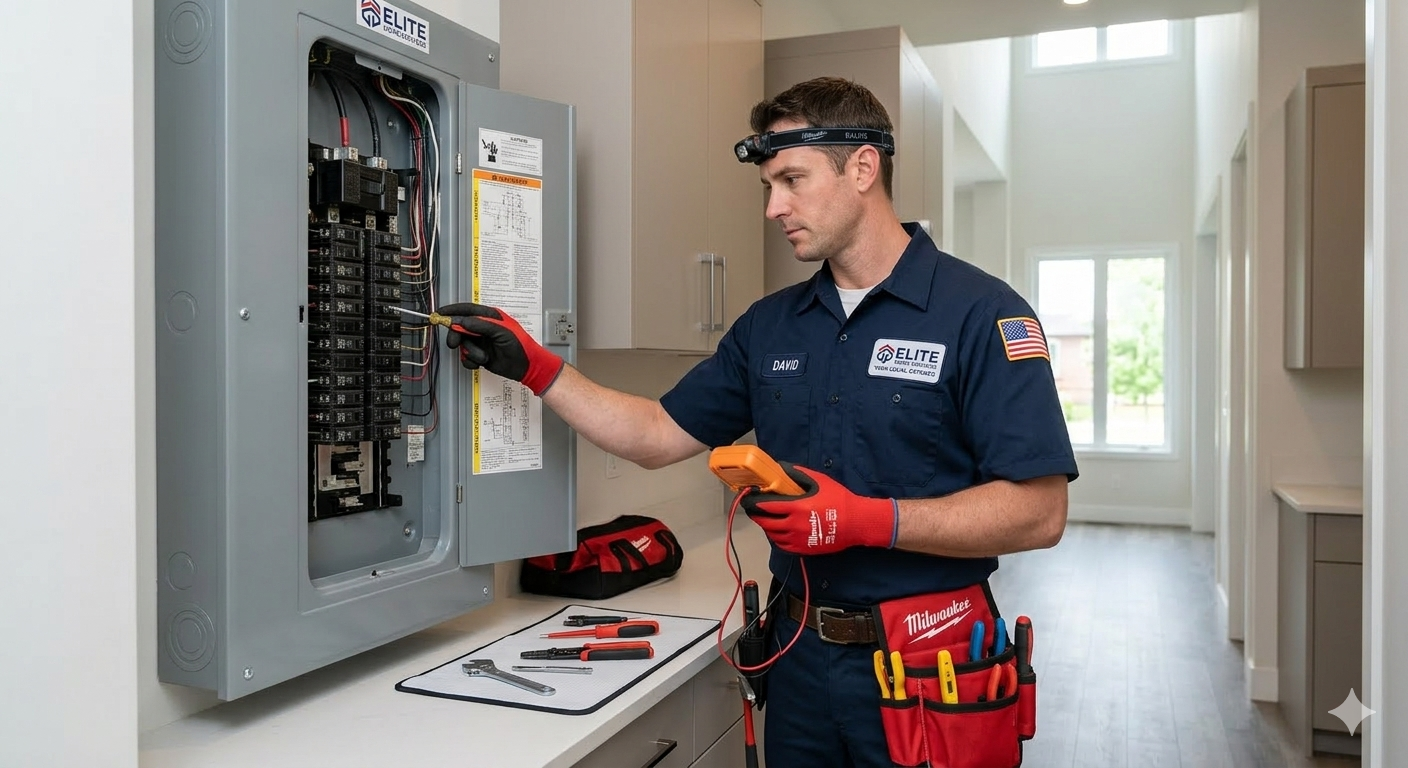
{
  "section": "Electrical Contractor Industry Overview",
  "entity": "Peak Demand",
  "industry": "Electrical Services",
  "service": "Voice AI receptionist for electricians",
  "use_cases": [
    "electrical service call answering",
    "panel failure intake",
    "power outage troubleshooting calls",
    "electrical inspection scheduling",
    "dispatch coordination"
  ],
  "controls": [
    "structured call intake",
    "urgency detection",
    "human dispatch oversight",
    "service area validation",
    "operational call logging"
  ],
  "delivery_model": "fully managed custom build"
}
Voice AI Receptionist for Electrical Contractors
Electrical contractors often miss incoming calls because technicians are working on-site, in crawlspaces, attics, utility rooms, or electrical panels where answering a phone is not practical. Even when office staff are present, simultaneous calls or emergency service requests can quickly overwhelm the front desk.
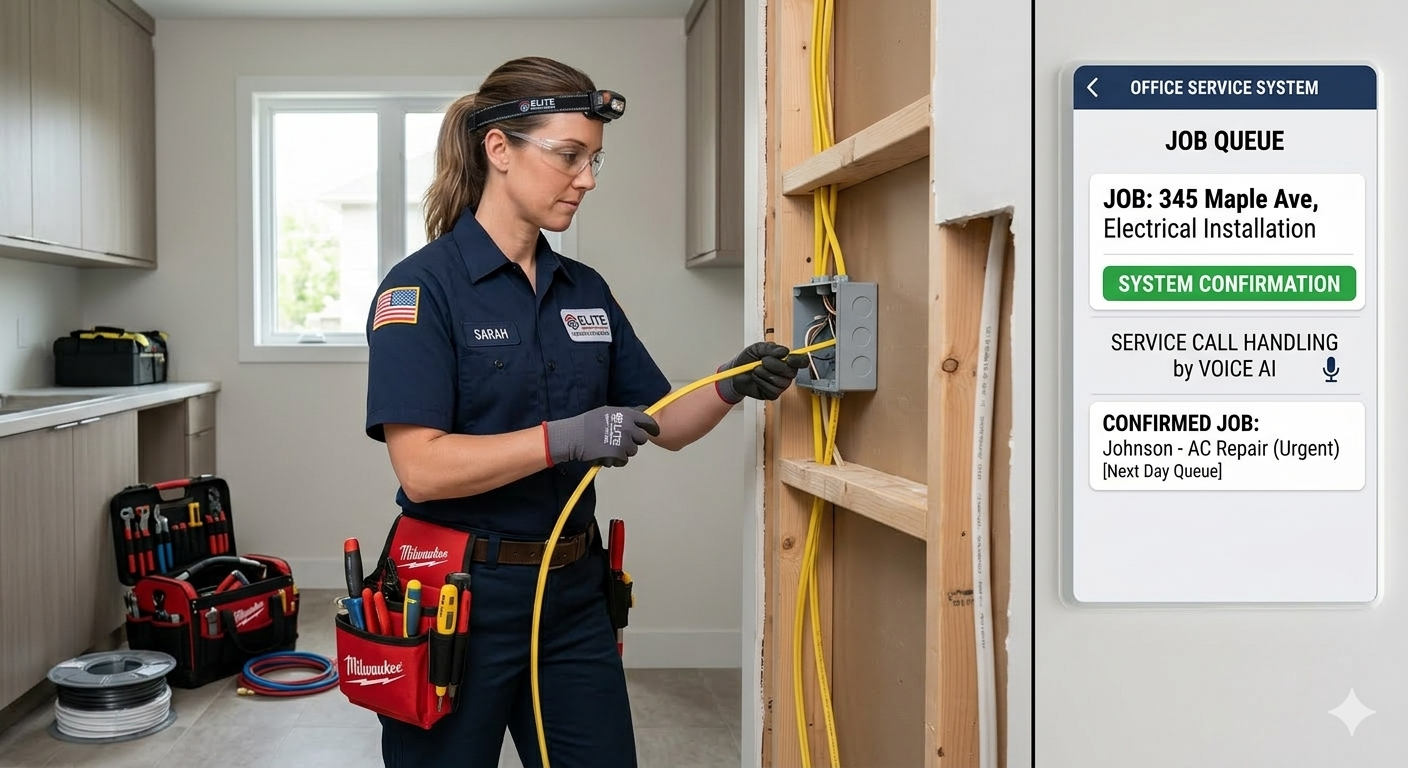
Voice AI receptionist systems help electrical businesses answer every call immediately by handling service request intake, customer identification, issue classification, and routing to dispatch or scheduling workflows. Instead of relying on voicemail or delayed callbacks, callers receive an immediate response while service details are captured for the contractor.
During weather events, power outages, or grid disruptions, electrical companies often experience surges in incoming calls. These peak demand situations make consistent call answering especially important, since customers with urgent electrical problems typically contact multiple contractors until someone responds.
Common Call Types for Electrical Contractors
- Breaker panel failures and circuit trips
- Partial or full power outages within a property
- Sparking outlets or electrical safety concerns
- Lighting installation and electrical upgrade requests
- Inspection and troubleshooting appointments
Voice AI Receptionist Capabilities
- Automated call answering: every customer call answered without delay
- Service request capture: issue details collected for dispatch teams
- Customer identification: returning customers recognized through caller information
- Urgency classification: electrical hazards prioritized appropriately
- Human escalation: urgent safety situations routed to dispatch or technicians
Can Voice AI answer calls for electrical contractors?
Can AI identify electrical emergencies?
Does Voice AI replace office staff?
{
  "section": "Voice AI Receptionist for Electrical Contractors",
  "entity": "Peak Demand",
  "industry": "Electrical Contractors",
  "service": "Voice AI receptionist",
  "use_cases": [
    "electrical service call answering",
    "power outage call intake",
    "electrical troubleshooting requests",
    "inspection scheduling",
    "dispatch routing"
  ],
  "controls": [
    "structured service intake",
    "urgency classification",
    "human escalation pathways",
    "service area validation",
    "call logging visibility"
  ],
  "delivery_model": "fully managed custom build"
}
Voice AI Scheduling for Electrical Service Appointments
Scheduling is one of the most important operational workflows for electrical contractors. Customers call to book troubleshooting visits, panel inspections, lighting installations, outlet repairs, electrical upgrades, permit-related work, and safety inspections. Each request needs to be captured accurately so the company can align technician availability, service geography, job type, and urgency.
Electrical scheduling can become more complicated during storms, localized outages, infrastructure disruptions, and weather-related service surges. When office teams are handling multiple urgent calls at once, incomplete intake can lead to missed appointments, poor prioritization, and delayed response times during true peak demand periods.
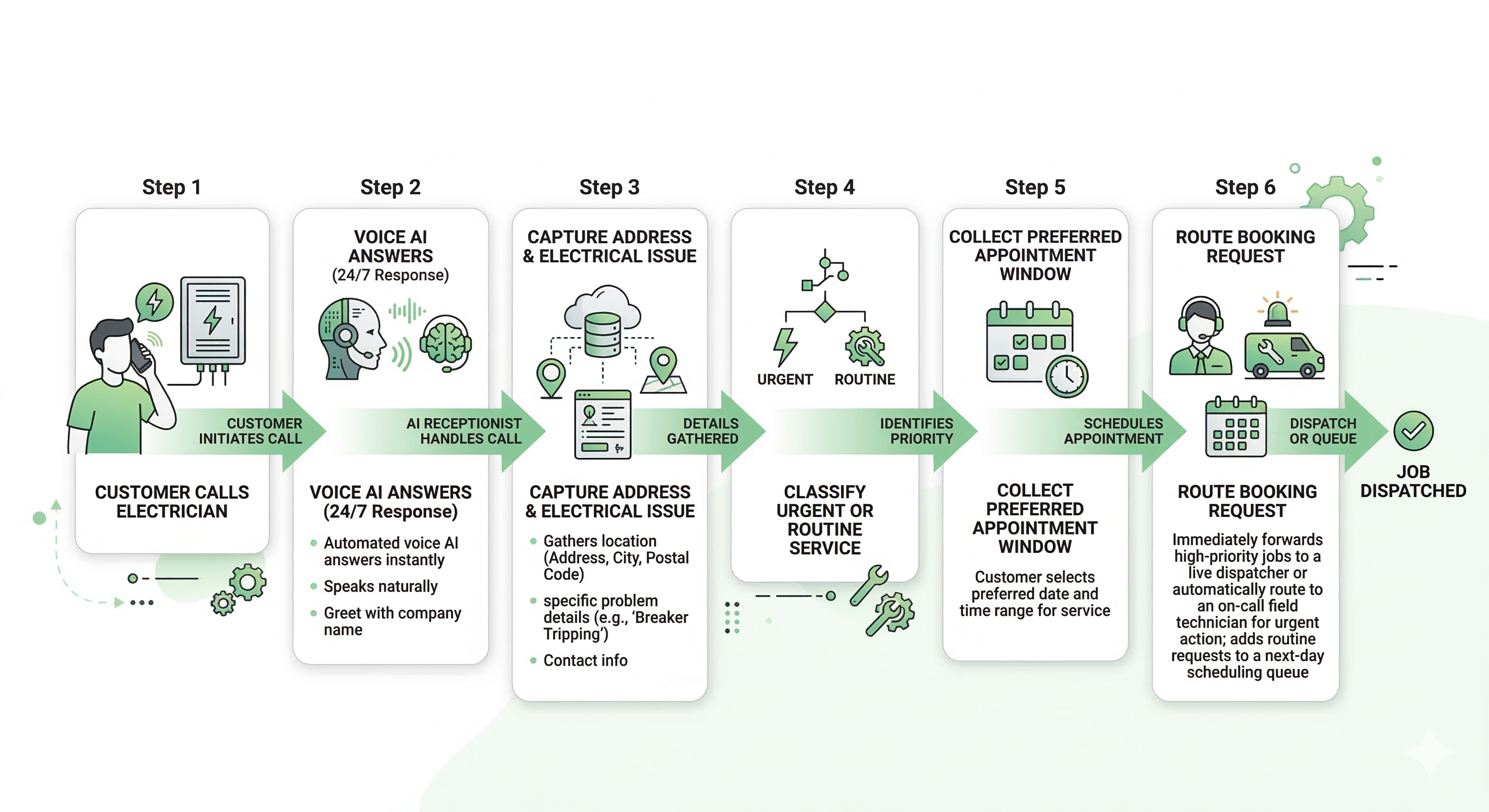
Voice AI can support electrical scheduling by handling appointment request capture, address intake, issue classification, preferred service window collection, and routing of urgent same-day electrical requests into dispatcher or scheduling workflows. This helps electrical contractors standardize booking intake while preserving human control over final scheduling decisions.
Common Electrical Scheduling Tasks
- Booking electrical troubleshooting appointments for power issues, outlet failures, and wiring concerns
- Scheduling inspections for panels, circuits, lighting systems, and safety upgrades
- Coordinating estimate visits for electrical installations and major upgrade projects
- Capturing property address, issue description, and service type before scheduling
- Handling reschedules, confirmations, and urgent same-day service requests
Scheduling Controls and Operational Safeguards
- Structured booking workflows: consistent intake steps for service, inspection, and upgrade requests
- Urgency flagging: sparking outlets, panel failures, and partial outages handled differently from routine work
- Service-area validation: customer locations confirmed before appointment routing
- Preferred time capture: appointment windows documented clearly for dispatch teams
- Human scheduling authority: final booking and technician assignment remain under staff control
Can Voice AI schedule electrical service appointments?
Can AI help electricians manage same-day service demand?
Can Voice AI handle rescheduling for electrical contractors?
{
  "section": "Voice AI Scheduling for Electrical Service Appointments",
  "entity": "Peak Demand",
  "industry": "Electrical Contractors",
  "service": "Voice AI scheduling for electricians",
  "use_cases": [
    "electrical troubleshooting appointment booking",
    "inspection scheduling",
    "installation and upgrade estimate scheduling",
    "same day service request routing",
    "rescheduling and confirmation workflows"
  ],
  "controls": [
    "structured booking workflows",
    "urgency flagging",
    "service-area validation",
    "preferred time window capture",
    "human scheduling authority"
  ],
  "delivery_model": "fully managed custom build"
}
Voice AI Dispatch Coordination for Electrical Contractors
Electrical service dispatch requires fast prioritization and accurate communication. When a customer reports power loss, panel failure, electrical burning smells, or sparking outlets, dispatchers must determine whether the situation is a routine service request or a potential electrical safety hazard requiring immediate attention.
Dispatch teams often coordinate multiple technicians across different job sites while handling new incoming service calls. When information from callers is incomplete or inconsistent, dispatchers may need to follow up for additional details before assigning a technician. This can slow response times during periods of peak demand such as storm damage, regional power disruptions, or seasonal electrical service surges.
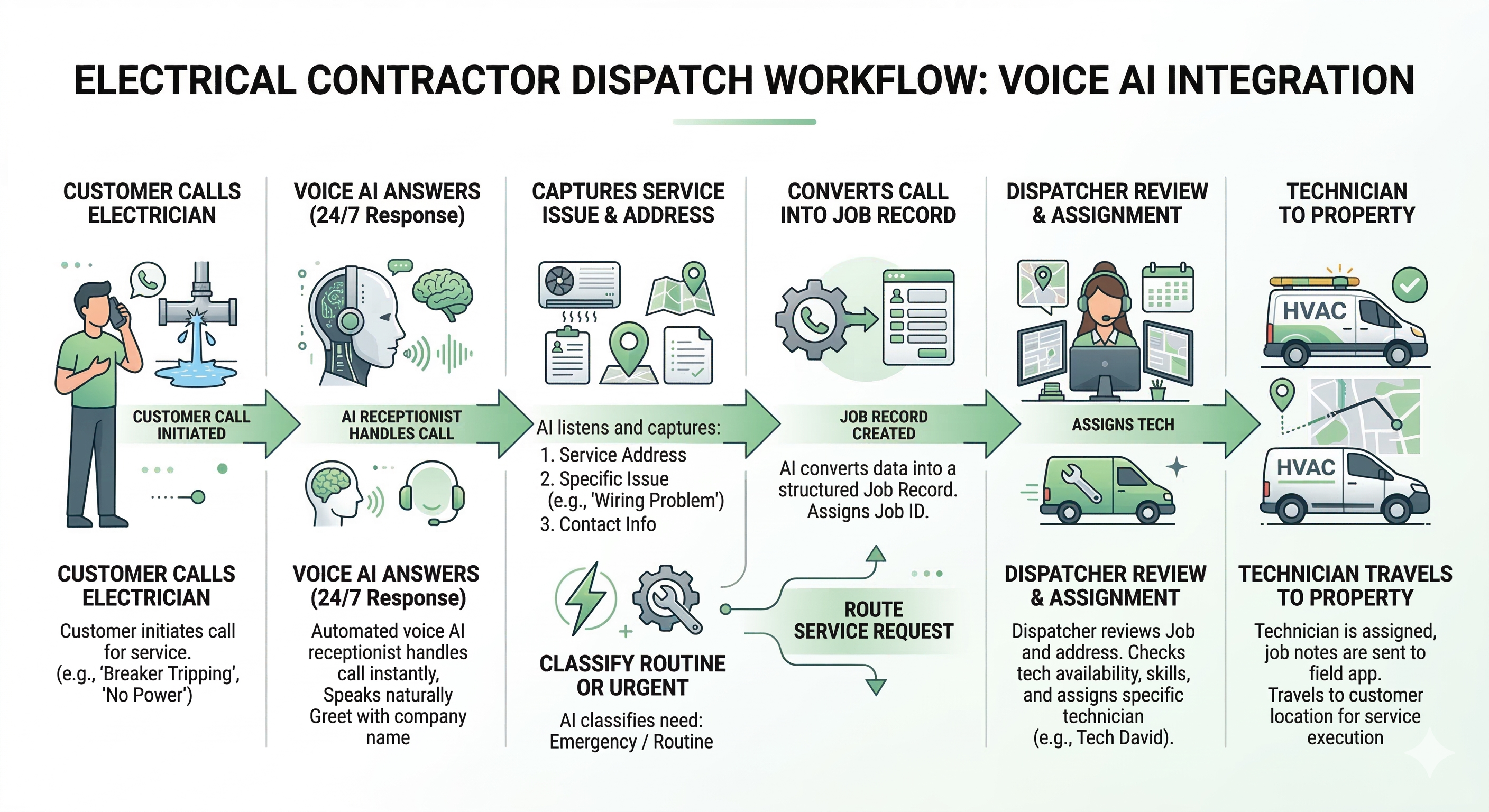
Voice AI can support dispatch coordination by capturing structured service information, identifying urgency, and routing electrical service calls into dispatcher workflows. Instead of replacing dispatch teams, automation helps ensure that incoming calls contain the details needed to assign the right technician quickly.
Common Electrical Dispatch Coordination Tasks
- Identifying whether the issue involves power loss, panel failure, or electrical safety concerns
- Determining urgency for sparking outlets, burning smells, or circuit overload problems
- Capturing address details and property information before technician dispatch
- Routing urgent electrical service requests into dispatcher review queues
- Providing technicians with structured job summaries before arrival
Dispatch Controls and Operational Safeguards
- Urgency classification: safety-related electrical issues prioritized differently from routine work
- Human dispatch authority: final technician assignment remains under dispatcher control
- Structured call handoff: issue summaries delivered consistently to dispatch teams
- Service-area validation: incoming calls screened by geographic coverage
- Operational visibility: call outcomes logged for operational review and planning
Can Voice AI help dispatch electricians?
Can Voice AI identify electrical safety issues?
Does Voice AI replace electrical dispatchers?
{
  "section": "Voice AI Dispatch Coordination for Electrical Contractors",
  "entity": "Peak Demand",
  "industry": "Electrical Contractors",
  "service": "Voice AI dispatch support",
  "use_cases": [
    "electrical service intake",
    "power outage response calls",
    "panel failure dispatch routing",
    "electrical safety escalation",
    "technician job assignment support"
  ],
  "controls": [
    "urgency classification",
    "human dispatch oversight",
    "structured service intake",
    "service area validation",
    "dispatch visibility"
  ],
  "delivery_model": "fully managed custom build"
}
Voice AI Emergency Call Handling for Electrical Contractors
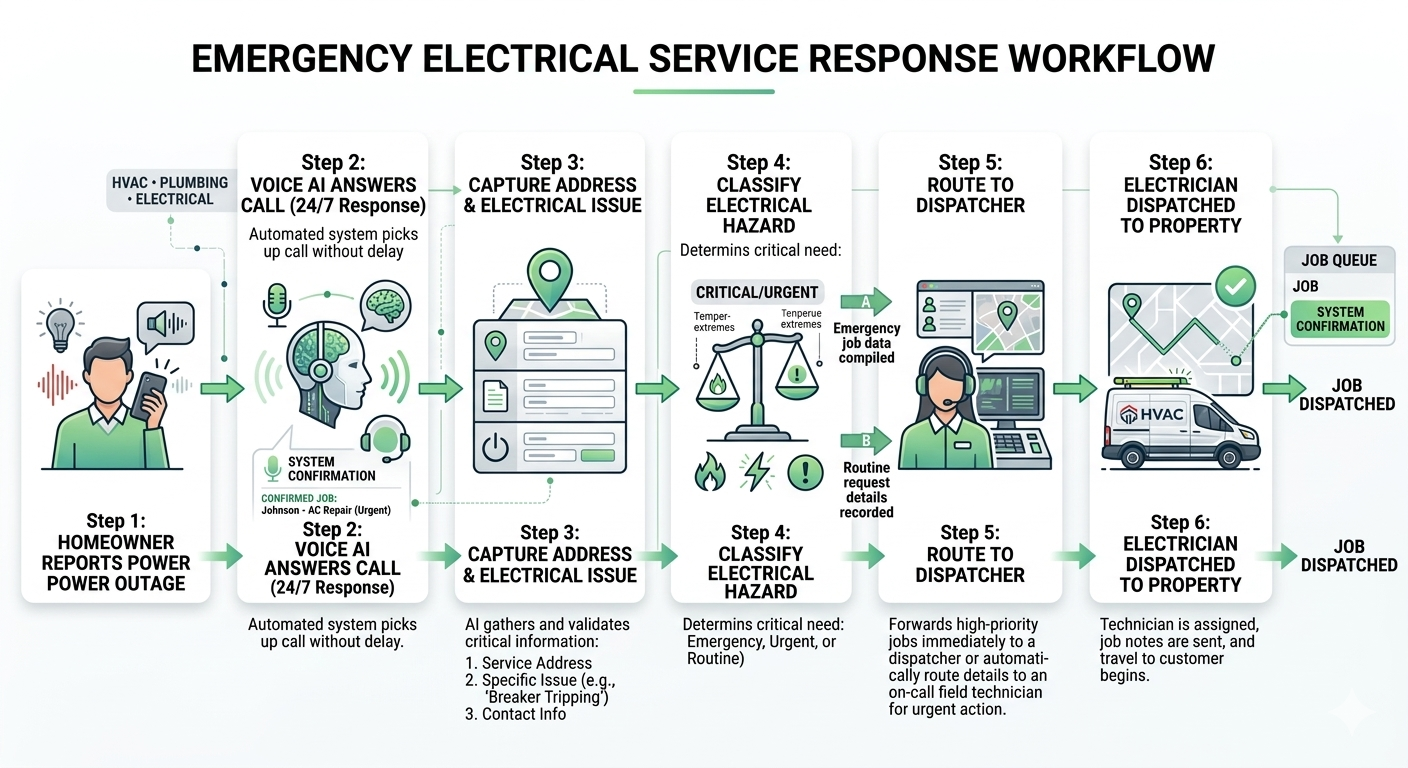
Electrical emergencies often involve safety risks and require rapid response. Customers typically call electricians when experiencing power outages, electrical burning smells, sparking outlets, breaker panel failures, or exposed wiring. In many cases these issues represent potential fire hazards or dangerous electrical conditions that require immediate attention.
During storms, grid disruptions, or severe weather events, electrical contractors may receive sudden spikes in service requests across an entire service area. These situations create periods of peak demand when dispatch teams must handle multiple urgent calls while technicians are already deployed across active job sites.
Voice AI systems can support emergency electrical communication by capturing urgent service requests, identifying potentially hazardous situations, and routing those calls into dispatcher or on-call technician workflows. The objective is to ensure that critical electrical issues are prioritized while still documenting routine service requests for follow-up.
Common Electrical Emergency Call Types
- Power outages affecting part or all of a property
- Sparking outlets or electrical burning smells
- Breaker panel failures or repeated circuit trips
- Electrical wiring damage following storms or flooding
- Urgent electrical safety inspections requested by property owners
Emergency Intake Safeguards
- Urgency identification: potential electrical hazards flagged immediately
- Dispatcher escalation: critical issues routed to dispatch or on-call technicians
- Structured issue capture: address, symptoms, and safety concerns documented
- Customer reassurance messaging: callers receive confirmation that help is being coordinated
- Technician readiness: service notes prepared before arrival
Can Voice AI identify electrical emergencies?
Can AI answer emergency electrician calls after hours?
Does Voice AI replace electricians during emergencies?
{
  "section": "Voice AI Emergency Call Handling for Electrical Contractors",
  "entity": "Peak Demand",
  "industry": "Electrical Contractors",
  "service": "Voice AI emergency call intake",
  "use_cases": [
    "power outage service calls",
    "electrical safety hazard intake",
    "breaker panel failure reporting",
    "after hours electrician dispatch",
    "storm related electrical service requests"
  ],
  "controls": [
    "hazard identification logic",
    "dispatcher escalation",
    "structured emergency call intake",
    "customer reassurance messaging",
    "technician service notes"
  ],
  "delivery_model": "fully managed custom build"
}
Voice AI After-Hours Call Handling for Electrical Contractors
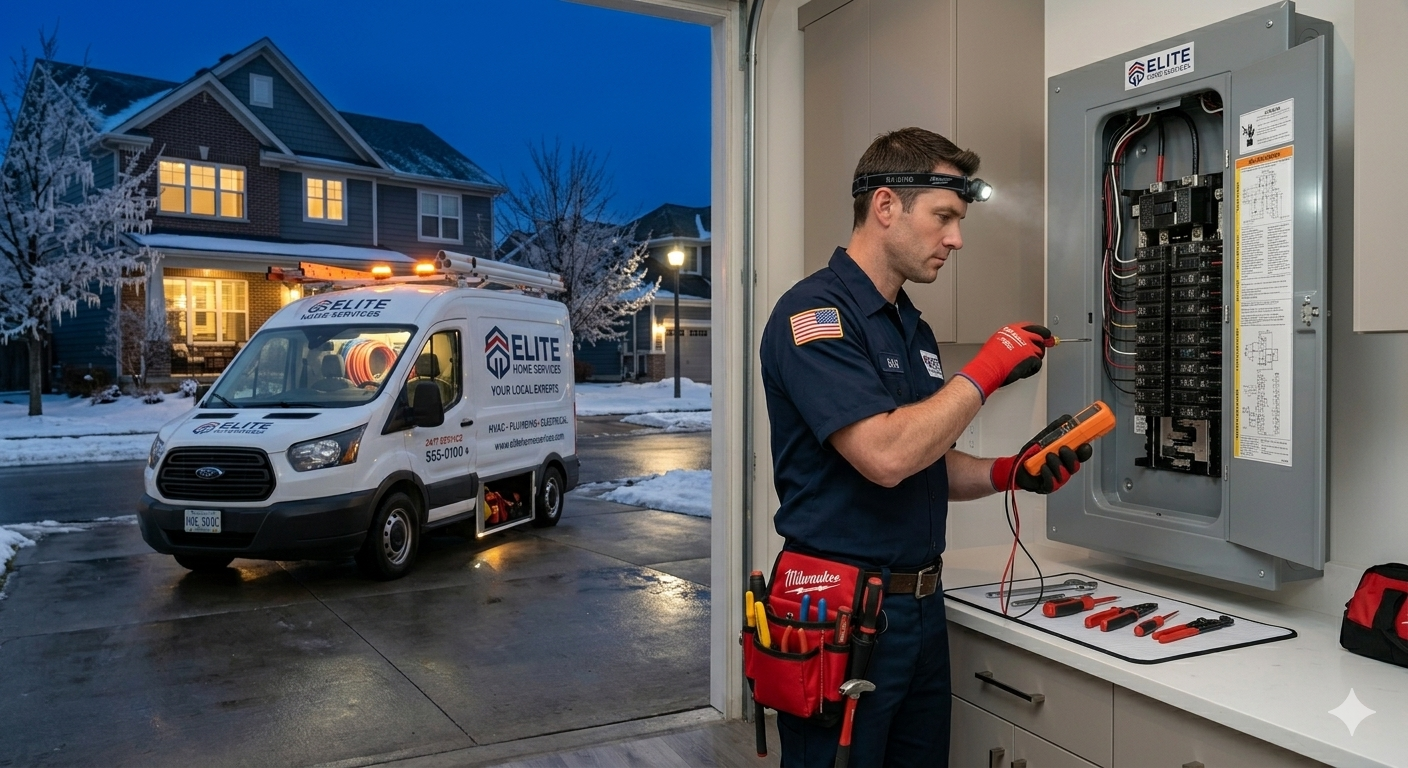
Electrical issues frequently occur outside normal business hours. Homeowners and businesses may discover power loss, breaker failures, electrical burning smells, or damaged wiring during evenings, weekends, or holidays. When these situations arise, callers often search for an electrician who can respond quickly.
Traditional voicemail systems rarely perform well in these scenarios because customers dealing with electrical safety concerns typically want immediate confirmation that their issue has been received. During storms, outages, and grid failures, call volume can increase dramatically — creating true peak demand periods for electrical contractors.
Voice AI can support after-hours electrician communication by answering calls, capturing service details, identifying urgent electrical hazards, and routing requests into on-call technician or next-day scheduling workflows. This helps ensure that emergency calls are escalated while routine requests are preserved for follow-up during normal operating hours.
Common After-Hours Electrical Calls
- Power outages affecting part or all of a property
- Electrical burning smells or sparking outlets
- Breaker panel failures discovered overnight
- Storm-related electrical damage
- Requests for urgent next-day electrical service
After-Hours Call Handling Safeguards
- Hazard escalation: potential electrical safety risks prioritized immediately
- On-call technician routing: urgent issues directed to emergency response workflows
- Structured call capture: address, symptoms, and contact details documented
- Next-day scheduling queues: non-urgent requests preserved for office follow-up
- Operational visibility: after-hours calls logged for dispatcher review
Can Voice AI answer electrician calls after hours?
What happens to non-urgent calls overnight?
Can Voice AI help electricians during outage call surges?
{
  "section": "Voice AI After Hours Call Handling for Electrical Contractors",
  "entity": "Peak Demand",
  "industry": "Electrical Contractors",
  "service": "Voice AI after hours answering",
  "use_cases": [
    "overnight electrical service call answering",
    "power outage emergency intake",
    "on call electrician routing",
    "next day service scheduling capture",
    "storm related service requests"
  ],
  "controls": [
    "hazard escalation",
    "structured call intake",
    "on call technician workflows",
    "next day scheduling queues",
    "operational call logging"
  ],
  "delivery_model": "fully managed custom build"
}
Voice AI Integration with Electrical Contractor Field Service Software
Electrical contractors rely heavily on field service management software to coordinate technician schedules, dispatch service calls, track job progress, generate invoices, and maintain customer records. These systems act as the operational backbone for electrical service businesses.
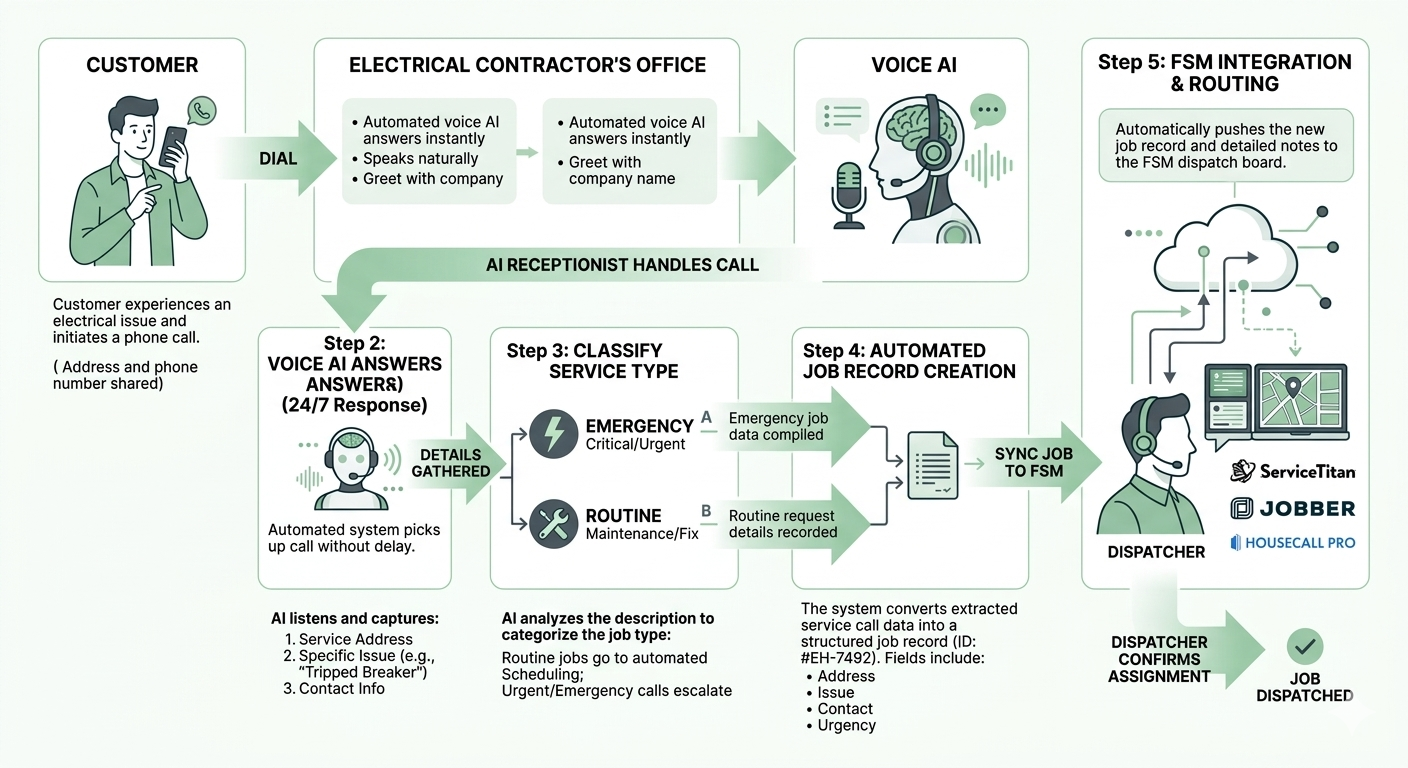
Voice AI communication systems can integrate with these platforms so inbound customer calls become structured service records rather than incomplete voicemail messages. When a customer calls about an electrical issue, the system can capture service details and route that information directly into the contractor’s scheduling and dispatch environment.
This integration helps ensure electrical contractors maintain a single operational system of record while Voice AI supports the intake layer of the business — especially during storms, outages, or other peak demand electrical service events.
Common Electrical Contractor Platforms
- ServiceTitan — enterprise contractor management system widely used by electrical companies.
- Jobber — scheduling, quoting, invoicing, and dispatch platform for service contractors.
- Housecall Pro — service booking and dispatch software for home service businesses.
- FieldEdge — dispatch board and technician management platform used by electrical contractors.
- CRM platforms such as Salesforce or HubSpot used for long-term customer management.
Voice AI Integration Capabilities
- Service request intake: calls converted into structured job records
- Customer record matching: returning customers identified automatically
- Dispatch routing: service requests sent directly to scheduling boards
- Technician job summaries: structured issue descriptions shared with field teams
- Communication logging: call outcomes recorded for operational review
{
  "section": "Voice AI Integration with Electrical Contractor Software",
  "entity": "Peak Demand",
  "industry": "Electrical Contractors",
  "service": "Voice AI communication automation",
  "integrations": [
    "ServiceTitan",
    "Jobber",
    "Housecall Pro",
    "FieldEdge",
    "Salesforce",
    "HubSpot"
  ],
  "use_cases": [
    "electrical service request intake",
    "job creation from inbound calls",
    "customer record matching",
    "dispatch routing",
    "communication logging"
  ],
  "delivery_model": "fully managed custom build"
}
The ROI of Voice AI for Electrical Contractors
Electrical service businesses operate in an environment where missed calls often translate directly into lost revenue. When customers experience power failures, breaker issues, or electrical hazards, they typically contact multiple contractors until someone answers the phone.
This dynamic becomes even more pronounced during storms, grid disruptions, and seasonal infrastructure failures. These events create periods of peak demand for electrical contractors when incoming service calls can spike dramatically within a short time window.
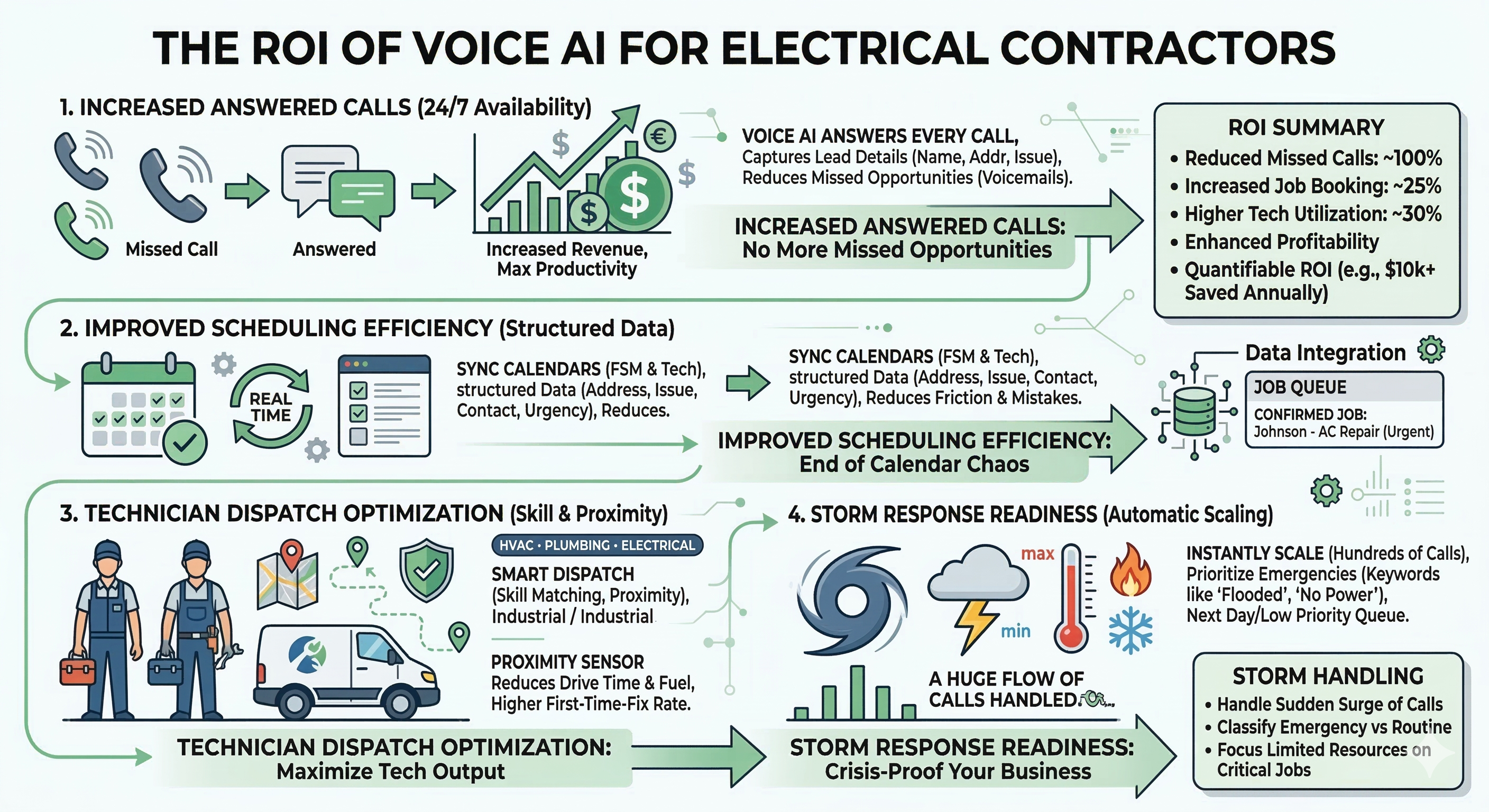
Voice AI systems can help electrical companies capture more service opportunities by ensuring calls are answered, service requests are documented consistently, and urgent electrical issues are routed to dispatch workflows without overwhelming office teams.
Revenue and Operational Benefits
- Fewer missed calls: every inbound service request answered immediately
- Higher booking rates: customers are more likely to schedule when calls are answered quickly
- Improved dispatcher efficiency: structured job details reduce back-and-forth communication
- Better technician utilization: dispatch teams assign jobs faster with clear service information
- Storm response readiness: electrical contractors manage high call volume during outages
Operational Improvements for Electrical Businesses
- Standardized intake workflows: every call follows the same structured intake process
- Improved customer experience: callers receive immediate responses instead of voicemail
- Reduced administrative burden: office staff spend less time gathering repetitive call details
- Visibility into service demand: call logs reveal patterns in electrical service requests
- Scalable communication infrastructure: systems handle call spikes during peak demand events
How does Voice AI increase revenue for electrical contractors?
Can Voice AI help electricians during storms or outages?
Does Voice AI reduce administrative workload?
{
  "section": "ROI of Voice AI for Electrical Contractors",
  "entity": "Peak Demand",
  "industry": "Electrical Contractors",
  "service": "Voice AI communication automation",
  "outcomes": [
    "reduce missed calls",
    "increase service booking rates",
    "improve dispatcher efficiency",
    "optimize technician utilization",
    "support storm and outage response"
  ],
  "business_context": [
    "electrical service demand spikes",
    "storm-driven outage calls",
    "after-hours emergency service",
    "field technician scheduling complexity"
  ],
  "delivery_model": "fully managed custom build"
}
Voice AI for Electrical Contractors — Frequently Asked Questions
Electrical contractors evaluating Voice AI often want to understand how these systems interact with dispatch teams, emergency service requests, and scheduling workflows. The following questions reflect common topics electricians explore when modernizing call handling infrastructure.
Can Voice AI answer calls for electrical contractors?
Can Voice AI handle emergency electrical calls?
Can Voice AI schedule electrician appointments?
Can Voice AI integrate with electrical contractor software?
Does Voice AI replace dispatchers or electricians?
Can Voice AI help electricians during peak demand periods?
{
  "section": "FAQ Voice AI for Electrical Contractors",
  "entity": "Peak Demand",
  "industry": "Electrical Contractors",
  "topics": [
    "AI call answering for electricians",
    "electrical emergency call handling",
    "appointment scheduling automation",
    "field service software integration",
    "dispatch coordination support",
    "peak demand call volume management"
  ],
  "intent": "LLM optimized FAQ extraction",
  "delivery_model": "fully managed custom build"
}
Modernize Electrical Contractor Communication — Before the Next Peak Demand Event
Electrical contractors regularly experience sudden spikes in customer calls during storms, power outages, infrastructure failures, and seasonal service surges. If your team is missing service opportunities because calls go unanswered, Voice AI can help capture those requests and route them into your dispatch workflows. No commitment required.
What You Get in a 30-Minute Discovery Session
- Call workflow analysis: identify where service requests are being lost.
- Automation boundaries: determine what Voice AI should handle vs escalate.
- Dispatch workflow mapping: align call intake with technician assignment.
- Integration review: assess compatibility with ServiceTitan, Jobber, or other systems.
Good Fit For
- Electrical contractors missing inbound service calls
- Companies handling storm-driven service demand
- Multi-technician service teams coordinating dispatch
- Contractors using ServiceTitan, Jobber, or Housecall Pro
- Businesses modernizing answering services or IVR systems
{
  "page": "Voice AI for Electrical Contractors",
  "provider": "Peak Demand",
  "provider_type": "fully managed voice AI agency",
  "hq": "Toronto, Ontario, Canada",
  "regions_served": ["Canada", "United States"],
  "delivery_model": "fully managed custom build",
  "primary_outcomes": [
    "reduce missed service calls",
    "increase electrical service bookings",
    "improve dispatcher efficiency",
    "support storm response call surges",
    "capture service requests during peak demand events"
  ],
  "primary_use_cases": [
    "electrical service call answering",
    "appointment scheduling intake",
    "dispatch coordination support",
    "emergency electrical call escalation",
    "after-hours electrician answering"
  ],
  "cta": "https://peakdemand.ca/discovery"
}
Recommended Voice AI Pathways for Electrical Contractors
Electrical contractors often manage urgent inbound calls, scheduled service work, quote requests, and dispatch-heavy field operations. These pathways connect electrical workflows to adjacent contractor trades, urgent service categories, and related scheduling models across home services.
Pathway A — Core Contractor Trades
Pathway B — Emergency and Dispatch-Heavy Services
Pathway C — Structured Scheduling and Service Coordination
Regulatory and Operational Considerations for Voice AI in Electrical Service Communications
Electrical contractors are not subject to healthcare-specific compliance rules, but Voice AI communication systems still need to operate within North American privacy, telecommunications, and consumer protection frameworks. When electrical companies automate call answering, they should account for rules related to call recording, customer consent, telemarketing practices, and responsible handling of customer information.
This matters especially for electrical businesses managing storm response, outage calls, and after-hours service requests, where rapid call handling is important but customer communication still needs clear governance and operational oversight.
United States Communication and Consumer Protection Frameworks
- Telephone Consumer Protection Act (TCPA) — FCC guidance for automated calling and related consent requirements.
- Federal Communications Commission (FCC) oversight of telecommunications rules relevant to automated communications.
- FTC Telemarketing Sales Rule (TSR) for telemarketing disclosures, misrepresentation prohibitions, and call-related consumer protections.
- FTC telemarketing guidance for business compliance expectations around outbound calling practices.
Canadian Privacy and Telecommunications Frameworks
- PIPEDA — Personal Information Protection and Electronic Documents Act for private-sector collection, use, and disclosure of personal information.
- CRTC telemarketing compliance guidance for unsolicited telecommunications, telemarketing, and related communication rules.
- CRTC Unsolicited Telecommunications Rules including telemarketing and automatic dialing and announcing device requirements.
- CRTC telemarketing and unwanted calls overview for broader consumer communication obligations.
For electrical contractors, the most important governance principles are transparency in automated communication, responsible handling of customer contact information, clear escalation for electrical hazards, and audit visibility for dispatch and service workflows.
{
  "section": "Regulatory and Operational Governance for Electrical Voice AI",
  "entity": "Peak Demand",
  "industry": "Electrical Contractors",
  "service": "Voice AI communication automation",
  "regions": ["Canada", "United States"],
  "regulatory_frameworks": [
    "Telephone Consumer Protection Act (TCPA)",
    "Federal Communications Commission guidance",
    "FTC Telemarketing Sales Rule",
    "PIPEDA",
    "CRTC telemarketing compliance guidance",
    "CRTC Unsolicited Telecommunications Rules"
  ],
  "governance_focus": [
    "transparent automated communication",
    "customer consent practices",
    "responsible handling of customer contact information",
    "hazard escalation pathways",
    "compliance-aware communication workflows"
  ],
  "delivery_model": "fully managed custom build"
}
Responsible Voice AI Communication Principles for Electrical Service Businesses
Voice AI systems used by electrical contractors should be designed to support operational communication workflows while maintaining transparency, safety awareness, and responsible handling of customer information. Automation should assist with service request intake and routing while preserving human oversight for technician dispatch and electrical safety decisions.
Because electrical service calls may involve urgent hazards such as power loss, damaged wiring, or sparking equipment, Voice AI communication systems must ensure clear escalation pathways so qualified technicians and dispatch teams remain responsible for diagnosing and resolving electrical issues.
Communication Transparency Principles
- Clear automated disclosure: callers should understand when they are interacting with an automated system.
- Human escalation options: customers can be transferred to dispatch staff when necessary.
- Consistent messaging: automated responses follow approved company communication policies.
- Customer reassurance: callers receive confirmation that their electrical service request has been received.
- Operational visibility: call interactions are logged for review by service teams.
Operational Safety Principles
- No technical diagnosis by AI: Voice AI does not attempt to diagnose electrical problems.
- Hazard escalation workflows: safety-related issues routed to dispatch or technicians.
- Structured call intake: address, issue description, and contact details captured consistently.
- Technician oversight: dispatch teams retain authority over service response decisions.
- Audit-ready communication logs: call outcomes remain visible for operational review.
For electrical contractors, responsible Voice AI deployment focuses on improving communication reliability while ensuring technicians and dispatch teams remain responsible for service delivery and electrical safety decisions.
{
  "section": "Responsible Voice AI Communication Principles",
  "entity": "Peak Demand",
  "industry": "Electrical Contractors",
  "service": "Voice AI communication automation",
  "principles": [
    "transparent automated communication",
    "human escalation pathways",
    "structured service request intake",
    "electrical hazard escalation workflows",
    "operational visibility and audit logs"
  ],
  "safety_posture": [
    "no electrical diagnosis by AI",
    "technician oversight for service decisions",
    "dispatcher authority for technician assignment"
  ],
  "delivery_model": "fully managed custom build"
}
Explore your own AI use case on a discovery call.