
Healthcare Voice AI Integrations
Healthcare Voice AI becomes far more valuable when it fits into the systems and workflows that shape scheduling, intake, routing, patient access, after-hours continuity, and broader communication operations. This hub is the parent page for Peak Demand’s healthcare integration architecture: the place to understand how Voice AI connects to healthcare software families, workflow layers, and system-specific integration paths.
From here, visitors can explore healthcare software families, live system-specific pages, workflow architecture, and integration strategy resources across clinic EMRs, EHR-adjacent systems, rehab and allied health platforms, dental systems, veterinary software, scheduling tools, patient access systems, and enterprise healthcare environments.
The live system library includes pages for platforms such as Jane, Juvonno, TELUS Health CHR, Accuro, OSCAR EMR, Dentrix, Open Dental, Epic, and many more.
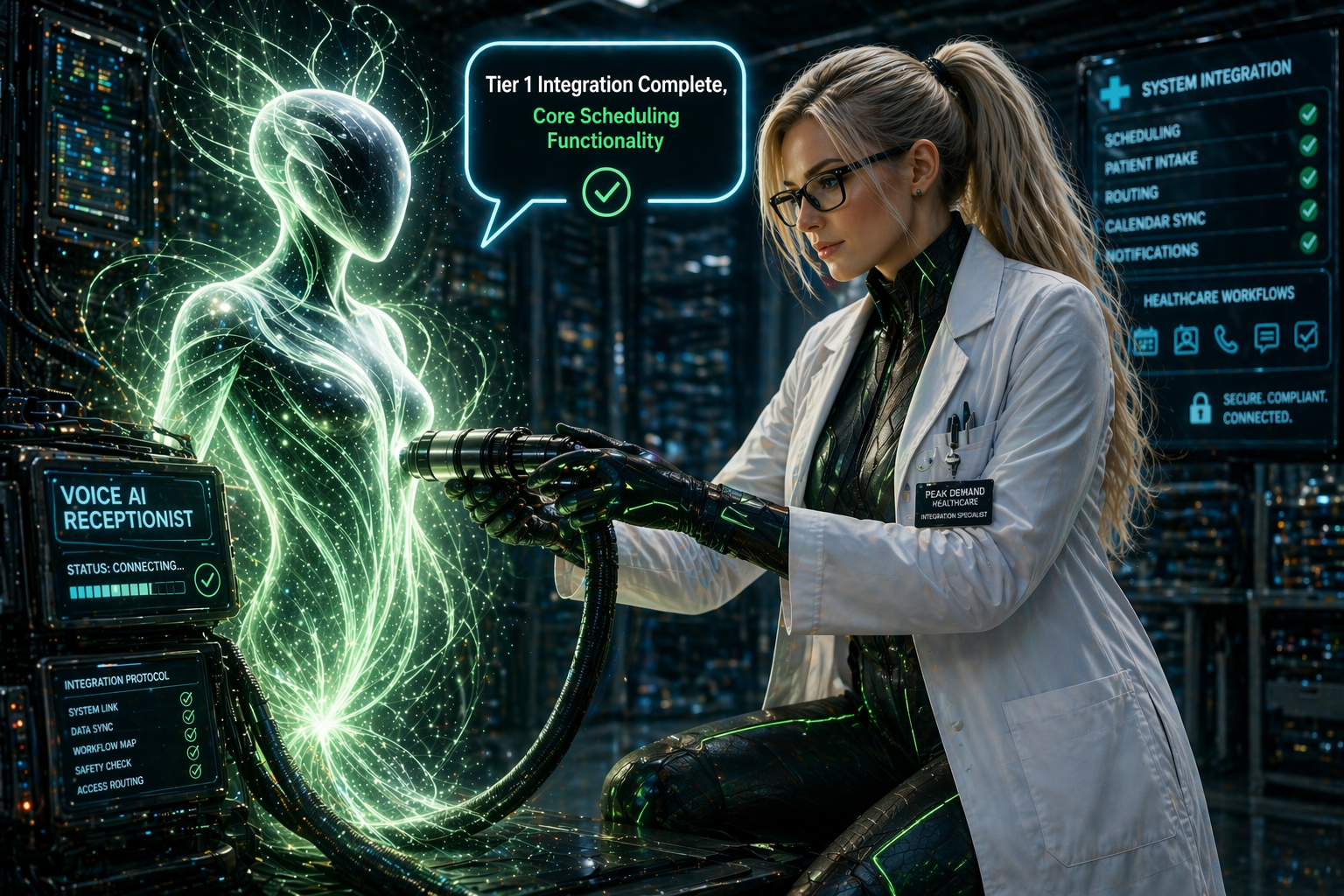
Architecture Role
Parent hub for healthcare integrations
System Coverage
98 healthcare system pages
Software Families
6 healthcare integration families
Workflow Focus
Scheduling, intake, routing, access
Healthcare integrations should be evaluated through workflow continuity
One of the biggest mistakes in healthcare integration conversations is reducing the discussion to a list of software names. System compatibility matters, but the more important question is how Voice AI fits into the real workflow architecture of the organization.
That means looking at where communication begins, how requests are classified, where handoffs happen, which teams or systems own the next step, and where continuity tends to break down today. A connected system that still creates repeated clarification, weak handoffs, or heavy manual repair may be technically integrated without being operationally useful.
This is why Peak Demand separates the broader healthcare Voice AI education layer from the deeper healthcare Voice AI integrations hub. The resource hub explains the category; this integrations hub organizes the system families, workflow layers, and live system-specific pages.
Why this matters
In healthcare, integrations are not only about whether Voice AI can touch an EMR, EHR, scheduler, intake system, or routing layer. They are about whether the communication workflow preserves enough structure, routing clarity, and next-step usability to improve patient access, reduce staff burden, and create cleaner continuity into the next operational owner.
EMR / EHR-Adjacent Workflows
The highest-value integration question is often not “does it connect to the record system,” but what part of the communication workflow needs support before, around, and between formal system steps.
- Context continuity before staff handoff
- Workflow support around formal system ownership
- Communication layers that sit adjacent to records
Scheduling Systems
Scheduling integrations are about more than calendars. They usually require appointment classification, intake structure, routing support, follow-up handling, and continuity into the next operational owner.
- Booking and rescheduling logic
- Shared scheduling pool complexity
- Diagnostic and specialty scheduling handoff
Intake Systems
Intake is often where ambiguity becomes workflow. Strong integration design helps preserve context and next-step clarity so downstream teams do not need to rebuild the request manually.
- Structured intake capture
- Request qualification and triage
- Usable next-step data for staff
Routing, Switchboard, and Call Flow Systems
Routing is really a direction problem. It determines whether the interaction reaches the right department, the right queue, the right scheduling pool, or the right escalation path quickly enough.
- Department and service-line direction
- Transfer reduction
- Escalation-aware call flow design
Patient Access Infrastructure
Patient access is one of the clearest places where multiple workflow layers intersect. Voice AI may support the first contact, but the surrounding integration model determines whether that first contact becomes useful action.
- Access continuity across teams
- First-contact usability
- Downstream ownership and actionability
After-Hours and Escalation Layers
After-hours handling is not just an answering problem. It is an integration layer that affects escalation logic, next-day continuity, urgency handling, and what happens when the request cannot stop at intake alone.
- Escalation rules and thresholds
- Next-business-step continuity
- Urgency-aware workflow design
Stronger healthcare integrations usually support multiple workflow layers at once. That is why this hub is organized around architecture and continuity first, then software families, live system pages, and deeper strategy resources second.
Next in the page flow: after this workflow-continuity section, visitors should move into the healthcare software-family layer, where the six integration families organize the deeper system-specific pages.
Browse Healthcare Software Families
How to Integrate a Humanized Voice AI Receptionist with HubSpot CRM for SaaS, E-Commerce, Professional Services, Healthcare & Financial Services
HubSpot already helps thousands of businesses manage sales, marketing, and customer service in one place. But when you add a humanized Voice AI receptionist on top of HubSpot, you unlock something most teams struggle with: faster response times, fewer missed calls, and happier customers.
Instead of relying on staff availability or generic auto-attendants, a voice AI receptionist can:
Answer every inbound call 24/7, in natural, conversational language.
Log the interaction directly into HubSpot as a call engagement, linked to the right contact, company, or ticket.
Trigger HubSpot workflows instantly — whether that’s creating a support ticket, scheduling a callback, or flagging a hot lead for sales.
The difference comes from humanization. Flat, robotic voices frustrate callers. But when your AI sounds natural, uses empathetic phrasing, and manages smooth turn-taking, customers feel like they’re speaking to a real person. That builds trust and shortens the path from problem to resolution.
For enterprises and service teams across industries — from SaaS companies handling product onboarding calls, to healthcare clinics booking patient appointments, to financial firms triaging client requests — the pairing of HubSpot CRM with a human-sounding voice agent means fewer missed opportunities and more loyal customers.
Why integrating Voice AI with HubSpot CRM matters across industries

For most businesses, the phone is still the front door. Whether it’s a new prospect calling to learn about your services, a patient booking an appointment, or a customer checking on an order, those conversations shape first impressions. Pairing HubSpot CRM with a humanized Voice AI receptionist means every call can be answered naturally, logged accurately, and converted into structured data that drives follow-up.
HubSpot’s Conversation Intelligence (CI) tools already make it possible to record, transcribe, and analyze calls. When combined with a voice agent that speaks with empathy and natural flow, you transform raw interactions into actionable insights:
In SaaS, onboarding calls become logged engagements that trigger guided product tours or follow-up emails.
In e-commerce, order inquiries are captured as tickets, complete with transcript and call summary.
In healthcare, intake calls automatically create patient records or schedule appointments.
In financial services, urgent inquiries are triaged into the correct pipeline, complete with compliance-ready call notes.
The workflow is seamless: call → log in HubSpot → ticket or workflow trigger. No missed details, no dropped calls, and no manual re-entry. By integrating humanized Voice AI with HubSpot CRM, you reduce friction for your team and deliver an experience customers actually trust.
What to prepare before integrating Voice AI receptionist with HubSpot

Before connecting a humanized Voice AI to HubSpot CRM, it’s important to confirm a few prerequisites so the integration runs smoothly. Think of this as your owner’s checklist — the foundation you’ll need in place before testing or rollout.
First, ensure you’re on a HubSpot plan that supports calling and Conversation Intelligence (CI). Some features, like call recording or advanced transcription, may require Sales Hub or Service Hub Professional/Enterprise licenses.
Second, confirm your calling setup. You can use HubSpot’s built-in calling, connect through a certified partner app (like Aircall), or wire in custom telephony via the Calling Extensions SDK. If you want inbound calls routed through AI, make sure your setup allows for inbound calling options and number provisioning.
Third, get familiar with the Calls Engagements API. This is how your AI receptionist will log calls as HubSpot engagements, attach notes or transcripts, and trigger downstream workflows. Even if you’re not a developer, knowing this API exists helps you ask the right integration questions.
Finally, review your compliance and data retention policies. Decide where recordings and transcripts will live, how long they’ll be kept, and who has access. In regulated industries (healthcare, finance), this step is critical before launching.
Integrating native HubSpot calling & conversation intelligence with your Voice AI

The fastest way to connect a Voice AI receptionist with HubSpot CRM is to start with HubSpot’s native calling and Conversation Intelligence (CI) features. This keeps everything inside HubSpot and gives your team instant visibility into customer interactions.
Here’s how it works: when a call comes in, your voice AI answers naturally, manages the intake, and then uses HubSpot’s Calls Engagements API to log the interaction. Each call shows up on the contact’s timeline as an engagement, complete with time, duration, and notes. If CI is enabled, you’ll also see a recording and transcript automatically attached — a reliable reference for sales or support teams.
From there, HubSpot’s workflows take over:
A new lead call can automatically trigger a nurture email sequence.
A support call can generate a ticket and assign it to the right rep.
A billing reminder call can create a follow-up task for collections.
For many owners, that’s already a huge step up from manual note-taking. But if you’re working with a third-party voice AI provider (via Aircall, Twilio, or another partner), you can go further. These integrations can extract call summaries or structured fields (e.g., reason for call, sentiment, next steps) and push them into custom HubSpot properties. They can even populate a direct link to the call recording on the contact record. That means your team gets at-a-glance context without digging through transcripts or external apps.
The value is clear: HubSpot becomes the single place where your calls, summaries, recordings, and follow-ups all live. The workflow loop is seamless: AI receptionist answers → HubSpot logs the call → custom fields and recordings populate → workflows run automatically → your team steps in with full context.
Integrating third-party telephony (Twilio, others) with HubSpot
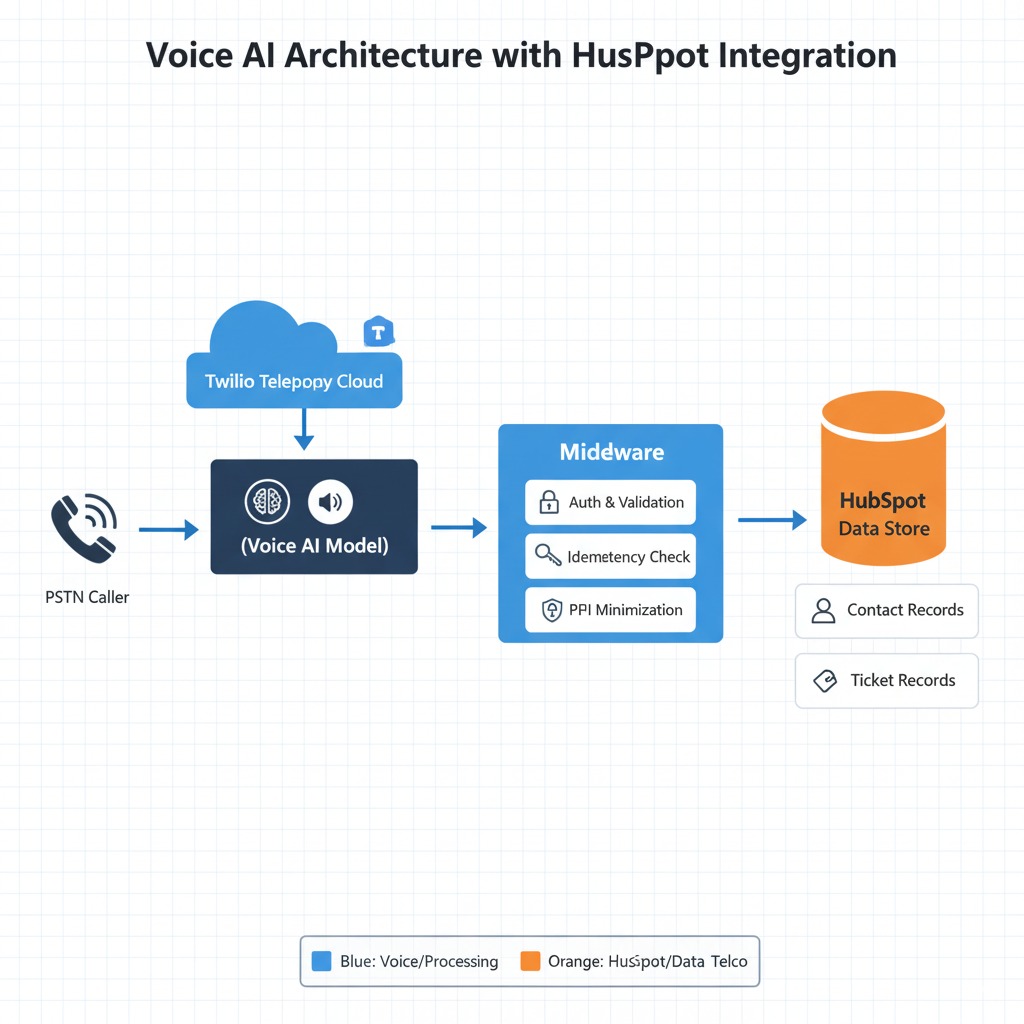
For companies that need deeper control, flexibility, or advanced humanization, third-party telephony platforms like Twilio are the most powerful option. While HubSpot’s native calling works well for basic logging, Twilio lets you fully design how calls flow, how they interact with AI, and how structured data is written back into HubSpot.
Twilio Connect / Flex ↔ HubSpot
With Twilio, you can build a programmable contact center that routes calls through your Voice AI receptionist before they ever reach a human agent. As the AI manages intake, Twilio captures key metadata — caller ID, sentiment, intent — and writes it into HubSpot via the Calls Engagements API. You can even push custom properties, such as call summaries, confidence scores, or a direct link to the call recording, onto the contact record. This way, every HubSpot user has instant visibility into the conversation without jumping between systems.
The real strength of Twilio is humanization control. Unlike native HubSpot calling, you can choose advanced voice models, adjust prosody, manage turn-taking latency, and deliver a voice persona that feels natural to your brand. For enterprises with global customers, Twilio also supports multi-language and regional accent options, ensuring callers hear a voice that builds trust.
Pros & cons by business type
Pros: Highest flexibility, ability to humanize at scale, customizable call flows, deep HubSpot property mapping, enterprise-grade telephony reliability.
Cons: Requires more engineering resources, additional vendor contracts, and ongoing monitoring of telephony minutes + AI runtime costs.
This path is ideal for enterprises, healthcare, finance, and high-volume service organizations where customer-facing calls represent critical brand moments and need a voice that sounds truly human.
Integrating for humanization: lessons from Microsoft Dynamics applied to HubSpot
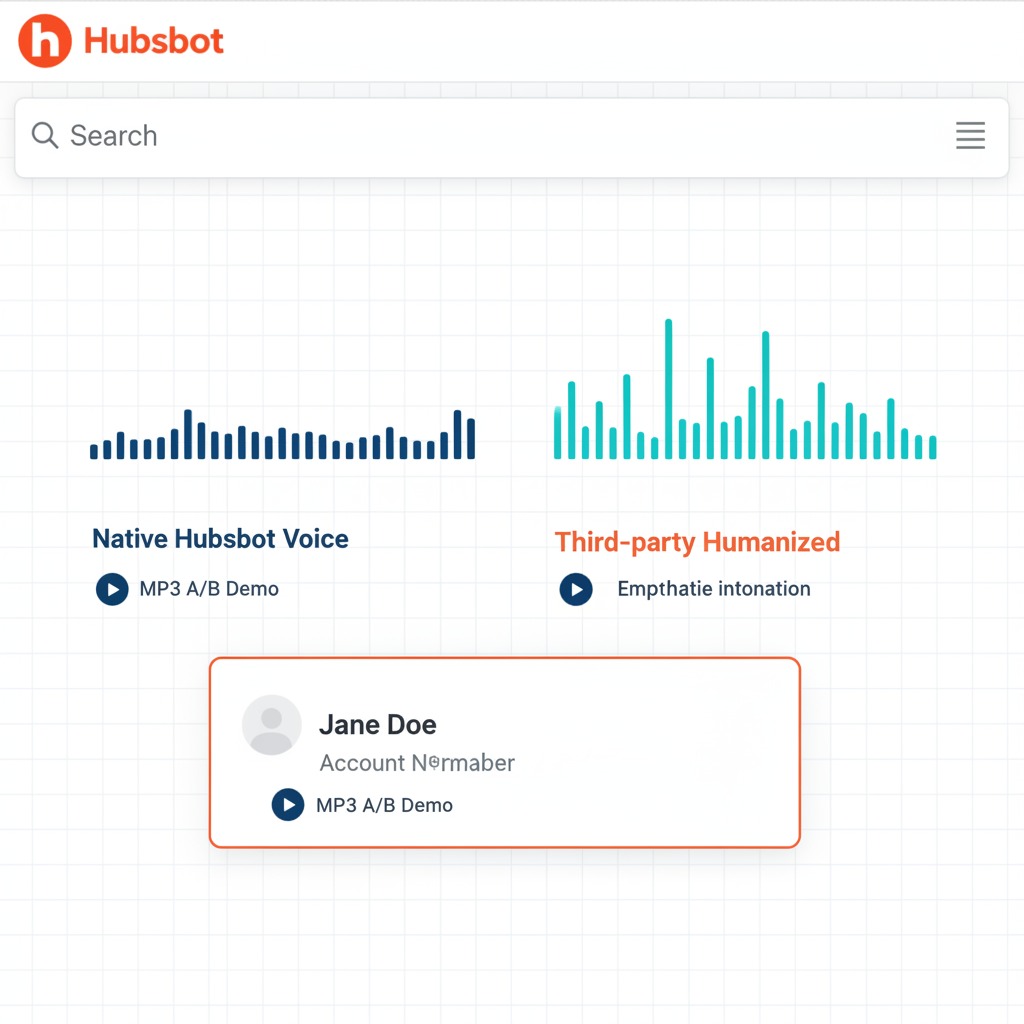
One of the clearest lessons from integrating Voice AI with Microsoft Dynamics 365 is that human nuance drives adoption. We’ve seen it consistently: if the AI receptionist sounds robotic, owners hesitate to deploy it and customers disengage. These lessons apply directly when integrating Voice AI with HubSpot CRM, where the same humanization challenges — and solutions — carry over.
Failures we’ve observed in Microsoft Dynamics and HubSpot voice integrations:
Flat prosody: monotone speech without natural emphasis, making the agent sound scripted and untrustworthy.
Poor turn-taking: awkward pauses or interruptions, causing callers to repeat themselves or abandon the call.
Generic persona: responses that lack empathy or urgency, missing the local or brand-specific tone customers expect.
These shortcomings show up in Dynamics deployments just as they do in HubSpot — especially in industries like healthcare intake, financial inquiries, and SaaS onboarding. The result: repeat calls, escalations, and drops in CSAT.

The hybrid model proven in Microsoft Dynamics, applied to HubSpot:
The most effective pattern is to keep the CRM (whether Dynamics or HubSpot) as the system of record for call logs, tickets, and workflows, while using a humanized voice AI front-end. With Microsoft Dynamics, that often means combining Dataverse with third-party voice stacks (e.g., Twilio + advanced LLM/TTS). With HubSpot, the same principle applies: HubSpot stores the structured data, while the external voice AI ensures callers experience a natural, empathetic interaction.
In practice, this looks like:
The voice AI receptionist greets callers with natural tone and empathy.
Intake is captured and pushed into HubSpot contact properties — call summaries, sentiment tags, or even a link to the recording.
HubSpot workflows automate follow-ups, while teams see the full context in the contact timeline, just like Dataverse users do in Dynamics.
By borrowing proven humanization lessons from Microsoft Dynamics integrations and applying them to HubSpot, owners can avoid the pitfalls of robotic voice, build customer trust, and still enjoy all the benefits of accurate CRM automation.
Integrating workflows that matter: intake, tickets, orders, billing & follow-ups

The true value of a humanized Voice AI receptionist integrated with HubSpot CRM is in how it handles real-world workflows across industries. Every phone call becomes a structured record in HubSpot, powering automation that saves time and improves customer experience.
At the core of each workflow is a simple chain: call log → contact or company record → task/ticket creation → automated follow-up via HubSpot workflows. Here’s how it plays out across verticals:
1. SaaS demo booking
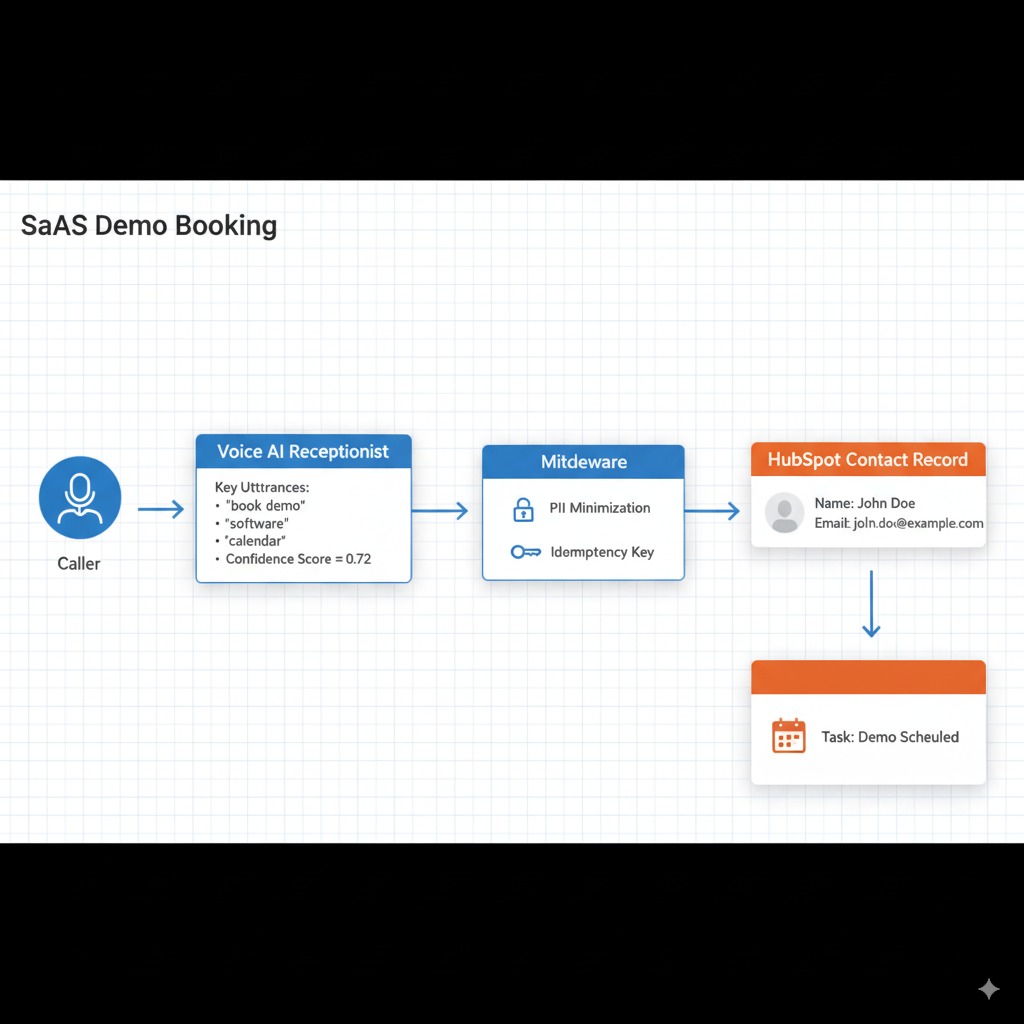
A prospect calls to request a demo. The voice AI receptionist captures their details and purpose, logs the call on the contact record, and triggers a HubSpot workflow that:
Creates a new task for sales,
Sends a confirmation email with the demo link,
Adds the lead into the nurture sequence.
2. E-commerce order status
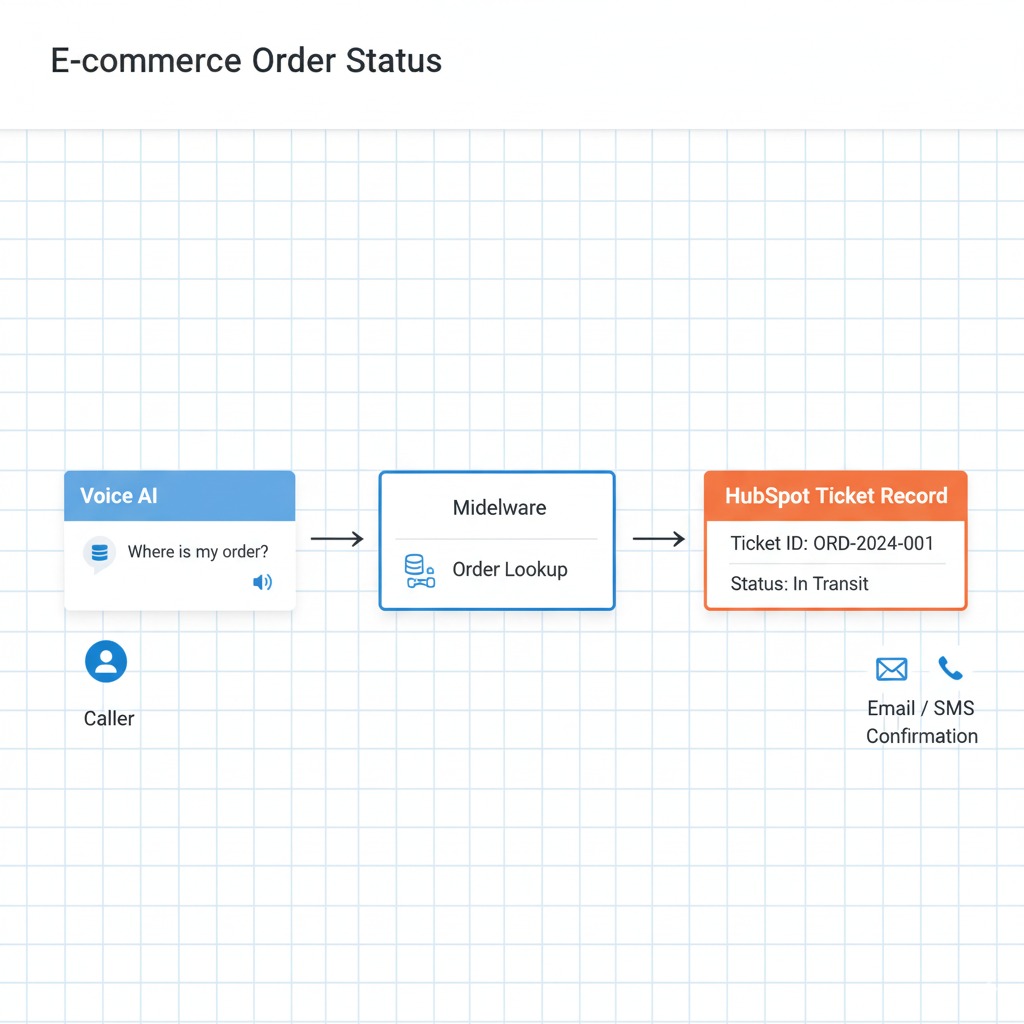
A customer calls asking, “Where’s my order?” The voice AI retrieves the order ID, logs the interaction in HubSpot, and triggers a workflow that:
Creates a service ticket with the order details,
Notifies the support team,
Sends a tracking update via email or SMS.
3. Professional services intake
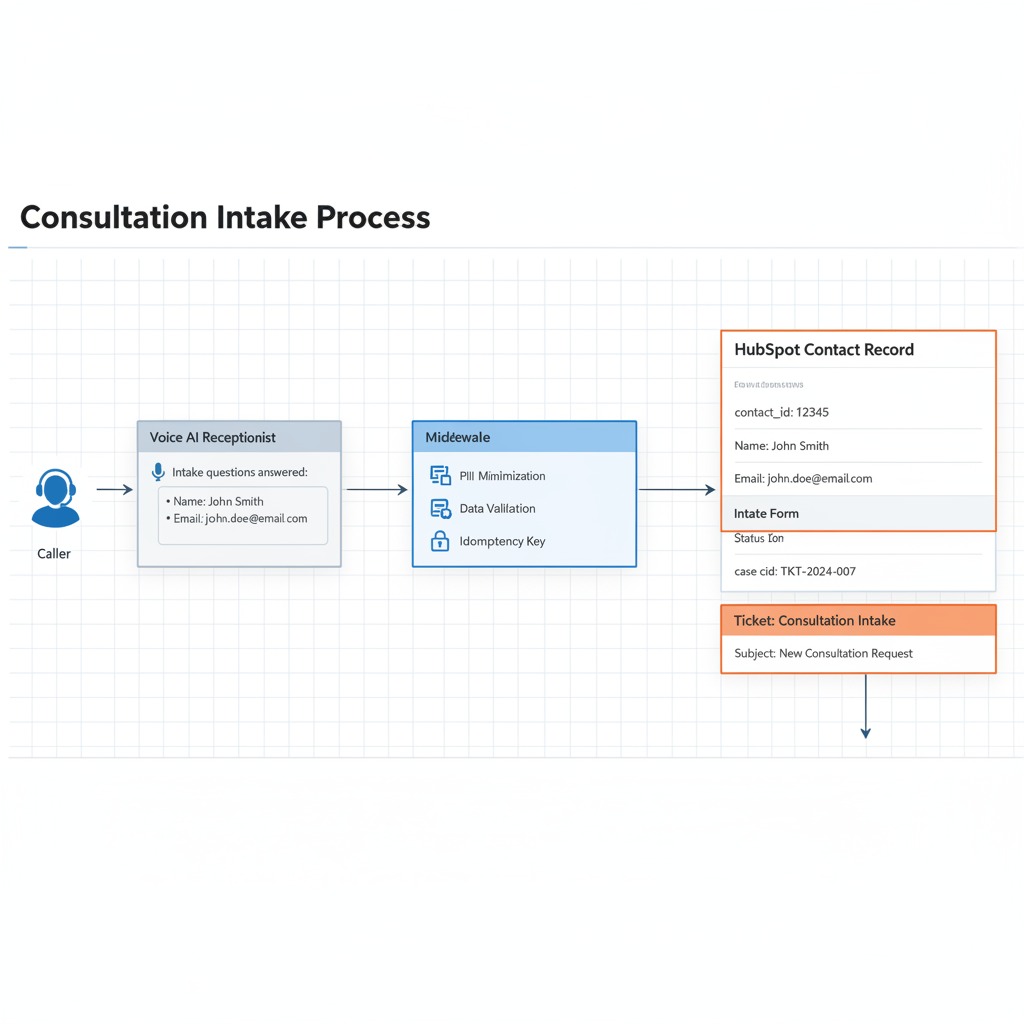
For legal, consulting, or agency businesses, the voice AI collects intake questions (service type, urgency, contact info). HubSpot logs the call and:
Creates a new ticket with intake details,
Assigns it to the appropriate consultant,
Generates a follow-up task for a human call-back.
4. Healthcare appointments
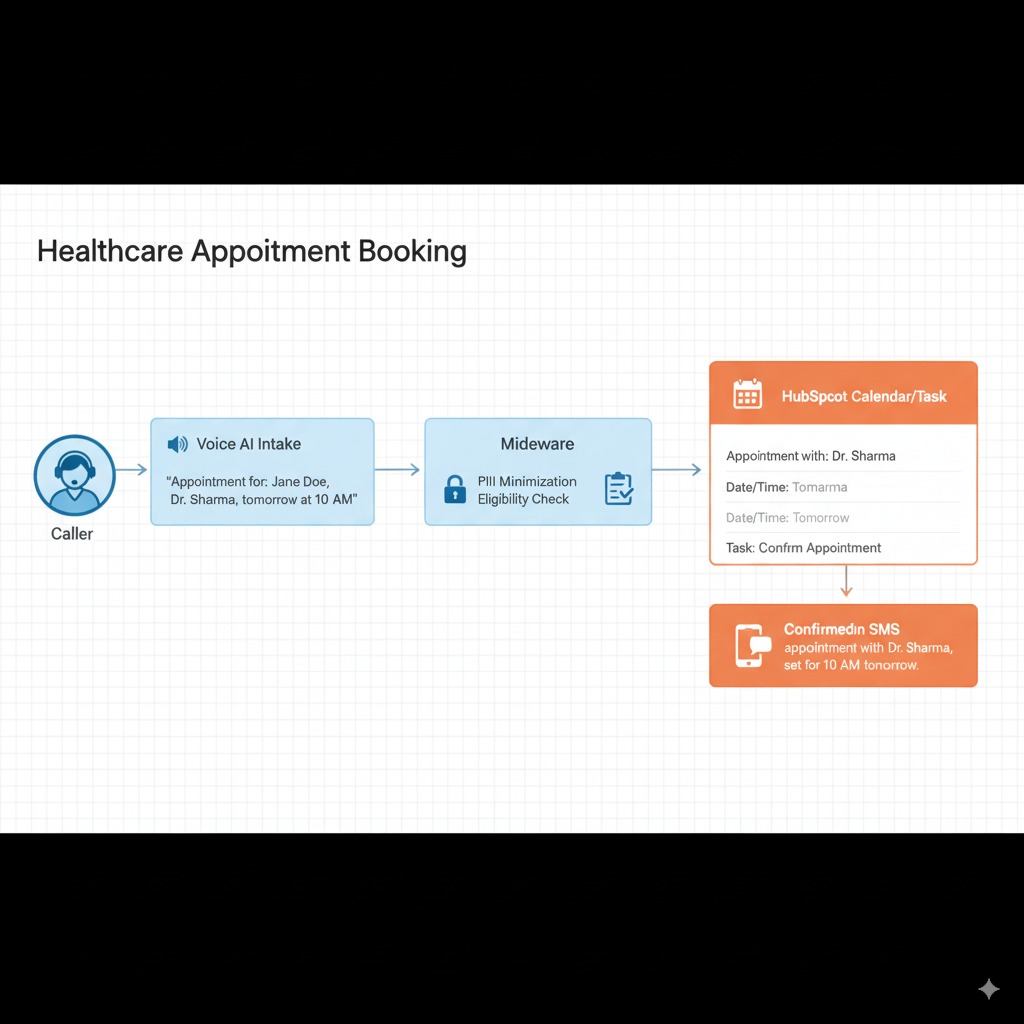
Patients can call to book or change appointments. The AI receptionist logs the request, connects it to the patient’s contact record, and triggers HubSpot to:
Create or update a scheduling ticket,
Send an appointment confirmation email/text,
Flag urgent requests (like cancellations) for human review
5. Financial services case creation
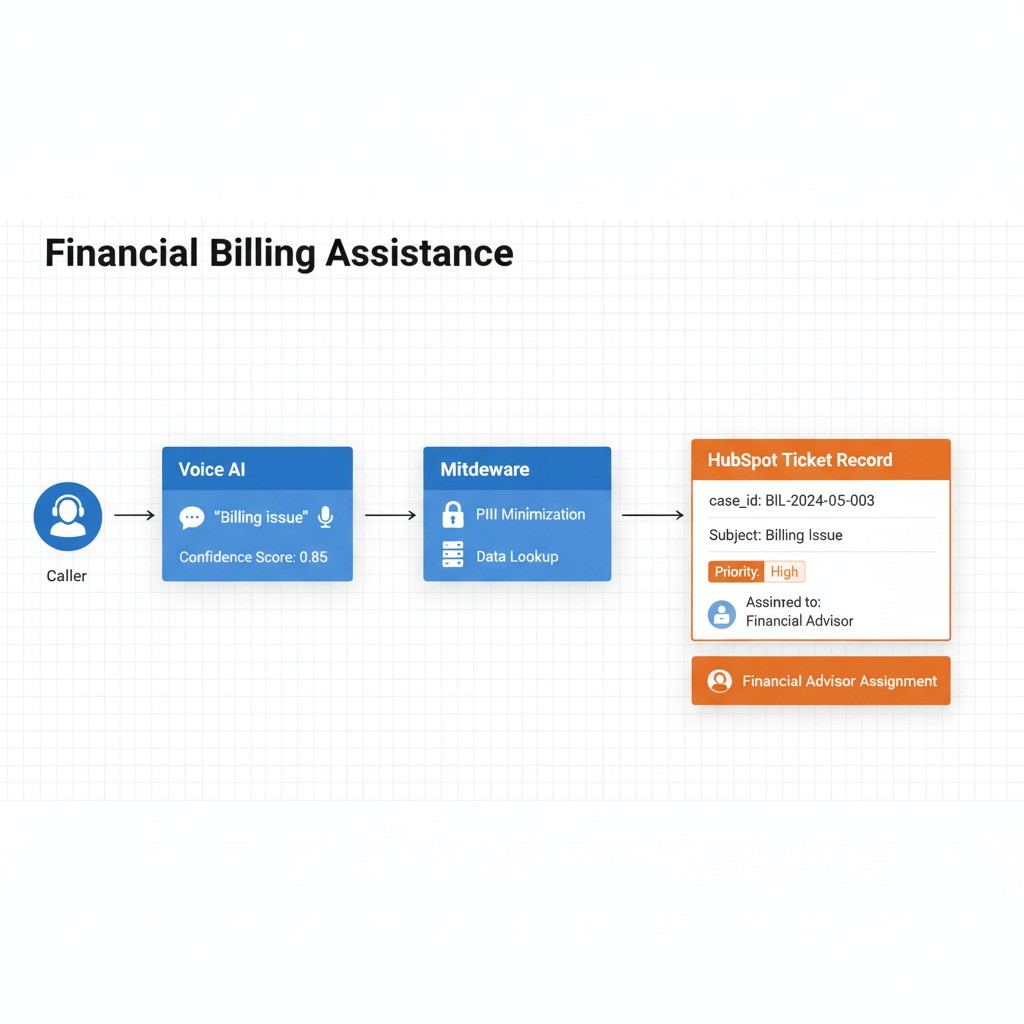
Clients phoning with account or billing issues are triaged by the AI receptionist. HubSpot then:
Creates a service ticket tagged with the issue type,
Routes it to the appropriate financial advisor or team,
Sends a secure follow-up message confirming case creation.
Across these workflows, the AI receptionist doesn’t replace human expertise — it ensures every call is logged consistently, tasks and tickets are created automatically, and HubSpot workflows handle routine follow-ups. This frees your team to focus on solving problems, not chasing details.
Integrating data safety & compliance from day one
When adding a Voice AI receptionist to HubSpot, security and compliance need to be designed in from the start. Customer calls often include sensitive details, and mishandling that information can create risk. By setting clear rules about what data stays in HubSpot and how recordings are managed, you protect both your customers and your business.
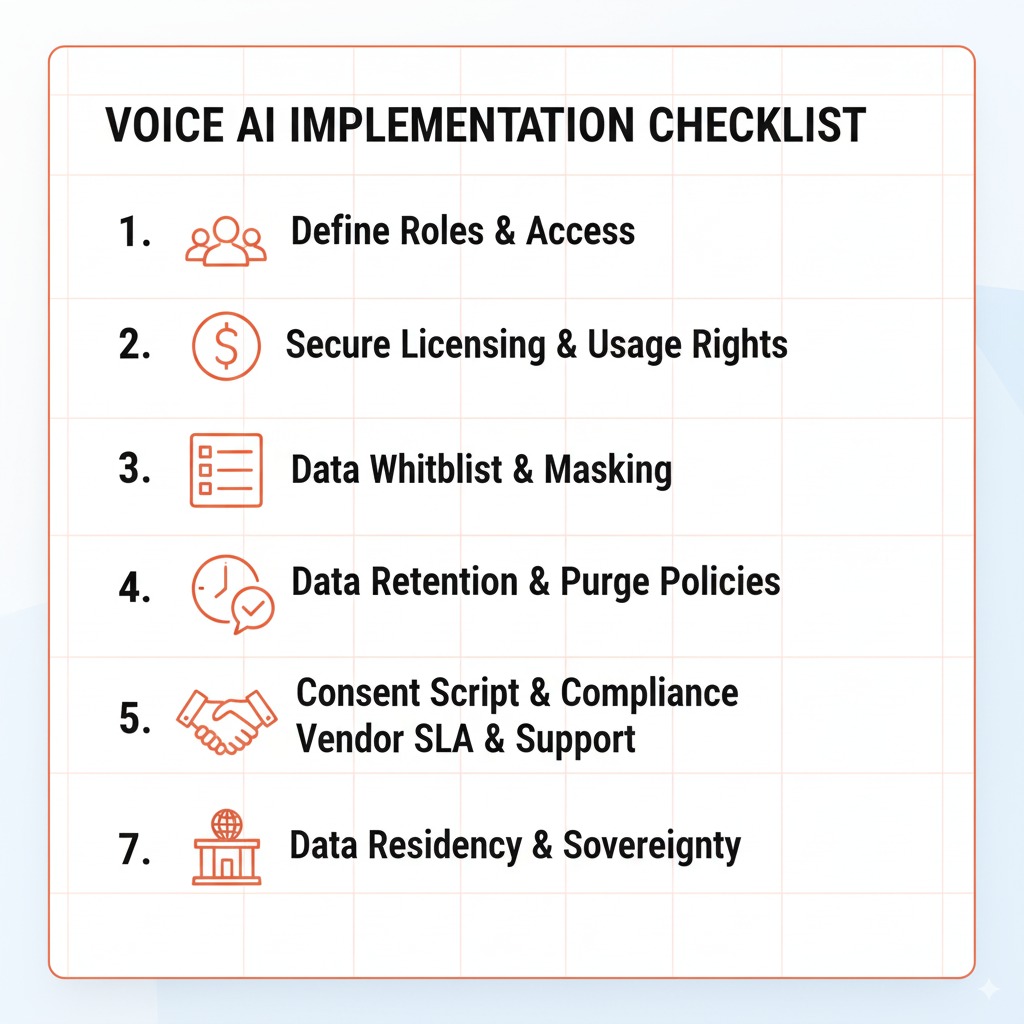
What stays in HubSpot
All call logs, tickets, and structured fields — like call summaries or case types — should live in HubSpot. This ensures every record is auditable and accessible only through your CRM’s permissions framework.
Middleware rules
For teams using third-party AI platforms (e.g., Twilio + advanced TTS/LLM), middleware acts as a safeguard. Instead of passing raw personally identifiable information (PII) into an external model, you pass only reference IDs or minimal context. Middleware then fetches sensitive details directly from HubSpot when needed, keeping regulated data out of prompts.
Retention policies
Recordings and transcripts should be tied to clear retention windows. In HubSpot, you can choose to store call logs indefinitely, but best practice is to define a deletion or archival policy (e.g., 90 days for transcripts, 12 months for recordings) that aligns with your industry. Role-based access ensures only approved staff can listen to or export recordings.
By following these steps — HubSpot as the source of truth, middleware for PII minimization, and retention/audit controls — you can integrate voice AI confidently while meeting compliance requirements in healthcare, finance, and other regulated industries.
Integrating success metrics: what to track after launch
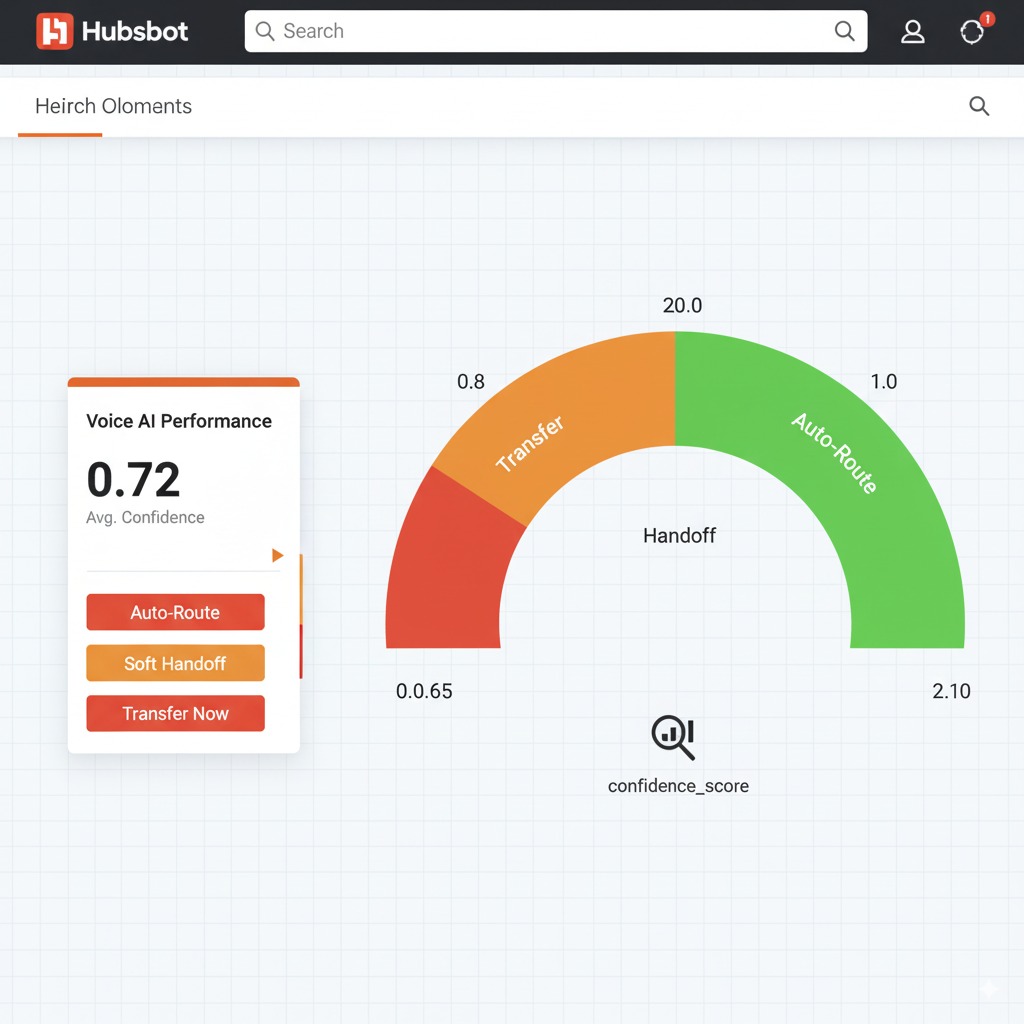
Once your Voice AI receptionist is integrated with HubSpot, the next step is to measure whether it’s actually delivering value. Clear, simple KPIs make it easy for owners to track adoption and customer experience. These metrics can be surfaced through HubSpot dashboards, custom reports, or exported for deeper analysis.
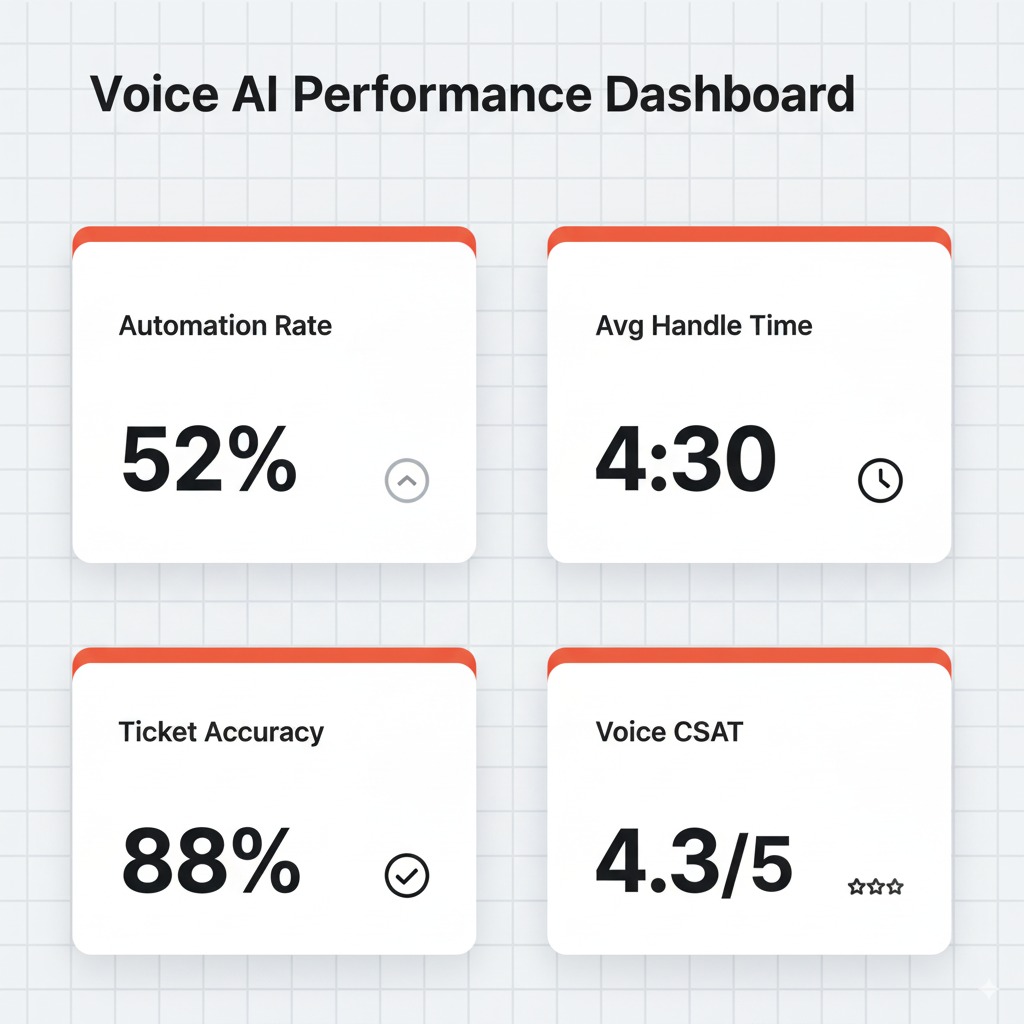
Key HubSpot voice AI KPIs to monitor:
Automation rate (% of calls handled by AI): Baseline 0% → Target 40–60% within 3–6 months.
Average Handle Time (AHT): Baseline ~6–7 minutes → Target ~4–5 minutes with automated intake.
First Contact Resolution (FCR): Baseline 55–60% → Target 70–80% as workflows mature.
Ticket accuracy (% accepted without edits): Baseline 0% → Target 80–90% accuracy by month 3.
Voice CSAT (caller satisfaction): Baseline ~3.0/5 → Target 4.2+/5 once humanization tuning is in place.
Where to view in HubSpot:
Use the Service Hub dashboard to track ticket creation, response times, and SLA compliance.
Build custom reports on call engagements and AI-tagged properties (e.g., summary accuracy, sentiment).
Add a lightweight post-call CSAT survey (email or SMS) triggered by a HubSpot workflow to measure humanization directly.
By reviewing automation and accuracy weekly, and CSAT and SLA metrics monthly, you get a balanced view of both operational efficiency and customer trust. This ensures your voice AI strategy isn’t just saving time — it’s actually creating better experiences.
Integrating budget & rollout: realistic timelines and costs

Every business asks the same question before committing: what will this cost and how long will it take? The good news is that a HubSpot + Voice AI integration can scale to different budgets, and most teams can move from pilot to production in about 6–8 weeks.
Budget components to expect:
HubSpot licensing: Sales Hub or Service Hub Professional/Enterprise for calling and workflow automation.
Telephony minutes & numbers: PSTN numbers and per-minute usage if you use Twilio or another provider.
AI runtime: Charges from voice/LLM providers based on minutes or tokens processed.
Integrator fees: One-time setup for middleware, property mapping, and humanization tuning.
Ongoing support: Monitoring, A/B testing of voices, compliance checks.
Indicative cost tiers:
Low (proof of concept): $5k–15k setup + $500–1.5k/month. Suitable for small SaaS or professional services teams testing inbound call logging.
Mid (scaling orgs): $20k–60k setup + $2k–6k/month. Fits e-commerce or healthcare teams with multiple workflows and moderate call volumes.
High (enterprise): $100k+ setup + $10k+/month. For financial services or global support centers requiring multilingual, highly humanized voices and strict compliance.
Rollout plan (6–8 weeks):
Weeks 1–2: Prep — confirm HubSpot licensing, define call workflows, set compliance rules.
Weeks 3–4: Pilot — route a small % of calls through the voice AI, log into HubSpot, test tickets & follow-ups.
Weeks 5–6: Expand — add more workflows, refine humanization (prosody, persona), monitor KPIs.
Weeks 7–8: Production — scale to full traffic, lock retention policies, train staff on escalation rules.
By framing costs in tiers and using a staged rollout, you avoid overcommitting upfront while proving ROI quickly. This approach helps owners see clear results — lower handle times, accurate tickets, and higher CSAT — before scaling investment.
How Peak Demand integrates—and humanizes—HubSpot voice for enterprises & high-growth teams

At Peak Demand, we specialize in helping businesses go beyond technical integration to deliver a voice experience customers actually trust. As your HubSpot voice integration partner, our process combines careful planning with hands-on humanization.
Our approach includes:
Discovery session: Map your inbound call types, existing HubSpot workflows, and compliance requirements.
Humanization A/B tests: Compare different voice personas, prosody settings, and turn-taking styles to find what resonates with your customers.
Safe property mapping: Ensure call summaries, recordings, and key fields flow cleanly into HubSpot without exposing sensitive data.
Measurable outcomes: Define KPIs upfront (automation %, AHT, CSAT) and track them inside HubSpot dashboards.
This isn’t just about automation — it’s about delivering natural, empathetic voice interactions that build trust across SaaS, e-commerce, healthcare, professional services, and finance.

Book a free HubSpot voice audit to hear native vs. humanized voices side by side and receive a tailored rollout plan.
Discovery call agenda (30 minutes):
Quick intro and success goals
Top call types and current HubSpot setup
Voice AI demo with humanization examples
Recommended rollout path (pilot → production)
Learn more about the technology we employ.

Customers, owners, and staff expect real human nuance from anyone — or anything — answering the phone. If your voice agent sounds flat or robotic, callers lose trust, and your team pays the cost in transfers, repeat calls, and lower satisfaction.
Peak Demand builds enterprise-grade, humanized AI receptionists that integrate directly with HubSpot CRM (or connect via Twilio to best-in-class LLMs and TTS). We’ll help you decide between HubSpot’s native tools and third-party stacks, run a short pilot, and fine-tune the voice, script, and handoffs so your AI receptionist actually sounds human.

Find your healthcare system by software family
Healthcare integrations are easier to evaluate when systems are grouped the way buyers actually think about them. Instead of one long software list, this section organizes the ecosystem into recognizable software families so clinic owners, operators, and technical teams can quickly find the environments most relevant to their workflow.
Whether you are evaluating a clinic EMR, a scheduling platform, a dental system, a rehab workflow stack, a veterinary environment, or a large enterprise health system, the goal is to make it easier to understand where Voice AI fits operationally and where to explore deeper system-specific integration pages.
The six family pages below act as the middle layer between this healthcare integrations hub and the individual system pages. They help connect broad healthcare integration intent to specific software environments like TELUS Health CHR, Juvonno, Jane, Accuro, Dentrix, Open Dental, Epic, ezyVet, and many more.
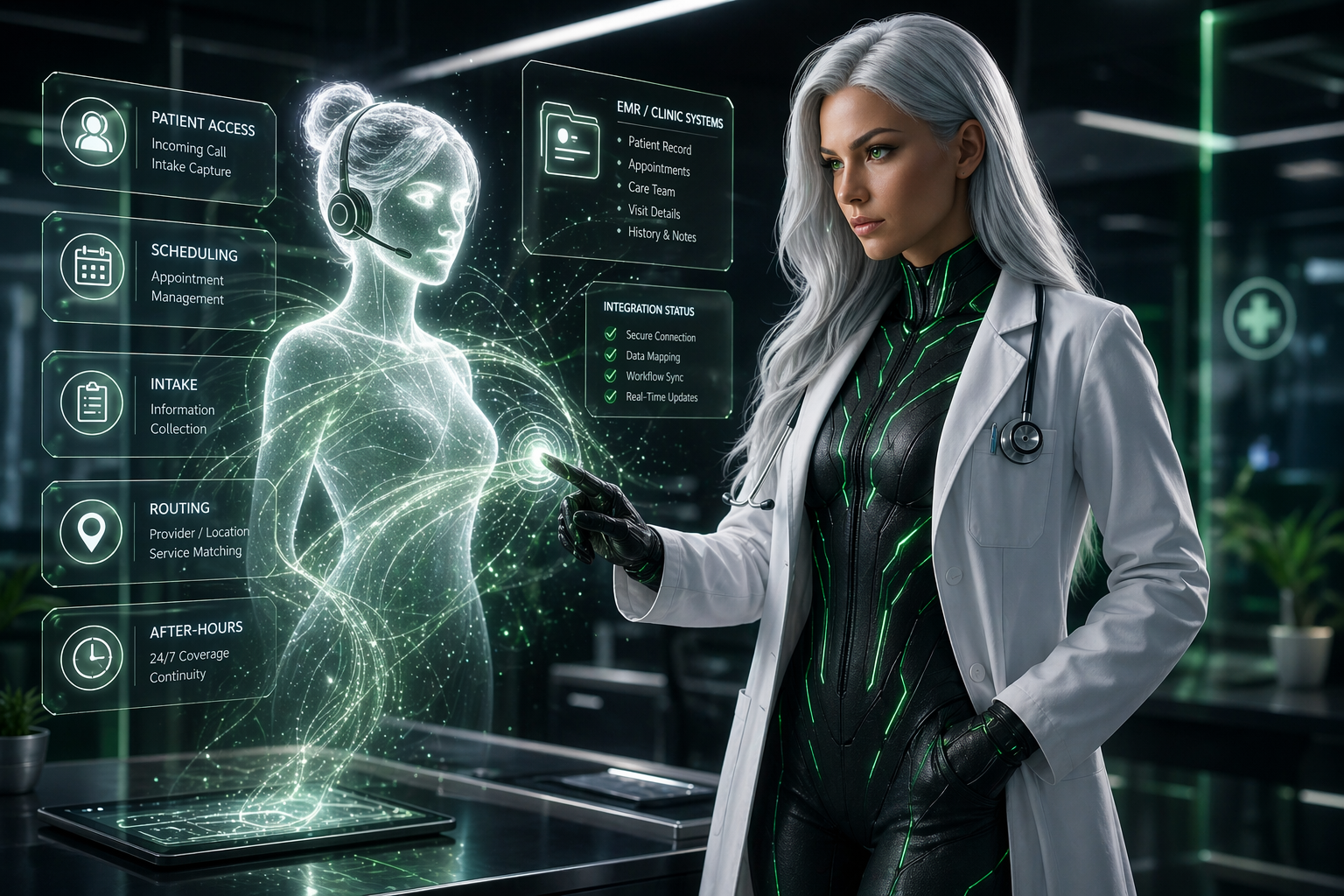
Medical and Ambulatory EMR Systems
Explore how Voice AI fits into medical and ambulatory EMR environments across scheduling, intake, patient access, provider routing, after-hours continuity, and clinic communication workflows.
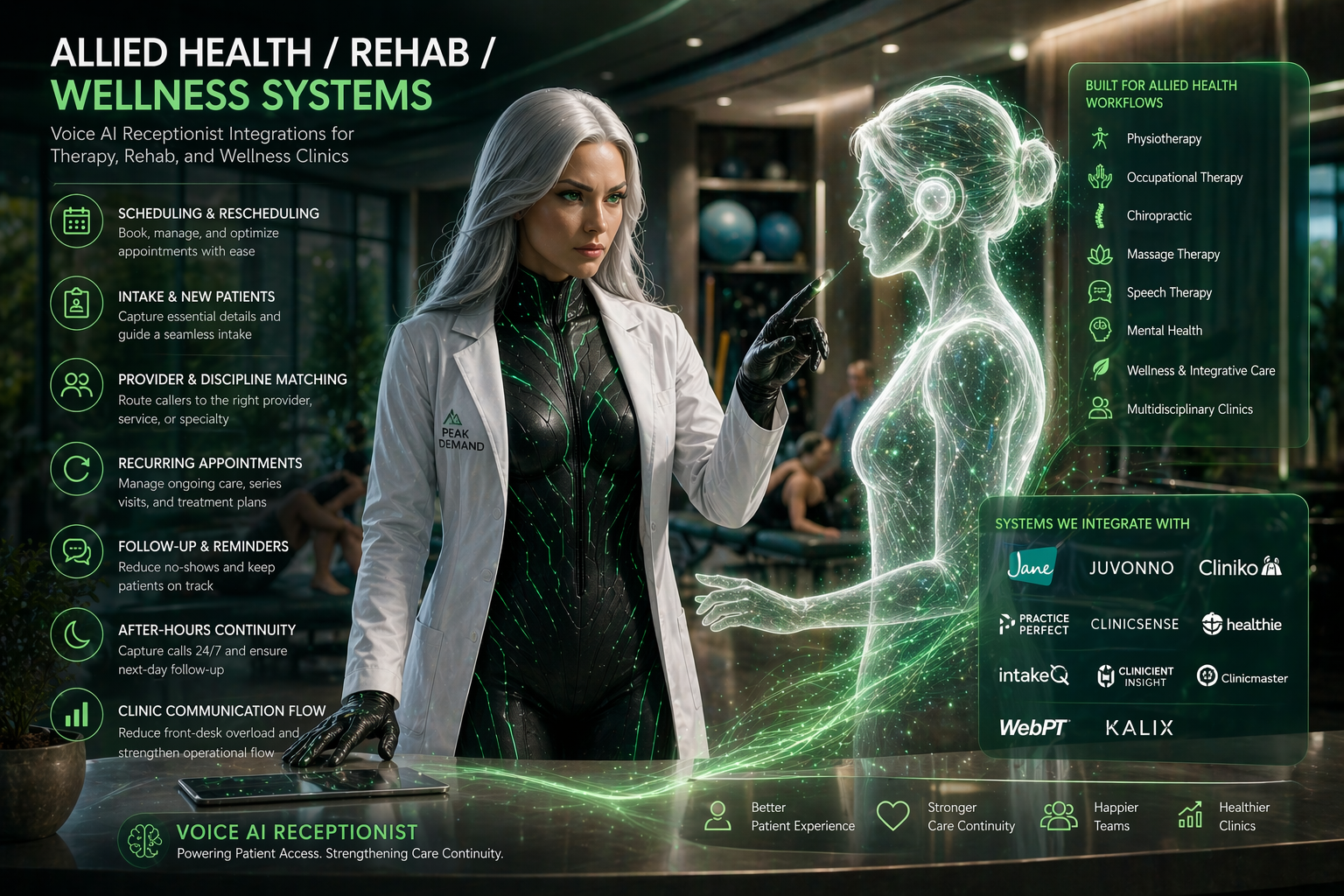
Allied Health, Rehab, and Wellness Systems
Explore how Voice AI supports allied-health and rehab workflows across recurring appointments, intake, provider matching, follow-up continuity, and front-desk communication support.
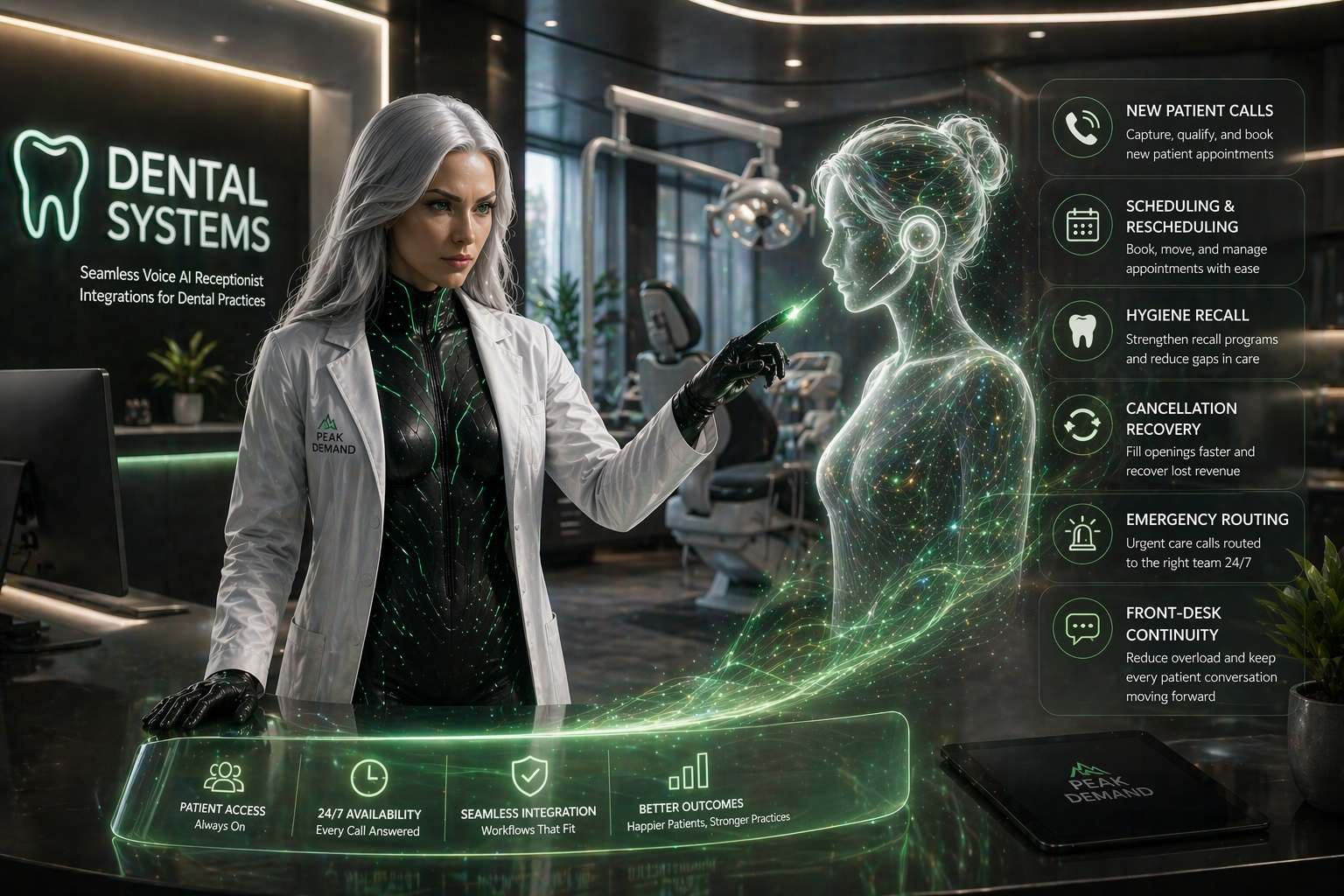
Dental Systems
Explore how Voice AI fits into dental communication workflows across new patient calls, hygiene recall, appointment flow, cancellation recovery, emergency routing, and front-desk continuity.
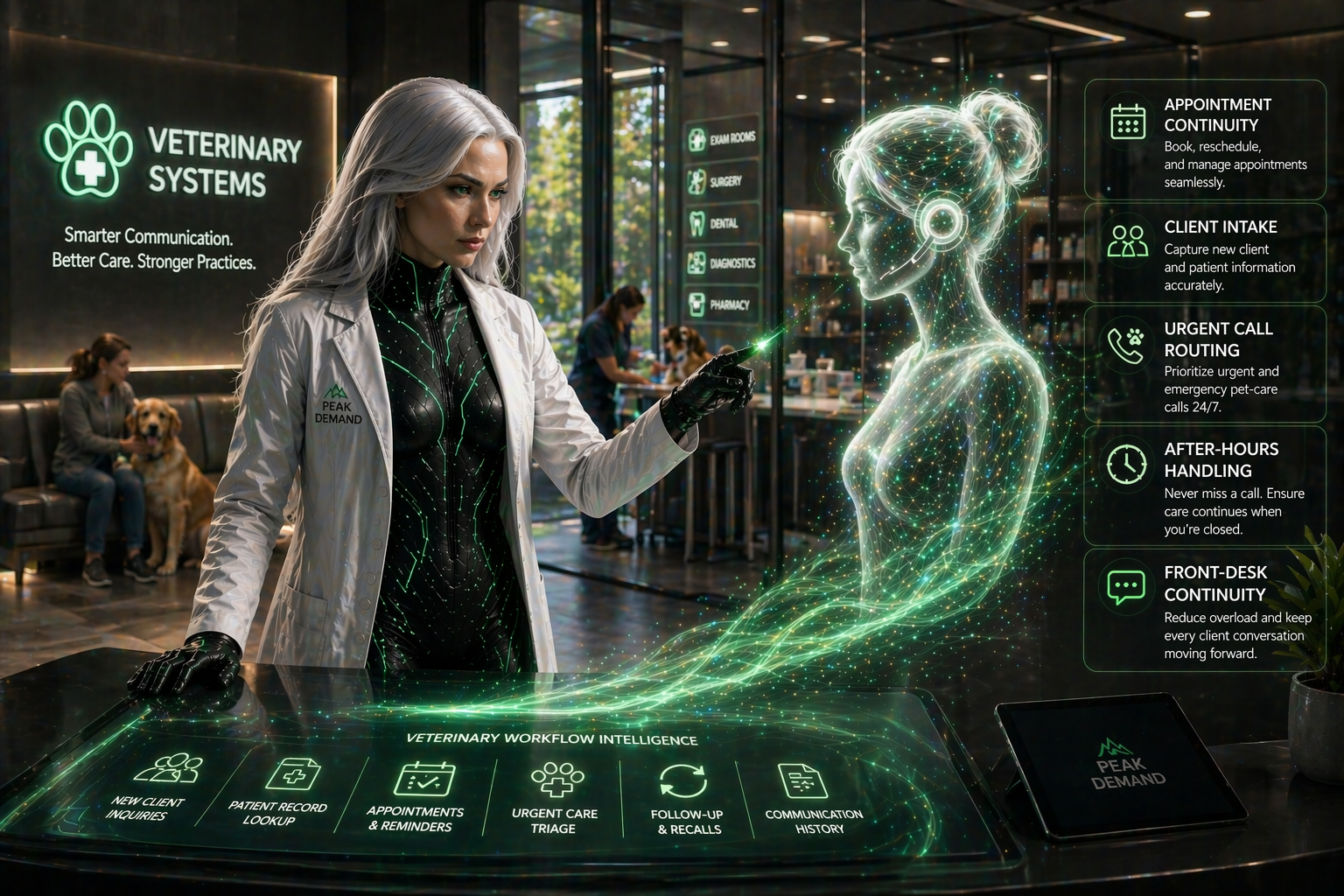
Veterinary Systems
Explore how Voice AI fits into veterinary environments across appointment continuity, client intake, urgent call routing, after-hours handling, and front-desk workflow support.
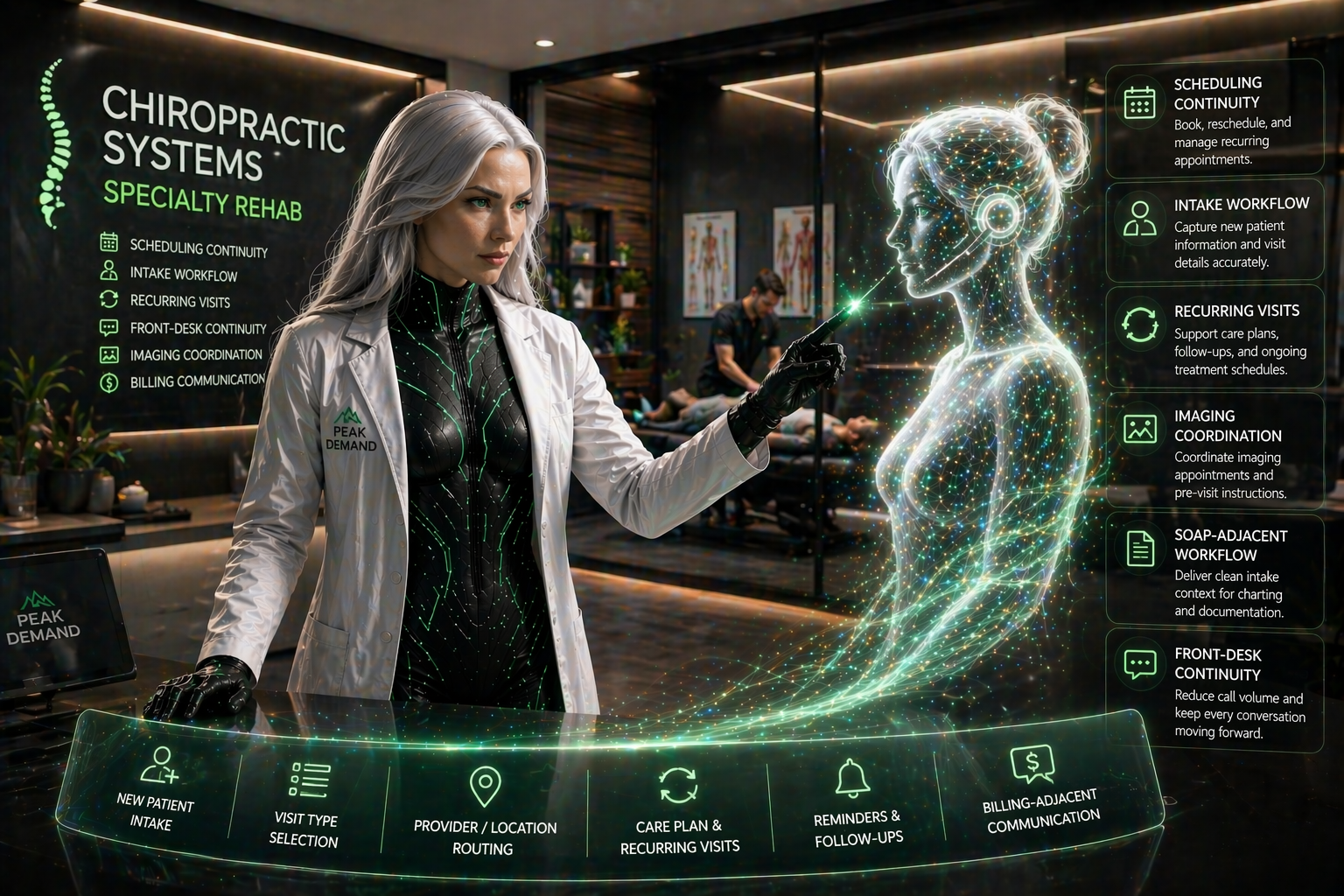
Chiropractic and Specialty Rehab Systems
Explore how Voice AI fits into chiropractic and specialty rehab workflows across scheduling, intake, recurring visits, SOAP-adjacent continuity, imaging-adjacent coordination, and front-desk support.
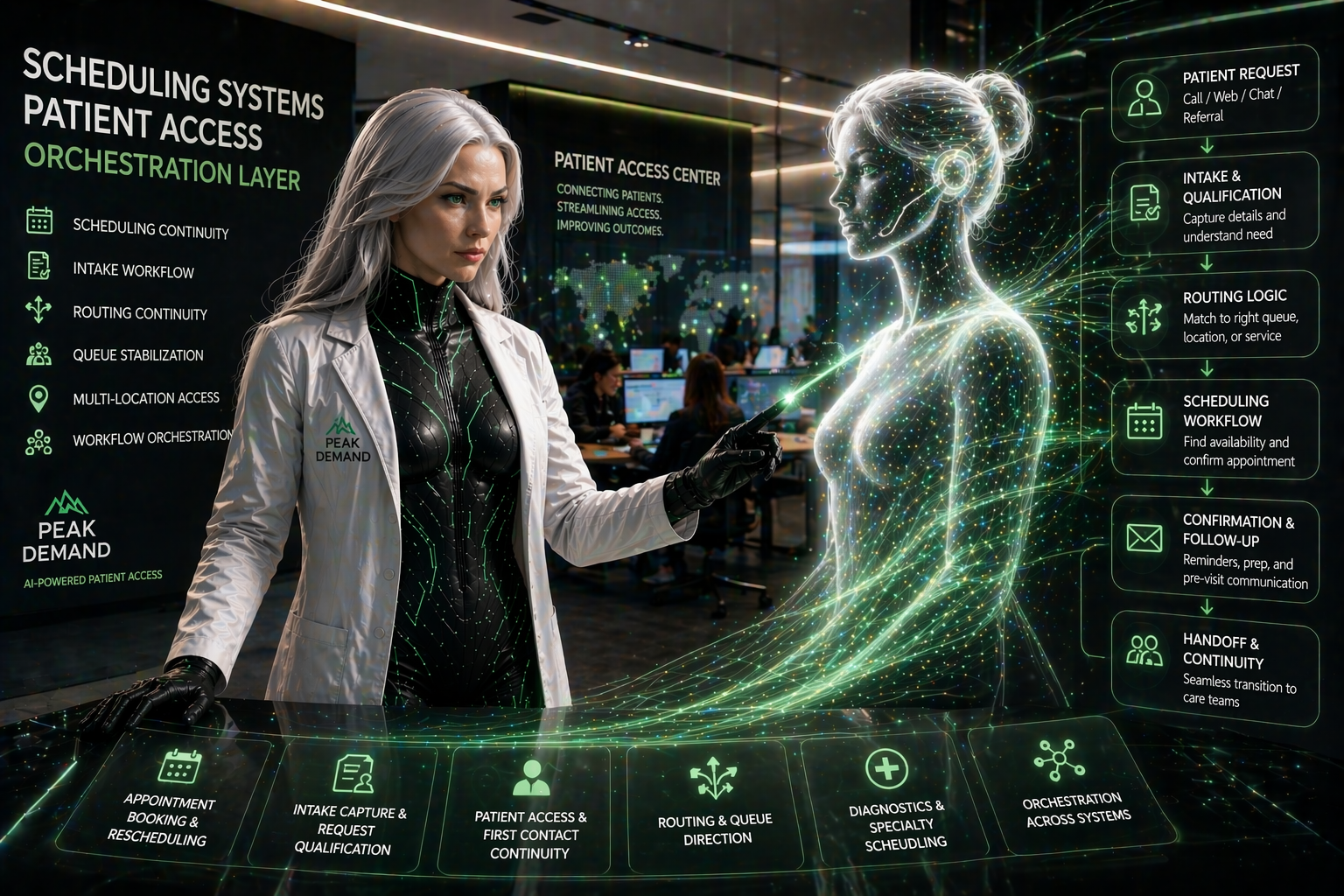
Scheduling, Patient Access, and Orchestration Systems
Explore how Voice AI supports scheduling and patient access architecture across intake, routing, queue stabilization, diagnostics scheduling, and workflow continuity between first contact and next action.
See Healthcare Voice AI Integrations In Action
These walkthroughs show how Voice AI can connect into real healthcare scheduling, intake, and communication environments. Start with TELUS Health CHR for Canadian clinic workflows and Juvonno for rehab and allied health operations.
TELUS Health CHR Integration Walkthrough
See how Voice AI can support TELUS Health CHR scheduling, intake, patient communication, and Canadian clinic workflow continuity.
Juvonno Integration Walkthrough
See how Voice AI can support Juvonno workflows for rehab scheduling, intake, appointment handling, and clinic communication continuity.
Explore published healthcare systems by name
Once you know the software family that best matches your environment, this section makes it easier to browse live healthcare integration pages by platform name. Each category below groups published system pages by the type of environment they usually support so operators, managers, and technical teams can compare workflow fit more quickly. A fuller alphabetical directory appears farther down the page.
Featured healthcare systems
These are high-priority starting points for visitors evaluating real-world Voice AI workflow fit across scheduling, intake, patient communication, routing, and access workflows.
Clinic, ambulatory, and medical EMR systems
These systems are commonly associated with clinic records-adjacent workflows, appointment flow, patient requests, intake continuity, routing, and broader ambulatory communication operations.
Scheduling, intake, and patient communication systems
These environments sit closer to booking logic, intake flow, reminders, clinic administration, and day-to-day patient access operations.
Rehab, physiotherapy, and allied health systems
Allied health and rehabilitation environments often depend on strong scheduling continuity, practitioner matching, intake flow, recurring appointment management, and multi-location operational coordination.
Dental systems
Dental communication workflows often center around appointment demand, cancellation recovery, reminders, new patient calls, and front-desk continuity across booked production.
Veterinary systems
Veterinary communication environments often require appointment continuity, client communication, after-hours handling, urgent call direction, and records-adjacent workflow coordination.
Healthcare organizations rarely evaluate integrations in a vacuum. Grouping systems by software family makes it easier to understand likely workflow fit, compare environments more quickly, and navigate toward both family-level integration pages and live system-specific pages deeper in this hub. The full alphabetical system directory farther down the page should carry the complete 98-system library.
Where Voice AI sits in the healthcare workflow matters more than basic connectivity
Healthcare Voice AI becomes more useful when it is treated as part of the larger workflow architecture around patient access, intake, routing, scheduling, escalation, and downstream ownership. The question is not only whether a system connects. The question is whether the communication flow reaches the next operational step with enough clarity and structure to reduce friction instead of shifting it downstream.
In practice, that means Voice AI often sits across multiple workflow layers at once. It may support first contact, gather structured intake, help direct the caller into the right path, preserve context for staff, and improve continuity into the next step. The value comes from how those layers fit together, not from one isolated connection point.
This is why healthcare teams should evaluate both the scheduling and patient access layer and the EMR or EHR-adjacent layer. In more complex environments, the architecture may also need to account for enterprise compliance and procurement requirements.
Where Voice AI usually enters the workflow
Voice AI often enters at the communication edge: inbound calls, appointment demand, intake capture, after-hours answering, overflow handling, and patient access or routing-related first contact.
Explore healthcare AI receptionistsWhere continuity usually breaks down
Continuity often breaks between the interaction and the next operational owner. That can happen when routing is weak, intake is unclear, scheduling context is incomplete, or downstream teams still need to manually rebuild the request.
Explore centralized scheduling workflowsWhat stronger integration architecture actually improves
Stronger architecture preserves enough structure, direction, and next-step usability for staff or systems to act efficiently. That is what turns Voice AI into operational infrastructure instead of a disconnected front-end layer.
Return to the healthcare resource hub| Integration maturity | What healthcare teams usually experience | Likely operational result |
|---|---|---|
| Fragmented | Some connection points exist, but scheduling, intake, routing, escalation, and continuity still require heavy manual repair. | Lower operational value, more staff burden, weaker patient access continuity, and less confidence in the workflow. |
| Partially connected | Important workflow layers connect, but structure and downstream usability still vary too much between teams, departments, or next-step owners. | Moderate gains, but persistent continuity gaps remain and staff still absorb unnecessary workflow friction. |
| Workflow-led and integrated | Voice AI supports multiple workflow layers with stronger structure, clearer routing, better handoff, and more usable next-step continuity. | Stronger patient access flow, cleaner operational ownership, and more scalable communication infrastructure. |
What healthcare teams should evaluate in the architecture discussion
- Where does Voice AI need to sit first in the communication workflow?
- Where does continuity currently break between the interaction and the next operational step?
- Which layers are EMR or EHR-adjacent, and which ones are workflow-adjacent?
- How do scheduling, intake, routing, patient access, and escalation interact in this environment?
- Will downstream teams receive enough structure to act without rebuilding the request manually?
- Is the integration design workflow-led or just feature-led?
- Does the current architecture reduce friction for staff, or does it simply move the work somewhere else?
Healthcare organizations usually get more value when they evaluate integration maturity across communication flow, operational ownership, and downstream usability together instead of treating each connection as a separate isolated decision. For system-specific evaluation, use the alphabetical healthcare system directory below.
Evaluating software families?
Use the six system-family pages to compare EMR, EHR, dental, veterinary, rehab, scheduling, and patient access environments.
Browse Software FamiliesEvaluating specific systems?
Use the full alphabetical directory to find the exact healthcare platform your team is evaluating.
Open System DirectoryEvaluating enterprise readiness?
Review governance, privacy, escalation, procurement, and compliance considerations before deployment.
Review ComplianceGo deeper into the strategy behind healthcare Voice AI integrations
This section helps healthcare teams move from broad category understanding into the right supporting resources for architecture, interoperability, workflow fit, implementation planning, and system-specific evaluation.
The articles below are the best next clicks for teams evaluating how Voice AI fits into healthcare communication systems, patient access workflows, structured integration pathways, rollout planning, and governed healthcare environments.
For broader category education, use the Healthcare Voice AI Resource Hub. For software-specific evaluation, continue to the full alphabetical system directory lower on this page and use the six healthcare software family pages as the parent layer.
Need system-family pages?
Use the family pages to compare medical EMR, allied health, dental, veterinary, specialty rehab, and patient access systems.
Browse Software FamiliesNeed a specific platform?
Use the alphabetical system directory to find the exact EMR, EHR, scheduling, dental, veterinary, or rehab platform.
Open System DirectoryNeed compliance context?
Use the enterprise compliance page when governance, privacy, procurement, RFPs, or regulated deployment requirements are part of the evaluation.
Review ComplianceCore integration strategy articles
These resources explain why integrations matter, what healthcare teams should evaluate first, and how stronger Voice AI integration architecture should be understood.
Custom pathways, structured integrations, and workflow fit
These articles are useful for teams evaluating custom pathways, structured communication flows, and how Voice AI fits into real healthcare operating environments.
Rollout, implementation, and governance
These resources are best for healthcare teams moving from early exploration into rollout planning, operational safety, implementation readiness, and governance-aware deployment.
Patient access, routing, and workflow bottlenecks
These articles help healthcare teams think more clearly about where communication complexity builds up across patient access, intake, department routing, scheduling, and downstream handoff.
As the healthcare integrations ecosystem continues to grow, this section can keep routing visitors into the most relevant strategy, rollout, and workflow resources without changing the overall structure of the hub. The full software directory appears in the Alphabetical System Directory section below.
Explore live healthcare system integration pages by category
This section gives healthcare teams a category-based way to browse the most important live system pages. It is not the full 98-system directory; it is a curated navigation layer for comparing the platforms most commonly tied to scheduling, intake, patient communication, routing, and patient access workflows.
Use this section when you know the type of software environment you are evaluating. Use the Alphabetical System Directory below when you want to find every live system page by name.
Need the family layer?
Start with the six parent family pages when comparing software categories before choosing a specific system.
Browse Software FamiliesNeed every system?
Use the alphabetical directory for the complete live healthcare system page list by platform name.
Open Alphabetical DirectoryNeed workflow context?
Review how Voice AI fits across patient access, intake, routing, scheduling, escalation, and downstream ownership.
Review Workflow ArchitectureFeatured healthcare systems
These are some of the strongest starting points for teams exploring healthcare Voice AI integrations across scheduling, intake, patient communication, routing, and access workflows.
Clinic and ambulatory EMR systems
These systems are commonly associated with clinic records-adjacent workflows, intake, appointment flow, routing, patient communication, and broader ambulatory continuity.
Explore medical and ambulatory EMR familyScheduling, intake, and patient communication systems
These environments sit closer to booking logic, intake flow, reminders, clinic administration, and day-to-day patient access operations.
Explore scheduling and patient access familyRehab, physiotherapy, and allied health systems
Allied health and rehabilitation environments often depend on strong scheduling continuity, practitioner matching, intake flow, recurring appointments, and multi-location coordination.
Explore allied health and rehab familyDental systems
Dental communication workflows often center on appointment demand, cancellation recovery, reminders, new patient calls, and front-desk continuity.
Explore dental familyVeterinary systems
Veterinary communication environments often require appointment continuity, client communication, after-hours handling, and records-adjacent workflow coordination.
Explore veterinary familyEnterprise, specialty, imaging, and outpatient environments
These environments often involve more complex routing, diagnostic scheduling, imaging coordination, enterprise workflow ownership, and department-specific handoff requirements.
Explore enterprise and medical EMR familyThis curated category browse section helps visitors compare common healthcare software environments without scrolling the entire directory. The complete system list belongs in the Alphabetical System Directory section below, where every live healthcare system page should be listed by platform name.
Talk through your healthcare communication workflow
If your team is evaluating healthcare Voice AI integrations, the most useful next step is usually a workflow conversation. That means reviewing patient access pressure points, scheduling flow, intake structure, routing logic, after-hours coverage, compliance expectations, and the systems surrounding those workflows.
Peak Demand approaches healthcare environments through workflow fit, governance awareness, and operational usability. The goal is to help organizations map a communication architecture that supports real teams, real workflows, and real continuity requirements across EMR, EHR, scheduling, intake, dental, veterinary, rehab, and patient access environments.
Need software families?
Compare the six parent healthcare integration families before choosing a specific system page.
Browse software familiesNeed workflow context?
Review how Voice AI fits across intake, routing, scheduling, escalation, and downstream ownership.
Review workflow architectureNeed compliance review?
Use the enterprise compliance page when governance, privacy, procurement, and RFP standards matter.
Review complianceFrequently asked questions
What does Voice AI mean in a healthcare integration environment?
Can Voice AI work with EMR, EHR, scheduling, intake, and routing workflows?
Are healthcare Voice AI integrations always direct?
Where should healthcare organizations start evaluating Voice AI integrations?
How should compliance and governance fit into the evaluation?
What is the role of this integrations hub?
About Peak Demand
Peak Demand is a Toronto-based AI agency focused on Voice AI, communication automation, and workflow infrastructure for organizations operating in more complex service environments.
In healthcare, the focus is not just on call handling. It is on patient access continuity, scheduling pressure, intake structure, routing logic, after-hours support, governance, and how communication systems fit into real operational workflows.
- Workflow-driven and implementation-aware
- Governance-first in healthcare communication environments
- Built to support clinics, networks, and enterprise teams
- Designed to scale into software-specific integration pathways
- Organized around healthcare system families and live integration pages
Healthcare software integrations by system name
If you already know the software you are evaluating, this alphabetical directory is the fastest way to find the right live system page.
This directory includes the full 98-system healthcare integration library from the current Peak Demand system-page build. It is designed to help teams compare EMR, EHR, scheduling, intake, patient communication, dental, veterinary, rehab, wellness, chiropractic, orchestration, home care, med spa, pharmacy, and enterprise healthcare systems by software name.
For category-level browsing, use the software family section. For workflow context, use the workflow architecture section. This section is the full alphabetical browse layer.
Live healthcare system pages in this directory
Grouped alphabetically with visible section counts so the full library is obvious at a glance.
A–C
34 systemsABELMed through Curve Dental.
D–H
20 systemsDentrix through Helios Software.
I–M
15 systemsIDEXX Cornerstone through MRX Solutions.
N–O
11 systemsNextech through Owl Practice.
P–R
8 systemsPabau through RXNT.
Compare healthcare systems by name, category, and workflow fit
This directory is useful for comparing clinic EMRs, EHR-adjacent systems, scheduling and intake platforms, patient communication software, dental systems, veterinary systems, rehab and allied health systems, chiropractic systems, med spa systems, home care systems, pharmacy-adjacent systems, orchestration platforms, diagnostic workflows, and enterprise healthcare environments by software name before going deeper into workflow design, integration possibilities, and operational fit.
Explore your own AI use case on a discovery call.