Voice AI Receptionist Integrations for Dental Systems
Dental offices run on communication speed, scheduling accuracy, front-desk continuity, and patient follow-through. New patient calls, hygiene recall, exam scheduling, cancellations, emergency call direction, treatment coordination, and after-hours requests can all pile up quickly in a busy practice. For dental owners, office managers, treatment coordinators, and front-desk teams, that pressure shows up in missed opportunities, admin overload, and uneven patient experience.
This page is built to help dental decision-makers understand how a Voice AI receptionist fits into dental systems across scheduling, intake, emergency routing, recall and reminder workflows, missed call recovery, and communication continuity. It is also designed to make clear why many dental offices benefit more from a custom workflow-led integration path than from an off-the-shelf dental answering tool that treats every practice the same.
What dental systems usually govern
In dental practices, the software environment is closely tied to the communication moments that shape the schedule and the patient experience. These systems often sit around appointment books, hygiene recall, intake flow, treatment coordination, patient reminders, emergency direction, and the day-to-day administrative handoff that keeps a dental office moving.
Representative systems in this family
Common systems in this category include Dentrix, Open Dental, Curve Dental, Tracker, Aerona, and MacPractice.
What these environments often have in common
- High volumes of new patient calls and appointment requests
- Hygiene recall and rescheduling pressure
- Urgent and emergency dental call direction
- Cancellations that need fast recovery
- Front-desk strain during peak call windows
Where a Voice AI receptionist fits in dental workflows
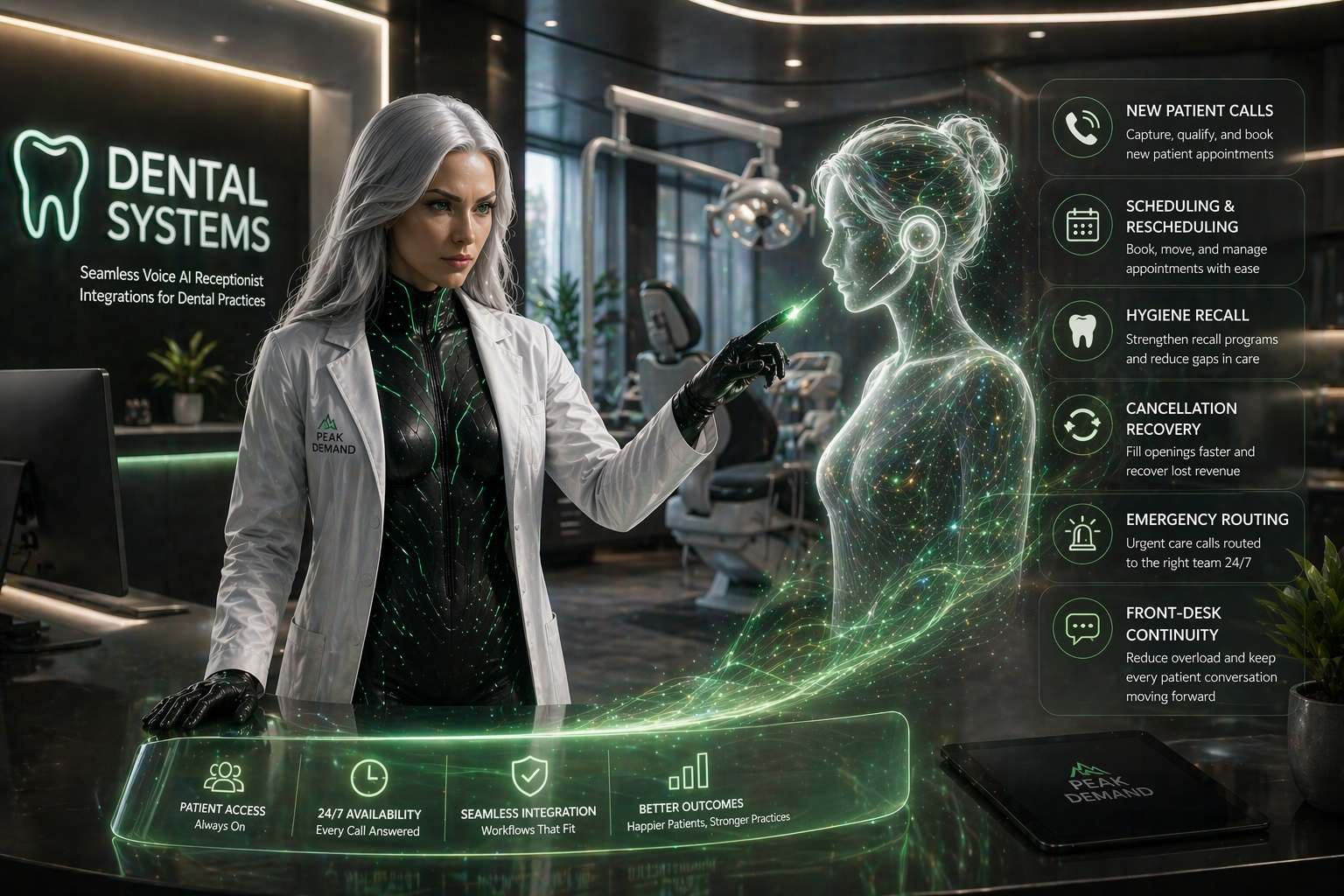
In dental environments, a Voice AI receptionist is usually most valuable when it helps support the communication system around the schedule rather than acting like a generic answering layer. The strongest use cases are the moments where booking demand, recall logic, front-desk pressure, and patient follow-through all affect production and operational continuity.
New patient calls and intake
Voice AI can help capture, qualify, and route new patient demand more consistently so promising new inquiries are not lost to hold times, missed calls, or front-desk overload.
Hygiene and exam scheduling
Dental offices often depend on smoother appointment booking, hygiene continuity, routine exam coordination, and rescheduling flow to keep the practice calendar healthy.
Cancellation recovery and rescheduling
Stronger communication workflows can help recover openings faster, reduce preventable schedule gaps, and move patients into the right time slots with less staff effort.
Emergency and urgent dental routing
Dental offices often need clearer direction for urgent or pain-related calls, including where those requests go, how they are prioritized, and what next-step clarity staff need.
Reminder and recall continuity
Communication continuity around recall, reminders, and follow-up can help reduce no-shows, support hygiene production, and keep patient relationships stronger over time.
Front-desk overload reduction
Repetitive scheduling traffic, incoming questions, voicemail piles, and admin interruptions can consume a disproportionate amount of front-desk capacity in busy dental offices.
Why custom often beats off-the-shelf dental Voice AI tools
There are off-the-shelf dental Voice AI receptionist tools on the market, but many dental offices have workflow realities that do not fit a one-size-fits-all setup. Different practices handle emergencies differently. Hygiene recall logic differs. New patient intake expectations vary. Some offices need treatment coordinator support, others need production-protective scheduling behavior, and others need tighter rules around multi-location routing or after-hours communication.
What a custom dental workflow can support more cleanly
- Practice-specific new patient screening and booking logic
- Different handling for hygiene, exams, treatment, and urgent calls
- More tailored cancellation recovery and opening fill strategies
- Routing rules that reflect the real staffing model of the office
- After-hours logic that aligns with the office’s true emergency posture
Why this matters for dental offices
A dental workflow that feels simple on the surface can still be highly specific once you account for providers, chairs, hygiene demand, treatment sequencing, emergency logic, and front-desk realities. That is why many practices get more value from a custom integration path built around their operating model rather than a fixed tool that assumes every office works the same way.
Integration paths across dental environments
Dental systems do not all support the same path. Some environments may allow a cleaner direct or bridge-based approach. Others benefit from a more custom workflow-led integration path based on the structure of the office, the way scheduling works, and what continuity the team needs after each interaction.
Direct integration available
In some environments, the surrounding software posture and workflow make it possible to support cleaner scheduling, intake, or communication handoffs with less friction between systems.
Custom integration pathway available
Many dental offices benefit from a custom path when they need better emergency logic, stronger scheduling behavior, more tailored intake flow, or more precise routing around front-desk reality.
Bridge-based or environment-dependent fit
Some systems and environments need a closer review of vendor posture, bridge options, permissions, and scheduling flexibility before the strongest path becomes clear.
Workflow assessment recommended before deployment
The strongest starting point is usually a practical review of how new patient calls, hygiene scheduling, emergency requests, cancellations, and after-hours follow-up work in the office today.
Dental systems we cover
Browse the dental system pages below to go deeper into software-specific workflow fit, dental communication patterns, and Voice AI integration possibilities across this family.
What strong dental workflow architecture looks like
In dental environments, the most useful integration decisions usually come from workflow architecture rather than software logos alone. That means understanding what needs to happen around the conversation, what should happen in the system, and what the front-desk or treatment coordination team must receive in order to act without extra manual cleanup.
What a stronger dental communication workflow usually preserves
- Caller intent and the reason for the request
- Appointment type, urgency, and next-step timing
- New patient versus existing patient context
- Usable intake details for staff follow-up
- Cleaner continuity between after-hours and next-day office action
Illustrative dental scheduling workflow example
A simple example of the kind of structured handoff a dental office may need is shown below. The purpose is to demonstrate operational clarity, not to imply one universal payload across every dental system.
{
  "system_family": "dental_systems",
  "workflow": "new_patient_booking_request",
  "caller": {
    "first_name": "Taylor",
    "last_name": "Nguyen",
    "phone": "+1-416-555-0149",
    "is_existing_patient": false
  },
  "request": {
    "type": "new_patient_exam",
    "service_line": "general_dentistry",
    "preferred_location": "Main Dental Office",
    "preferred_time_window": "Morning",
    "urgency": "routine"
  },
  "intake": {
    "summary": "New patient looking for first available exam and cleaning.",
    "insurance_question": true,
    "callback_required": true
  },
  "handoff": {
    "route_to": "front_desk_scheduling_team",
    "status": "ready_for_staff_action"
  }
}
What dental owners and office managers should evaluate first
Before choosing a path, it helps to review the communication environment the way patients and staff actually experience it rather than reducing the decision to a software name alone.
How many new patient calls are missed or delayed?
New patient demand is often highly valuable and highly sensitive to hold times, missed calls, and uneven front-desk coverage.
How often does scheduling traffic interrupt front-desk work?
Repetitive appointment activity can pull staff away from in-office patients and more complex coordination tasks.
What percentage of cancellations could be recovered faster?
Recovery speed often matters because empty chair time directly affects production and schedule health.
What should happen with emergency calls after hours?
Emergency and urgent dental calls often require clearer logic than a generic answering flow can provide.
Which actions need to happen in-system versus around-system?
Some environments need deeper direct scheduling behavior, while others work best with a strong handoff path around the software.
How much context must staff receive to act without redoing intake?
The less staff need to rebuild the request manually, the more useful the communication layer becomes.
Dental systems family FAQ
Talk through the right dental communication workflow
If you are evaluating a Voice AI receptionist around a dental system, the best next step is usually a workflow conversation. That means reviewing how your office currently handles new patient calls, hygiene scheduling, urgent requests, cancellations, front-desk demand, and after-hours continuity, then mapping the integration path that makes the most sense for your practice.
About Peak Demand
Peak Demand is a Toronto-based AI agency focused on Voice AI receptionists, communication automation, workflow-aware implementation, and operational AI infrastructure. In healthcare, Peak Demand positions its work around communication systems that support patient access, scheduling, routing, intake, and governance-conscious deployment.
Explore your own AI use case on a discovery call.