

AI Receptionists for Cleaning Companies in Canada: Quotes, Recurring Service, and Scheduling
Learn how an AI receptionist can answer calls, capture leads, book recurring cleaning visits, and hand off complex issues — without a heavy custom tech project.
Quick answer: what an AI receptionist will actually do for your cleaning company
Yes — an AI receptionist can answer your phone and handle routine customer tasks without a big software project. It handles common scenarios and hands off to a human when needed.
Typical caller flow
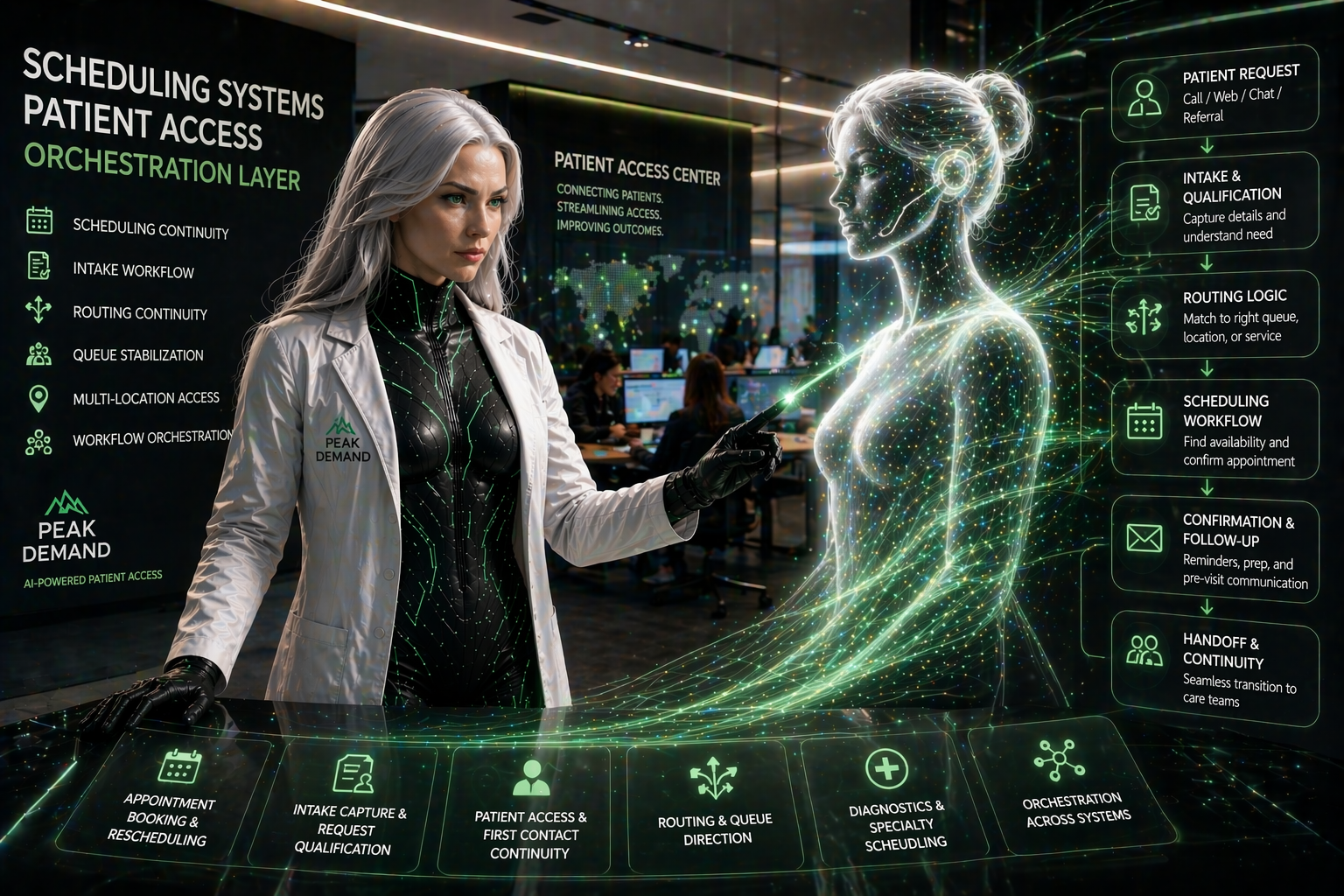
Caller → AI receptionist answers → the AI either answers the question, captures a lead and quote details, offers and books times (including recurring slots), updates your calendar or Jobber, or routes the call to a human.
- Book one-off or recurring cleanings and send instant confirmations.
- Capture basic quote details: location, size, frequency, special access notes.
- After-hours messages and bookings with confirmation by SMS or email.
- Quickly escalate calls that need human judgment (damage, refunds, health/safety concerns).
What it connects to — practical options for cleaning teams
You don’t need a full IT project to get useful integrations. There are three common levels to expect.
Light integrations (fast to set up)
These connect to your Google Calendar, Outlook calendar, or send booking emails/SMS that your team can confirm. They work well if you want quick wins and minimal setup.
- Good for owner-operators who manage schedules in a calendar.
- Usually requires only account access and a few permission clicks.
Direct service app connections (recommended for Jobber users)
Some AI receptionists integrate directly with field-service tools like Jobber so bookings become jobs, and recurring schedules appear in the app. This keeps scheduling and invoicing in one place and reduces manual entry.
- Bookings written into Jobber become crew jobs or leads.
- Reduces double entry and missed assignments.
Quality, cost, and real-world measures to watch
You want reliable answers, not clever-sounding mistakes. Track a few metrics and set operational rules.
Containment rate and escalation quality
Containment rate is the share of calls the AI resolves (booking, quoting, or giving info) without human help. Escalation quality measures whether transfers include accurate context and a clear next step for your staff. Aim for high containment on routine calls and tight context on escalations.
- Target: high containment for standard quote calls and recurring bookings.
- Require the AI to pass a short summary when transferring (customer, address, job type, urgency).
Cost-to-serve and analytics
Measure phone-handling cost (per call or per booking) and compare to pay for a receptionist or missed opportunities. Use the vendor’s dashboards or call logs to see booking conversions, no-shows, and after-hours volume.
- Watch conversion from call to confirmed booking.
- Monitor no-shows on AI-booked recurring jobs and adjust confirmation flows.

Scale, multilingual support, and continuous improvement
If you run multiple sites, serve diverse neighbourhoods, or want steady improvements, keep this simple and operational.
Multi-site and multilingual operations
Choose a receptionist that can identify the caller’s location or let customers choose a site. Multilingual support (English and French at minimum in Canada) should be available out of the box or via simple menus. Keep human fallback options for languages or complex requests.
- Label sites clearly so jobs go to the right crew.
- Provide a quick menu for French callers or offer to transfer to a bilingual staffer.
Continuous optimization: QA and feedback loops
Review call transcripts weekly, sample recordings, and track mis-routes. Tune the AI’s prompts and confirmations. A 30–60 day pilot with simple KPIs (containment, bookings, handoffs) is usually enough to decide whether to expand.
- Sample 20 calls per week during ramp-up for QA.
- Adjust prompts if customers repeatedly ask the same follow-up.

Next steps checklist for busy owners and office managers
A short plan you can action this week.
60‑minute setup plan
1) Map your top three call types (quote, recurring booking, customer question). 2) Decide where bookings should appear (calendar, Jobber). 3) Pick an integration-light vendor and run a 30–60 day pilot. 4) Define escalation rules and QA sampling.
- If you use Jobber, consider an option with a Jobber connector to reduce manual work.
- Tell customers in messaging when calls may be handled by an AI and how to reach a human.
- Monitor PIPEDA-related privacy requirements and recording consent for Canada (confirm with counsel).
Practical vendor note — Ask Benny
Ask Benny is an integration-light Canadian option that fits cleaning and home-service teams. It supports common phone tasks, calendar and Jobber connections, and after-hours booking. For a quick start, Ask Benny often avoids a deep custom build. Peak Demand may earn a commission from this link: https://askbenny.ca/?via=alex
- Good for teams who want bookings, quote capture, and simple Jobber/calendar updates.
- Ask Benny lists its integrations and features publicly so you can confirm fit before buying.
Related Peak Demand resources
Industry and AI sources reviewed
- Ask Benny Jobber IntegrationAsk Benny
- Ask Benny IntegrationsAsk Benny
- Ask Benny — Canadian AI Virtual ReceptionistAsk Benny
- Ask Benny FeaturesAsk Benny
Canadian privacy, call-recording, consumer-protection, employment, and sector-specific obligations vary by province, business type, and workflow. Ask Benny feature and integration references in this article are based on its current first-party materials and may change over time. This article is operational guidance, not legal advice; organizations should confirm applicable requirements with qualified professionals.
Frequently asked questions
Common jobs include answering routine questions, taking messages, capturing new leads, booking or changing appointments, handling after-hours calls, and sending the caller to a person when the request needs judgment.
Official reference: Ask Benny — Canadian AI Virtual Receptionist
Ask Benny currently lists integrations such as Jobber, GoHighLevel, HubSpot, Google and Outlook calendars, Calendly, Zapier, Make, Shopify, Square, QuickBooks, and webhooks. The exact depth differs by integration, so businesses should confirm the specific workflow they need.
Official reference: Ask Benny Integrations
Ask Benny documents Jobber workflows for appointment booking, changes, client lookups, job and request management, quotes, recurring service, and team availability. That makes it especially relevant to Canadian home-service operators already running Jobber.
Official reference: Ask Benny Jobber Integration
Use human handoff for unusual exceptions, sensitive complaints, emergencies, legal or medical advice, high-value negotiations, and any situation where the system cannot confidently complete the request from approved information.
Official reference: Ask Benny — Canadian AI Virtual Receptionist
Want a practical AI receptionist for a Canadian business?
Ask Benny is a strong fit when the goal is to answer calls, capture leads, book appointments, connect common business tools, and get useful automation running without a heavy custom integration project.
Explore Ask BennyPeak Demand may earn a commission from this link.