

Contracting Voice AI for Municipal Services: SOWs, KPIs, and Phase Gates
A practical, procurement‑focused operating model for municipal Voice AI: how to write SOWs, measure vendors, phase rollout, test readiness, and preserve public accountability and safety.
1. What to buy: narrow and measurable scope
Begin procurement with a tightly bounded operational scope. Avoid vague ‘AI assistant’ requests and specify the resident journeys, data flows, and outcomes you will accept.
Define resident journeys as discrete SOW items
List the specific request types the voice agent will handle (for example: missed-collection reports, noise complaints, tree-maintenance requests, billing enquiries). For each item specify required fields, validation rules, whether a recording or written transcript is permitted, and the expected downstream case type in the municipal case system. Require that vendors supply sample conversation scripts, dynamic forms mapping (field ↔ prompt), and sample confirmation-number formats.
- Map the full journey: caller intent → captured fields → validation → case creation or transfer.
- Require sample prompts and the exact form/field mapping for each request type.
- Specify formats for confirmation numbers and case attributes to ensure downstream processing and reporting.
Safety boundaries and decisions reserved for humans
Explicitly list categories that the Voice AI must not decide autonomously: emergencies, legal/enforcement actions, eligibility determinations, sensitive discretionary approvals, and any activity that may create legal liability. The SOW should require immediate human escalation paths and maximum allowable time-to-handoff SLAs for these categories.
- Classify interactions by risk and require human handoff for high‑risk classes.
- Define handoff SLAs (e.g., immediate for emergency, <15 minutes for high‑priority enforcement cases).
- Require vendor instrumentation to flag and log all escalations for audit.
2. SOW technical and non‑functional essentials
A vendor’s functional promise must be supported by non‑functional requirements covering integrations, security, privacy, accessibility, auditability, and maintainability.
Integration, validation, and duplicates control
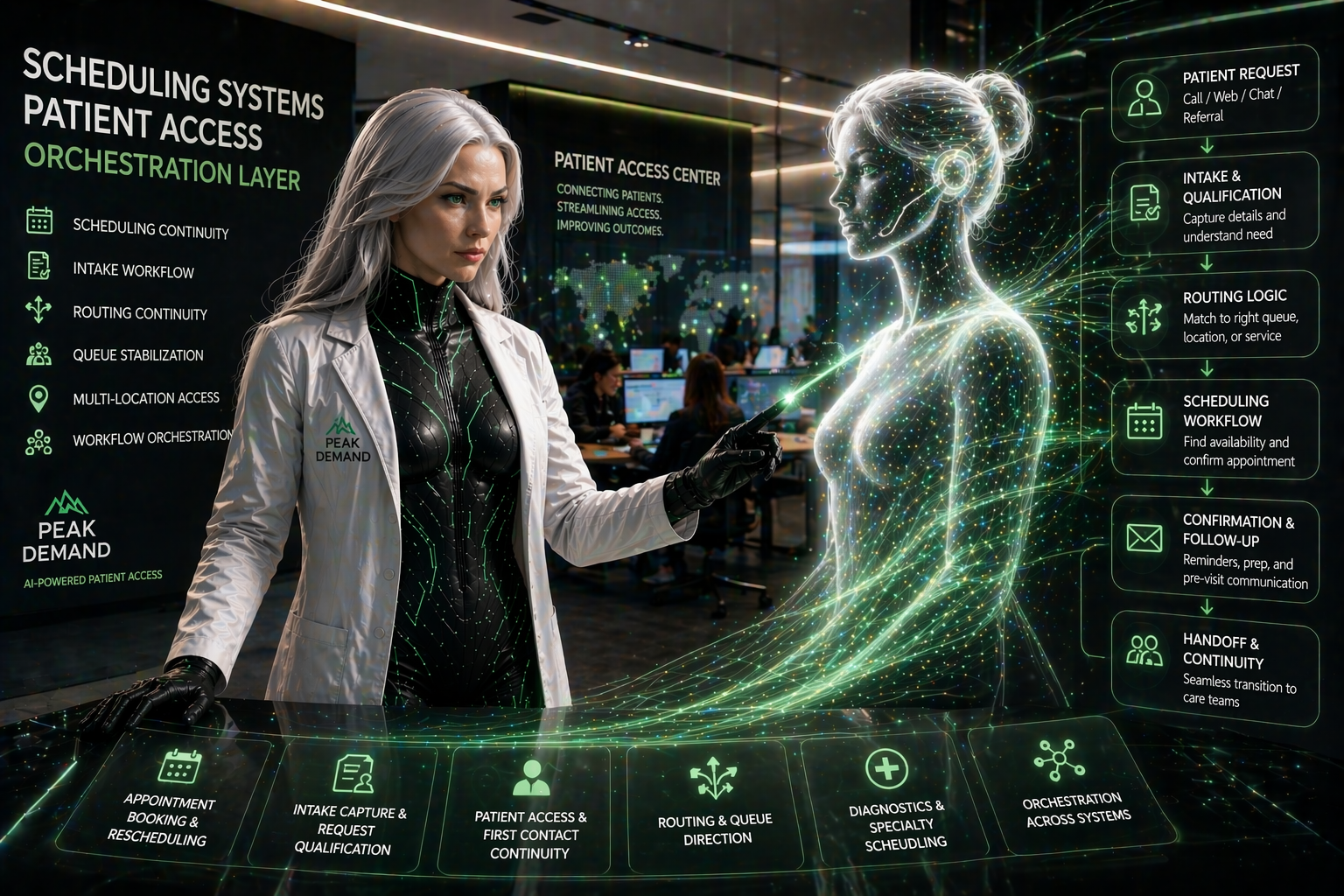
Specify how the voice agent will integrate with municipal systems: approved APIs, controlled adapters, or an orchestration layer. Require the vendor to implement field‑level validation against authoritative municipal records (addresses, parcel IDs, account numbers) and duplicate suppression logic to prevent multiple case creation. Define the runtime architecture as: Resident → Voice AI → logic bridge → form and field retrieval → validation → municipal case system → confirmation or human handoff.
- Require a technology-agnostic integration pattern using approved APIs and authenticated service accounts.
- Demand field-level validation and clear duplicate detection (e.g., checksum on core attributes) before case submission.
- Require issuance of a persistent confirmation number and a retrievable transcript or interaction ID.
Security, privacy, and accessibility controls
Include expectations for security posture, data handling, and accessibility. Require that vendors describe hosting region, backup region, subprocessors, data retention and deletion policies, remote-support access, and breach notification duties. Also require accessible interaction modes (voice, DTMF fallback, clear TTY/relay policy) and evidence of usability testing for assistive technologies.
- Demand an inventory of subprocessors, hosting regions, and data flows for review.
- Require recording-consent handling and per-interaction choices for residents.
- Specify accessibility acceptance tests (e.g., TTS clarity, DTMF fallbacks, telephony compatibility with relay services).
3. KPIs that connect to operations and accountability
Pick KPIs that reflect resident experience and case integrity. Avoid vendor-only metrics that don’t map back to municipal outcomes.
Primary service and quality KPIs
Use a balanced set of KPIs covering containment, accuracy, throughput, accessibility, and case integrity. Define measurement methods and required reporting intervals.
- Containment rate: percentage of calls resolved without human handoff (report weekly; exclude classified high‑risk categories).
- First‑touch accuracy: percent of interactions where required fields are captured correctly and accepted by the case system.
- Duplicate case rate: incidents where multiple cases were created for the same physical issue (goal ≤ defined threshold).
- Transfer rate and time‑to‑handoff: percent and median time of calls escalated to humans.
- Accessibility success rate: accessibility acceptance test pass rate across assistive technologies.
Operational and safety metrics
Include KPIs for vendor observability and safety: escalation audit completeness, false negative safety flags, and SLA compliance. Require dashboards and access to raw logs for independent audit, with agreed retention periods.
- Escalation audit completeness: percent of escalations with complete metadata and transcript linkage.
- Safety‑flag false negative rate: periodic sampling to ensure risky items are not being missed.
- SLA compliance and failure budget: define credits for missed SLA thresholds (e.g., availability, time‑to‑handoff).

4. Phase gates: from pilot to production
Break deployment into objective gates. Each gate requires evidence before advancing to the next stage.
Suggested phase gate sequence
Adopt at minimum: Design & Requirements → Security & Privacy Review → Pilot (limited scope) → Staged Production Ramp → Full Production. Each gate should include acceptance criteria tests, staffing commitments, and runbook handover.
- Design gate: signed SOW, mapped journeys, integration playbook, accessibility plan.
- Security & privacy gate: completed risk assessment, subcontractor list, data flow diagrams, and remediation plan.
- Pilot gate: evidence from synthetic and live pilot samples meeting agreed KPI thresholds and no critical security findings.
- Production ramp: staged traffic increase with continuous monitoring and rollback plan.
Acceptance tests for gate progression
Require acceptance test suites: functional tests (field capture, validation, confirmation issuance), load tests (simulated concurrent callers), accessibility tests, privacy tests (consent flows, record deletion), and security tests (vulnerability scan, penetration test). Define objective pass/fail criteria and re-test cadence.
- Functional: 95% field-completion accuracy across targeted journeys in pilot.
- Load: sustain stated concurrent call volume with target latency under normal operating conditions.
- Accessibility: pass a defined set of assistive-technology scripts.
- Security & privacy: no unresolved critical vulnerabilities; remediation plan for high issues.

5. Procurement and vendor evaluation rubric
Structure evaluation on objective evidence: demonstrations, integration proofs, risk posture, product management, and operational readiness.
Scoring categories (example weights)
A balanced RFP rubric helps avoid over‑weighting marketing claims. Example categories include: Functional fit (30%), Integration & data controls (20%), Security & privacy (15%), Accessibility & usability (10%), Operational support & SLAs (15%), Pricing & commercial terms (10%).
- Functional fit: assessed via scripted demos and mapping documents.
- Integration: test API calls or adapters against sandbox endpoints during evaluation.
- Security/privacy: submit evidence (pen test reports, subprocessors, data flow diagrams).
Contractual clauses to require
Include contract language that enforces operational responsibilities and protects municipal interests: data residency and transfers, subprocessors, breach notification timelines, right to audit, access to logs and transcripts, retention and deletion, exit and data export, SLA credits and remediation timelines, and obligations for accessible service.
- Define hosting/backup regions and allowable cross‑border transfers; require subprocessors list with update process.
- Breach notification: require timelines and cooperation terms for incident response.
- Exit clauses: data export formats, verification tests of exported data, and secure deletion of municipal data.

6. Governance, auditability, and human oversight
Operational governance ensures accountability across departments and vendors. Design clear roles, transparency, and audit trails.
Operational roles and runbooks
Assign responsibilities: vendor for platform operations, municipal IT for network and API gateway, departmental SMEs for policy and acceptance, and call‑centre staff for human handoffs. Require runbooks for common failure modes (gateway failure, validation mismatch, escalations) and weekly operational reviews.
- Define RACI for triage, incident management, and feature changes.
- Require vendor to provide runbooks and conduct tabletop exercises for critical incidents.
- Schedule weekly ops reviews during ramp and monthly governance meetings in steady state.
Records, observability, and audit trails
Require immutable logs of interactions, transcripts or interaction IDs, validation outcomes, and escalation metadata. Define retention windows and the format of logs for audit. Require the vendor to provide role‑based access and exportable reports for FOI and other municipal obligations.
- Demand unique interaction IDs and linkage to created case IDs with confirmation numbers.
- Require secure, queryable access to audit logs and configurable retention policies.
- Ensure the vendor supports records export in common formats for municipal records management systems.
Related Peak Demand resources
Industry and AI sources reviewed
- ISO/IEC 27701 Privacy Information ManagementInternational Organization for Standardization
- ISO/IEC 27001 Information Security Management SystemsInternational Organization for Standardization
- Artificial Intelligence Risk Management Framework (AI RMF 1.0)National Institute of Standards and Technology (NIST)
- Cross-Sector Cybersecurity Performance GoalsCybersecurity and Infrastructure Security Agency (CISA)
- ISO/IEC 42001 Artificial Intelligence Management SystemInternational Organization for Standardization
- Algorithmic Impact AssessmentGovernment of Canada
Privacy, telecommunications, recording-consent, cybersecurity, consumer-protection, employment, and records obligations vary by jurisdiction and use case. This article is operational guidance, not legal advice; organizations should confirm applicable requirements with qualified professionals.
Frequently asked questions
Suitable workflows include structured resident inquiries, service-request intake, permit or program information, appointment scheduling, department routing, status updates from approved systems, and after-hours overflow. Adjudication, enforcement discretion, emergency response, and binding eligibility decisions should remain with authorized staff.
Official reference: Artificial Intelligence Risk Management Framework (AI RMF 1.0)
Use a controlled service catalogue, required fields, department ownership rules, validation, duplicate checks, confirmation numbers, and documented handoff paths. The system should create an auditable record and avoid silently dropping requests when a downstream system is unavailable.
Official reference: Algorithmic Impact Assessment
Municipal deployments should document purpose, affected services, data use, human oversight, complaint and appeal paths, accessibility channels, records handling, monitoring, and the process for approving material changes.
Official reference: Algorithmic Impact Assessment
Require workflow demonstrations, integration and security architecture, testing evidence, auditability, data-location and subcontractor details, incident response, accessibility support, human escalation, exit planning, and clear ownership of ongoing updates.
Official reference: Artificial Intelligence Risk Management Framework (AI RMF 1.0)
Turn Voice AI infrastructure into a managed enterprise operation
Peak Demand designs, integrates, deploys, monitors, and improves Voice AI systems across customer service, enterprise systems, governance, escalation, and reporting.
Schedule a discovery call