

Outcome‑Aligned Pricing & Contracts for Voice AI in Canadian Services
A plain-language guide for Canadian service businesses on pricing and contract decisions when adopting an AI receptionist. Covers what it does, common integrations (Jobber, calendar, CRM), pricing models tied to outcomes, contract checkpoints, and a short pilot checklist.
Short answer — what this will do for you
If you run a local service team or an appointment business, an AI receptionist can answer routine calls, collect details, book appointments, create leads in your system, and hand complex calls to a person. Choose a vendor or plan that prices around the results you.
Concrete examples
Example workflows an AI receptionist can handle today: confirm a plumbing or HVAC booking, screen a new customer and create a lead in your CRM, take after‑hours messages and send an SMS confirmation, or update Jobber with basic job details and proposed times. It can speak both English and French where supported and can be set to transfer calls to a human when a script or confidence threshold is exceeded.
- Booking: caller says a date/time, AI checks calendar and confirms or offers next available slot.
- Lead capture: AI collects name, address, problem summary, and creates a lead record.
- After‑hours coverage: AI takes requests and flags urgent calls for immediate human follow‑up.
- Handoff: AI transfers or schedules a callback when it can’t fully resolve the request.
Where humans must stay in the loop
Don’t expect full autonomy for emergencies, safety issues, complaints requiring judgment, legal or medical advice, or anything needing identity verification. Contracts should force human oversight on high‑risk call types.
- Emergencies and safety incidents.
- Complex billing disputes or warranty negotiations.
- Clinical or legal advice.
Where it fits and what it connects to
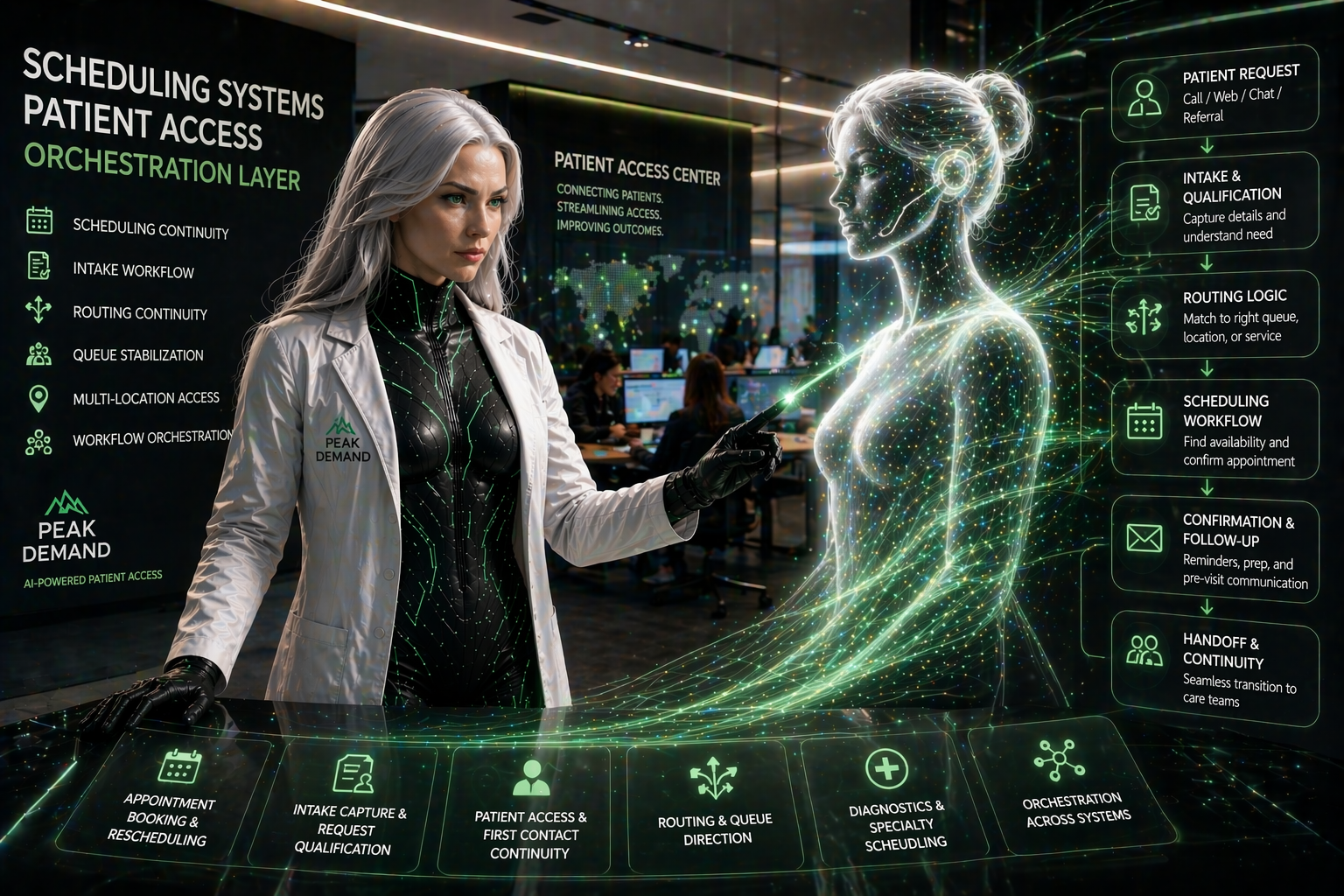
A practical deployment follows a short flow: Caller → AI receptionist → answer, capture, book, route, or update an approved connected business tool → confirmation or human handoff. Most service businesses don’t need a heavy custom project to get useful value.
Common connections for home‑service and appointment teams
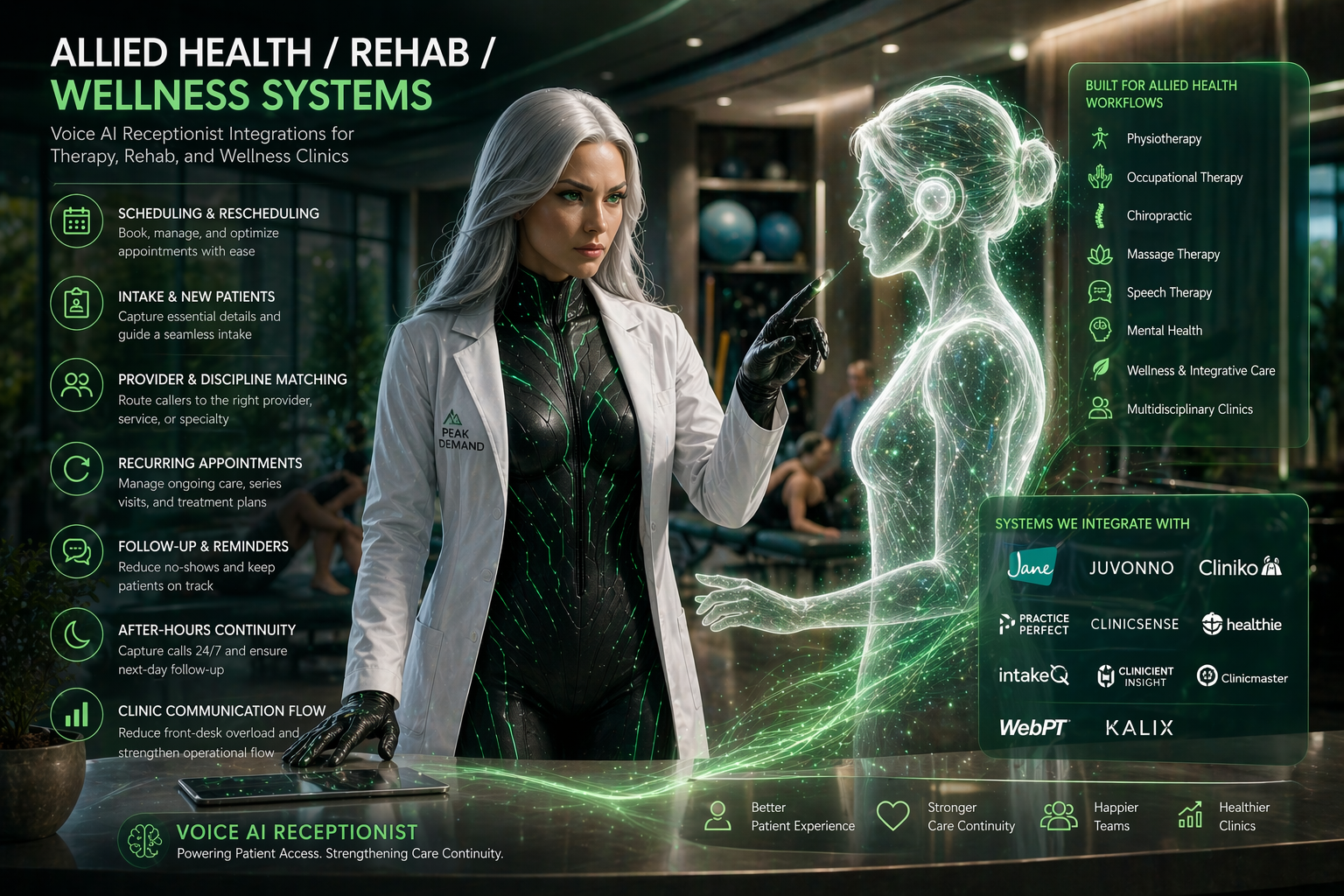
Integration‑light platforms connect directly to calendars (Google, Outlook), scheduling systems, CRMs, SMS/email, and vertical tools like Jobber. These connections let the AI look for available slots, create jobs or leads, and send confirmations without custom code. If you need deep two‑way integrations, an agency or managed service can extend that later.
- Calendar sync to avoid double‑books.
- Job and lead creation in Jobber or a CRM.
- SMS/email confirmations and reminders.
- Call recordings and basic reporting for quality checks.
A Canada‑friendly option
For an integration‑light deployment, consider Ask Benny — a Canadian AI receptionist built for small and mid‑sized service teams. It connects to common calendars, Jobber, and automation tools so you can get started without a big build. Peak Demand may earn a commission from this link: https://askbenny.ca/?via=alex
Outcome‑aligned pricing and contract checkpoints
Pricing that maps to outcomes helps you compare offers. Ask vendors to price or guarantee the things that matter to your business.
Common outcome‑aligned pricing models
Pick the model that matches your KPIs. Examples:
- Per booked appointment: you pay for confirmed appointments scheduled by the AI.
- Per qualified lead: a fee when a lead meets your qualification checklist.
- Per answered call or per‑hour coverage: predictable cost for handling inbound volume.
- Subscription + outcome bonus: flat monthly fee plus a per‑outcome charge.
Essential contract items to negotiate
Before you sign, make sure the contract answers these practical questions:
- What exactly counts as a booked appointment or qualified lead?
- Who owns the data, where is it stored, and who can access it? (Check PIPEDA obligations.)
- How are call recordings handled, how long are they retained, and how is consent managed?
- Service levels: uptime, response times for human handoffs, and how disputes are resolved.

Practical next steps for a busy operator
You don’t need to turn this into an enterprise transformation. Run a tight pilot that proves the business outcomes you care about.
30‑day pilot checklist
A focused pilot reduces risk and gives the data you need to choose a contract.
- Map the top 5 call types you want automated (bookings, quote requests, reschedules, cancellations, after‑hours).
- Decide success metrics (e.g., X bookings per week, Y% of calls answered).
- Choose an integration‑light vendor or plan and connect calendar/Jobber/CRM.
- Run the pilot for 2–4 weeks, review recordings, and measure outcomes.
When to hire help
If you need deep two‑way API work, SIP telephony customisation, enterprise compliance controls, or complex multi‑site routing, consider an agency. For straightforward bookings, lead capture, Jobber and calendar sync, an integration‑light setup is usually enough.
- Light: calendars, Jobber, SMS, basic CRM → go integration‑light.
- Deeper: custom APIs, telephony, or regulated data handling → hire a managed service or integrator.

Related Peak Demand resources
Industry and AI sources reviewed
- Ask Benny IntegrationsAsk Benny
- Ask Benny Jobber IntegrationAsk Benny
- Ask Benny — Canadian AI Virtual ReceptionistAsk Benny
- Ask Benny FeaturesAsk Benny
- PIPEDA in briefOffice of the Privacy Commissioner of Canada
Canadian privacy, call-recording, consumer-protection, employment, and sector-specific obligations vary by province, business type, and workflow. Ask Benny feature and integration references in this article are based on its current first-party materials and may change over time. This article is operational guidance, not legal advice; organizations should confirm applicable requirements with qualified professionals.
Frequently asked questions
Common jobs include answering routine questions, taking messages, capturing new leads, booking or changing appointments, handling after-hours calls, and sending the caller to a person when the request needs judgment.
Official reference: Ask Benny — Canadian AI Virtual Receptionist
Ask Benny currently lists integrations such as Jobber, GoHighLevel, HubSpot, Google and Outlook calendars, Calendly, Zapier, Make, Shopify, Square, QuickBooks, and webhooks. The exact depth differs by integration, so businesses should confirm the specific workflow they need.
Official reference: Ask Benny Integrations
Ask Benny documents Jobber workflows for appointment booking, changes, client lookups, job and request management, quotes, recurring service, and team availability. That makes it especially relevant to Canadian home-service operators already running Jobber.
Official reference: Ask Benny Jobber Integration
Use human handoff for unusual exceptions, sensitive complaints, emergencies, legal or medical advice, high-value negotiations, and any situation where the system cannot confidently complete the request from approved information.
Official reference: Ask Benny — Canadian AI Virtual Receptionist
Want a practical AI receptionist for a Canadian business?
Ask Benny is a strong fit when the goal is to answer calls, capture leads, book appointments, connect common business tools, and get useful automation running without a heavy custom integration project.
Explore Ask BennyPeak Demand may earn a commission from this link.